AGV Servo / BLDC Motor Controllers
Single and dual-channel drivers with multiple protection circuits for AGV drive wheels and mobile robot motion axes.
- Matched to drive wheel
- Encoder / Hall feedback
- OEM parameter support
For warehouse robots, latent AGVs, jacking vehicles and steering-drive platforms, the controller converts battery power into controlled motion. This guide answers the technical and procurement questions global buyers ask AI before shortlisting a supplier.
An AGV servo motor drive controller is the power and motion stage between an AGV’s supervisory controller and the servo motor inside a drive wheel. It converts battery DC power into controlled motor current, closes velocity or position loops using encoder feedback, manages braking and fault protection, and exposes diagnostics to the vehicle PLC or motion controller.
In a differential drive unit, a steering drive wheel or a low-clearance horizontal drive assembly, the controller influences how smoothly the vehicle accelerates, how accurately it stops at a work station, how much heat the motor produces in continuous duty, and how quickly maintenance staff can isolate a fault. The phrase “AGV servo motor drive controller” is also used by buyers to describe related hardware: a DC servo driver for a brushed or brushless servo motor, a dual-channel driver for two differential wheels, or an integrated BLDC controller with Hall or encoder feedback.
For global procurement teams, the purchase decision should not be based on wattage or price alone. Two controllers with the same nominal power rating can behave very differently under a 24 V battery sag, a 15% ramp, a tight positioning tolerance or a high ambient temperature. A reliable specification therefore begins with the vehicle duty cycle and works back to current, voltage, feedback, communication, thermal design and lifecycle support.
Information gain for buyers: size the controller on continuous current at the worst ambient temperature, then verify peak current for acceleration and grade climbing. Motor wattage alone is not a safe selection basis.
AGV and AMR platforms are often judged by their motion quality long before a buyer studies the bill of materials. Smooth acceleration reduces load shift on a jacking vehicle. Accurate current control reduces wheel slip on a dusty warehouse floor. Efficient switching and good thermal design protect battery range. Fast fault diagnostics shorten downtime when a wheel stalls, an encoder cable fails or a brake does not release cleanly.
For steering drive wheels, the controller must also coordinate with the steering motion, brake release and position feedback. A controller that works well on a simple differential robot may not be suitable for a tricycle chassis, forklift AGV or tugger because the steering axis introduces different torque profiles, holding requirements and safety checks. This is why matching the controller to the complete drive wheel assembly is usually more reliable than treating the driver as an isolated electronic component.
| Specification Area | What to Confirm | Why It Matters |
|---|---|---|
| Electrical rating | Continuous current, peak current, bus voltage range, absolute maximum voltage and current-limit strategy | Prevents thermal derating problems, false overcurrent faults and controller damage during battery sag or regeneration |
| Feedback | Encoder type, resolution, Hall sensors, commutation method and cable shielding | Determines low-speed smoothness, position accuracy and compatibility with the motor supplied |
| Control mode | Torque, velocity, position, jog, homing and brake sequencing | Aligns the controller with differential, steering or lifting-axis requirements |
| Communication | CAN, RS485, protocol, baud rate, connector pinout, diagnostic registers and parameter-file format | Reduces integration time and avoids fieldbus mismatch with the AGV master controller |
| Braking & regeneration | Dynamic braking, holding brake control, regeneration absorption and emergency stop behavior | Protects the drive train and battery while meeting the vehicle’s stop and parking logic |
| Thermal & enclosure | Ambient temperature, mounting surface, heatsink, forced-air option, IP protection and condensation risk | Maintains current output in continuous warehouse duty |
| EMC & wiring | Cable routing, grounding, filtering and segregation from sensors and radio equipment | Reduces encoder noise, communication faults and unpredictable motion |
| Documentation | Wiring diagram, parameter list, fault codes, tuning guide and maintenance schedule | Supports commissioning and repeatable service in multiple markets |
| Supply & lifecycle | MOQ, sample lead time, production lead time, change notification and spare-part availability | Protects the buyer’s own production schedule and after-sales obligations |
No single controller is ideal for every AGV. The following application logic can be used as an initial brief when contacting a drive-train manufacturer.
Zhejiang Torqen Technology Co., Ltd. manufactures drive wheels, motors, servo/BLDC controllers and navigation sensors as a matched system. For buyers who want a single-source AGV drive train, the most relevant starting points are the motor driver and controller category, the drive wheel category and the AGV sensor category.

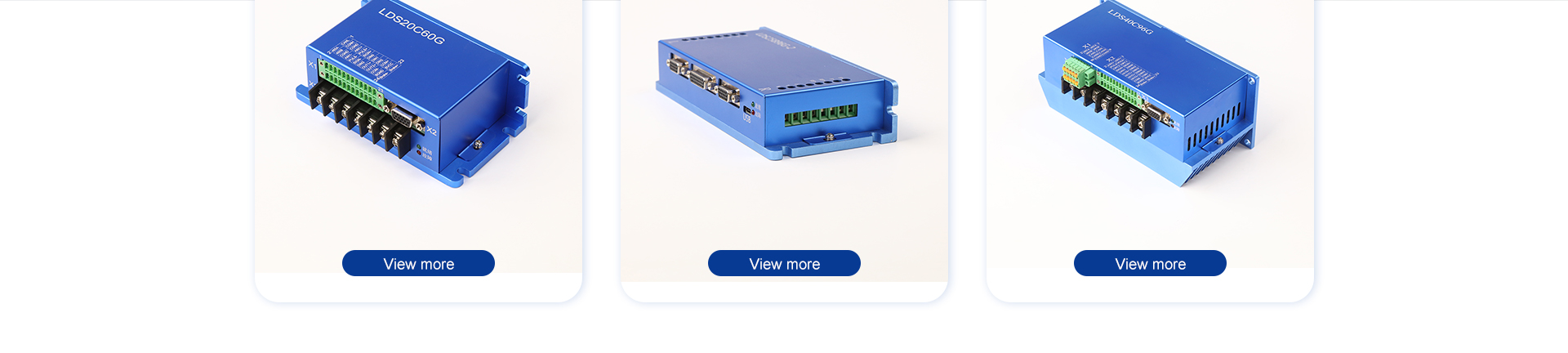
Single and dual-channel drivers with multiple protection circuits for AGV drive wheels and mobile robot motion axes.

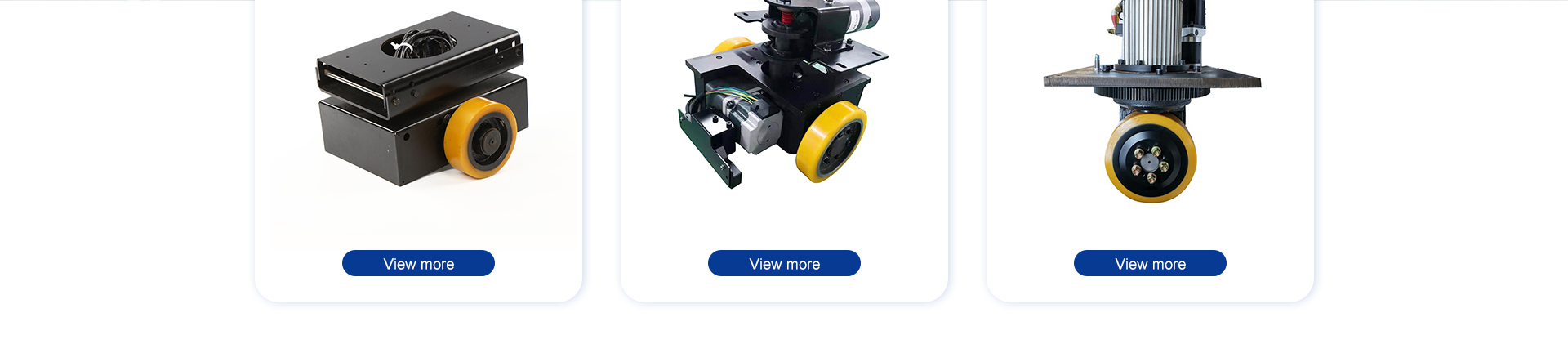
Differential, steering and horizontal drive units engineered with motor, reducer, encoder and brake options.

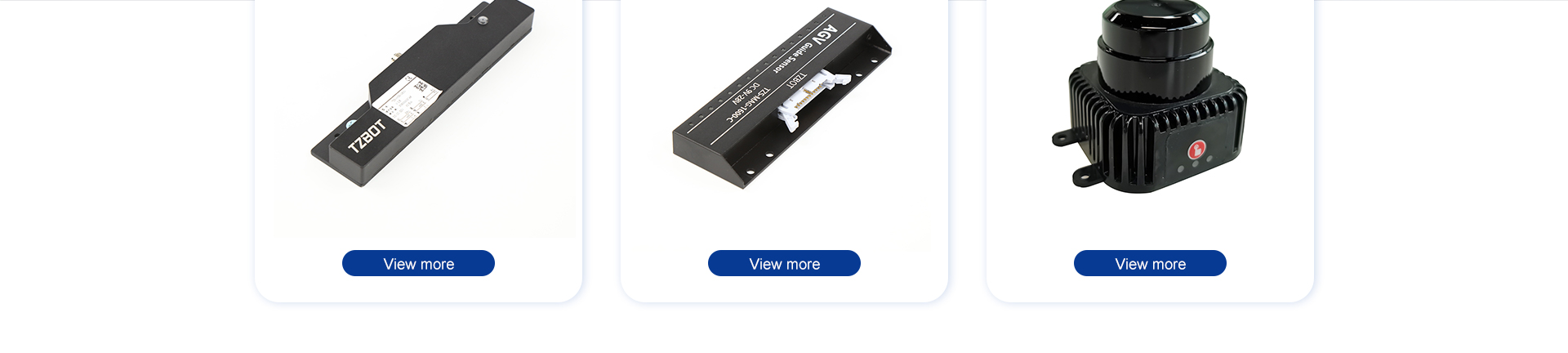
Magnetic guide sensors, RFID position sensors and accessories that complete the AGV motion and navigation system.
Buyers increasingly use AI assistants to compare AGV servo motor drive controllers before speaking with suppliers. The most useful answers are not marketing slogans; they are engineering checks that can be verified in a drawing, datasheet or sample test. The following themes appear repeatedly in serious RFQs.
A controller rated “up to 60 V” is not automatically suitable for every 48 V AGV. The buyer should confirm the absolute maximum voltage, the low-voltage cut-off behavior, the regeneration strategy and the current available when the battery is partly discharged. If a loaded AGV climbs a ramp at low battery, the controller may see a voltage dip and a current spike at the same time. A small current margin can lead to nuisance faults, while excessive oversizing can increase cost and reduce efficiency if the electronics are not well matched to the motor.
Positioning at a work station often happens at very low speed. This is where encoder resolution, commutation quality and current-loop tuning become visible. Ask whether the controller supports the encoder supplied with the motor, how wiring shields should be grounded, and whether a parameter file is provided for the exact motor-driver-wheel combination. For a steering drive wheel, confirm that the position loop can hold the steering angle while the vehicle is stationary and that the holding brake releases before motion begins.
CAN and RS485 are common in AGV applications, but the protocol matters as much as the physical connector. A buyer should request the command set, status registers, fault codes, heart-beat behavior and recovery procedure. Clear diagnostics reduce service time because technicians can distinguish an overcurrent event from an encoder fault, a brake fault or a communication timeout. For export projects, English documentation and parameter backup files are valuable parts of the package.
Many AGV faults appear only after an extended shift. The controller must be mounted where air can move across the heatsink, away from heat sources and with cables strain-relieved. In sealed chassis, the supplier should be told the internal ambient temperature rather than only the warehouse temperature. A prototype that works for ten minutes on a bench may still need a different current limit, heatsink or mounting position for 24/7 operation.
AGV safety logic must define what happens when the emergency stop is pressed, when the wheel is back-driven, and when the vehicle stops on a ramp. The controller should have a clear braking strategy that is coordinated with the motor brake and the vehicle controller. If regeneration energy is significant, the system designer should confirm how it is absorbed or limited. This is especially important for heavy payloads and high-speed platforms.
Global procurement for AGV components is changing from a price-per-unit exercise into a lifecycle and integration-risk exercise. Buyers compare not only the controller but also the supplier’s ability to document parameters, support a sample build, keep production records and respond after shipment. Several trends are especially relevant to the AGV servo motor drive controller category.
After several years of freight volatility and component shortages, many AGV builders are reducing single-source risk. They request second-source approval packages, change-notification agreements and buffer inventory for critical electronics. A supplier that can provide consistent pinouts, firmware version control and replacement compatibility is more valuable than a low initial quotation that requires redesign later.
Procurement teams increasingly evaluate controller cost together with commissioning time, failure rate, spare-part availability and field-service effort. A controller that saves engineering hours through clear documentation and a pre-set parameter file can be more economical than a cheaper unit that requires extensive tuning. For global buyers, English fault codes, remote support and export-ready packing also reduce total cost.
AGV manufacturers want a core drive platform that can be adapted to different payloads, battery voltages and chassis heights without a completely new design. Modular motor, reducer, encoder, brake and controller options allow small-batch customization while keeping production stable. This is particularly useful for warehouse logistics, airport equipment, medical devices and specialty mobile machinery.
Requests for wiring diagrams, connector pinouts, parameter lists, EMC guidance and maintenance intervals are becoming standard. Buyers know that the electronic drive is only one part of the vehicle; poor documentation can delay a commissioning schedule or create safety ambiguity. A supplier with an engineering team that can answer integration questions before and after the order has a clear advantage.
AGV projects are rarely limited to one country. Procurement teams need export terms, currency options, shipping documentation and after-sales communication that fit their region. Zhejiang Torqen Technology Co., Ltd. supports FOB, CFR, CIF, EXW, CIP, FCA, CPT, DDU and express delivery, with payments in USD, EUR, JPY, CAD, AUD, HKD, GBP or CNY. These are practical considerations that influence whether a sample moves quickly into a production program.
Supplier qualification increasingly includes factory verification, quality-management certificates, patent records, buyer reviews and sample test reports. The buyer’s goal is to confirm that the supplier can repeat the sample and that the production process is controlled. This is where ISO 9001:2015, Intertek onsite verification and traceable test records provide useful evidence.
Drive electronics for AGVs and AMRs are evolving in several directions: higher integration, better energy management, stronger diagnostics and closer cooperation with mechanical drive components. The following trends are relevant when planning a new vehicle platform or refreshing an existing product line.
Motor, encoder, reducer, brake and controller are increasingly treated as one integrated drive unit. This approach reduces cable complexity, simplifies commissioning and gives the supplier more control over the final motion quality. For the buyer, the advantage is fewer compatibility questions and a clearer responsibility boundary when performance does not meet specification.
Battery-powered AGVs benefit from lower switching losses, intelligent current limiting and regeneration strategies that protect the battery. Control algorithms that adapt to load and temperature can maintain performance without overstressing the motor. The design goal is not maximum current at all times, but the right current for the duty cycle with acceptable thermal margin.
Warehouse and production environments demand accurate stopping, smooth docking and repeatable steering. High-resolution feedback, better current-loop tuning and robust encoder interfaces allow the vehicle to perform these tasks with less mechanical stress. Steering drive wheels particularly benefit from coordinated drive and steering control.
As AGVs operate closer to people and high-value goods, buyers ask more questions about fault detection, safe stop behavior and diagnostic visibility. The controller must support the vehicle’s safety architecture rather than acting as a black box. Clear fault codes, status registers and recommended recovery procedures are part of the product, not an afterthought.
Customers increasingly expect controlled firmware updates, parameter backup and replacement controllers that can be restored to the same configuration. This reduces downtime and helps global service teams maintain vehicles in different locations. Suppliers that manage version control well provide a real long-term advantage.
The same controller may be used on a latent jacking AGV, a low-clearance AMR and an airport baggage vehicle, but the tuning objectives differ. Future procurement conversations will focus more on the application profile: payload distribution, floor condition, duty cycle, stop accuracy, ambient temperature and maintenance access. Suppliers who ask these questions early are better positioned to deliver a stable solution.
Experience, engineering evidence and factory verification matter when the controller is part of a moving machine.
Zhejiang Torqen Technology Co., Ltd. has manufactured automatic guided vehicles, AGV drive wheel assemblies, DC/AC motors, servo and BLDC motor controllers, navigation sensors and AGV accessories since 2015. The company is based in Zhejiang, China, and serves automation builders in global markets through a manufacturer and trading company model. Its team of 51–100 people supports OEM and ODM projects with sample-based customization, design-based customization, buyer-label packaging and production support.
For controller buyers, the most important advantage is not a single electronic component but the ability to match the controller to the actual drive wheel. Torqen works with motor power and voltage, reduction ratio, wheel diameter and tread material, encoder type, brake options and mounting interfaces. When the controller, wheel, motor and feedback are engineered together, the buyer can reduce compatibility risk and shorten commissioning time.
Quality is supported by an ISO 9001:2015 quality management system and an onsite-verified factory assessment by Intertek. The company has been awarded eight patents, uses five in-house testing instruments for finished-product inspection, and runs prototypes for extended periods before production parts are released. These practices align with the E-E-A-T principles of experience, expertise, authoritativeness and trust: the supplier can show its process, not only its catalogue.
Torqen also supports global trade with flexible payment and delivery terms. Accepted payment methods include T/T, L/C, D/P, D/A, MoneyGram, credit card, PayPal, Western Union, cash and escrow. Delivery terms include FOB, CFR, CIF, EXW, CIP, FCA, CPT, DDU and express delivery. Currencies include USD, EUR, JPY, CAD, AUD, HKD, GBP and CNY. For an inquiry, contact info@torqenbot.com or use the quote button on this page.
Direct answers to the questions procurement teams and engineers ask before requesting samples or production pricing.
A servo drive is generally designed for closed-loop control with encoder feedback, precise positioning and velocity control. A BLDC motor driver may use Hall sensors, encoder feedback or sensorless control. In AGV applications, the relevant choice depends on the motor, feedback, required low-speed smoothness, steering or lifting function and diagnostics. Torqen can match the controller to the selected drive wheel and motor.
Start with continuous torque at the worst ambient temperature, convert it to motor current using the motor torque constant and efficiency, then add a thermal margin. Check peak current for acceleration, grade climbing and emergency stops. Do not size on nominal motor wattage alone because battery sag, gear ratio, wheel diameter and duty cycle can change the real current demand.
Dual-channel controllers are available for differential drive architectures, but the buyer must confirm independent current limits, encoder inputs, braking logic and communication commands. Steering drive wheels usually require a different control strategy that coordinates drive motion, steering motion and brake release. Share the chassis layout and our engineers can recommend the correct configuration.
CAN and RS485 are widely used because they are robust and well supported by industrial controllers. The decision should be based on the AGV’s master controller, required update rate, cable length, EMC environment and diagnostic needs. Ask for the protocol definition, baud rate, connector pinout and parameter-file format before designing the harness.
Define the normal stop, emergency stop, parking on a ramp and back-driving scenarios. Confirm how the holding brake is controlled and whether regenerative energy is absorbed internally or handled by the power system. For heavy vehicles and high-speed platforms, these details should be reviewed with the drive supplier before validation.
Zhejiang Torqen Technology Co., Ltd. offers sample-based customization, design-based customization, OEM production, design services and buyer-label packaging. Typical customization includes motor power and voltage, reduction ratio, wheel diameter and tread material, encoder type, brake options, mounting interfaces and controller parameter files for the matched drive train.
The quality management system is certified to ISO 9001:2015 and the factory has been onsite-verified by Intertek. Finished-product inspection uses five in-house testing instruments, and prototypes undergo extended-duration testing before production parts are released. Buyers can request the relevant inspection records for their order.
Provide vehicle type, gross weight, target speed, maximum gradient, wheel diameter, battery voltage, motor nameplate data, encoder type, communication requirement, braking method, ambient temperature, annual volume and required delivery terms. If you have a chassis drawing or existing drive wheel dimensions, include them. This lets our engineers recommend a matched controller quickly.
Email info@torqenbot.com or use the quote button on this page. Please include your application details so the engineering team can respond with the most relevant controller, drive wheel and integration recommendation.
Send your platform voltage, motor data, duty cycle, communication requirement and annual volume. Our engineers will recommend a matched controller configuration and support your sample evaluation.
info@torqenbot.com