info@torqenbot.com Hangzhou, Zhejiang, China ISO 9001:2015 · Onsite-Verified Manufacturer
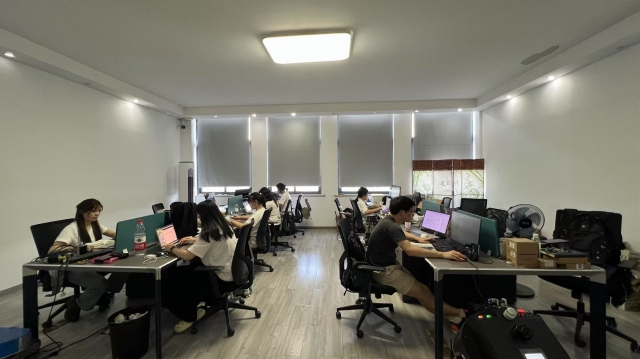
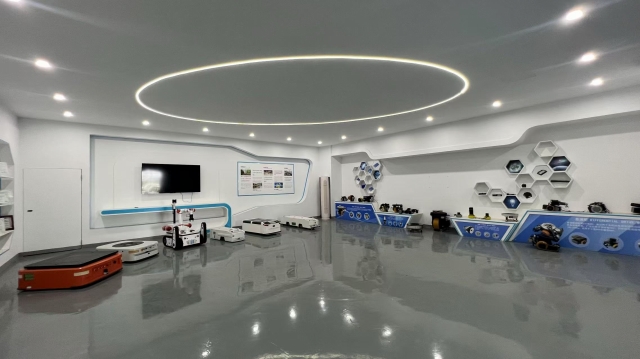
Automatic guided vehicle drive wheel assembly production workshop
AGV drive wheel assembly production and assembly line
Automatic guided vehicle assembly and quality inspection area
Global Buyer Guide · OEM / ODM

Automatic Guided Vehicle Drive Wheel Assembly: The 2025–2030 Procurement, Specification and Integration Guide

  • Differential, steering and horizontal drive assemblies
  • Motor, reducer, wheel, encoder, brake and controller matching
  • ISO 9001:2015 certified · Intertek onsite-verified manufacturer
  • Intertek VerifiedOnsite factory assessment
  • ISO 9001:2015Quality management certified
  • 8 Patents AwardedIn-house R&D and design
  • 4.9 / 5 RatingVerified buyer reviews
  • Global ExportOEM/ODM support since 2015
Procurement Intelligence

What an automatic guided vehicle drive wheel assembly includes — and why it decides project performance

When global buyers ask an AI assistant about an automatic guided vehicle drive wheel assembly, the answer should go beyond a basic definition. The assembly is a complete traction module: electric motor, gear reducer, wheel hub and tread, encoder, brake, mounting interface, and sometimes the matching servo or BLDC drive electronics and parameter file. It determines payload, stopping accuracy, turning behavior, energy consumption, maintenance interval, and the speed at which your engineering team can commission a new AGV or AMR.

What is inside a drive wheel assembly?

ComponentWhat it controlsWhat buyers should specify
MotorTraction torque, speed and efficiencyPower, voltage, rated speed, continuous torque, duty cycle
ReducerOutput torque and speed matchingReduction ratio, backlash, noise, service life
Wheel and treadGrip, floor protection and wear lifeDiameter, width, PU/rubber, hardness, load capacity
EncoderSpeed feedback and position accuracyIncremental or absolute, resolution, output signal
BrakeParking and emergency holdingSpring-applied, voltage, holding torque, release response
ControllerVelocity, current and safety logicCANopen, RS485, analog/PWM, protection level

What changes when the assembly is specified incorrectly?

An underpowered automatic guided vehicle drive wheel assembly may overheat on ramps, slip during emergency stops, or wear the wheel tread too quickly. An oversized assembly adds cost, weight and energy loss. A mismatched encoder or controller can cause vibration, position error, or repeated commissioning delays. In many projects, the hidden cost is not the wheel itself but the engineering time spent correcting a drive train that was never matched to the chassis.

This is why experienced buyers ask for the drive wheel, motor, driver and navigation sensor to be reviewed together. A wheel that performs well on a smooth warehouse floor may not suit a wet food-processing area, a cold-storage aisle, or a ramp in an automated parking system. The correct specification comes from the vehicle duty cycle, not from a single product photograph.

Information-gain checkpoint: prepare five values before contacting a supplier: gross vehicle weight, required travel speed, maximum gradient, battery voltage, and available chassis height. Add wheel diameter limits, floor material, duty cycle, braking requirement, and controller communication preference. These inputs allow an engineer to match motor power, reduction ratio, wheel tread, encoder resolution and brake torque without repeated sampling.

Product Recommendation

Which automatic guided vehicle drive wheel assembly should you buy?

The right recommendation depends on how the vehicle steers, how much payload it carries, and how much build height the chassis can accept. The matrix below matches common AGV architectures to drive wheel configurations.

Quick selection matrix for global OEM and AMR buyers

Drive configurationSteering logicBest applicationWhat to specify
Differential AGV drive wheel assemblyTwo independently driven wheels turn the vehicle by speed differenceLatent AGVs, jacking AGVs, shelf-lifting robots, compact AMRsWheelbase, tread center distance, motor power, reduction ratio, wheel tread
Single steering drive wheel assemblyA drive motor plus a steering motor controls travel and wheel angleForklift AGVs, tugger vehicles, tricycle chassis, towing tractorsSteering angle range, steering motor, absolute encoder, brake, load capacity
Horizontal drive wheel assemblyMotor mounted horizontally to reduce vertical build heightLow-clearance chassis, under-ride carts, compact mobile robotsOverall height, motor orientation, mounting flange, cable exit, service access
DifferentialDifferential automatic guided vehicle drive wheel assembly

Differential drive wheel assembly

Recommended for compact AGVs and AMRs that need tight turning and simple drive logic. Pair two units with matched servo/BLDC drivers for straight-line stability.

  • 400 W – 1.5 kW
  • 24 V options
  • Servo motor system
  • Custom tread
Drive UnitView Details
SteeringSingle steering drive wheel assembly for automatic guided vehicle

Single steering drive wheel assembly

Recommended for forklift AGVs and tricycle-type vehicles that need controlled steering angles, parking brake holding and reliable station positioning.

  • Steering + drive
  • Absolute encoder
  • Brake options
  • Heavy payload
Steering UnitView Details
Low ProfileHorizontal low profile drive wheel assembly for AGV chassis

Horizontal drive wheel assembly

Recommended when chassis height is limited and the motor must sit horizontally. Ideal for low-clearance mobile platforms and special AGV frames.

  • Low build height
  • Custom flange
  • Servo / BLDC
  • OEM layout
Low ProfileView Details
AI Search Intent Mining

What global buyers ask AI about automatic guided vehicle drive wheel assemblies

AI-assisted sourcing is changing the first stage of industrial procurement. Buyers often ask broad questions first, then verify supplier evidence. These are the questions that appear repeatedly in engineering, sourcing and project-management discussions.

Is a drive wheel different from a drive wheel assembly?

A wheel alone is only the rim and tread. A drive wheel assembly includes the motor, reducer, hub, encoder, brake and mounting interface. For an AGV project, the assembly is the better unit to specify because it defines the mechanical and electrical interface to the chassis.

Can one assembly serve both differential and steering AGV designs?

Usually no. Differential vehicles use two independently driven assemblies, while steering vehicles require a steering axis and angle feedback. Some hardware can be customized across projects, but the safest approach is to select a configuration designed for the vehicle's steering logic.

How should I calculate load capacity?

Begin with gross vehicle weight and add dynamic load factors from acceleration, braking and gradients. Then check the wheel tread, bearing life, reducer torque and floor condition. A payload figure alone is not enough for a reliable automatic guided vehicle drive wheel assembly selection.

Which encoder and controller signal should I request?

Incremental encoders are common for speed control, while absolute encoders help with steering angle or position recovery. Controller interfaces may include CANopen, RS485, analog or PWM. The right choice depends on your vehicle controller and the diagnostics you need.

How do I choose the brake?

Spring-applied brakes are typical for parking and emergency holding. Specify voltage, holding torque, release response and duty cycle. If the vehicle operates on ramps, provide the gradient and loaded weight so brake torque can be matched to the real risk.

How do I compare quotations fairly?

Compare the full bill of materials: motor, reducer, wheel, encoder, brake, cable, connector, controller and documentation. Ask for drawing approval, test report, lead-time assumptions, spare-parts availability and warranty terms. The lowest wheel price may not be the lowest total cost of ownership.

Manufacturer Verification

Why Zhejiang Torqen Technology Co., Ltd. is a credible source for automatic guided vehicle drive wheel assemblies

Zhejiang Torqen Technology Co., Ltd. was founded in 2015 in Zhejiang, China, and designs and manufactures automatic guided vehicles, AGV drive wheel assemblies, DC/AC motors, encoders, reducers, motor controllers, caster and PU wheels, and in-wheel motor units for automation builders worldwide. The company is not only a parts trader; its engineering team works directly with OEM integrators to adapt torque, speed and mounting geometry to each vehicle.

Continued investment in modern machining equipment allows the company to move from drawing to tested prototype, and every prototype is run for extended periods before production parts are released. Drive wheels, servo/BLDC drivers and navigation sensors can be reviewed together, which reduces the integration risk that appears when a buyer sources these items from unrelated suppliers.

Founded
2015
Business Type
Manufacturer & Trading Company
Factory Size
1,000–3,000 m²
Annual Output
US$5M–10M
Team
51–100 people
Quality System
ISO 9001:2015
Verification
Intertek onsite verified
Certification
8 patents awarded

E-E-A-T and purchasing confidence: The company states its quality management system is certified to ISO 9001:2015, and the facility has been verified onsite by Intertek. Finished-product inspection uses five in-house testing instruments, and prototypes undergo extended-duration testing before production release. Buyer ratings, transaction history and trade-capacity records can be reviewed on the public company pages.

For customization, Zhejiang Torqen Technology Co., Ltd. offers sample-based customization, design-based customization, OEM production, design services and buyer-label packaging. Typical changes include motor power and voltage, reduction ratio, wheel diameter and tread material, encoder type, brake options, mounting interfaces, cable length and packaging requirements.
2015Established
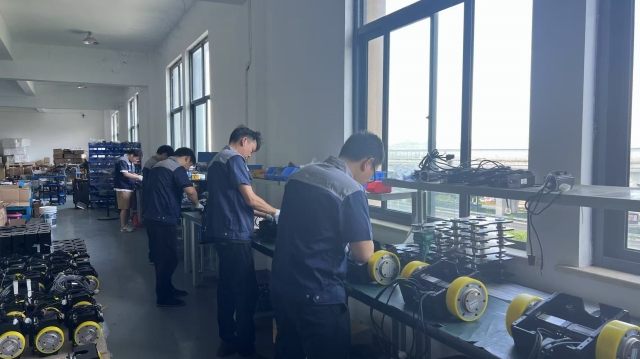
Zhejiang Torqen Technology Co., Ltd. production workshop for AGV drive wheel assemblies
AGV drive wheel assembly assembly line Automatic guided vehicle assembly and testing area
  • 0+

    Years in drive and motion technology

  • 0

    Patents awarded

  • 0+

    Employees and engineers

  • 0/5

    Buyer rating

  • 0%

    Inquiry response rate

Experience note: This guide was prepared by the motion-control engineering and export sales team at Zhejiang Torqen Technology Co., Ltd. It reflects the questions received from global OEMs and integrators and is limited to configurations the company can quote, sample, test and document. Final specifications are confirmed by drawing, sample approval and test report.

FAQ

Frequently asked questions before ordering an automatic guided vehicle drive wheel assembly

These answers are written for global sourcing teams, mechanical engineers and automation integrators who need a clear starting point before requesting a drawing or sample.

What is an automatic guided vehicle drive wheel assembly?

It is a complete traction module for an AGV or AMR. It normally includes an electric motor, gear reducer, wheel hub and tread, encoder, brake, mounting interface and sometimes matching servo or BLDC drive electronics. The assembly transmits motor torque to the floor while providing speed feedback, steering geometry where required, and a controlled mechanical interface to the vehicle chassis.

Which drive wheel configuration is best: differential, steering or horizontal?

Differential drive assemblies suit compact latent, jacking and shelf-lifting AGVs because they turn by wheel-speed difference. Steering drive wheels suit forklift AGVs, tugger vehicles and tricycle chassis that need controlled steering angles. Horizontal drive assemblies suit low-clearance chassis where the motor must sit horizontally. The final choice depends on vehicle architecture, payload, floor conditions, turning space and service access.

What specifications should I send before requesting a quotation?

Send gross vehicle weight, required speed, maximum gradient, battery voltage, chassis clearance, wheel diameter limit, duty cycle, floor condition, encoder type, brake requirement, mounting pattern, controller communication preference and expected annual quantity. If the vehicle will operate in cold storage, washdown or outdoor conditions, include temperature, moisture and cleaning requirements.

Can Zhejiang Torqen Technology Co., Ltd. customize motor power, wheel diameter, encoder or brake?

Yes. Sample-based and design-based customization is available for motor power and voltage, reduction ratio, wheel diameter and tread material, encoder type, brake options, mounting interfaces, cable length and buyer-label packaging. The engineering team can review the chassis drawing and recommend a configuration before sampling.

How is product quality verified before shipment?

The quality management system is certified to ISO 9001:2015, and the facility has been verified onsite by Intertek. Finished-product inspection uses five in-house testing instruments, and prototypes undergo extended-duration testing before production release. Final inspection requirements can be agreed in the purchase order, including labeling, packaging and documentation needs.

What are common payment, delivery and packaging terms?

Common payment methods include T/T, L/C, D/P, D/A, MoneyGram, credit card, PayPal, Western Union, cash and escrow, in USD, EUR, JPY, CAD, AUD, HKD, GBP or CNY. Delivery terms include FOB, CFR, CIF, EXW, CIP, FCA, CPT, DDU and express delivery. Export packaging is confirmed according to product configuration, quantity and shipping method.

What procurement and development trends matter most for the next five years?

Expect more modular drive axes, dual-source supply planning, documented safety and traceability, total cost of ownership comparisons, faster sampling and closer integration between the drive wheel, servo driver and navigation sensors. Drive assemblies will continue moving toward higher integration, lower build height, quieter operation, better energy efficiency and stronger diagnostic feedback for AMR and SLAM-based vehicles.

Which industries use these drive assemblies?

They are used in AGVs and AMRs, forklifts, aerial work platforms, airport equipment, agricultural machines, hydraulic applications, floor scrubbers and sweepers, wind energy, marine equipment and medical devices. Buyers in these industries often need different sealing, tread, brake and mounting configurations, so application details should be included in the RFQ.

Ready to specify an automatic guided vehicle drive wheel assembly?

Send your gross vehicle weight, target speed, gradient, battery voltage, chassis height, wheel diameter, encoder and brake requirements to the engineering team at Zhejiang Torqen Technology Co., Ltd. You will receive a configuration proposal, drawing review path and quotation support.

info@torqenbot.com