Audible Confirmation
When an AGV leaves a pick station, enters a blind corner, begins a lift or docks with a conveyor, a voice prompt reduces uncertainty for operators and nearby staff.

Help operators, pedestrians and maintenance teams understand what an automated guided vehicle is doing with event-driven voice prompts, multilingual safety alerts and clear status messages.
Buyers are not only looking for a speaker. They are evaluating an event-driven audio interface that makes AGV behavior legible, supports workplace safety and fits an existing control architecture.
When an AGV leaves a pick station, enters a blind corner, begins a lift or docks with a conveyor, a voice prompt reduces uncertainty for operators and nearby staff.
Priority announcements for reversing, obstacle detection, emergency stop, low battery and fault states can be clearer than indicator lights in busy warehouses.
Global facilities often operate with mixed-language teams. A voice module with multiple message sets can support local operators without changing the vehicle controller.
Voice messages can identify faults, remind technicians to check a wheel or sensor, and shorten troubleshooting for fleets already in service.
Buyer intent: Most procurement teams ask about voltage, trigger interface, message customization, language options, environmental protection and sample support before they ask about price. A supplier that can answer these questions with drawings and test data is easier to qualify.
Use these profiles to prepare an RFQ. The final configuration should be confirmed against your vehicle voltage, controller protocol, mounting space, noise level and safety logic.
Recommended for small latent, jacking and shelf-lifting AGVs: 24–48 V DC input, low standby current, 8–30 stored messages, compact speaker and digital I/O or RS485 trigger.
For forklift AGVs and larger AMRs, request a louder amplified speaker, directional audio, sealed connectors and an IP65 enclosure when dust or wash-down exposure is expected.
For multinational sites, prepare message sets in two or more languages, assign priority levels to safety alerts, and allow language selection through the vehicle HMI or controller.
For existing AGV fleets, specify a module with CAN or RS485 interface, easy firmware update access, event logging and a mounting bracket that fits the current chassis.
| AGV Type | Recommended Profile | Confirm Before Quotation |
|---|---|---|
| Latent / jacking AGV | Compact 24–48 V DC module, 5–15 W output, 8–30 stored messages | Mounting height, speaker direction, harness length, event list |
| Forklift AGV / AMR | Higher-output module, directional speaker, IP65 enclosure | Ambient noise, safety requirements, voltage drop, cable routing |
| Cleanroom platform | Sealed connectors, low-particle housing, low standby current | Cleanroom class, ESD control, material compatibility |
| Retrofit fleet | RS485 or CAN interface, update access, event logging | Controller protocol, firmware version, service access |
| Cold storage AGV | Wide-temperature speaker, anti-condensation consideration | Temperature range, condensation risk, cable jacket material |
Use this guide to compare supplier answers, reduce integration risk and prepare a complete RFQ for your engineering team.
| Specification | What to Ask | Buyer Guidance |
|---|---|---|
| Input voltage | 12 V, 24 V, 48 V DC or wide-range input? | Match the AGV battery bus and confirm transient protection. |
| Trigger interface | I/O, RS485, CAN, CANopen or relay? | Provide the controller protocol and event timing to the supplier. |
| Message storage | Stored audio files, TTS or both? | Clarify who approves voice content and how updates are delivered. |
| Output power | 5–15 W for compact AGVs, 10–20 W for noisy areas? | Test at the planned mounting position, not only on a bench. |
| Priority logic | Can safety warnings override status messages? | Request a message priority table before sample approval. |
| Diagnostics | Fault output, event log or status feedback? | Choose a module that helps maintenance teams troubleshoot. |
| Specification | What to Ask | Buyer Guidance |
|---|---|---|
| Enclosure rating | IP54, IP65 or higher? | Select according to dust, wash-down and outdoor exposure. |
| Temperature range | Standard indoor or wide-temperature components? | Cold storage and outdoor AGVs need extra validation. |
| Speaker type | Standard speaker or directional horn? | Directional audio can reduce disturbance while remaining audible. |
| Mounting | Bracket, screw pattern and service clearance? | Confirm with a chassis drawing before tooling or production. |
| Cabling | Connector type, harness length and strain relief? | Request a wiring diagram for the installation team. |
| Acoustic testing | Can the supplier test at the target ambient noise level? | Record the test distance, volume setting and background noise. |
Engineer’s tip: prepare your vehicle voltage, controller interface, event list, required languages, ambient noise, IP rating and mounting envelope before requesting a sample. These details determine whether the AGV voice announcement module can be integrated quickly or will require a second design cycle.
Global buyers are moving from simple audio add-ons to documented, configurable communication modules that support multi-site fleets and long service life.
Procurement teams increasingly request standard message libraries that can be localized for each site. Buyers will compare suppliers on language file management, version control and update support.
Safety and operations teams want evidence of message priority, volume control, event mapping and failure behavior. A voice module that can be documented is easier to approve than a generic speaker.
Many buyers manage mixed AGV fleets. They prefer modules with harnesses, brackets and configuration files that can be installed across different vehicle generations without redesigning the dashboard.
Voice prompts are often specified together with warning lights, displays and HMI messages. Procurement will favor suppliers who can provide a compatible combination rather than isolated parts.
Buyers want to change messages without returning hardware to the factory. Support for configuration files, local updates or authorized firmware tools is becoming part of the purchase decision.
Global buyers increasingly request sample records, inspection reports, change-control notes and spare-part planning. Traceability reduces risk when the module becomes part of a multi-year AGV program.
Procurement planning: separate the voice module into mechanical, electrical, audio and documentation requirements. This makes supplier comparison more objective and helps prevent hidden costs during integration, local language approval and after-sales support.
Future modules will be evaluated as communication subsystems, not accessories. Integration, clarity, configurability and serviceability will matter as much as sound output.
Modules will support more precise mapping between controller states and audio output, including message priority, cooldown timers and zone-based volume settings.
Text-to-speech, stored files and message libraries will be managed through simpler configuration files or service tools, helping buyers update language content without hardware redesign.
Speakers, connectors and housings will be selected for dust, vibration, temperature variation and wash-down exposure, especially for forklift, cold-storage and outdoor AGV use.
Directional speakers, volume schedules and noise-aware settings will help balance safety audibility with the comfort of nearby workers, particularly in multi-shift operations.
Different facilities ask different questions. These are the most common application scenarios global buyers evaluate before requesting a sample.
Zhejiang Torqen Technology Co., Ltd. has designed and manufactured automatic guided vehicles, AGV drive wheel assemblies, motors, servo/BLDC controllers, navigation sensors and AGV accessories since 2015. This matters when buying an AGV voice announcement module: a voice module is only effective when its voltage, trigger interface, mounting, harness and event logic are matched to the vehicle’s controller, drive wheel and sensor system.
Our engineers work directly with OEM integrators on sample-based and design-based customization. Typical discussions cover motor power, voltage, reduction ratio, wheel diameter, encoder type, brake options, mounting interfaces, message content, connector choice and buyer-label packaging. For voice announcement projects, the team can review the vehicle voltage, control interface, required languages, ambient noise and installation position so that the module fits the intended AGV platform.
Quality is managed under an ISO 9001:2015 quality management system. Our facility has been verified onsite by Intertek, and we use five in-house testing instruments plus finished-product inspection. Prototypes are run for extended periods before production release. We hold eight awarded patents, operate a factory of 1,000–3,000 m² and employ 51–100 people. Annual output is US$5M–10M. For export buyers, we support FOB, CFR, CIF, EXW, CIP, FCA, CPT, DDU and express delivery, with payment in USD, EUR, JPY, CAD, AUD, HKD, GBP or CNY.
Years in AGV components
Patents awarded
Employees & engineers
Buyer rating
Inquiry response rate
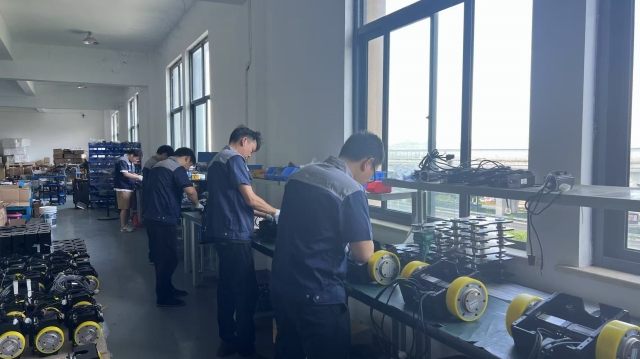
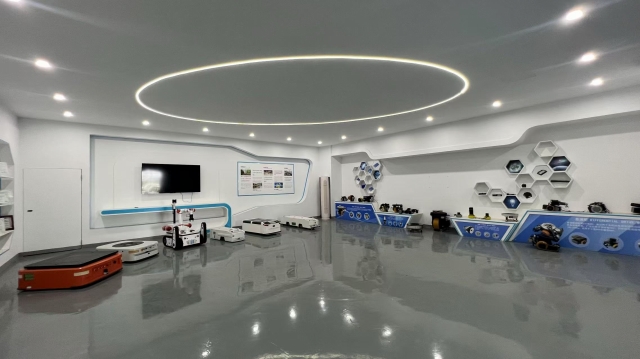
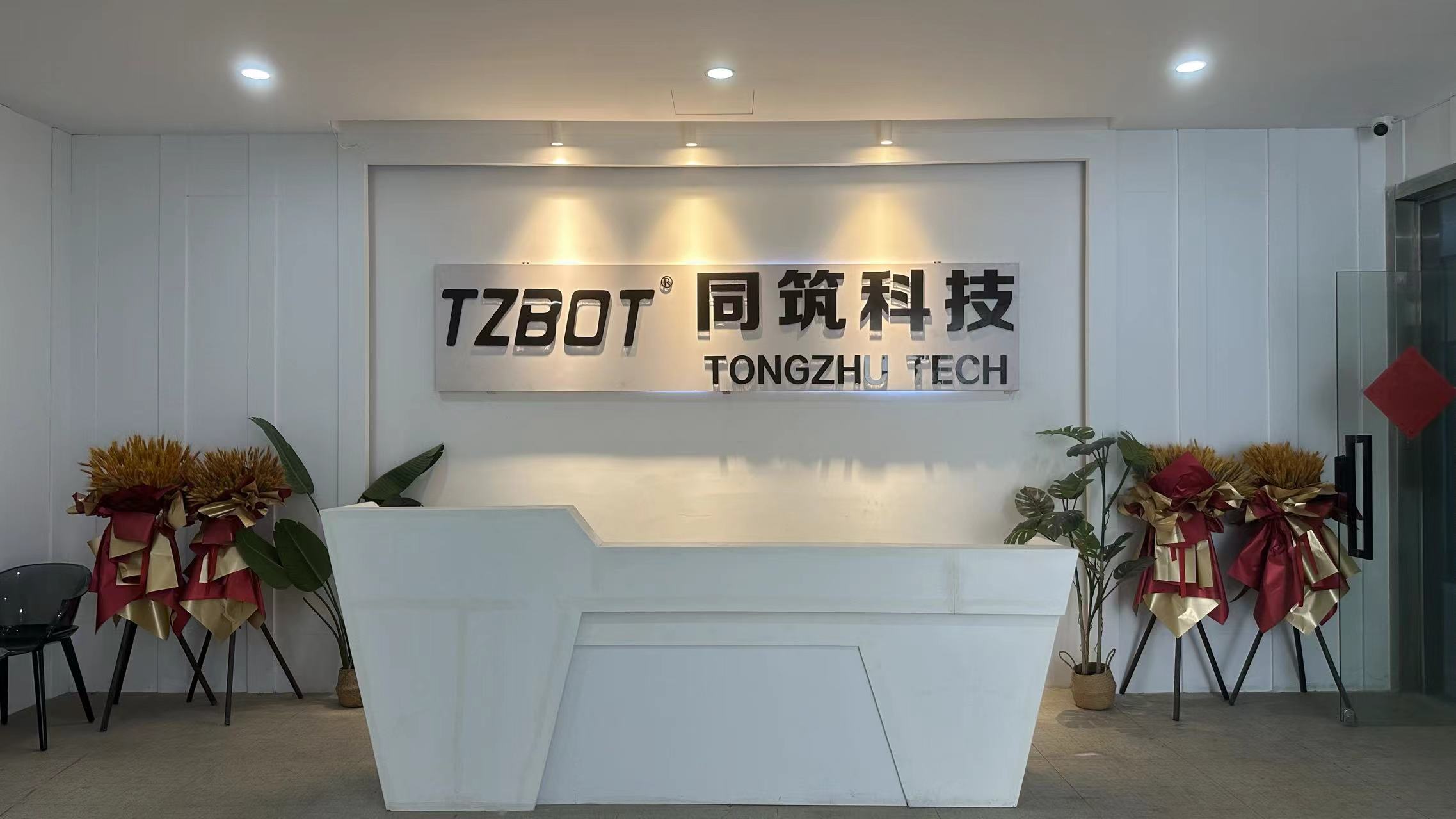
Real production, inspection and cooperation images help buyers evaluate manufacturing capability before requesting a voice announcement module sample.
These answers reflect the questions procurement and engineering teams commonly raise during supplier evaluation and sample approval.
An AGV voice announcement module is an audio output device that plays stored voice messages or synthesized speech when triggered by an AGV controller. It supports safety warnings, direction changes, docking confirmation, low-battery alerts, fault notices and operator instructions. It is not simply a speaker; the module should include suitable input interfaces, message logic, power protection and mounting hardware for mobile equipment.
Yes, provided the interface is specified correctly. Common trigger options include digital I/O, RS485, CAN, CANopen and relay contacts. Buyers should confirm the controller protocol, available voltage, connector type, cable length, message priority and event timing before ordering. A wiring diagram and interface definition should be reviewed by both engineering teams.
Typical AGV and AMR battery systems use 24 V DC or 48 V DC, with 12 V DC also used on smaller platforms. The module should be selected to match the vehicle power bus and protected against voltage spikes, reverse polarity and load transients. If the module shares a circuit with drive controllers or sensors, confirm the transient and grounding arrangement.
Yes. Voice content can be recorded, generated by text-to-speech or supplied as audio files. For global facilities, it is common to prepare message sets in multiple languages, then select the language by vehicle setting, controller command or site configuration. Buyers should define who approves pronunciation, message priority and safe wording before sample approval.
For indoor warehouse AGVs, a protected enclosure is often sufficient. For forklift AGVs, cold storage, outdoor logistics, wash-down areas or dusty facilities, request a higher IP rating, wide-temperature components, sealed connectors and a speaker designed for the actual noise and climate conditions. The mounting location should also be checked for vibration and water exposure.
Use event-based triggers rather than continuous audio, set priority levels for safety messages, match speaker output to ambient noise, and test directional speakers at the planned mounting position. A volume schedule can keep night-shift announcements lower while preserving safety warnings. The controller logic should also avoid duplicate triggers during the same maneuver.
Request a wiring diagram, interface definition, message list, voltage and current specifications, environmental rating, test report, packaging information and warranty terms. For OEM projects, also confirm change-control procedures, sample approval and production inspection records. Documentation is especially important when the voice module will be deployed across multiple sites or vehicle generations.
Yes. Zhejiang Torqen Technology Co., Ltd. supports sample-based customization, design-based customization, OEM production, design services and buyer-label packaging for AGV components and accessories. Voice content, connector type, harness length, mounting bracket and message logic can be discussed with the engineering team. Please include your vehicle voltage, controller interface, required languages and estimated annual quantity in the inquiry.
Zhejiang Torqen Technology Co., Ltd. supplies AGV drive wheels, motor controllers, motors, navigation sensors and accessories. A voice module can be discussed together with these components so that the electrical and mechanical interfaces are reviewed in one project. This is useful for buyers building a new AGV platform or updating an existing fleet.
Include vehicle voltage, controller interface, number of messages, required languages, ambient noise, IP rating, mounting space, connector preference, sample quantity, annual volume and target schedule. If possible, add a simple event map showing when each message should play. These details allow the supplier to recommend a practical configuration and identify any items that require engineering review.
Send your AGV voltage, controller interface, required languages, ambient noise level, IP rating and mounting space. Our engineers will recommend a configuration and confirm sample availability.
info@torqenbot.com