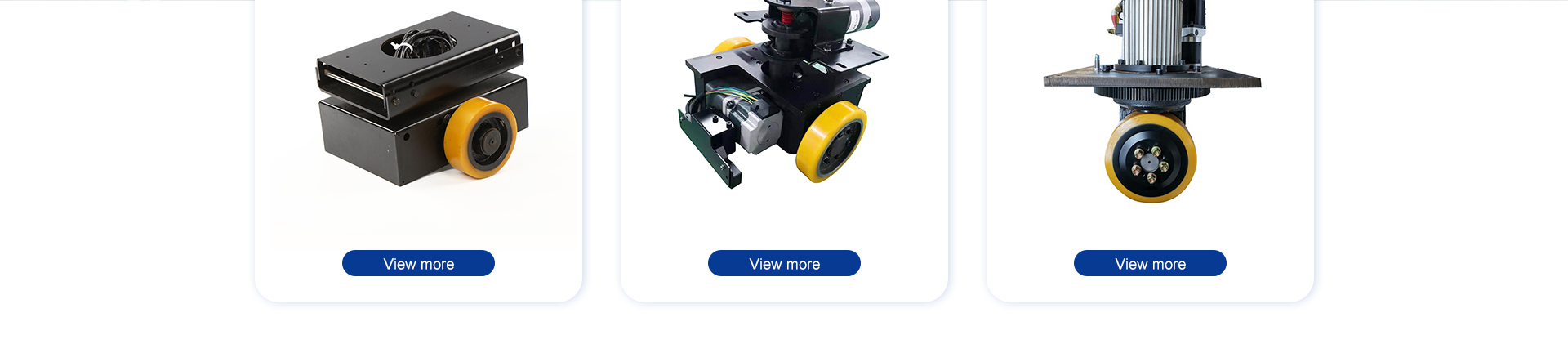
What Is a Differential AGV Drive Wheel Unit?
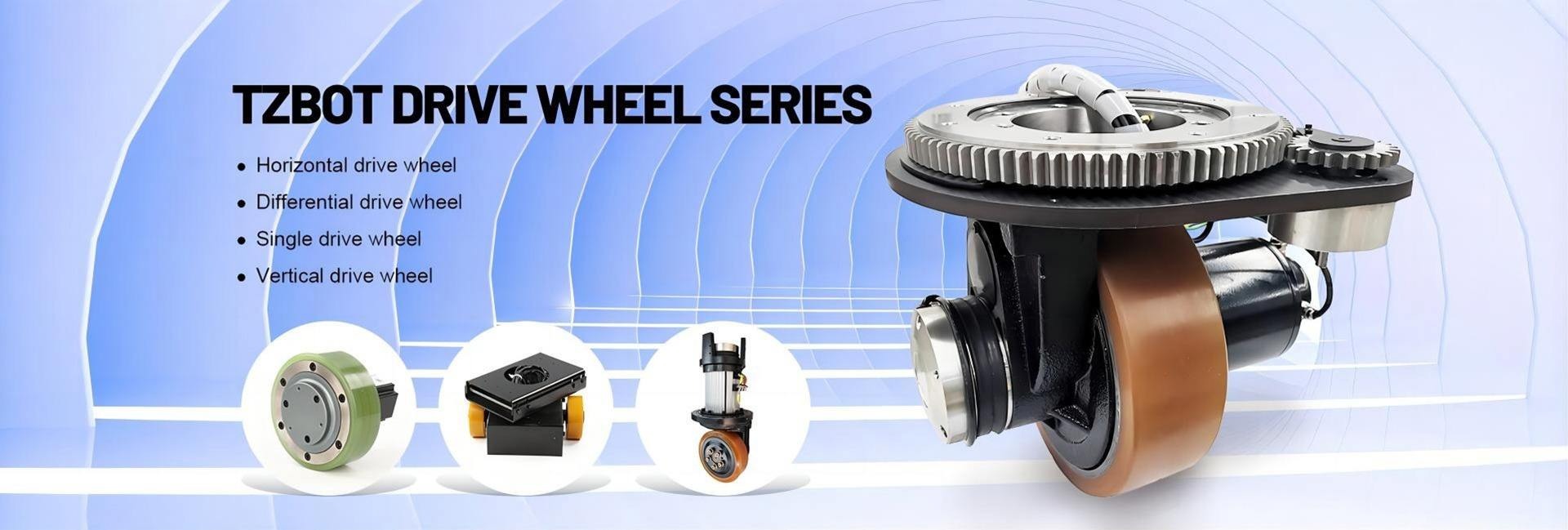
A differential AGV drive wheel unit is an integrated motion module used in automatic guided vehicles (AGVs) and autonomous mobile robots (AMRs). It normally combines two independently driven wheels, or two matched drive assemblies, with servo or brushless DC motors, planetary or helical gear reducers, encoders, mounting brackets and optional electromagnetic brakes. The vehicle turns by changing the relative speed of the left and right drive wheels. When both wheels rotate at the same speed, the AGV moves straight; when one wheel rotates faster than the other, the vehicle follows a curved path; when the wheels rotate in opposite directions, the chassis can rotate around its own center.
For purchasers, this description explains why the drive unit should be selected as part of the whole chassis, not as a standalone commodity. A unit that looks similar in a catalogue can behave very differently when it is loaded to its rated payload, asked to hold position on a ramp, or expected to repeat a docking position thousands of times per shift. The critical variables are not limited to motor power. Wheel diameter changes ground speed and torque; gear ratio changes acceleration and back-driving behaviour; encoder resolution influences positioning; tread material affects traction and floor marking; brake torque determines holding safety; and the mounting interface determines whether the unit will fit the vehicle at all.
Global buyers increasingly ask suppliers to provide information gain, not generic claims. A useful technical response should explain how the unit was matched to the application, which parameters were tested, how the controller is tuned, and what documentation is supplied for integration. Zhejiang Torqen Technology Co., Ltd. approaches differential drive units in this way: the engineering team starts with vehicle mass, target speed, wheel diameter, gradient, duty cycle and battery voltage, then works back to motor power, reduction ratio, encoder type, brake option and controller settings.
Selection Variables That Change the Final Differential Drive Configuration
| Input to define | Why it matters | Typical buyer question |
|---|---|---|
| Gross vehicle weight and wheel load | Sets the required continuous torque, wheel pressure and bearing life. | How much payload can one drive unit carry? |
| Target speed and acceleration | Balances motor power, gear ratio and current draw. | Can the unit reach the required travel speed without overheating? |
| Gradient and ramp hold | Determines brake holding torque and controller safety logic. | Will the AGV hold position on a slope without rolling? |
| Wheel diameter and tread | Changes ground speed, torque and traction on the floor. | Which tread suits epoxy, concrete or wash-down floors? |
| Battery voltage and controller | Defines current, communication and parameter matching. | Is the drive compatible with a 24 V or 48 V system? |
| Mounting height and interface | Ensures mechanical fit and service access inside the chassis. | Can the unit fit a low-clearance AGV frame? |