Blog
Top 10 Types of Automatic Guided Vehicles for Businesses
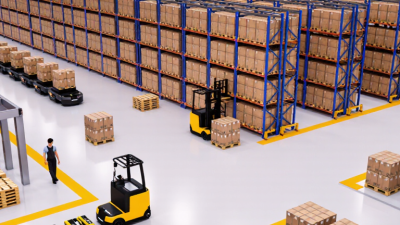
A busy distribution center is easy to picture: pallet loads cross polished floors, forklifts turn between racks, and workers watch for moving equipment. An Automatic Guided Vehicle (AGV) can take over repeatable transport routes, but the right model depends on the load, layout, and workflow. A small tugger may suit wheeled carts. A heavy-duty unit may move loaded pallets. Choosing by appearance alone is a weak start.
Robotics pioneer Joseph F. Engelberger is widely associated with the line, “I can’t define a robot, but I know one when I see one.” The remark is often quoted broadly, rather than as advice about AGVs specifically. Still, it offers a useful reminder: machines must be judged by what they actually do. In this guide, we compare ten common AGV types, from unit-load carriers and forklifts to towing vehicles and specialized platforms. We consider practical details such as aisle width, payload, charging needs, floor condition, and how people share the route. Small details matter.
A machine that works beautifully in a clear test area may struggle beside a staging zone crowded with pallets. That gap deserves attention. No single vehicle fits every business, and automation does not fix a poorly planned process by itself. The sections ahead explain where each type can help, what trade-offs to examine, and which questions to ask before deployment. Use them as a starting point, not a promise of effortless savings. Real results require careful measurement, operator feedback, and a willingness to revise the plan.
Read more »
 By:Ethan
- November 27, 2026
How to Choose an Automated Guided Vehicle in 2026?
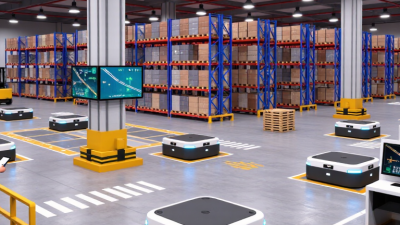
Choosing an Automated Guided Vehicle in 2026 is less about picking the newest model and more about matching a machine to the work on your floor. A unit that moves pallets smoothly across a wide, clean aisle may struggle around tight corners, uneven joints, or changing traffic. Small details matter. Payload, load dimensions, travel distance, charging time, and stopping space all shape day-to-day performance. A glossy specification sheet cannot reveal every obstacle.
This guide outlines the questions worth asking before comparing suppliers. Check how the vehicle navigates, responds to people and equipment, and connects with your warehouse management or production systems. Ask for measurable details: route capacity, recovery procedures, battery performance, service response, and expected maintenance. Then test a realistic route with representative loads, not an idealized demo. Watch what happens at a busy crossing. Notice whether operators can understand alerts and recover from routine interruptions. Safety and reliability should be assessed against your site’s requirements, with qualified professionals involved where needed.
Cost deserves a wider lens. Purchase price is only one line; integration, training, downtime, batteries, and support can change the total. Still, forecasts can mislead. Actual traffic rarely behaves exactly like a planning model. Compare vendors using the same tasks and assumptions, document what remains uncertain, and speak with customers who operate similar systems. The right choice may be less impressive on paper, yet more dependable on your floor. That is a useful distinction.
Read more »
 By:Charlotte
- November 27, 2026
What Are the Top Types of AGV Robots?
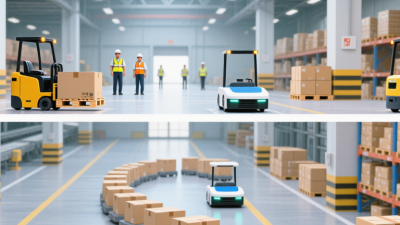
Factories and warehouses are moving more materials with less manual handling. An AGV Robot can carry pallets, tow carts, or move loads between fixed production points. Its route may follow floor markers, reflectors, or mapped guidance systems. The right design depends on payload, aisle width, floor conditions, and how often routes change. Small details matter: a pallet truck must approach a load cleanly, while a tugger needs room to turn with its train.
Industry data shows why automation deserves attention, but figures need careful interpretation. The International Federation of Robotics reported 541,302 industrial robot installations worldwide in 2023, in its World Robotics 2024 report. That figure covers industrial robots broadly, not AGVs alone. MHI and Deloitte’s 2024 Annual Industry Report also found that 55% of surveyed supply-chain leaders planned to increase technology and innovation investment. These reports establish a wider automation trend; they do not prove that every facility needs mobile robots. That distinction matters.
This guide compares common AGV types, including tow tractors, unit-load carriers, pallet trucks, and automated forklifts. It also clarifies where AGVs differ from autonomous mobile robots, whose navigation can adapt more readily to changing routes. The categories are not always tidy. Product labels vary between manufacturers, and a robot’s real capabilities may matter more than its name. Use the comparisons to assess load handling, guidance, and site fit before shortlisting a system. A careful choice starts with the material flow, not the brochure.
Read more »
By:Charlotte
- November 27, 2026
