info@torqenbot.com Hangzhou, Zhejiang, China ISO 9001:2015 · Onsite-Verified Manufacturer
0%

A busy distribution center is easy to picture: pallet loads cross polished floors, forklifts turn between racks, and workers watch for moving equipment. An Automatic Guided Vehicle (AGV) can take over repeatable transport routes, but the right model depends on the load, layout, and workflow. A small tugger may suit wheeled carts. A heavy-duty unit may move loaded pallets. Choosing by appearance alone is a weak start.

Robotics pioneer Joseph F. Engelberger is widely associated with the line, “I can’t define a robot, but I know one when I see one.” The remark is often quoted broadly, rather than as advice about AGVs specifically. Still, it offers a useful reminder: machines must be judged by what they actually do. In this guide, we compare ten common AGV types, from unit-load carriers and forklifts to towing vehicles and specialized platforms. We consider practical details such as aisle width, payload, charging needs, floor condition, and how people share the route. Small details matter.

A machine that works beautifully in a clear test area may struggle beside a staging zone crowded with pallets. That gap deserves attention. No single vehicle fits every business, and automation does not fix a poorly planned process by itself. The sections ahead explain where each type can help, what trade-offs to examine, and which questions to ask before deployment. Use them as a starting point, not a promise of effortless savings. Real results require careful measurement, operator feedback, and a willingness to revise the plan.
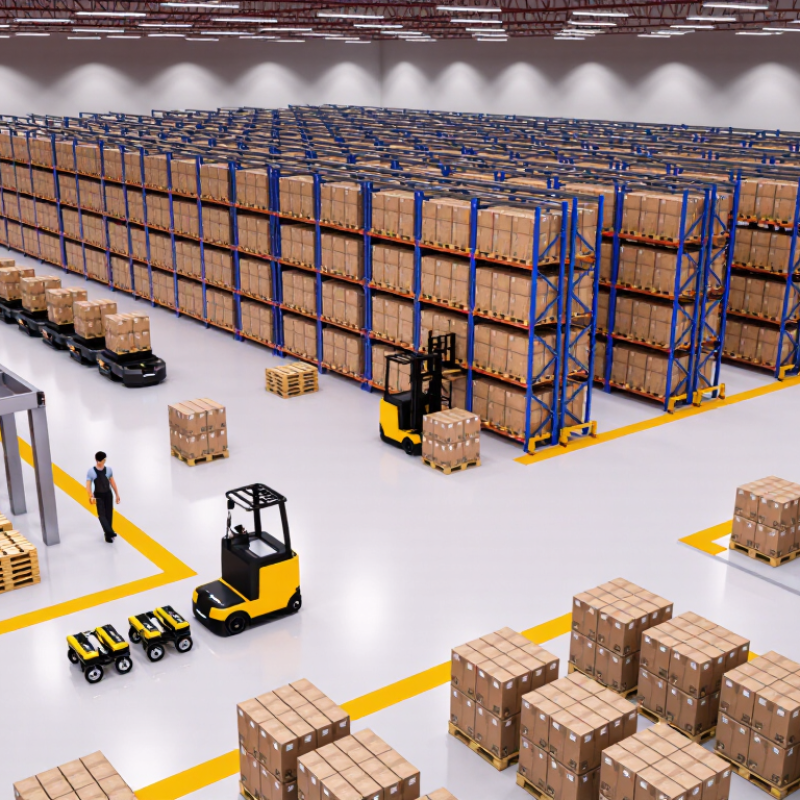
Top 10 Types of Automatic Guided Vehicles for Businesses

What Automatic Guided Vehicles Are and How They Work

An automatic guided vehicle, or AGV, is a powered vehicle that moves materials through a workplace with limited direct human control. It may carry a pallet, tow a cart, or transport bins between production stations. Unlike a manually driven forklift, an AGV follows a planned route using guidance such as floor markers, magnetic tape, reflectors, or mapped navigation. The right method depends on the building and the task. Some routes are simple. Others need careful adjustment.

An AGV combines a drive system, onboard controls, navigation equipment, and safety sensors. A fleet controller can assign jobs and coordinate vehicles, while the AGV checks its position and follows its route. Sensors may detect people, carts, or obstacles and trigger a stop or slowdown. It can then resume when the path is clear, depending on its setup.

Quiet operation. Clear signals matter.

For example, a vehicle carrying a loaded pallet may pause at a shared aisle until a worker moves away. In real facilities, floor changes, blocked routes, and inconsistent traffic can disrupt smooth movement. Planning and testing help, but they do not remove every delay.

A layout that looks efficient on a drawing may feel cramped during a busy shift.

How AGVs Navigate and Transport Materials

Automatic guided vehicles (AGVs) navigate by following routes configured for a facility. Some track magnetic tape or floor markers; others use laser scanners, reflectors, or mapped surroundings. Wheel encoders estimate distance, while onboard sensors detect obstacles and help the vehicle stop safely. Fleet software can assign routes and manage crossings, but narrow aisles and changing layouts still need careful planning.

Routes are not magic. A misplaced pallet or blocked marker can slow a vehicle or force a stop. In practice, teams should test routes during busy shifts, not only in an empty warehouse.

The International Federation of Robotics reported that sales of professional service robots for transportation and logistics reached nearly 113,000 units in 2023, up 35% year over year. This category includes more than AGVs alone, so the figure signals broader automation growth rather than AGV sales specifically.

After reaching a pickup point, an AGV may tow carts, carry a load on its platform, or transfer materials using a lift or conveyor. A tugger can pull several carts between production cells; a platform vehicle may deliver a single pallet to a storage lane. Operators should match payload, turning space, floor conditions, and delivery timing to the task. Small errors matter. A vehicle that navigates well can still create congestion if its handoff point blocks people or other equipment.

Ten Types of Automatic Guided Vehicles Used by Businesses

Ten types of automatic guided vehicles serve different loads and routes. Tow AGVs pull trains of carts through long warehouse aisles. Unit-load models carry pallets or containers on powered decks. Pallet-truck AGVs lift pallets just above the floor, while forklift AGVs stack them on racks. Counterbalance models handle heavier pallets without front support legs. Reach-truck AGVs extend forks into deeper storage positions. Very-narrow-aisle units work in tight rack corridors. Light-load carriers move bins or small components. Assembly-line AGVs deliver parts beside workstations. Heavy-duty models transport large machinery or steel coils. Small loads, short routes.

Selection depends on floor quality, turning space, load stability, and handoff points. A pallet-truck unit may suit a smooth dock route, but not a steep ramp. Tow vehicles can move several carts, though tight corners complicate the train. Assembly-line vehicles need repeatable stopping positions. Heavy-duty systems require careful route and floor checks. Not every route stays tidy. In operating sites, temporary staging and parked equipment can narrow passages.

The International Federation of Robotics’ World Robotics 2024 report recorded about 113,000 professional service robots for transporting goods sold in 2023, down 5% from 2022. Its category includes mobile transport robots beyond traditional AGVs, so it is useful as market context, not a direct count of AGVs alone. Buyers should test representative loads and actual routes before settling on a vehicle type.

Top 10 Types of Automatic Guided Vehicles Used by Businesses

The chart groups ten common AGV designs by their primary material-handling approach.

The counts reflect the ten types listed here, not market share or industry adoption: pallet truck, forklift, reach truck, very-narrow-aisle, unit-load, heavy-load, conveyor-top, assembly-line, tugger, and under-riding AGVs. Actual capabilities vary by model and configuration.

Business Applications and Benefits of Different AGV Types

AGVs support different workflows, so the useful choice depends on load, route, and handoff point. Tow tractors pull several carts between production areas and warehouses, reducing repeated walking and forklift trips. They suit predictable routes with frequent deliveries. Unit-load carriers move bins, trays, or components directly between workstations. This can keep assembly lines supplied, though poorly timed handoffs may still create queues.

Pallet-moving AGVs handle loads at floor level, while automated forklift vehicles can lift pallets onto racks or loading points. The latter can reduce manual handling in busy storage zones, but need clear aisle rules and careful traffic planning. Small cart-style vehicles work well for light, frequent deliveries, such as replenishing tools at several stations. Fit matters. A heavier vehicle is not automatically better.

Some facilities use assembly AGVs to carry a product through staged work, allowing teams to work at a consistent pace. Heavy-load models can transport large components across plants, where manual movement would require substantial coordination. Benefits include more predictable material flow, fewer repetitive trips, and improved visibility into delivery timing. Not always. Narrow turns, uneven floors, and changing production schedules can undermine the gains. Before deployment, businesses should map routes, measure loads, and test handoffs during a normal shift; a clean floor plan rarely captures every real-world delay.

How to Choose the Right AGV for an Operation

Choosing an AGV starts with the task, not the vehicle catalogue. Map each load’s weight, dimensions, pickup height, and travel frequency. A tugger suits repeated cart trains; a unit-load vehicle carries pallets along predictable routes. Forklift-style AGVs need clear turning space and compatible rack heights. Measure aisle widths at the narrowest points, including room for people and manual trucks.

Check the operating environment before comparing speeds. Uneven floors, ramps, dust, and tight doorways can limit performance. Record peak traffic at crossings and the number of deliveries per hour. MHI’s 2024 Annual Industry Report found that 55% of surveyed organizations planned to increase supply-chain technology investment. That signals interest, not guaranteed payback. Build a business case using actual labor, delay, and maintenance costs.

Then test the vehicle against the site’s real workflow. Confirm how it communicates with doors, lifts, warehouse software, and charging points. Review stopping behavior, pedestrian detection, emergency procedures, and maintenance access with trained staff. Ask for a pilot during a busy shift, not just a quiet demonstration. Track completed moves, blocked routes, manual interventions, and battery downtime. Small obstacles matter. A route that looks simple on a drawing may fail beside a crowded staging area.

Top 10 Types of Automatic Guided Vehicles for Businesses — How to Choose the Right AGV for an Operation

AGV Type Typical Payload Range Best-Fit Operations How It Handles Loads Key Advantages Selection Considerations
1. Towing (Tugger) AGV Approximately 500–2,000 kg per train, depending on the vehicle and carts Moving multiple carts or trailers between production areas, warehouses, and staging zones Connects to and pulls one or more carts along a planned route Moves several loads per trip and supports repeatable milk-run routes Check total train weight, cart coupling, turning space, route intersections, and whether carts need to be loaded or unloaded automatically.
2. Unit-Load Carrier AGV Approximately 500–2,000 kg Transporting pallets, bins, totes, or fixtures between workstations and conveyor lines Carries a load on a powered platform, often with a conveyor or lift-top transfer Can transfer loads directly to compatible conveyors or production equipment Confirm load dimensions, transfer height, interface design, and whether the load must be centered or positioned precisely.
3. Pallet-Truck AGV Approximately 500–2,000 kg Moving palletized goods over short or medium distances in warehouses and factories Uses low forks to pick up and transport pallets near floor level Works with common pallet-handling processes and can serve floor-level pickup points Check pallet entry clearance, pallet condition, floor quality, pickup accuracy, and whether loads must be placed on racks.
4. Forklift AGV Approximately 1,000–3,000 kg Automated pallet transport, stacking, and storage or retrieval in warehouse aisles Uses forks to lift and carry pallets; some models can place loads at elevated positions Can automate material handling that would otherwise require a driver-operated forklift Evaluate lift height, aisle width, rack compatibility, load stability, floor flatness, and safety separation from pedestrians.
5. Counterbalanced AGV Approximately 1,000–5,000 kg Handling loads where front outriggers cannot fit beneath the pallet or around the pickup location Uses a rear counterweight to balance a front-mounted load on forks Can access loads in locations with limited ground clearance for support legs Account for the vehicle’s larger turning radius, overall footprint, load center, operating surface, and required lifting height.
6. Reach-Truck AGV Approximately 1,000–2,000 kg High-density storage and pallet handling in narrow warehouse aisles Extends a reach mechanism to retrieve or place loads at elevated rack positions Supports vertical storage while making efficient use of warehouse space Measure aisle width and rack geometry; verify lift height, load capacity at height, and floor tolerances.
7. Very-Narrow-Aisle (VNA) AGV Approximately 1,000–2,000 kg High-bay warehouses with carefully planned, very narrow storage aisles Guides a load-handling mast through narrow aisles to store or retrieve pallets Can increase storage density where building layout and rack design are suitable Requires accurate aisle and rack alignment, suitable floor conditions, and a layout designed for the vehicle’s guidance and turning needs.
8. Under-Ride (Under-Rider) AGV Approximately 500–1,500 kg, including the carried cart or platform Moving dedicated carts, racks, or mobile platforms between repeatable pickup and delivery points Travels beneath a compatible cart and lifts or couples to it for transport Offers a compact way to automate cart movement without a fixed conveyor Check under-clearance, cart interface, load stability, docking accuracy, and whether carts can safely support the load.
9. Assembly-Line AGV Approximately 500–2,000 kg Moving components, work-in-process, or fixtures between manufacturing stations Carries a fixture or work platform and follows a programmed production route Can support repeatable material delivery and production sequencing Assess cycle time, station interfaces, route congestion, positioning accuracy, and how the system will respond to production changes.
10. Heavy-Duty AGV Approximately 5,000 kg to more than 50,000 kg, depending on design Transporting large industrial components, steel products, molds, or heavy machinery Uses a reinforced platform or specialized load interface to carry exceptionally heavy loads Automates movement of loads that exceed the capacity of standard warehouse vehicles Requires detailed engineering review of load distribution, floor capacity, route geometry, braking, docking, and site safety controls.

Note: Payload figures are indicative planning ranges, not universal specifications. Actual capacity depends on vehicle design, load center, lifting height, route conditions, and the manufacturer’s rating. Confirm requirements through a site assessment and equipment specification review.

FAQS

What is an automatic guided vehicle (AGV)?

An AGV is a powered vehicle that moves materials with limited direct human control. It may carry a pallet, tow carts, or deliver bins.

How does an AGV navigate around a workplace?

It follows configured routes using floor markers, magnetic tape, laser scanners, reflectors, or mapped surroundings. Wheel encoders estimate distance, while sensors detect obstacles.

What happens when an AGV encounters a person or obstacle?

Depending on its setup, it can slow down or stop until the path clears. A loaded vehicle may pause in a shared aisle.

What kinds of loads can AGVs move?

Some carry pallets on a platform; others tow several carts or lift pallets. Small-load models move bins and components between workstations.

How should a business choose an AGV type?

Match the vehicle to load weight, floor quality, turning space, and handoff points. Test representative loads on real routes.

Can AGVs work in narrow aisles?

Some models are designed for tight rack corridors. Still, parked equipment or temporary staging can make a planned route feel cramped.

What can disrupt an AGV route?

Blocked markers, misplaced pallets, floor changes, and busy traffic can cause delays or stops. Routes are not magic.

Why should routes be tested during busy shifts?

An empty warehouse may hide congestion at crossings and delivery points. A clean map can still mislead. Watch where people actually walk.

Conclusion

Automatic Guided Vehicles (AGVs) are mobile machines designed to move materials through workplaces with minimal direct human control. An Automatic Guided Vehicle follows a planned route using navigation methods such as sensors, cameras, or mapped paths, while onboard systems help it detect obstacles and transport loads safely. Businesses can choose from several types, including towing vehicles, unit-load carriers, pallet movers, forklifts, and compact carts, each suited to different materials and working environments.

AGVs can support tasks in manufacturing, warehousing, and distribution by reducing repetitive manual transport, improving workflow consistency, and making better use of staff time. The right choice depends on factors such as load size, travel distance, floor layout, traffic, required speed, and how the vehicle will connect with existing operations. By matching the AGV’s design and navigation capabilities to the job, an organization can build a more efficient and adaptable material-handling process.

Ethan

Ethan

Ethan is a professional marketing specialist who combines a deep understanding of the company’s products with a clear, practical approach to communicating their value. He regularly contributes expert articles to the company website, sharing useful insights, explaining product features, and helping......