Exact Station Identity
Every tag can carry a unique ID, so the AGV knows which charger, conveyor, lift, inspection point or parking position it has reached.
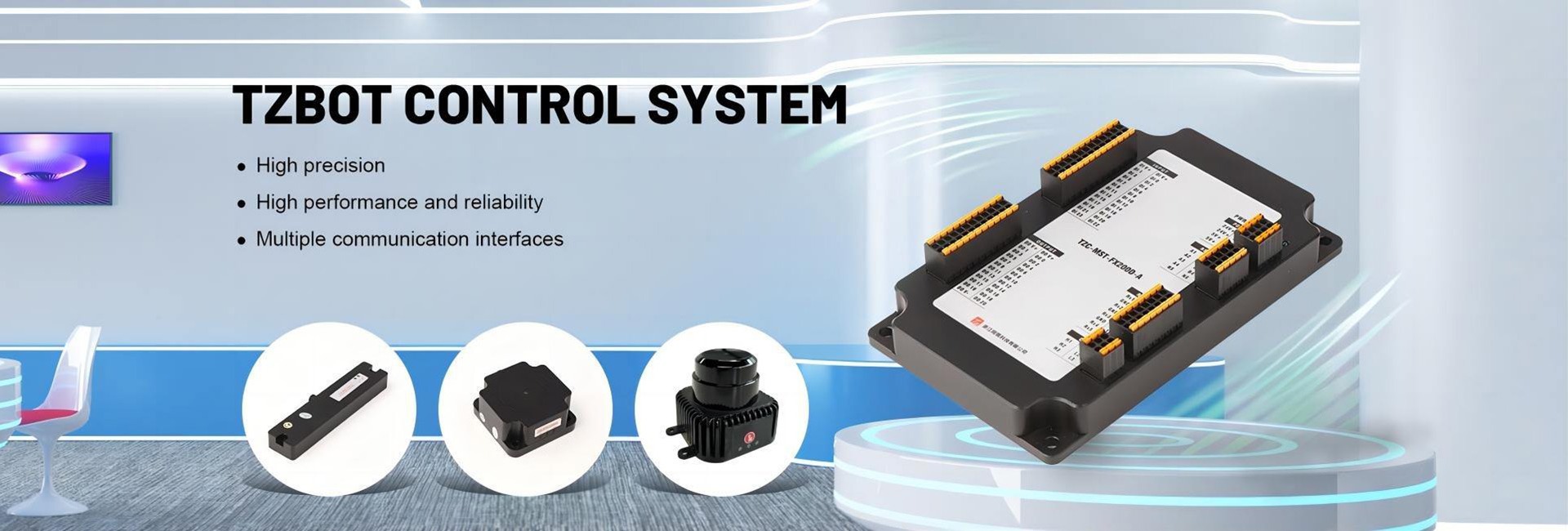
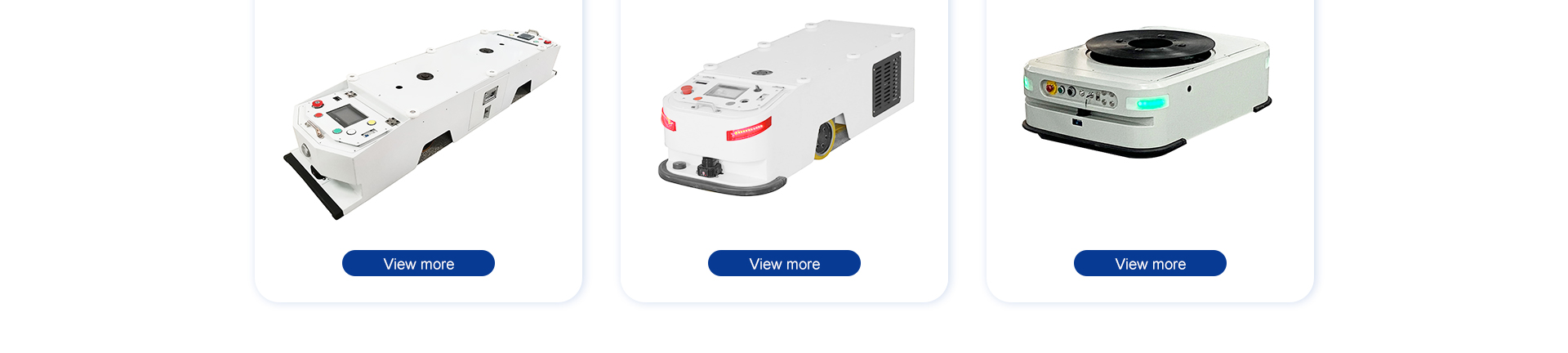
Select, integrate and source RFID station readers for reliable AGV route decisions.
An RFID position sensor gives an automated guided vehicle a reliable digital identity at the exact places where a route must make a decision.
An RFID position sensor for AGV navigation is a reader module and tag system installed on an automated guided vehicle. Passive RFID tags are embedded in the floor, mounted on racks, installed beside chargers, or placed at workstations and conveyor handshakes. When the vehicle passes over or near a tag, the reader reports a unique tag ID to the vehicle controller. The controller compares that ID with its route map and triggers a stop, turn, lift, speed change, charging request, door handshake or process confirmation.
This is not a continuous lane-following sensor. Its strongest value is deterministic decision points. Magnetic guide sensors can keep the vehicle on a fixed path, QR codes can support grid positioning, and lidar or SLAM can provide flexible navigation. RFID adds an exact station identity where optical or magnetic signals alone are not enough. In warehouses, RFID is frequently used at pickup and drop-off points, elevator lobbies, charger parking positions, traffic junctions and quality-control stations.
The correct selection is not based only on a datasheet read distance. Vehicle speed, tag size, antenna orientation, floor material, mounting height, tag spacing, controller protocol, response latency and environmental protection all affect the real read window. Our engineering recommendation is to validate the complete tag-reader-controller chain with the actual vehicle and floor before approving a production order.
Application engineering note: RFID is an information layer. It becomes more valuable when the controller can use the tag ID to select a route, confirm a load transfer, release a safety interlock or log that an AGV reached a service point.

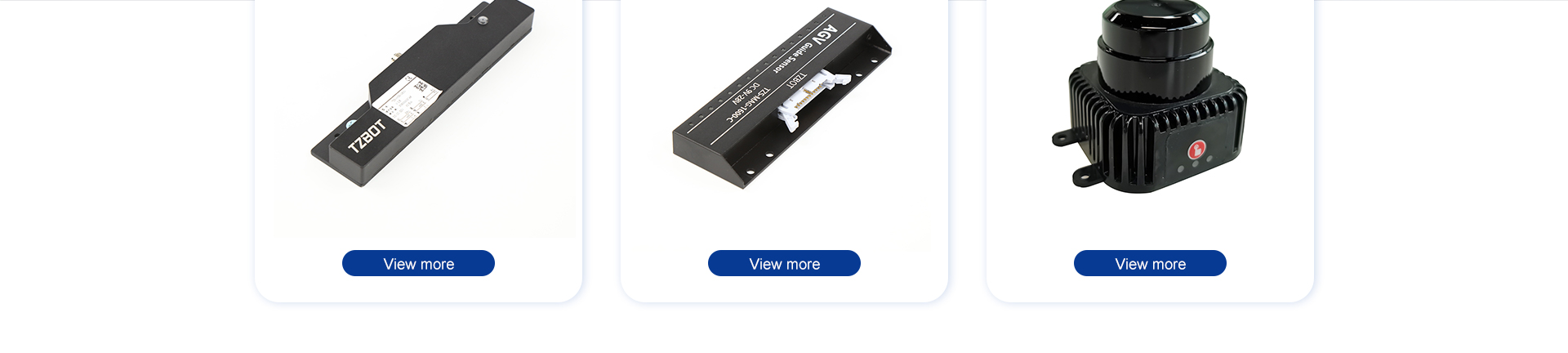
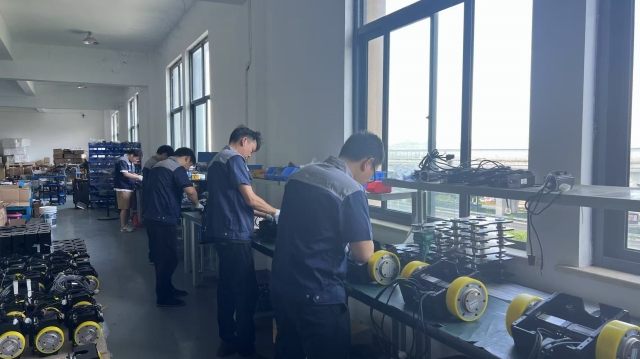
Every tag can carry a unique ID, so the AGV knows which charger, conveyor, lift, inspection point or parking position it has reached.
Use RFID to confirm junctions, speed zones, one-way paths and handshakes where the AGV must change behavior, not just follow a line.
Digital IO, RS232, RS485 or CAN can be matched to the vehicle controller, with wiring guidance and sample tags for testing.
Global buyers usually need a validated package, not an isolated reader. Choose a starting configuration and we will match the interface, tag construction and mounting to your vehicle.
Recommended for depot stops, pickup and drop-off stations, charger handshakes, conveyor interfaces and elevator lobbies where each stop needs a unique identity.
For metal floors, washdown zones, fork traffic and high-cycle routes, the tag package should be selected together with embedding depth and replacement strategy.
Combine RFID station identity with magnetic guide, QR code or lidar sensors. This reduces supplier coordination and avoids interface mismatches.
Use these two practical tables to prepare an RFQ that reduces sampling cycles and prevents expensive read-window problems after installation.
| Parameter | Why It Matters | What to Provide |
|---|---|---|
| Tag type | Defines read distance, metal immunity and installation depth | Floor material, tag location and replacement method |
| Read window | Must be long enough at real travel speed | Maximum speed, tag spacing and stopping tolerance |
| Interface | Determines wiring and controller software effort | IO count, RS232, RS485 or CAN requirement |
| Response time | Late tag data can create a missed action | Vehicle controller scan cycle and command timing |
| Environment | Dust, water, metal and fork traffic affect lifetime | IP rating, cleaning method and mechanical protection |
| Tag map | Prevents duplicate IDs and commissioning errors | Station list, junctions, chargers and future expansion |
| Method | Strength | Limitation | Best Fit |
|---|---|---|---|
| RFID position sensor | Unique station and junction ID | Only reads at tag locations | Decision points and process handshakes |
| Magnetic guide | Simple continuous lane following | Needs floor tape and stable routes | Fixed AGV paths |
| QR code | Grid positioning and low-cost marks | Requires clean, visible floor codes | Warehouse grid navigation |
| Lidar / SLAM | Flexible routes and obstacle mapping | Higher cost and software complexity | Dynamic mixed-fleet environments |
Buyer tip: include floor material, travel speed, tag spacing, controller interface, expected tag quantity, IP rating and installation method in your inquiry. These details allow Zhejiang Torqen Technology Co., Ltd. to recommend a workable RFID position sensor for AGV navigation without guessing.
Across warehouse automation and production logistics, the buying conversation has moved from single-component price comparison to validated subsystem sourcing.
Buyers increasingly purchase RFID with magnetic, lidar and controller integration so the vehicle reaches stable navigation faster.
Onsite factory verification, ISO certification, test records and traceability are now standard checks before a global buyer places a repeat order.
Project teams ask for sample tags, interface data and engineering feedback quickly so they can test before the next warehouse installation window.
Spare tags, mounting guidance, replacement plans and consistent production documentation are being requested together with the first order.
AGV navigation is becoming more data-driven. RFID is moving from simple presence detection toward richer route identity and process integration.
RFID will increasingly work alongside magnetic guide, lidar, IMU and SLAM. The objective is not to replace every sensor but to provide reliable identity where other sensing methods are weak.
Readers and controllers will filter, pre-process and validate tag events closer to the sensor, reducing latency and improving stop accuracy at high vehicle speed.
Tag IDs can be linked to station numbers, speed limits, load types, service records and maintenance status. This makes RFID useful for commissioning, auditing and route changes.
Anti-metal tags, sealed readers, protected cabling and easy-replace floor tags will remain important in plants with forklifts, washdown and heavy traffic.
OEMs want interchangeable sensor interfaces and documentation across regions. Clear connector definitions and stable firmware behavior reduce local integration risk.
AGV builders are reducing the number of navigation vendors. A supplier who also understands drive wheels, motor controllers and vehicle commissioning can shorten problem solving.
Zhejiang Torqen Technology Co., Ltd. has manufactured AGVs, AGV drive wheel assemblies, motors, servo/BLDC controllers, navigation sensors and AGV accessories since 2015. For RFID position sensor projects, this matters because the sensor must work with the real vehicle controller, drive unit, route map and commissioning process — not only with a laboratory test bench.
Our ISO 9001:2015 quality management system, Intertek onsite-verified facility, 8 awarded patents and 51–100 person team support OEM and ODM buyers. We offer sample-based customization, design-based customization, buyer-label packaging and engineering review for motor power, voltage, reduction ratio, wheel tread, encoder, brake, mounting interface and sensor integration.
Prototypes can be run for extended periods before production release, and finished products are inspected with in-house testing instruments. For global purchasers, we support FOB, CFR, CIF, EXW, CIP, FCA, CPT, DDU and express delivery, with payment terms in USD, EUR, JPY, CAD, AUD, HKD, GBP and CNY.

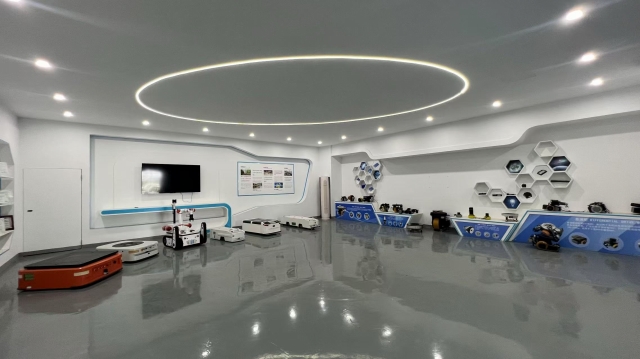
We understand servo/BLDC drivers and AGV controllers, so sensor interface questions are reviewed with the complete motion system in mind.
Prototype endurance runs, finished-product inspection and production traceability help buyers move from sample approval to repeat order with fewer surprises.
Flexible delivery terms, multiple payment currencies and export packing support buyers in Europe, North America, Asia, the Middle East and other regions.
Online support is available 24/7 with a 97.9% inquiry response rate and a 4.9/5 verified buyer rating, helping global projects keep moving.
These are the questions procurement teams and automation engineers ask most often before requesting samples.
An RFID position sensor for AGV navigation reads passive RFID tags installed in the floor, rack, charger or workstation. The unique tag ID is sent to the vehicle controller, which matches it with its map and triggers a stop, turn, lift, speed change, charging request or process handshake.
Usually it complements rather than replaces them. Magnetic guide sensors handle continuous lane following, QR codes suit grid positioning, and lidar or SLAM supports flexible routes. RFID is strongest for deterministic decision points where a unique station or junction ID is required.
Start with vehicle speed, tag spacing, tag mounting height, floor material, controller interface and required response time. The final read window must be validated with the actual tag, antenna, mounting and floor. Common interfaces include digital IO, RS232, RS485 and CAN, depending on the AGV controller.
Yes, integration should be planned around your controller protocol, connector definition, mounting envelope and tag map. Torqen can review the electrical interface and provide sample tags, wiring information and parameter guidance before production.
Metal floors require anti-metal tag construction, correct embedding depth, suitable antenna selection and floor testing. For washdown, dust, fork traffic or outdoor areas, the reader and tag package should be specified with the required IP rating and mechanical protection.
Test the complete vehicle at real travel speed, with the actual floor material, tag location, tag gap, controller interface and load condition. Record missed reads, duplicate reads, response latency, stopping accuracy and installation tolerance before approving the design.
Zhejiang Torqen Technology Co., Ltd. supports sample-based customization, design-based customization, OEM production, buyer-label packaging and integration review for AGV sensor projects. Typical work includes interface definition, cable and connector choice, tag packaging, reader mounting and documentation.
The quality management system is certified to ISO 9001:2015 and the facility has been onsite-verified by Intertek. Production follows finished-product inspection with in-house testing instruments, and prototypes can undergo extended-duration testing before release.
Use the image gallery to review our production, assembly, testing and customer support environment before requesting a sample.
Send your floor material, vehicle speed, controller interface, tag quantity and installation method. Our engineers will review the sensor configuration and reply with the next sampling step.
info@torqenbot.com