ISO 9001:2015 · Intertek Onsite-Verified · OEM / ODM Since 2015
CE Certified Laser Guided AGV Manufacturers & Exporter
Factory-direct laser guided AGV platforms, differential and steering drive wheels, servo/BLDC controllers, navigation sensors and charger pads from Zhejiang Torqen Technology Co., Ltd. Engineered for European safety expectations, export-ready documentation, and repeatable fleet production.
Featured Product Range
8 Core Products for CE-Oriented Laser Guided AGV Builds
These eight products cover the practical buy list for a laser guided AGV project: smart mapping controllers, CE-oriented latent AGVs, heavy-duty differential wheels, horizontal drive wheels, vertical traction units, spring-suspension drive wheels and automatic charger pads. Each product link is preserved for direct technical review.
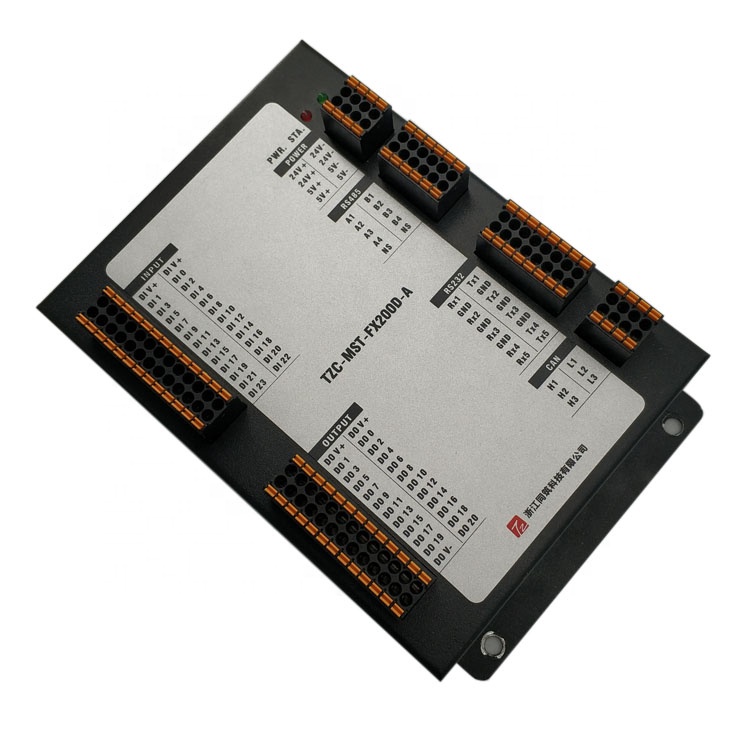
TZBOT AGV Smart Controller TZC-MST-FX200D-A with Mapping and Auto Guide for AGV
Central control for mapping, route execution and vehicle coordination in automated material handling fleets.
- Mapping
- Auto guide
- Fleet logic
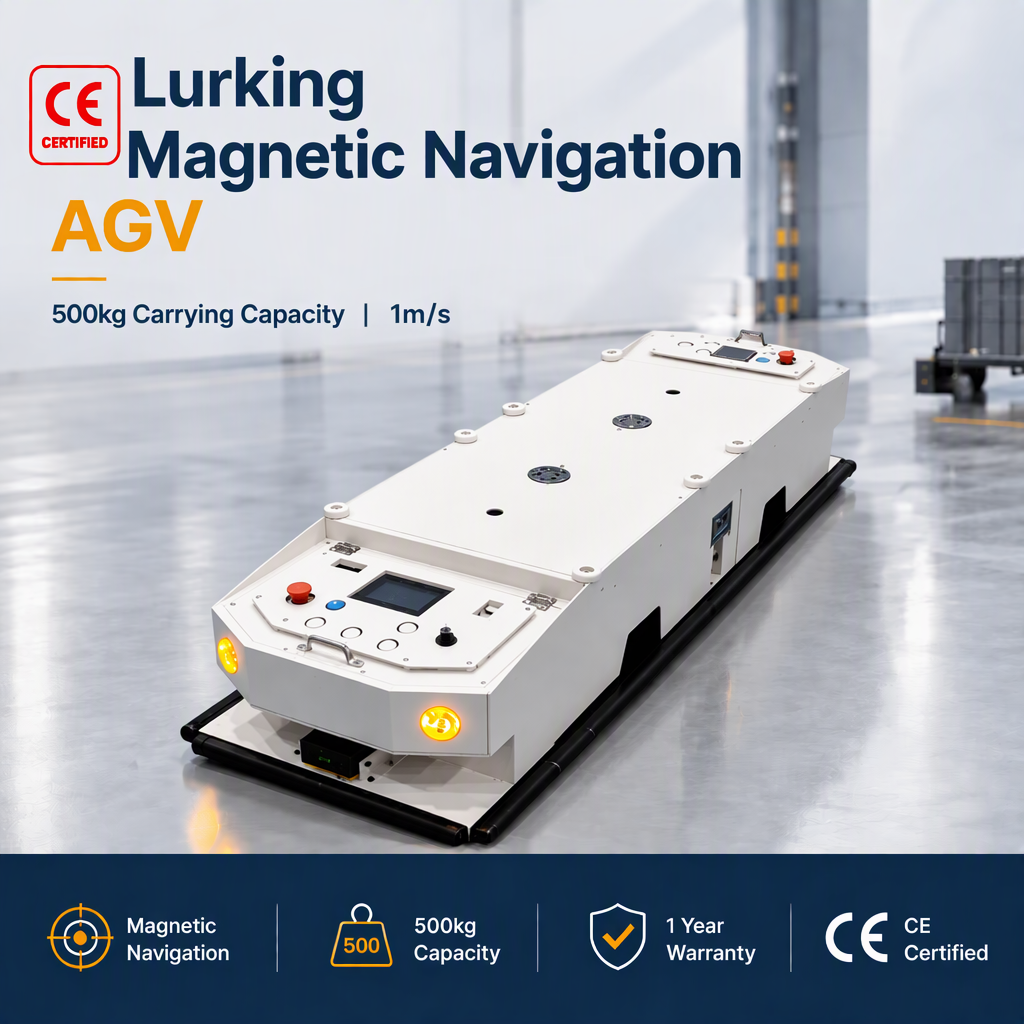
TZBOT EU CE Lurking AGV Material Handling Equipment Logistic Automation 500kg Bidirectional Magnetic Guidance Mobile Robot
Compact latent-type AGV for under-cart transport, with bidirectional movement and logistics automation focus.
- 500 kg
- CE-oriented
- Bidirectional

TZBOT 48V DC 2 Ton Heavy Duty Differential Unit AGV Wheel TZCS-750-30
Heavy-payload differential drive unit for stable traction, turning and high-load industrial AGV chassis.
- 2 ton
- 48V DC
- Differential
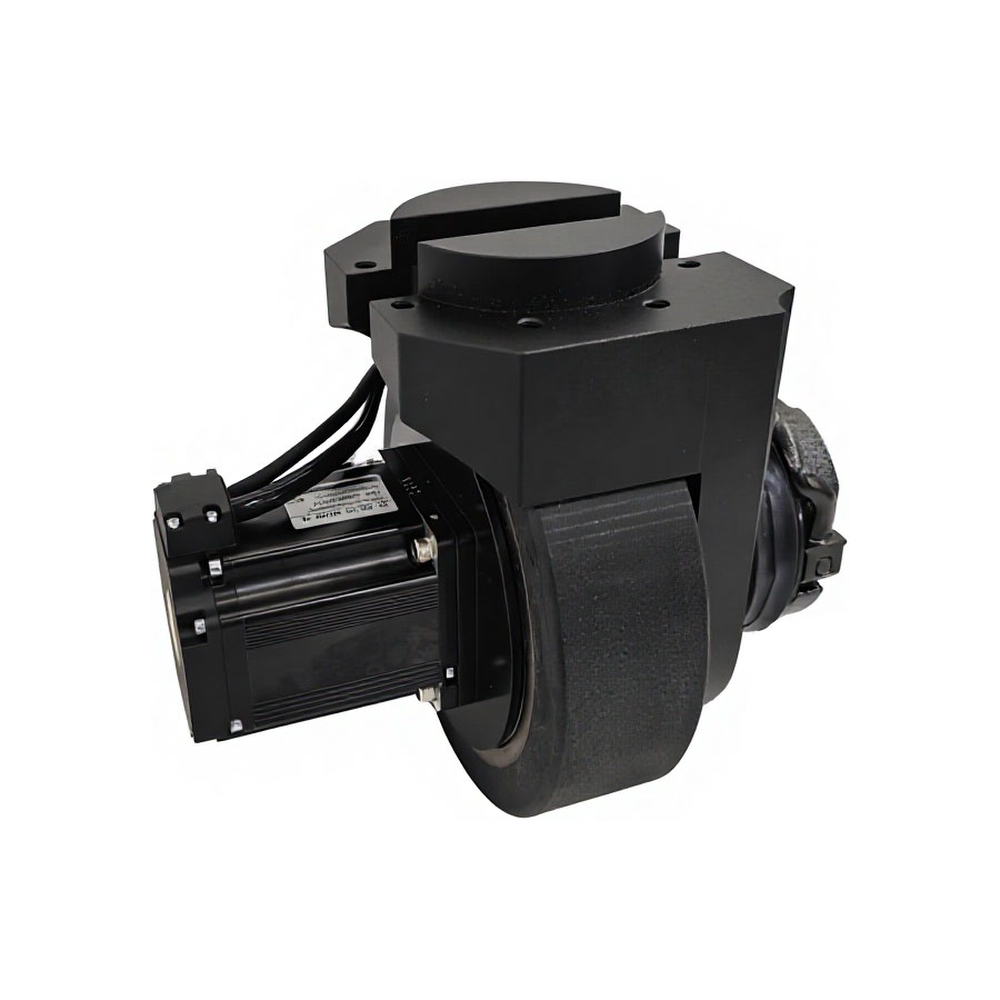
TZBOT 1000kg Bearing Capacity AGV Wheel 1000W Servo Motor Material Handling Equipment Part Horizontal Drive Wheel
Horizontal drive wheel designed for low-clearance chassis and compact material handling platforms.
- 1000 kg
- 1000W servo
- Low profile
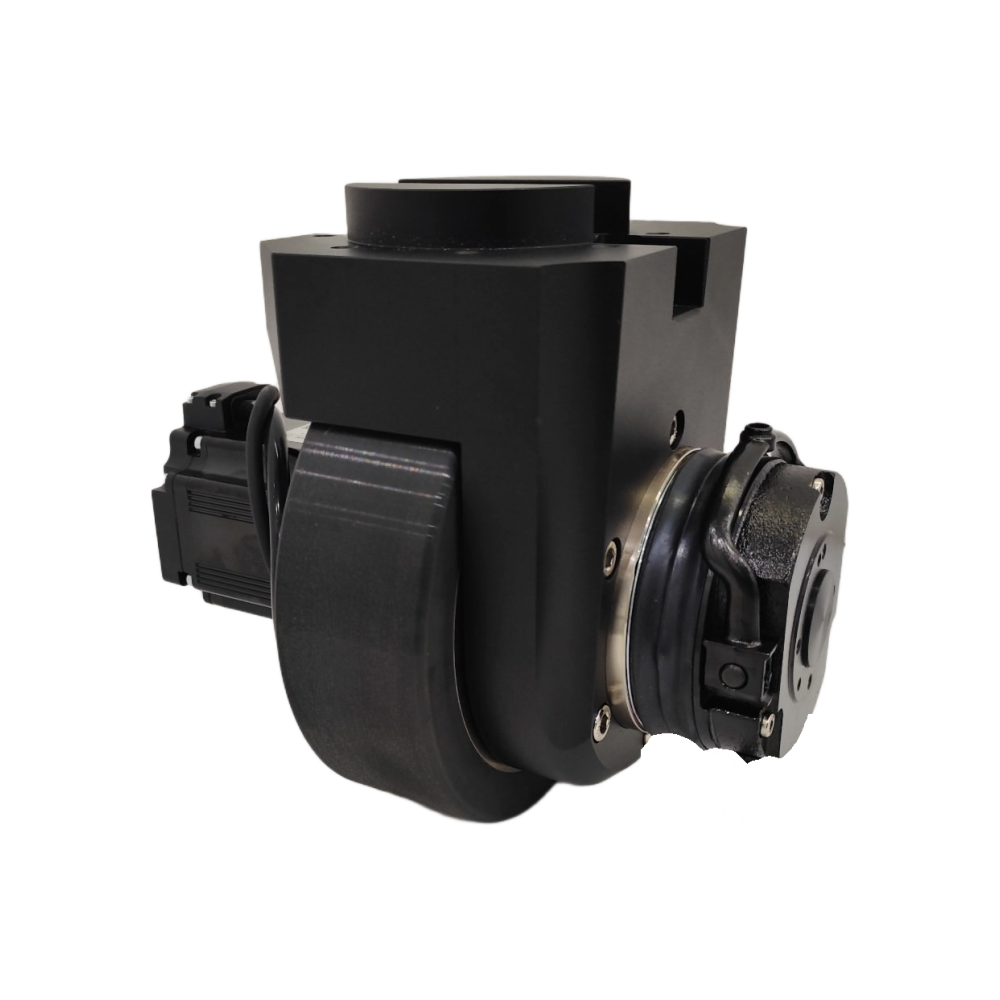
TZBOT Compact Structure AGV Wheel Imported Polyurethane 1000kg Load Duty Mobile Robot Horizontal Drive Wheel Unit
Compact horizontal drive unit with imported polyurethane tread for quiet, floor-friendly traction.
- PU tread
- Compact
- 1000 kg load
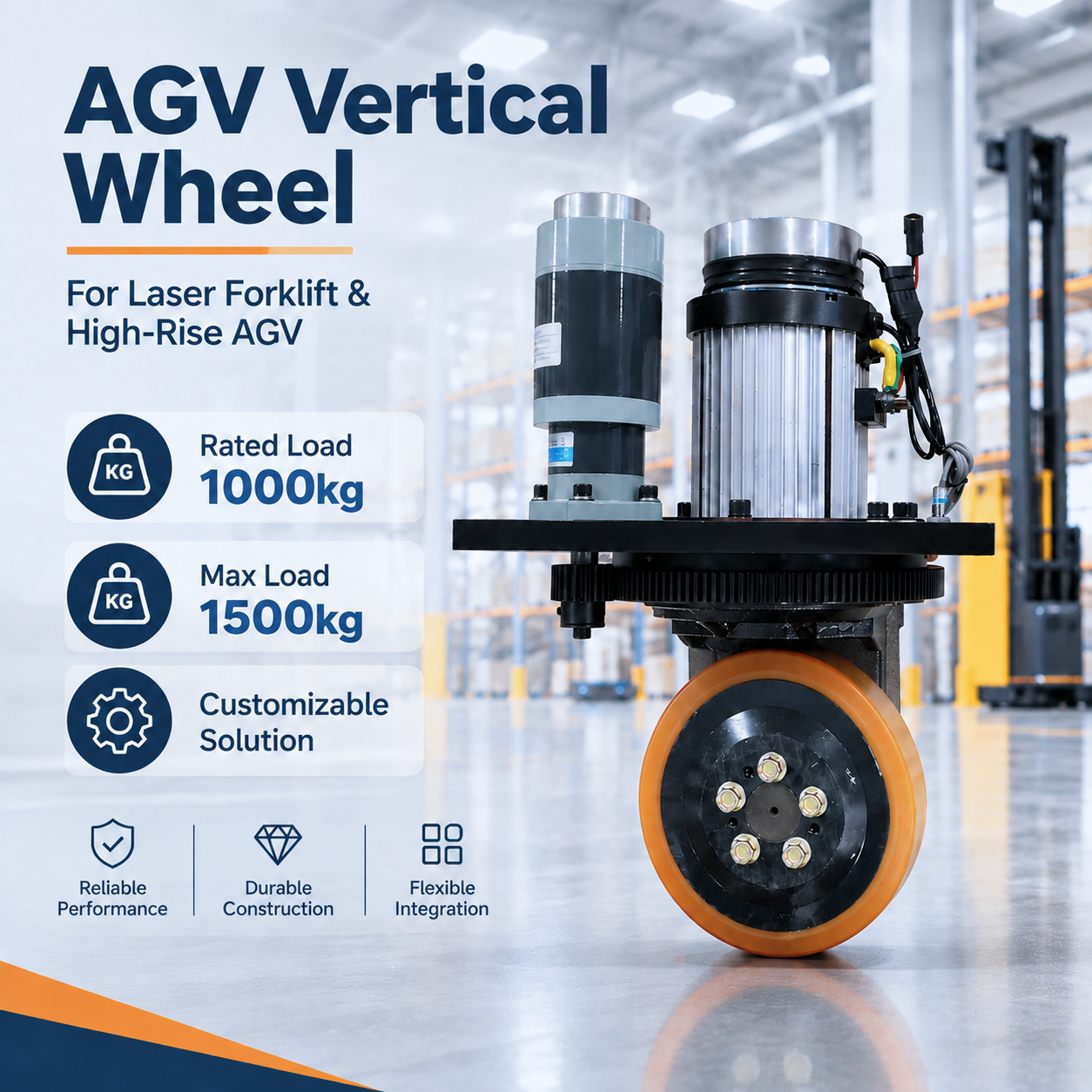
TZBOT 2590r/min Vertical Driving Unit Electric Traction Wheel 1500W Steering Forklift Accessories
Vertical traction and steering unit for forklift-type AGVs and vehicle architectures needing controlled wheel angle.
- 1500W
- 2590 r/min
- Steering
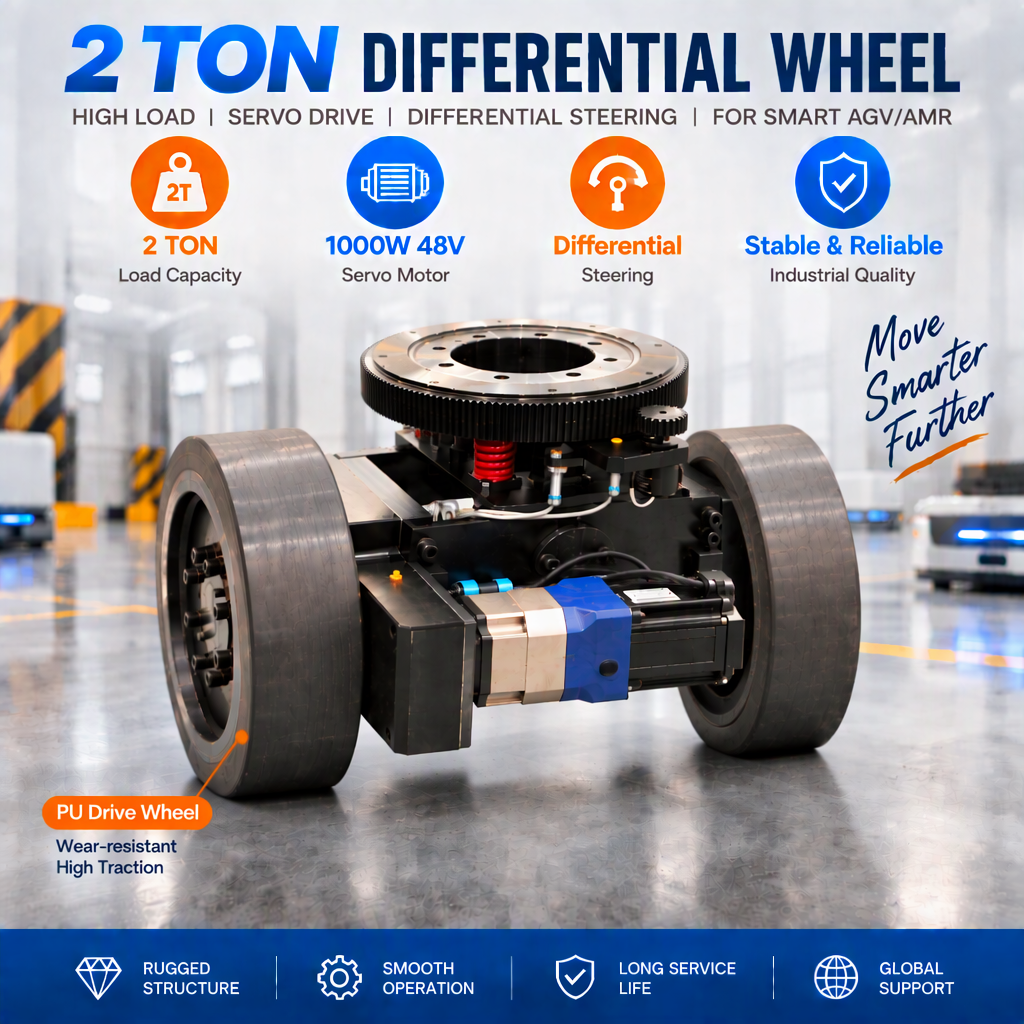
TZBOT 2000KG Heavy Duty Series AGV Wheel 1000W 48V Strong Power Mobile Robot Differential Drive Wheel with Spring Suspension
Heavy-duty differential wheel with spring suspension for uneven floors and high gross vehicle weight.
- 2000 kg
- Spring suspension
- 48V
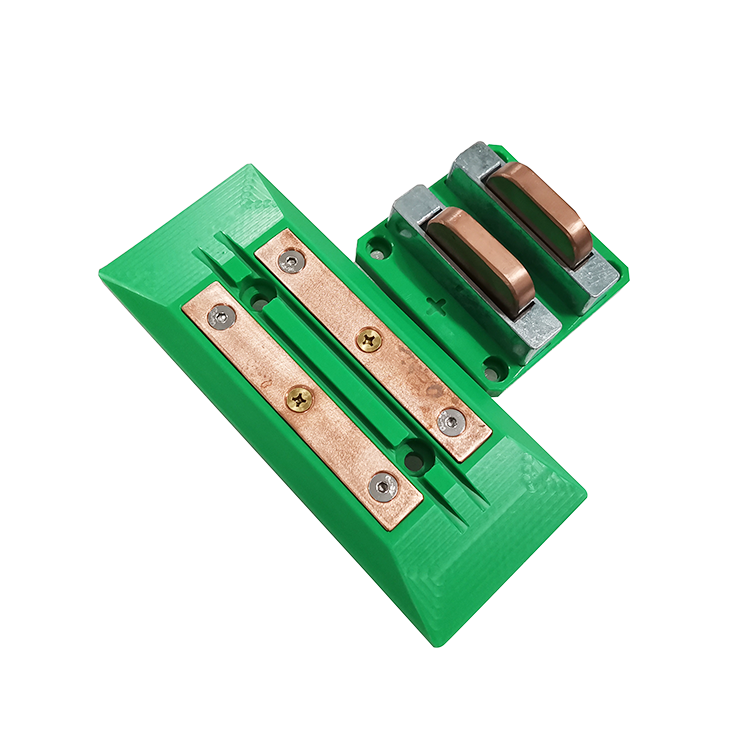
TZBOT Charger Pad Model TZ-CP-50A with Brush Plate and Brush Block for AGV Navigation Vehicles
Automatic charging contact solution for opportunity charging and fleet uptime in AGV stations.
- Auto charging
- Brush plate
- Station-ready
Information Gain · Procurement Intelligence
What Buyers Should Verify Before Selecting a CE Certified Laser Guided AGV Supplier
The phrase “CE certified laser guided AGV” is often used loosely in B2B search results. For engineering buyers, the real question is not whether a supplier has a logo on a catalogue page, but whether the vehicle, drive train, controller, sensor set, charger and safety functions can be documented convincingly for the target market.
A laser guided AGV is a system-level machine. It may use lidar SLAM, reflectors, magnetic tape, QR grids, RFID tags or a fusion of several methods. CE marking is therefore a vehicle-level conformity claim, not a property of a drive wheel in isolation. The final integrator remains responsible for the machine risk assessment, declaration of conformity, emergency-stop architecture, safety-rated sensor performance and installation checks. A capable component manufacturer should shorten that work by supplying traceable specifications, wiring diagrams, parameter files, test evidence and clear rated-load definitions.
Torqen approaches this from the drive-train side. Since 2015, the company has produced automatic guided vehicles, AGV drive wheel assemblies, DC/AC motors, encoders, reducers, servo and BLDC controllers, magnetic guide sensors, RFID position sensors, lidar sensors and AGV accessories. That range matters because a laser guided AGV is only as reliable as the interface between wheel, motor, driver, encoder and navigation logic. When those parts are matched in one factory, the buyer spends less time diagnosing torque, speed, wheel-slip and stopping-distance problems across separate vendors.
For a serious procurement file, request the following before approving a sample: the applicable CE directive list for the final machine, component declarations where available, EMC test evidence for controllers, safe torque-off or brake behavior if used, charger contact ratings, wheel load and duty-cycle limits, serial-number traceability, spare-parts lead time and the name of the engineer who will support commissioning. These documents do not replace the system integrator’s CE work, but they make the technical file more defensible and the sample cycle shorter.
Supplier Vetting Checklist
- Final machine CE scope, risk assessment and declaration responsibility are written into the project plan.
- Drive unit load, speed, gradient, duty cycle, wheel diameter and mounting interface are confirmed in drawings.
- Servo/BLDC driver, encoder and brake options are matched to the vehicle battery and control architecture.
- Safety sensor, emergency stop, bumper and charger integration are reviewed before tooling release.
- Pilot units are tested for braking distance, floor transitions, RF interference and charging repeatability.
- OEM labels, packaging, spare-parts kit and multilingual documentation are agreed before mass production.
Founded in Zhejiang, China
Employees and engineers
Factory footprint
Annual output range
Product Recommendations
Recommended Configurations by AGV Application
Use these three starting points to narrow the enquiry. A payload range, chassis height and navigation strategy are usually enough for an application engineer to propose a motor, reducer, wheel and driver combination.
Warehouse latent and jacking AGVs
For 500–1,000 kg carts, start with the 500 kg EU CE lurking AGV concept or a compact differential drive unit, then match a servo/BLDC controller, magnetic/RFID sensor set and automatic charger pad. Keep the chassis height low and verify floor transitions before committing to wheel tread hardness.
Heavy-duty 2-ton platforms
The TZCS-750-30 48V DC 2-ton differential unit and the 2000 kg spring-suspension differential wheel are better starting points for high gross vehicle weight. Confirm motor power, reduction ratio, brake torque and floor friction; spring suspension helps maintain wheel contact but does not replace a proper chassis stiffness analysis.
Low-clearance and steering AGVs
For low-clearance mobile robots, the 1000 kg horizontal drive wheel and compact polyurethane horizontal unit save vertical space. For forklift-type or tricycle vehicles, the 1500W vertical driving unit gives dedicated steering and traction control. Always include a charger policy, because opportunity charging changes battery choice and fleet size.
Procurement Trends
Procurement Trends Reshaping Laser Guided AGV Sourcing, 2025–2030
Buyers are shifting from “lowest unit price” to “lowest integration risk”. For a CE certified laser guided AGV programme, the purchasing decision now includes documentation quality, modularity, energy strategy and after-sales responsiveness.
Compliance-first sourcing
European and North American buyers increasingly ask for evidence before price. Expect requests for CE-related declarations, EMC evidence, safety-function descriptions, charger contact ratings, material declarations, serial traceability and clear responsibility boundaries between component supplier and vehicle integrator. Suppliers that treat documentation as a product feature will win repeat orders.
Modular drive-train procurement
Instead of buying a complete wheel, motor, reducer, encoder and driver from five vendors, engineering teams are consolidating around a tested drive-train module. This reduces interface risk, shortens the prototyping cycle and simplifies spare-parts planning. A matched wheel-plus-driver package is especially valuable for small AGV OEMs that lack a large motion-control test lab.
Total cost of ownership and uptime
AGV fleet buyers now model energy consumption, opportunity charging, tyre wear, spare-parts lead time and service response alongside purchase price. A charger pad and drive wheel that appear slightly more expensive can lower TCO if they reduce downtime. Ask for duty-cycle guidance, wear-part recommendations and a recommended spare-parts kit for every vehicle batch.
Technology Development
Engineering Trends in Laser Guided AGV Platforms
Laser guidance is no longer a single sensor decision. The strongest AGV platforms combine laser SLAM, reflectors, magnetic tape, RFID and safety lidar, then select the lowest-cost navigation layer for each zone.
Sensor fusion becomes standard
Laser SLAM gives layout flexibility, while magnetic guidance and RFID confirm station approach and speed zones. A fused navigation layer reduces commissioning time and gives maintenance teams a fallback when reflective surfaces disturb lidar.
Higher payload in tighter chassis
2-ton differential drive units, spring suspension and compact horizontal wheels allow heavier loads without increasing the vehicle footprint. The design challenge moves to chassis stiffness, thermal margin and braking distance rather than motor size alone.
Safety and functional evidence
Emergency stop, safe speed, bumper strips, lidar zones and brake monitoring are increasingly reviewed as one safety function. Component suppliers should state encoder resolution, brake response, driver protection and failure behavior clearly so the integrator can complete the risk assessment.
Digital twin and charging logic
Simulation now guides wheel layout, charger placement and fleet size before steel is cut. Opportunity charging with reliable contact pads, plus controller parameters that can be reused across a fleet, shortens commissioning and reduces field variation.
Engineering Guide
Drive Wheel and Navigation Selection Guide for Laser Guided AGV Projects
Use the comparison below to align mechanical and navigation decisions. The goal is not to choose the most complex system, but to select the lowest-cost architecture that meets safety, layout-change and uptime requirements.
Drive Wheel Configurations
| Type | Steering method | Best fit |
|---|---|---|
| Differential drive unit | Two independent wheels turn by speed difference | Latent, jacking and shelf-lifting AGVs; compact turning |
| Steering drive wheel | Drive motor plus steering motor controls wheel angle | Forklift AGVs, tricycle chassis and tugger vehicles |
| Horizontal drive assembly | Motor mounted horizontally to reduce build height | Low-clearance chassis and under-ride carts |
| Vertical traction wheel | Vertical motor layout with steering function | Forklift accessories and vehicles needing high traction force |
Navigation & Positioning Options
| Method | Infrastructure | Best fit |
|---|---|---|
| Laser SLAM / lidar | Natural features or reflectors | Flexible routes and frequently changing layouts |
| Magnetic guide sensor | Magnetic tape on floor | Fixed routes, low cost and fast deployment |
| RFID position sensor | RFID tags at stations | Station recognition, speed zones and junctions |
| QR code navigation | Floor QR grid | Grid warehouses and goods-to-person systems |
Engineer’s tip: before requesting a quote, prepare five values: gross vehicle weight, target speed, maximum gradient, battery voltage and available chassis height. These determine motor power, reduction ratio, wheel diameter and driver current. Adding floor material, cleaning policy and required braking distance will further shorten the sample cycle.
Manufacturing Partner
Why Global Buyers Choose Torqen as Their AGV Manufacturing and Export Partner
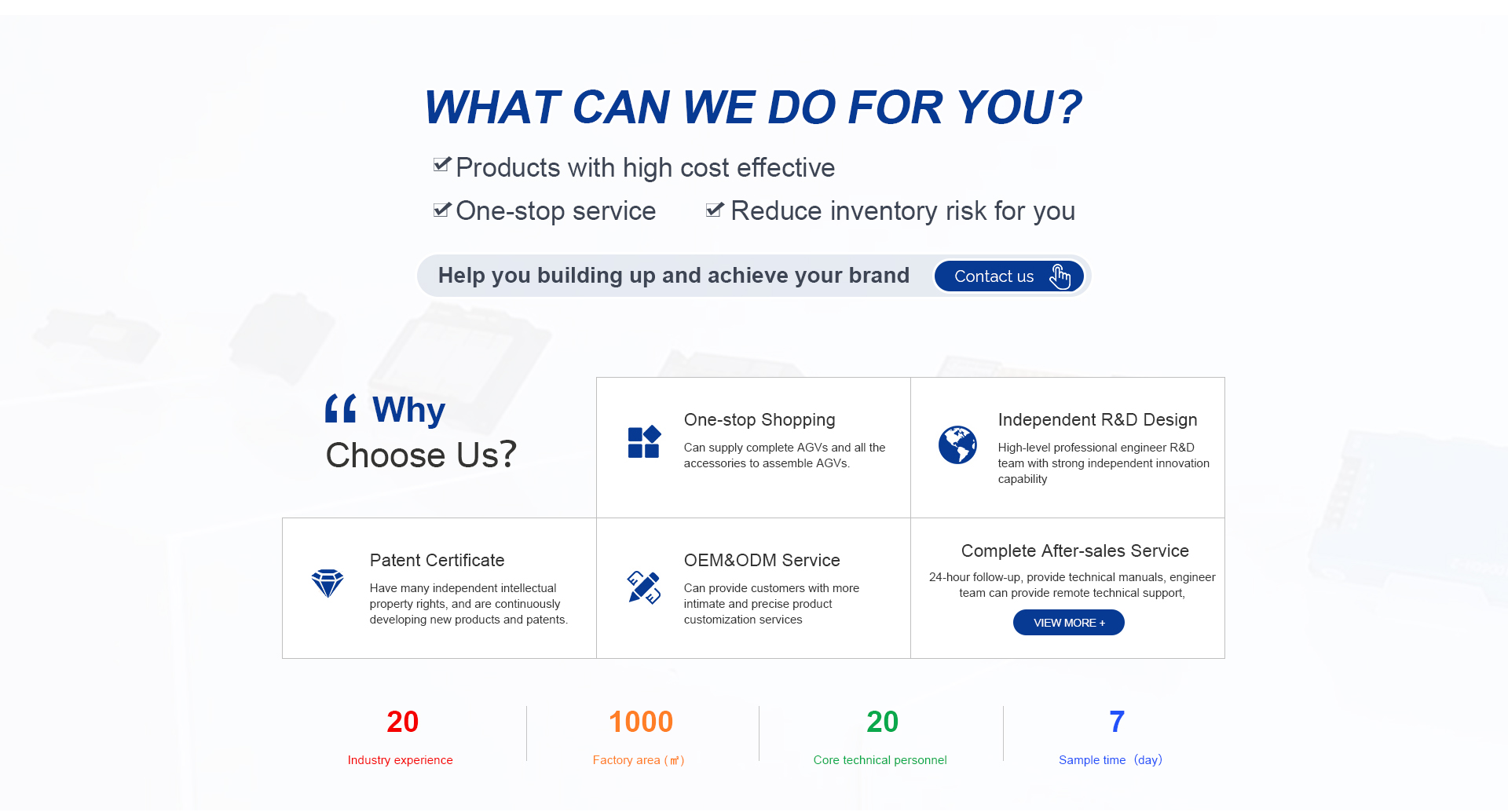
Zhejiang Torqen Technology Co., Ltd. combines drive-wheel engineering, motor and controller matching, sensor supply and export experience in one supplier relationship. The value is not only product variety; it is the ability to keep interfaces consistent from prototype to production.
Matched drive-train engineering
Wheels, motors, reducers, encoders and drivers are selected together. This reduces torque mismatch, parameter rework and commissioning time for AGV builders.
Testing before shipment
Five in-house testing instruments support finished-product inspection. Prototypes undergo extended-duration testing before production release, helping catch thermal, wear and parameter issues early.
OEM / ODM customization
Sample-based customization, design-based customization, OEM production, design services and buyer-label packaging are available. Typical changes include motor power, voltage, reduction ratio, wheel diameter, tread material, encoder type, brake options and mounting interfaces.
Audited quality system
The company is ISO 9001:2015 certified and Intertek onsite-verified, with 8 awarded patents and a 4.9/5 buyer rating. These signals support due diligence for European and North American buyers.
Export-ready terms
Payment methods include T/T, L/C, D/P, D/A, credit card, PayPal, Western Union and escrow. Delivery terms include FOB, CFR, CIF, EXW, CIP, FCA, CPT, DDU and express delivery, with USD, EUR, JPY, CAD, AUD, HKD, GBP and CNY support.
Responsive technical support
The sales and technical team reports a 97.9% inquiry response rate and provides wiring diagrams, driver parameter files and commissioning guidance so overseas engineers can move from sample to production with less friction.


Frequently Asked Questions
FAQ: Buying a CE Certified Laser Guided AGV from a Chinese Manufacturer
These are the questions engineering and procurement teams ask most often during supplier evaluation. Clear answers reduce the risk of mismatched expectations during sampling and mass production.
Are Torqen laser guided AGVs CE certified?
CE conformity applies to the final machine configuration. Torqen can supply CE-oriented AGV platforms and components, and support the integrator with technical specifications, declarations where applicable, wiring information and test evidence. The final vehicle builder remains responsible for the machine risk assessment, declaration of conformity and CE marking of the complete AGV. This distinction is important for a defensible procurement file.
Can you customize a drive wheel for our AGV chassis?
Yes. Typical customizations include motor power and voltage, reduction ratio, wheel diameter, tread material, encoder type, brake options, cable length, connector type and mounting interface. To quote accurately, send the gross vehicle weight, target speed, maximum gradient, chassis height, battery voltage, duty cycle and floor condition. A drawing or 3D model shortens the review further.
Which navigation method should we choose: laser SLAM, magnetic, RFID or QR?
Choose laser SLAM when routes change frequently and infrastructure should be minimal. Choose magnetic tape when routes are stable and cost control matters. Use RFID tags for station confirmation, speed zones and junctions, even when the main navigation is laser-based. QR grids suit warehouse layouts with repetitive goods-to-person stations. Many high-uptime fleets combine two or three methods for resilience.
What is the sampling process and typical lead time?
The process usually starts with a requirement review, followed by an engineering proposal, prototype build, endurance testing and production release. Sample lead time depends on customization level and component availability. Provide the application data early, and ask for a written sample schedule with milestones, inspection criteria and shipping terms. For critical fleets, order a spare drive wheel and charger pad with the pilot batch.
What payment and shipping terms are accepted?
Accepted payment methods include T/T, L/C, D/P, D/A, MoneyGram, credit card, PayPal, Western Union, cash and escrow. Currencies include USD, EUR, JPY, CAD, AUD, HKD, GBP and CNY. Delivery terms include FOB, CFR, CIF, EXW, CIP, FCA, CPT, DDU and express delivery. Confirm Incoterms, packaging, insurance and customs documentation in the quotation.
Which industries use Torqen drive products?
Torqen products are used in AGVs and AMRs, forklifts, aerial work platforms, airport equipment, agricultural machines, hydraulic applications, floor scrubbers and sweepers, wind energy, marine equipment and medical devices. This cross-industry exposure helps the engineering team anticipate harsh floors, outdoor conditions, washdown concerns and high-duty-cycle requirements.
Send Your AGV Specification for a CE Review and Drive-Train Quote
Share your payload, speed, gradient, chassis height, battery voltage, navigation method and target market. The engineering team can recommend a matched drive wheel, servo/BLDC controller, sensor set and charger pad, then confirm the documentation package needed for your CE project.
info@torqenbot.com
