China Best Electric Stacker AGV Exporter & Wholesalers
A procurement-grade sourcing guide for importers comparing electric stacker AGV platforms, differential drive wheels, steering units, laser SLAM AMRs, controllers and spare parts from an ISO 9001:2015-certified Chinese manufacturer.
Eight Products for Electric Stacker AGV & Mobile Robot Programs
Electric stacker AGV projects rarely fail because one component is cheap. They fail when the wheel, motor, controller, navigation and safety choices are sourced as disconnected parts. The eight items below are practical starting points for importers, distributors and OEM engineering teams building or localizing stacker AGV fleets.
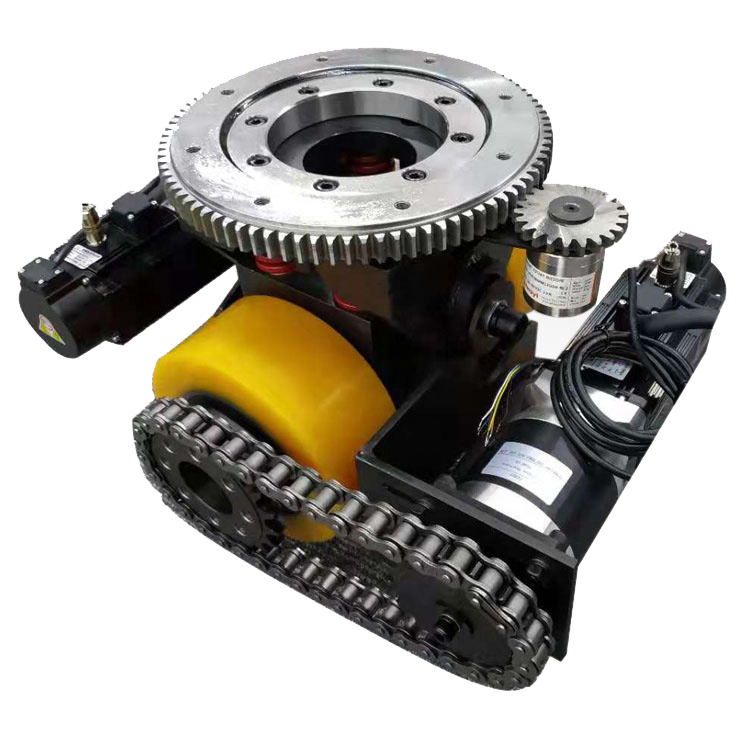
TZBOT 48V DC 2 Ton Heavy Duty Differential Unit AGV Wheel TZCS-750-30
A 48V DC, 2-ton-class differential wheel unit for counterbalanced electric stacker AGVs, heavy towing platforms and dense warehouse transfer. The TZCS-750-30 configuration matters when braking, wheel tread and mounting geometry must be matched to a high-load chassis rather than bought as a generic caster.
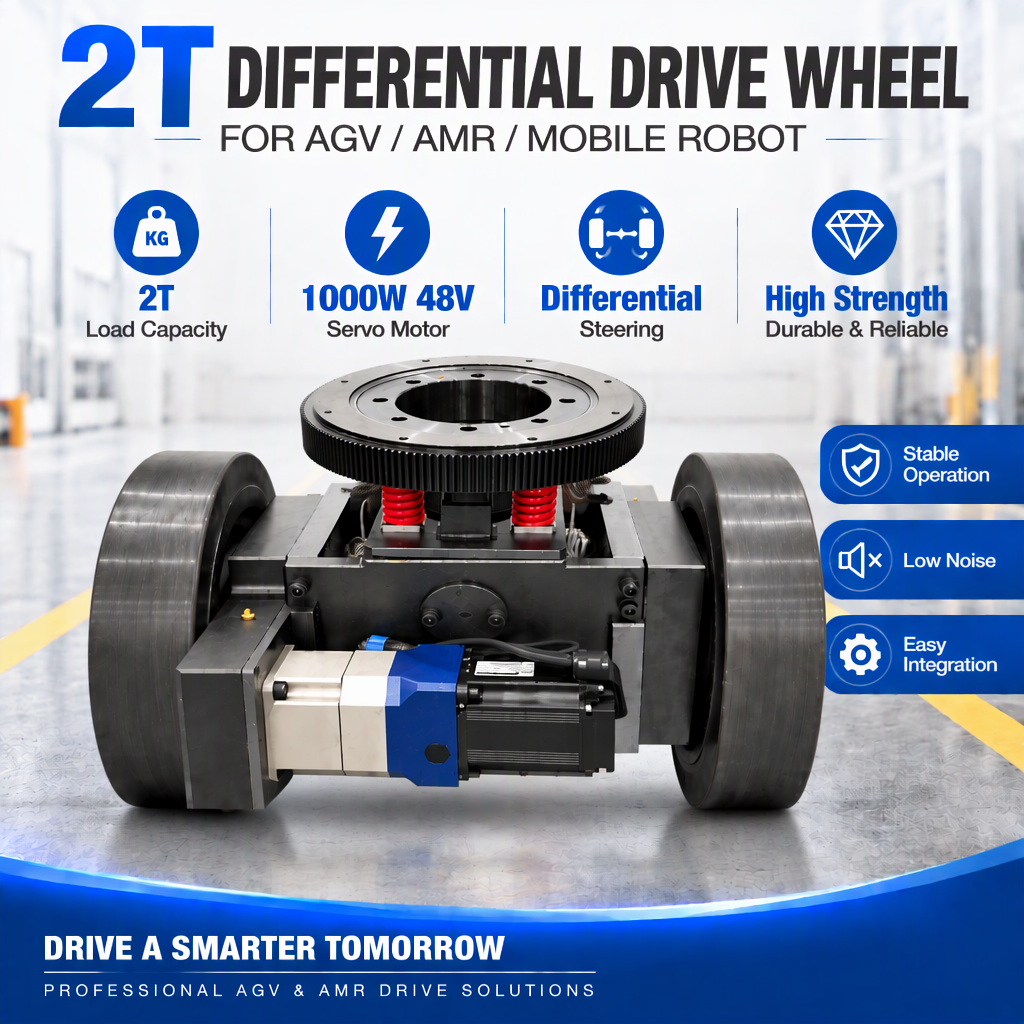
TZBOT 2000kg Traction Capacity Logistic Robot Part AGV AMR Differential Steering Drive Wheel for Sale
A 2,000 kg traction-capacity differential steering drive wheel for logistic robots. It suits tugger and stacker architectures that need controlled steering angles plus robust floor grip. Buyers should request load-curve data, reduction ratio options and encoder or brake configuration before comparing quotations.
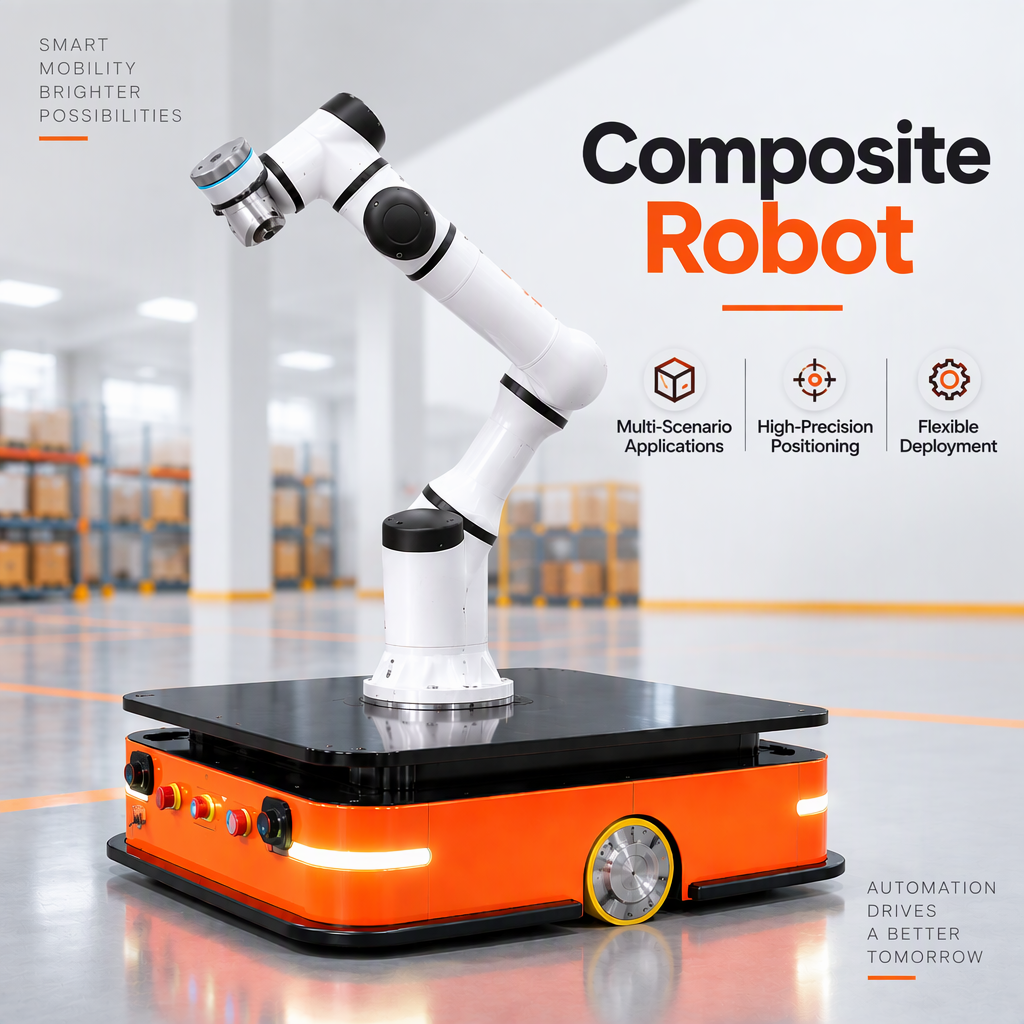
TZBOT Customizable Composite Robot Multi Applications 600kg Bearing Chassis AGV AMR with Robotic Arm
A customizable 600 kg composite robot platform with robotic arm integration. For warehouses moving from fixed conveyors to flexible automation, this is a compact example of how an AGV chassis becomes a mobile workstation. Confirm arm reach, battery duty cycle and safety scanner zones with the factory during sampling.
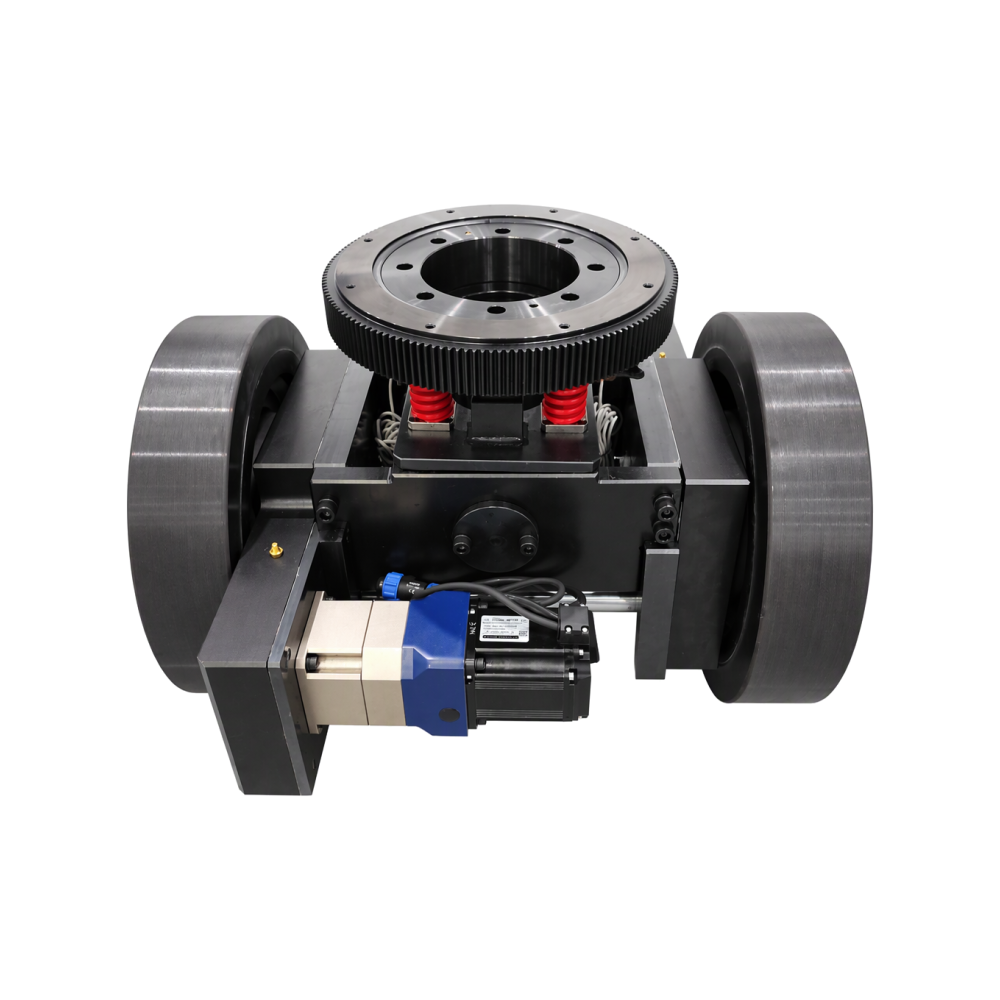
TZBOT Heavy Duty Series AGV Wheel 1000w 48v Servo Motor Control Mobile Robot Differential Drive Wheel with Spring Suspension
A 1,000 W, 48 V servo differential drive wheel with spring suspension. Suspension helps maintain traction over dock levellers, expansion joints and imperfect floors. It is a strong fit for heavy-duty stacker AGV programs where stopping distance and speed stability matter more than the lowest component price.
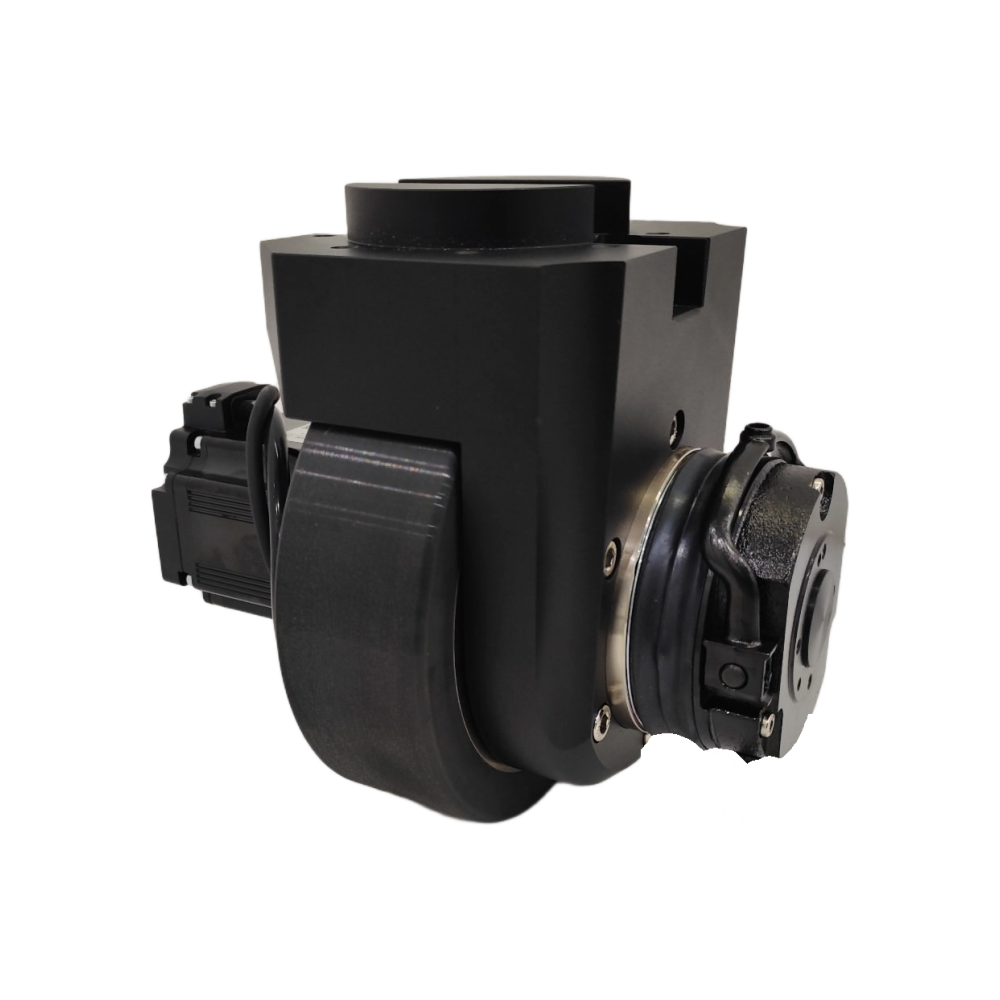
TZBOT Compact Structure AGV Wheel Imported Polyurethane 1000kg Load Duty Mobile Robot Horizontal Drive Wheel Unit
A compact, imported-polyurethane 1,000 kg horizontal drive wheel unit for low-clearance mobile robots. Its value lies in reducing chassis height while preserving service access. Purchasing teams should verify wheel hardness, bearing life and the available mounting envelope before releasing a purchase order.
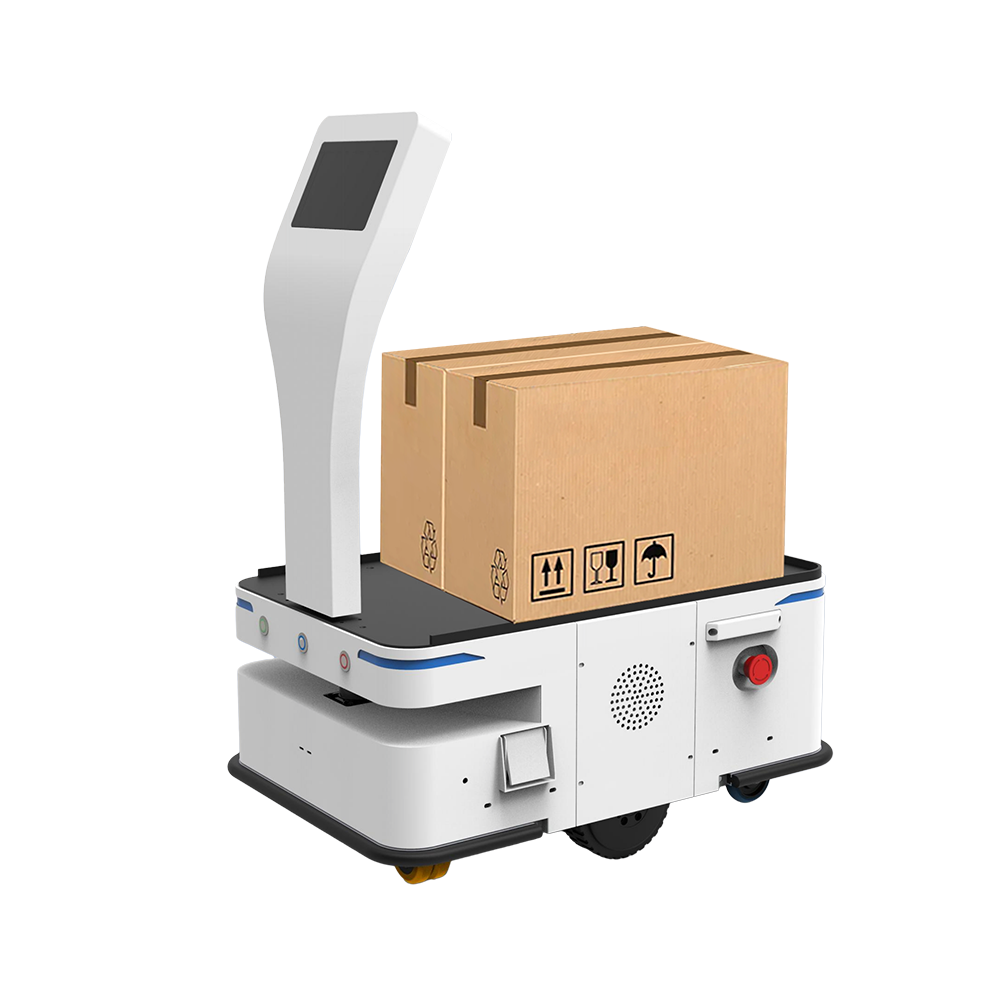
TZBOT High Precision Guidance Laser SLAM Navigation AMR Robot 80kg Carrying Capacity Material Handling AMR Robot with 7 Inch HMI
An 80 kg carrying-capacity laser SLAM AMR with 7-inch HMI for material handling. It is suitable for flexible intralogistics, electronics assembly and small-parts transport where floor tape is undesirable. Ask for mapping performance under changing lighting, aisle congestion and high-traffic conditions.
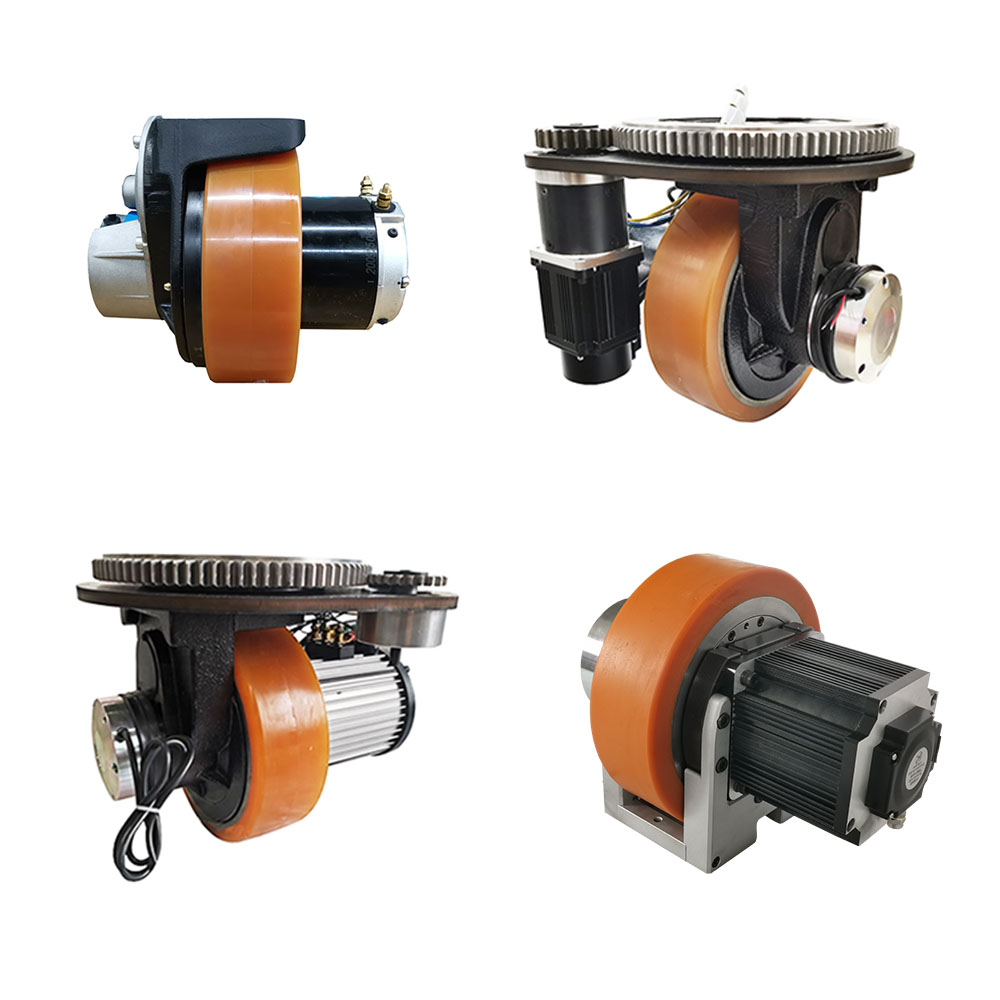
TZBOT 750W 1000KG Load Capacity Horizontal Drive Wheel Assembly AGV Wheel for Wholesale Automated Guided Robot
A 750 W, 1,000 kg horizontal drive wheel assembly for wholesale automated guided robot programs. It gives distributors a cost-effective motion module for standard stacker and cart platforms. Match it with the correct driver, encoder and brake to avoid hidden integration cost after import.
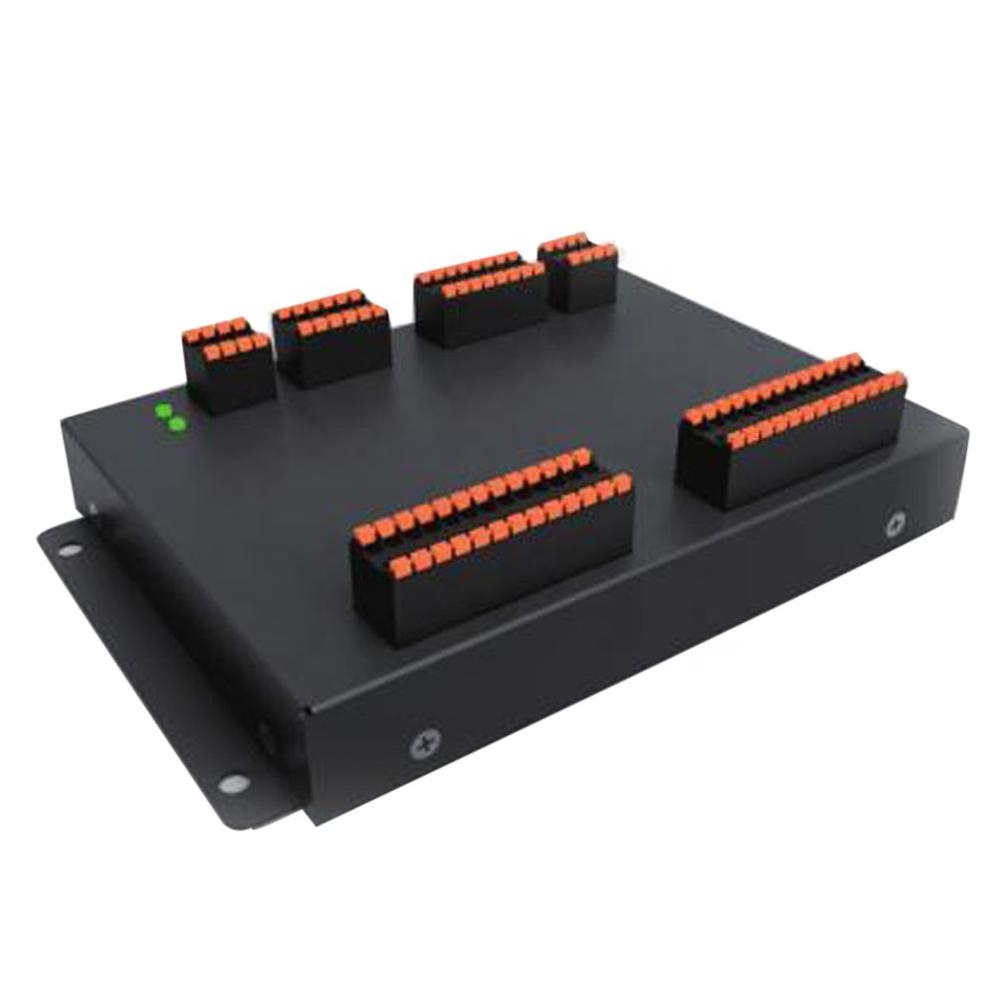
TZBOT TZC-MST-FX200D-A Controller for Commanding the AGV
A TZC-MST-FX200D-A controller for commanding an AGV. Controller choice affects acceleration, steering, fault diagnosis and LiDAR or magnetic sensor inputs. Buyers should request I/O diagrams, parameter files and a firmware support commitment as part of the supply agreement.
What Importers Really Mean by “Best Electric Stacker AGV Exporter”
Commercial intent on this query is not limited to buying one complete vehicle. It usually splits into four buying conversations. Matching the right conversation early prevents quotation waste and reduces integration risk.
Distributor Sourcing
Wholesalers need stable supply, repeatable specifications, spare-part kits and multilingual documentation. The key question is not only “what is the unit price?” but “which configuration can I resell without field failures?”
OEM / ODM Engineering
Vehicle builders want a drive train they can tune: motor power, voltage, reduction ratio, wheel diameter, tread material, encoder type, brake and mounting interface. The winning supplier behaves like an engineering partner, not a catalog shipper.
Risk & Compliance
Procurement teams need evidence: ISO 9001:2015, onsite verification, inspection records, load curves, wiring diagrams and traceable production data. Safety and documentation are now part of total cost, not a post-purchase afterthought.
Lifecycle Support
Wholesale buyers care about spare wheels, controllers, sensors and after-sales response long after the first shipment. A clear spare-part BOM and fast technical response often outweigh a small initial price difference.
How Electric Stacker AGV Buying Will Change Through 2030
Wholesale and OEM buyers are shifting from “find the cheapest exporter” to “secure a configurable, documented and serviceable supply chain.” These are the purchasing priorities we see shaping requests from global automation integrators.
Illustrative buyer-weighting model based on OEM sourcing discussions for stacker AGV, AMR and drive-wheel projects. Use it as a discussion framework, not a fixed index.
1. Total Cost of Ownership Beats Unit Price
Importers are calculating wheel life, brake wear, controller failure rates, spare-part lead time and commissioning hours. A slightly higher drive unit that avoids field replacement can be cheaper over a three-year fleet contract. Ask suppliers for load-cycle assumptions, maintenance intervals and recommended spare ratios.
2. Modular Drive-Train Sourcing
Buyers increasingly want the wheel, servo motor, reducer, encoder, brake and driver matched by one supplier. This reduces interface disputes and shortens prototype cycles. Contract language should define the exact motor-driver pairing, parameter file version and test report for each shipment.
3. China Core Plus Regional Assembly
China remains a deep source of motion components, but some buyers add local assembly or regional warehousing for faster service. A practical RFQ therefore separates “China factory-direct drive train” from “local customization, kitting and after-sales.” This is especially relevant for wholesalers serving multiple countries.
4. Safety and Documentation Are Contractual
Electric stacker AGVs interact with pedestrians, pallets and dock traffic. Buyers now request wiring diagrams, emergency-stop logic, obstacle-sensor behavior, brake test data and traceable serial numbers. Suppliers that provide documentation early become easier to approve than those that promise it after payment.
5. Data-Ready Controllers and Sensors
Controllers are no longer black boxes. Integrators want CAN, RS485 or Ethernet access, parameter export, fault logs and firmware change notes. For SLAM and magnetic navigation, buyers should define map-update responsibility and sensor calibration support before the first production order.
6. Faster Sampling, Smaller Initial Batches
OEM teams need sample-based customization and design-based customization without committing to a full container. Flexible prototype runs, buyer-label packaging and staged production help distributors test a market before scaling. Confirm sample fees, tooling ownership and the path from prototype to mass production.
Engineering Directions Shaping the Next Generation of Stacker AGVs
The most competitive electric stacker AGV platforms are becoming lower, smarter, safer and easier to service. These development trends should influence the specifications you write today.
Higher Payload Density, Lower Chassis
Warehouses want more payload without raising the vehicle height. Horizontal drive wheel assemblies and compact reducers allow a lower deck for latent lifting and under-ride stacker platforms. Buyers should confirm ground clearance, wheel travel and maintenance access together.
Suspension and Traction Control
Spring suspension and matched servo control help maintain grip on dock levellers, ramps and expansion joints. For heavy-duty 1,000 W to 2,000 kg-class applications, traction stability can matter more than top speed. Request test data for start, stop and slope handling.
Integrated Servo Drive Wheels
Motor, reducer, encoder and brake are increasingly packaged as one serviceable unit. This reduces wiring complexity and shortens assembly time, but it also makes interchangeability important. Standardized mounting interfaces and documented torque curves simplify multi-year fleet maintenance.
Hybrid Navigation: Magnetic, RFID and SLAM
Magnetic guide sensors remain cost-effective for fixed routes, while RFID tags identify stations and speed zones. Laser SLAM adds route flexibility. The strongest designs combine methods rather than relying on one. Ask how the controller arbitrates between sensor inputs during a fault or map change.
Safety Monitoring and Fault Diagnosis
Safety scanners, bumpers, emergency stops and controllers must work as a system. Modern buyers ask for fault logs, diagnostic LEDs, brake monitoring and clear recovery procedures. These features reduce downtime for distributors who support end users remotely.
Modular Composite Robots
Mobile manipulators combine an AGV chassis with a robotic arm, vision or tooling. A 600 kg bearing chassis can become a mobile workstation for machine tending or pallet handling. Early coordination between chassis, arm, battery and safety zones is essential to avoid rework during integration.
| Vehicle Architecture | Recommended Drive | Navigation Fit | Procurement Focus |
|---|---|---|---|
| Counterbalanced electric stacker AGV | Heavy-duty differential or steering drive unit, 1–2 ton class | Magnetic guide with RFID stations or laser SLAM | Brake torque, wheel tread, load curve, IP rating and mounting geometry |
| Low-clearance latent lifting AGV | Compact horizontal drive wheel assembly | Magnetic tape or QR grid | Chassis height, wheel hardness, bearing life and service access |
| Forklift-type or tugger AGV | Single steering drive wheel or differential steering unit | Lidar SLAM plus safety scanners | Steering angle control, acceleration profile, emergency-stop logic |
| Composite mobile manipulator | Servo differential chassis, 600 kg bearing class | Laser SLAM and station recognition | Arm integration, center of gravity, battery duty cycle, safety zones |
| Small-parts material handling AMR | Integrated compact drive modules | Laser SLAM with 7-inch HMI | Mapping performance, fleet software interface and after-sales support |
Information-gain checklist: before requesting a quote, prepare gross vehicle weight, target speed, maximum gradient, battery voltage, available chassis height, floor condition, navigation preference, annual volume and destination market. These nine data points let an experienced exporter recommend a drive wheel, controller and sensor set without multiple quotation rounds.
Why Torqen Is a Practical China Exporter and Wholesale Partner
Zhejiang Torqen Technology Co., Ltd. has manufactured AGVs, differential and steering drive wheels, motors, servo and BLDC controllers, navigation sensors and AGV accessories since 2015. The company combines factory-direct engineering with export-ready commercial support for global buyers.
Established in Zhejiang, China
Patents awarded through in-house R&D
Quality management system certified
Inquiry response rate for global buyers
Complete Drive Train From One Source
Drive wheels, motors, reducers, encoders, brakes, servo/BLDC controllers and navigation sensors can be matched together. This reduces interface risk and simplifies the bill of materials for stacker AGV builders.
OEM / ODM Customization
Sample-based customization, design-based customization, OEM production, design services and buyer-label packaging are available. Typical changes include motor power, voltage, reduction ratio, wheel diameter, tread material, encoder type and brake options.
Matched Electronics and Sensors
Servo and BLDC drivers are selected for Torqen drive wheels, with magnetic guide sensors, RFID position readers and lidar options available for a single-source automation package.
Testing Before Production Release
The quality system is certified to ISO 9001:2015, and the facility has been verified onsite by Intertek. Five in-house testing instruments support finished-product inspection, while prototypes undergo extended-duration testing before production parts ship.
Export-Ready Commercial Terms
Accepted payment methods include T/T, L/C, D/P, D/A, MoneyGram, credit card, PayPal, Western Union, cash and escrow. Currencies include USD, EUR, JPY, CAD, AUD, HKD, GBP and CNY, with FOB, CFR, CIF, EXW, CIP, FCA, CPT, DDU and express delivery options.
Responsive Engineering Support
A dedicated sales and technical team answers buyer inquiries around the clock, with a 97.9% inquiry response rate. Support can include wiring diagrams, driver parameter files, commissioning guidance and fault analysis after delivery.
Traceable Spare-Part Supply
Wheels, controllers, sensors and accessories are supported by production records and export packing. Wholesalers can plan replacement stock for stacker AGV fleets instead of treating every service part as a new project.
Global Application Experience
Torqen drive products are used in AGVs and AMRs, forklifts, aerial work platforms, airport equipment, agricultural machines, hydraulic applications, floor scrubbers and sweepers, wind energy, marine equipment and medical devices. This cross-industry exposure helps engineers anticipate real operating conditions.
Requirement Review
Share load, speed, gradient, voltage, chassis height, floor condition and annual volume. The application engineer clarifies the real operating envelope before recommending parts.
Engineering Proposal
Motor power, reduction ratio, wheel diameter and tread are matched. Drawings and interface data are shared so the buyer can confirm mechanical and electrical fit.
Prototype and Endurance Run
A sample or design-based customization is produced and tested. Extended-duration runs and parameter checks reduce the risk of releasing an unstable configuration.
Production, Inspection and Export
Mass production follows ISO 9001:2015 controlled processes. Final inspection, export packing and the agreed delivery term are completed before shipment.
Common Questions From Electric Stacker AGV Buyers
These answers reflect the commercial and engineering questions that appear most often in wholesale and OEM requests for stacker AGV drive systems and components.
Are you a manufacturer or a trading company?
Zhejiang Torqen Technology Co., Ltd. is a manufacturer and trading company founded in 2015. The business combines factory production with export support for AGVs, AGV drive wheel assemblies, DC/AC motors, encoders, reducers, motor controllers and navigation sensors. The facility has been verified onsite by Intertek and operates an ISO 9001:2015 quality management system.
What is the minimum order quantity for wholesale electric stacker AGV parts?
MOQ depends on whether the item is a standard drive wheel, a customized motor and reducer combination, or a complete AGV platform. Standard components can often be sampled in small quantities, while OEM/ODM projects may require a prototype agreement before mass production. For a useful quote, include annual volume, first-order quantity, customization level and destination market.
Can you customize wheel diameter, voltage, reduction ratio or brake options?
Yes. Sample-based customization and design-based customization are available. Typical changes include motor power and voltage, reduction ratio, wheel diameter and tread material, encoder type, brake options and mounting interfaces. Buyer-label packaging and design services are also available. Custom work is strongest when the buyer supplies chassis drawings, load curves and target performance data.
How do I choose between differential, steering and horizontal drive wheels?
Differential drive units suit compact latent and jacking AGVs that turn by wheel-speed difference. Steering drive wheels suit forklift, tricycle and tugger-type vehicles that need controlled steering angles. Horizontal drive wheel assemblies suit low-clearance chassis. Share payload, speed, maximum gradient, chassis height and battery voltage, and an application engineer can recommend a configuration instead of leaving the choice to guesswork.
How is product quality verified before shipment?
The quality management system is certified to ISO 9001:2015, and the facility has been verified onsite by Intertek. Finished-product inspection uses five in-house testing instruments, and prototypes undergo extended-duration testing before production parts are released. For project purchases, buyers can request inspection records, load curves, wiring diagrams, serial-number traceability and agreed acceptance criteria in the purchase contract.
What payment and delivery terms are accepted?
Accepted payment methods include T/T, L/C, D/P, D/A, MoneyGram, credit card, PayPal, Western Union, cash and escrow, in USD, EUR, JPY, CAD, AUD, HKD, GBP or CNY. Delivery terms include FOB, CFR, CIF, EXW, CIP, FCA, CPT, DDU and express delivery. The best term depends on the buyer’s customs profile, order value, destination and whether the shipment includes batteries or complete vehicles.
Which documents and technical files can be provided?
Depending on the product and order stage, buyers can request drawings, wiring diagrams, driver parameter files, inspection records, packing lists, commercial invoices and product labels. For integrated systems, define the required controller firmware version, sensor calibration support and spare-part list in the supply agreement. Clear documentation reduces commissioning time for overseas distributors and OEM engineers.
How fast is technical support after delivery?
The sales and technical team handles inquiries around the clock, with a reported 97.9% response rate. Support can cover wiring checks, parameter settings, fault analysis and replacement-part recommendations. For wholesale customers, it is advisable to agree a named technical contact, response window and spare-part stock level before the first repeat order.
Request a Wholesale, OEM or ODM Proposal
Send gross vehicle weight, maximum speed, gradient, battery voltage, chassis height, navigation preference, annual volume and target market. Our engineers will recommend a drive wheel, controller and sensor set that fits your electric stacker AGV program.
Factory-direct export support · ISO 9001:2015 · Intertek onsite-verified manufacturer · OEM/ODM customization · Global shipping terms
