8 Factory-Direct Intralogistics Automation Products for Wholesale and OEM Buyers
This shortlist reflects high-recurring search and procurement intents in AGV/AMR material handling: high-payload horizontal drive wheels, Ackerman chassis for collaborative arms, 750W and 1000W drive assemblies, CE-marked latent AGVs, heavy-duty differential wheels with suspension, magnetic guidance tape, and laser SLAM AMR robots. Each specification link is preserved for engineering review.
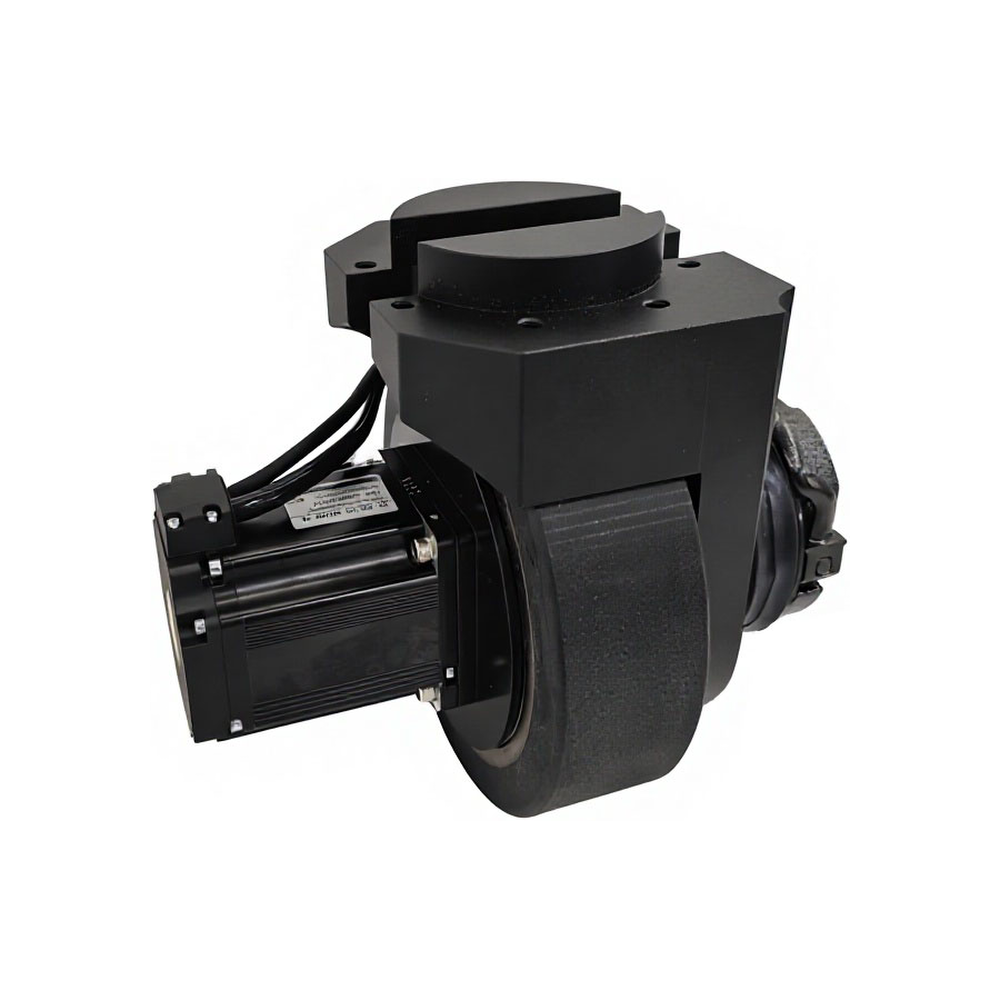
TZBOT AGV Wheel Traction Accessories 1000kg Heavy Duty Capacity Material Handling Equipment Part Horizontal Drive Wheel Assembly
Recommended for 1,000kg-class low-clearance AGV platforms that need a compact horizontal drive footprint. The assembly simplifies chassis integration and spare-part planning for OEMs building latent AGVs, transfer carts, and production-line movers.
Review specifications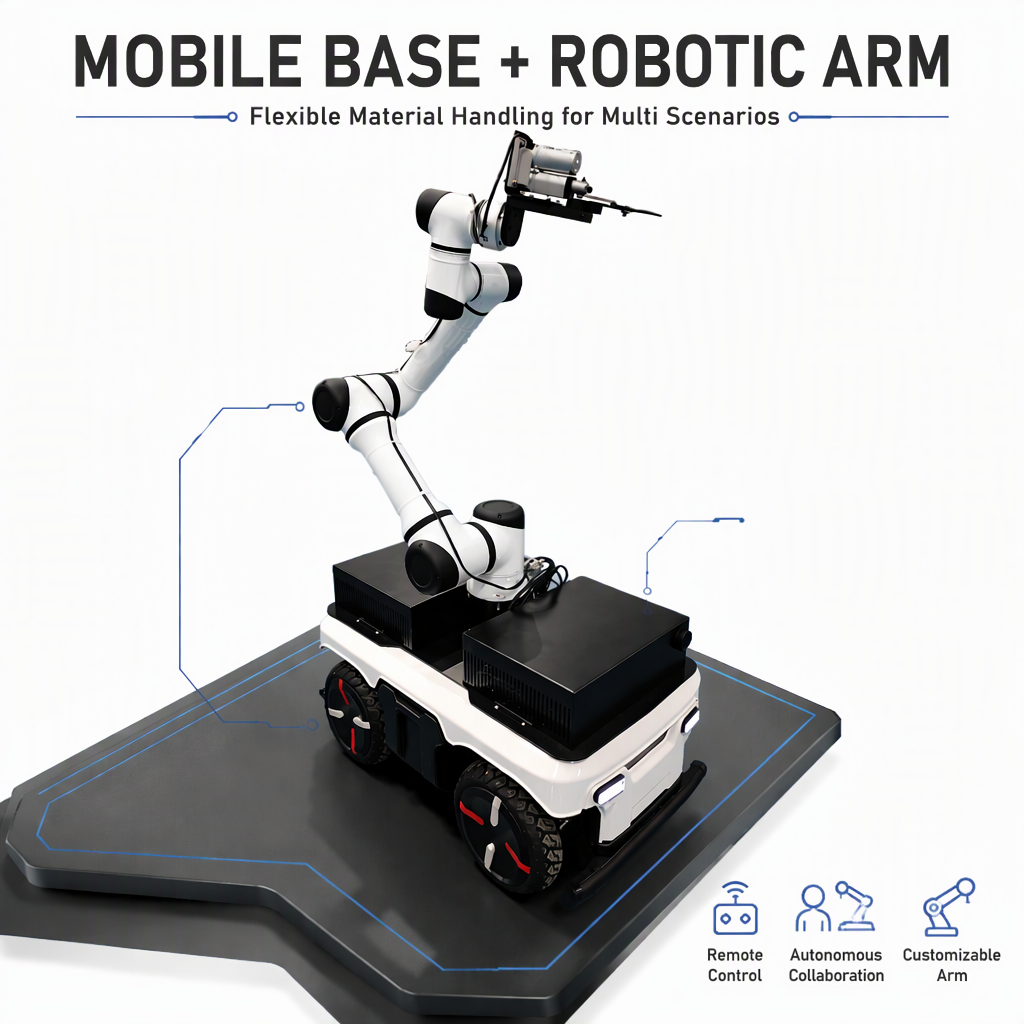
TZBOT Four Wheel Drive Ackerman Chassis AGV Collaborative Remote Control Composite Robot with Arm
A four-wheel-drive Ackerman steering platform for collaborative robot arm integration. It suits mobile manipulation, remote inspection, and flexible manufacturing cells where controlled steering and stable payload support matter more than a minimal drive-wheel price.
Review specifications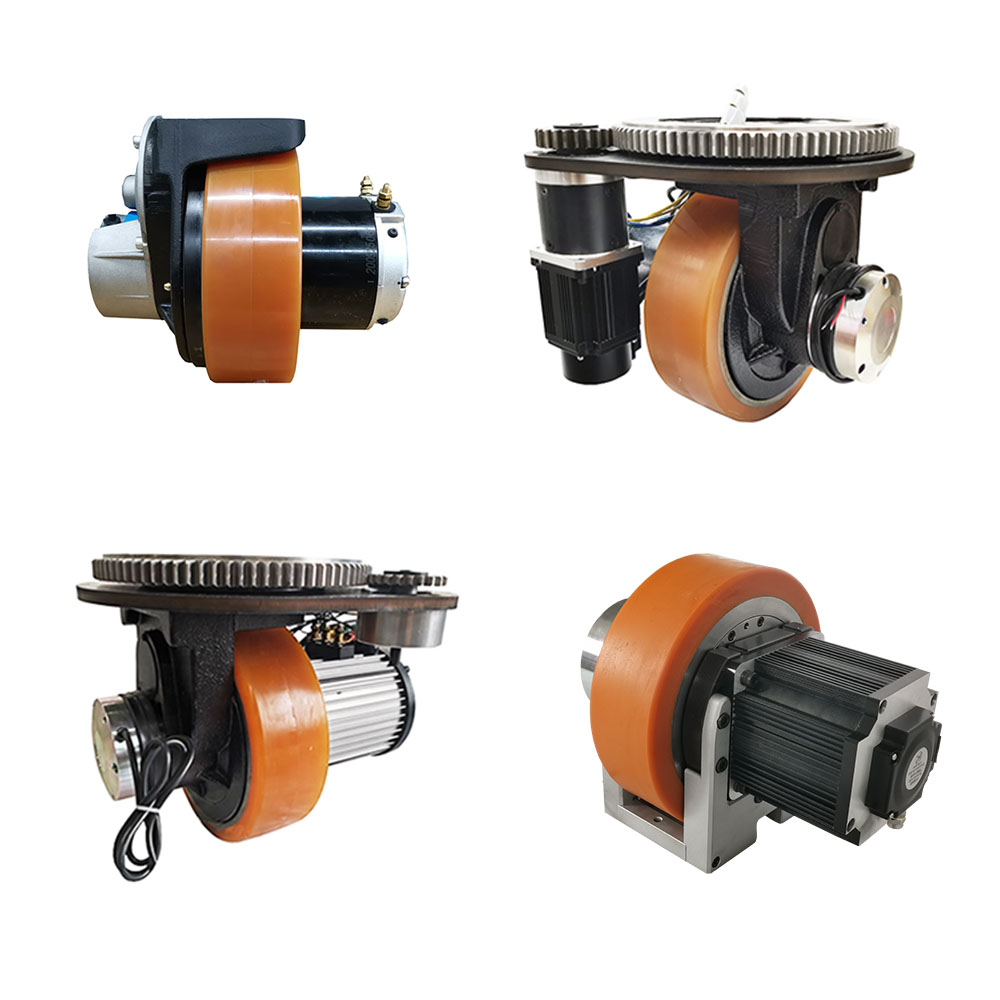
TZBOT 750W 1000KG Load Capacity Horizontal Drive Wheel Assembly AGV Wheel for Wholesale Automated Guided Robot
A wholesale-oriented 750W horizontal drive wheel for 1,000kg load platforms. It is a practical choice for standard latent AGVs, cart movers, and production-line transfer robots seeking a balance between traction, energy use, and initial project cost.
Review specifications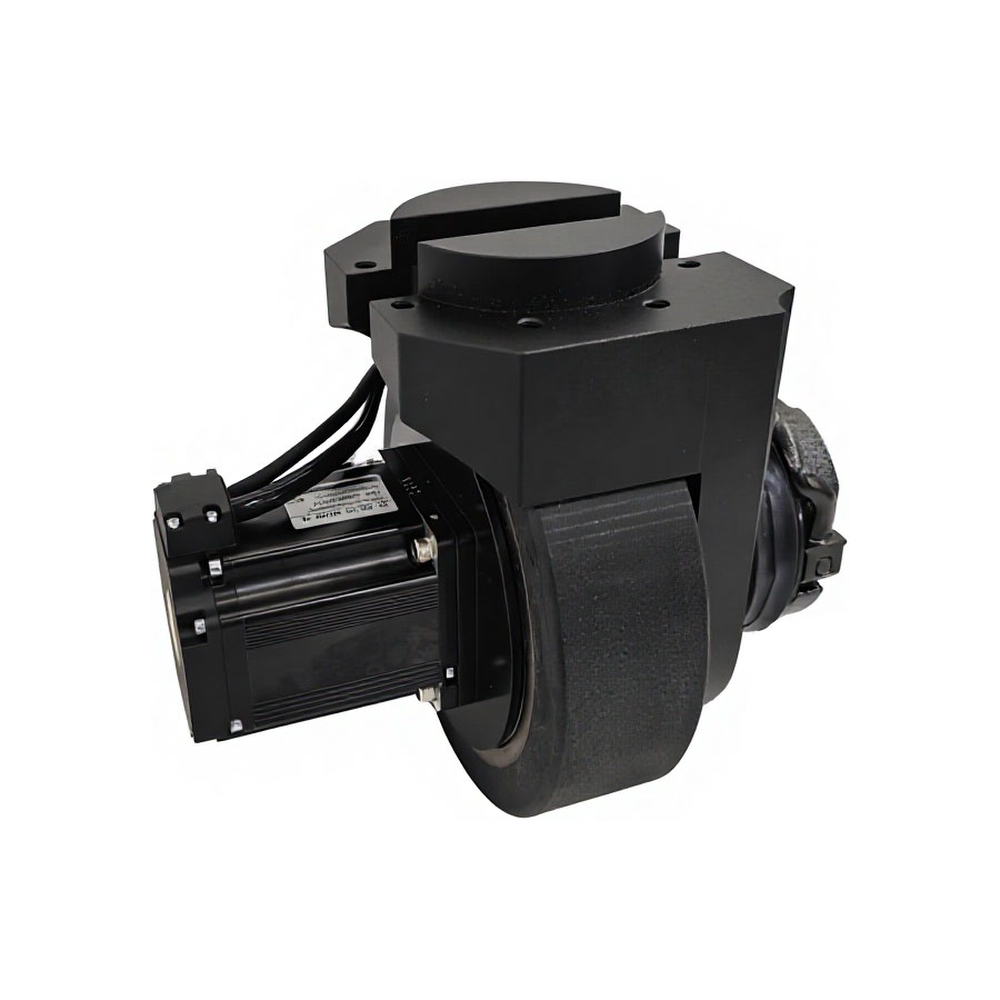
TZBOT 1000kg Bearing Capacity AGV Wheel 1000w Servo Motor Material Handling Equipment Part Horizontal Drive Wheel
For heavier-duty horizontal drive applications, this 1,000W servo-motor wheel assembly supports up to 1,000kg bearing capacity. Recommended when acceleration, gradeability, or duty cycle is more demanding than a standard 750W unit can support.
Review specifications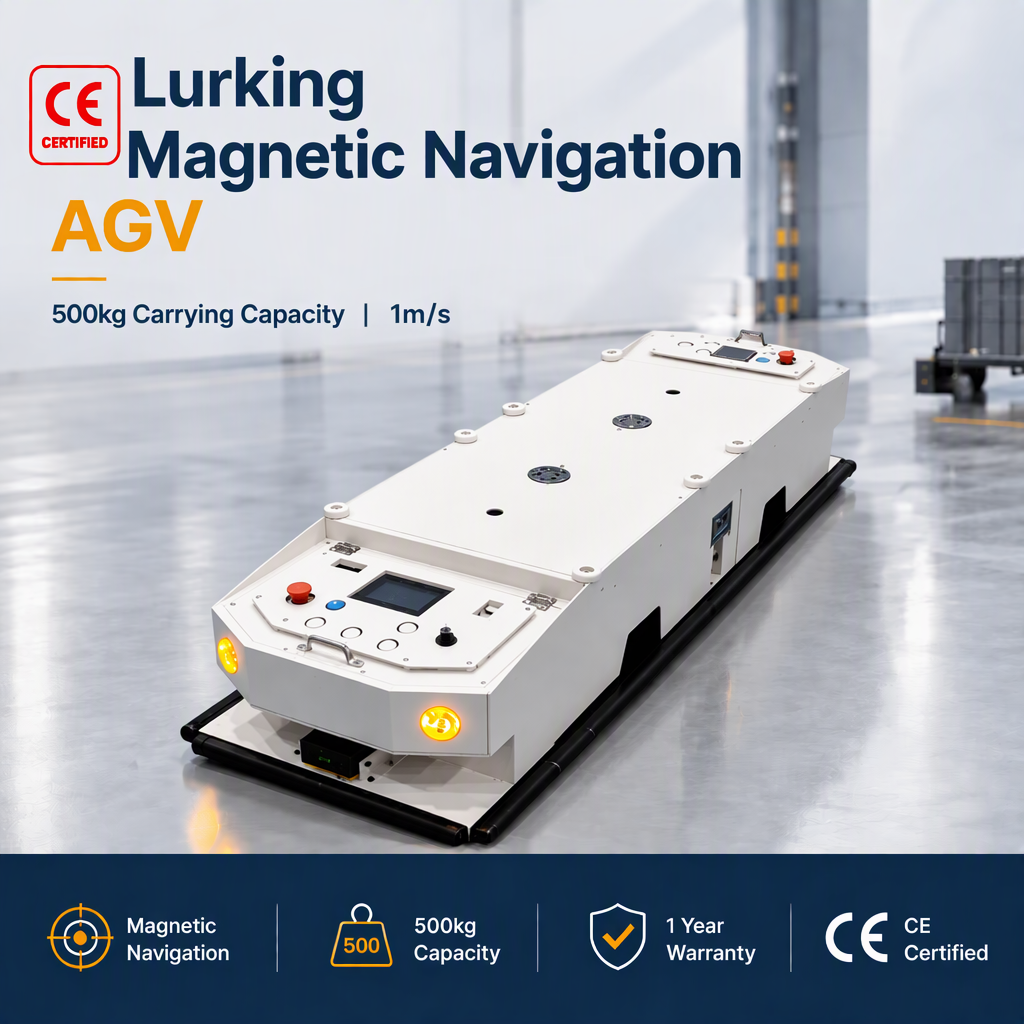
TZBOT EU CE Lurking AGV Material Handling Equipment Logistic Automation 500kg Bidirectional Magnetic Guidance Mobile Robot
A CE-marked 500kg bidirectional latent AGV for warehouse logistics. Magnetic guidance gives predictable routes and fast commissioning in existing facilities, and it pairs naturally with magnetic tape, RFID station tags, and safety bumpers.
Review specifications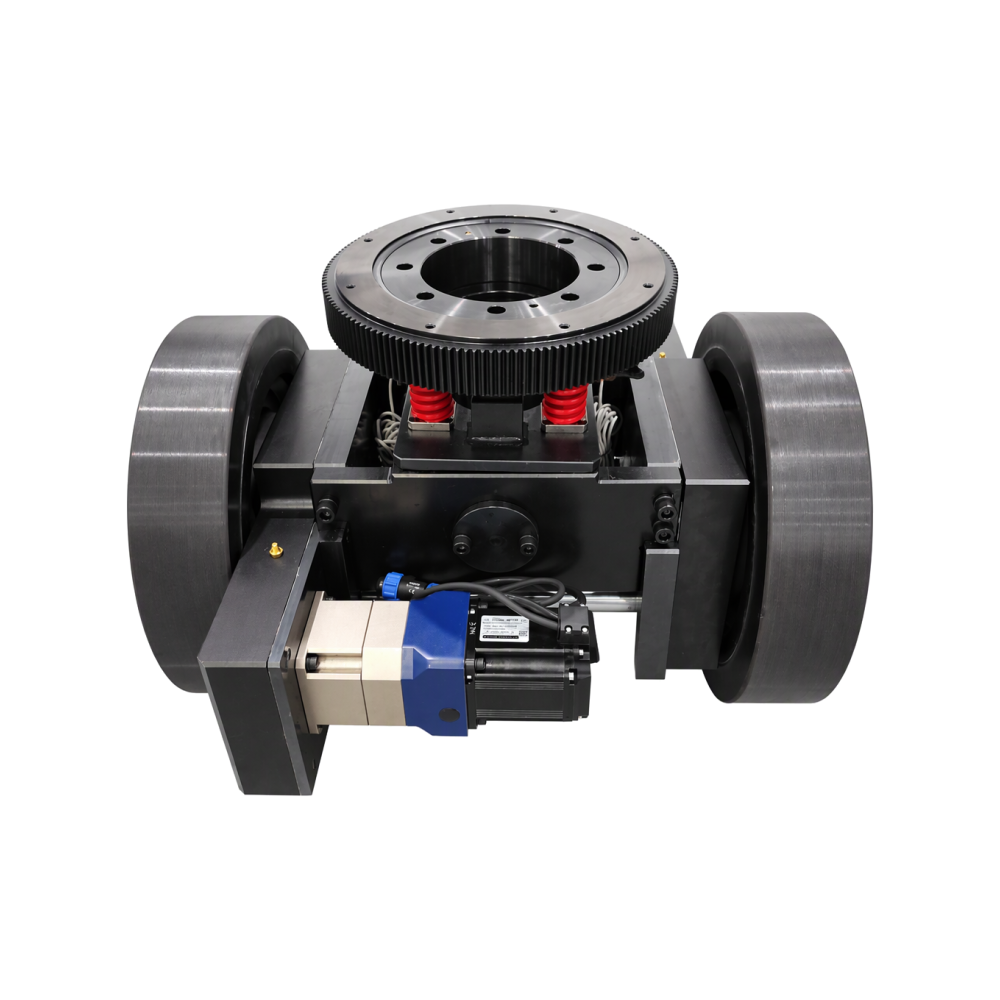
TZBOT Heavy Duty Series AGV Wheel 1000w 48v Servo Motor Control Mobile Robot Differential Drive Wheel with Spring Suspension
A 48V 1,000W differential drive wheel with spring suspension for uneven floors and heavy-duty mobile robots. Suspension helps maintain traction, while differential steering supports tight turns, docking, and variable payload distribution.
Review specifications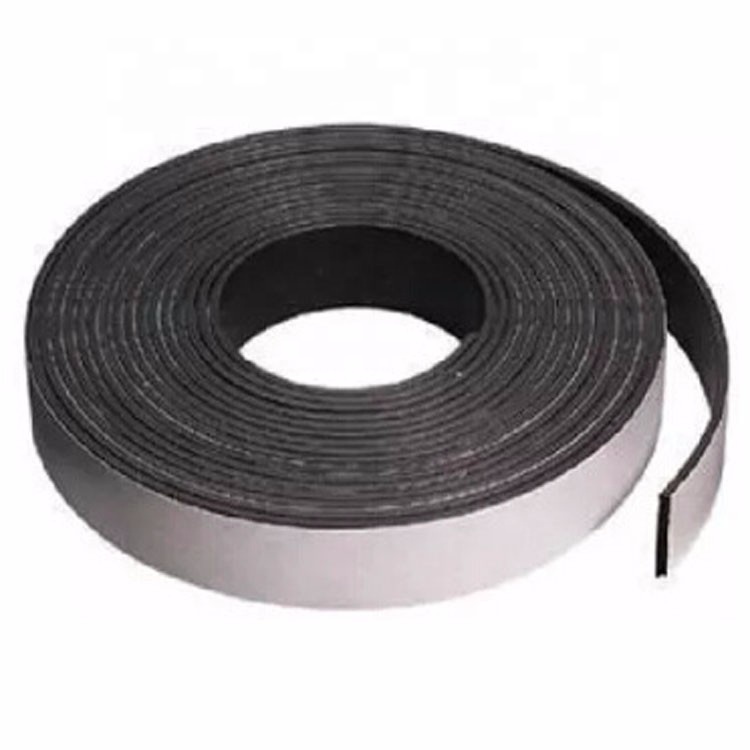
Sell Well Magnetic Tape Which N Pole up of 5cm Width, 25m One Roll for AGV Paved Path Can Retail or Wholesale
N-pole-up 50mm magnetic tape supplied in 25m rolls for AGV path installation. Suitable for magnetic-guidance latent AGVs and route expansions. Wholesalers can combine tape with sensors, RFID tags, and protective tape to create a complete navigation consumables program.
Review specifications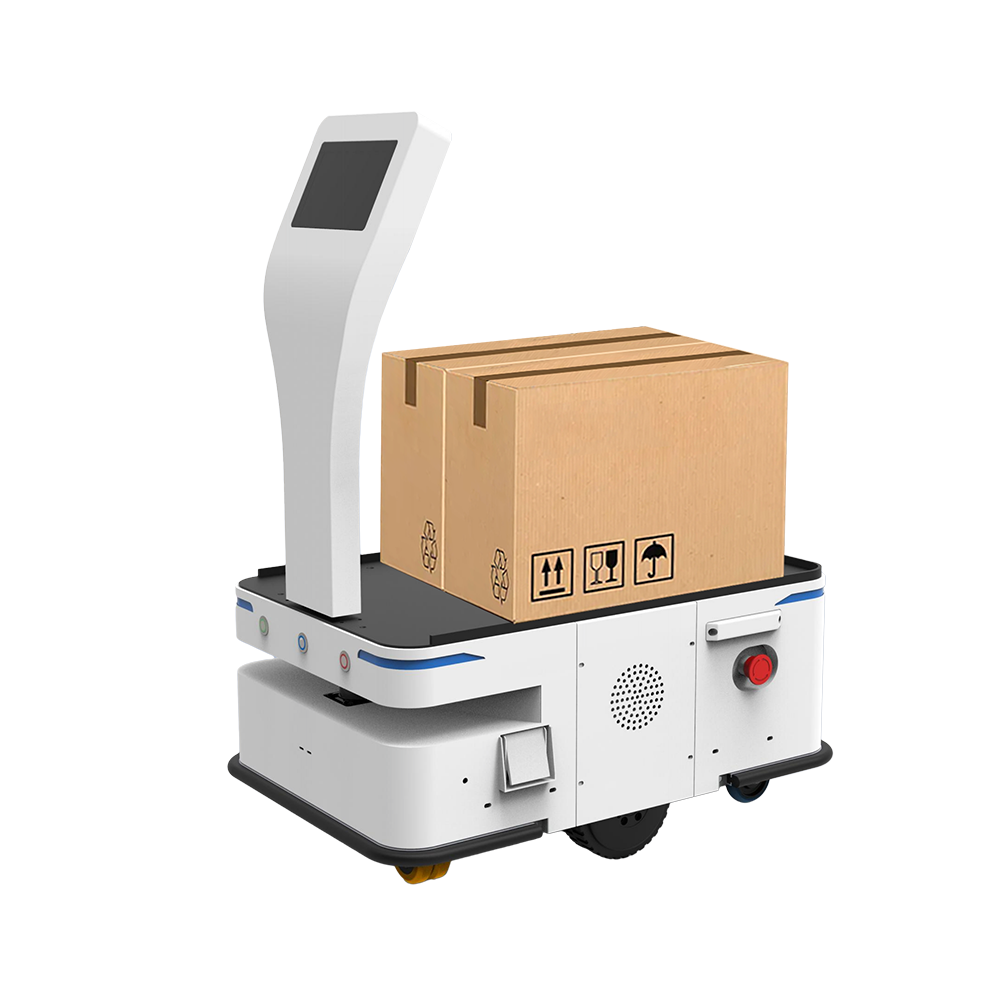
TZBOT High Precision Guidance Laser Slam Navigation AMR Robot 80kg Carrying Capacity Material Handling AMR Robot with 7 Inch HMI
An 80kg laser SLAM AMR with a 7-inch HMI for flexible material handling. No magnetic tape is required, so it suits warehouses and laboratories that change layouts frequently. Recommended for light payload transport, machine tending, and internal logistics pilots.
Review specificationsWhy China’s Intralogistics Automation Supply Chain Still Wins on Depth, Speed and Cost-to-Integrate
For international buyers, China’s advantage is no longer just unit price. It is the density of motor, reducer, encoder, controller, wheel, and sensor suppliers within a short production radius — and the ability to move from drawing to tested prototype without losing engineering context.
China’s intralogistics automation cluster compresses sampling cycles. A buyer can source a 1,000kg horizontal drive wheel, its matched servo or BLDC driver, magnetic guide sensor, RFID position sensor, and magnetic tape through one quality system rather than reconciling tolerances across five vendors. That matters because drive wheels are not stand-alone parts; they are mechanical, electrical, and control interfaces at the same time.
Zhejiang Torqen Technology Co., Ltd. was founded in 2015 in Zhejiang, China, and operates as a manufacturer and trading company with a 1,000–3,000 m² factory, 51–100 employees, US$5M–10M annual output, ISO 9001:2015 certification, Intertek onsite verification, eight patents, and a 4.9/5 buyer rating. For SEO and procurement due diligence, these are verifiable experience and authority signals — not just catalog claims.
The better sourcing question is not “Which drive wheel is cheapest?” but “Which supplier will reduce integration risk for the next three years?” That shifts evaluation toward matched drivers, test evidence, spare-part commonality, export terms, and engineering response time. Torqen’s single-source drive-train model is built around that shift.
Years in drive and motion technology since 2015
Patents awarded around drive and motion designs
Employees and engineers supporting OEM projects
Inquiry response rate with fast technical follow-up
Why Global Wholesalers and OEM Integrators Choose Torqen
Intralogistics automation buyers do not only purchase a wheel or a sensor. They purchase compatibility, repeatability, documentation, and delivery confidence. Torqen’s advantage is the ability to match mechanical, motor, driver, and navigation components inside one engineering workflow.
One Factory, One Matched Drive Train
Drive wheels, motors, reducers, encoders, servo/BLDC drivers, and navigation sensors can be specified together. This reduces integration risk and shortens the path from prototype to stable production.
Customization to the Interface Level
Sample-based and design-based customization includes motor power and voltage, reduction ratio, wheel diameter and tread material, encoder type, brake options, mounting interfaces, and buyer-label packaging.
Quality Evidence, Not Claims
ISO 9001:2015 certification, Intertek onsite verification, five in-house testing instruments, finished-product inspection, and extended-duration prototype testing before production release.
Wholesale-Ready Packaging and Documentation
Export packing, spare-part kits, product labels, and buyer-specific packaging help distributors serve local AGV/AMR customers without opening every carton for configuration checks.
Export Terms That Fit Different Markets
Payment methods include T/T, L/C, D/P, D/A, credit card, PayPal, Western Union, cash, and escrow. Trade terms include FOB, CFR, CIF, EXW, CIP, FCA, CPT, DDU, and express delivery.
Application Experience Across Sectors
Products are used in AGVs and AMRs, forklifts, aerial work platforms, airport equipment, agricultural machines, hydraulic applications, floor scrubbers and sweepers, wind energy, marine equipment, and medical devices.
What Wholesalers Should Put in Their 2026–2030 Intralogistics Procurement Plan
The next buying cycle will reward distributors and OEMs who can prove lifecycle cost, integration speed, and spare-part availability — not only a low first price. These four procurement shifts are especially visible in AGV/AMR drive-train and navigation sourcing.
TCO Becomes the Primary Bid Variable
Buyers are moving from “cost per wheel” to cost per operating hour, including downtime, replacement labor, and spare-part logistics. A lower-priced wheel that causes integration delays is no longer viewed as a saving.
Modular Drive-Train Bundles Replace Part-by-Part Buying
AGV builders increasingly prefer a wheel, matched driver, encoder, brake, and sensor package from one supplier. Shared connectors, parameter files, and test records reduce engineering rework at the integrator level.
Local Spare-Part Buffers and Quick-Swap Modules
Wholesalers are expected to hold fast-moving parts close to end users. Lower-clearance drive wheels, magnetic tape, sensors, and driver modules are the most common quick-swap items in regional service programs.
Traceability and Certification Evidence
CE-related documentation, ISO 9001:2015 process control, serialized production records, and inspection reports are becoming normal tender requirements — especially for warehouse projects with multi-year service contracts.
Typical OEM Sourcing Weighting for Custom Drive-Train Projects
Indicative decision weighting observed in AGV/AMR component sourcing discussions. Use it as a negotiation framework, not a market statistic.
| Decision Factor | Lowest-Price Purchase | Torqen Lifecycle-Cost Approach |
|---|---|---|
| Drive wheel fit | Generic wheel; adapter plate and trial-and-error integration | Motor power, voltage, reduction ratio, wheel diameter, brake, encoder, and mounting matched to vehicle data |
| Driver compatibility | Separate driver vendor; parameter tuning becomes buyer risk | Servo/BLDC drivers matched to Torqen drive wheels, with integration support |
| Navigation package | Sensor sourced independently; cable and protocol issues delayed | Magnetic guide, RFID, lidar, and magnetic tape available within one supply conversation |
| Spare parts | Replacement parts ordered only after failure | Common mounting patterns, export packing, and initial spare kits for wholesale programs |
| Quality evidence | Catalog specifications without deep test documentation | ISO 9001:2015 system, Intertek onsite verification, five testing instruments, and extended prototype testing |
Where AGV/AMR Drive and Navigation Technology Is Moving Next
Product development is shifting from isolated components to integrated motion modules. Buyers who specify interfaces correctly today can avoid redesign when payloads rise, aisles narrow, or facilities introduce mixed human-robot traffic.
Low-Profile Horizontal Drive Modules
Lower chassis heights are becoming a design priority for latent AGVs and under-ride carts. Horizontal drive wheel assemblies help engineers reduce deck height without sacrificing load capacity.
48V and Servo/BLDC Convergence
Higher-efficiency 48V architectures and matched servo/BLDC drivers are becoming common for heavier AGV platforms. Field-oriented control and proper driver matching improve smoothness, response, and energy use.
Sensor Fusion for Navigation Fallback
Magnetic guidance, RFID station recognition, and laser SLAM are being combined rather than treated as isolated choices. Fallback navigation and station-level accuracy are especially important in brownfield warehouses.
Spring Suspension and Floor Adaptability
Uneven floors, dock transitions, and variable payload distribution are pushing demand for suspension-equipped differential drive wheels. Stable wheel contact protects traction and reduces mechanical stress.
Safety and CE-Ready Architectures
Bumper integration, obstacle avoidance, emergency-stop logic, and documented component selection are moving earlier into the design phase. CE-marked systems such as the 500kg magnetic guidance AGV help buyers start from a stronger compliance baseline.
Digital Serviceability and Traceability
Encoder feedback, fault logs, and serialized production records make maintenance more predictable. For wholesalers, digital serviceability means fewer mis-shipped spare parts and faster technical diagnosis across borders.
What This Means for Your Next Purchase Order
- Specify the mechanical interface, not only the wheel diameter.
- Ask for matched driver parameter files with the first sample order.
- Add fast-moving spare parts to the initial wholesale shipment.
Match the Product to the Real Operating Condition
A drive wheel that performs well in a clean, flat warehouse may fail on a ramp or at a dock transition. Use the operating condition first, then confirm voltage, payload, and navigation.
| Application Condition | Recommended Drive / Navigation | Why It Fits | Product to Review |
|---|---|---|---|
| Low-clearance latent AGV, 500–1,000kg | Horizontal drive wheel with magnetic guidance or QR navigation | Compact build height and straightforward integration for under-ride carts and transfer platforms | 750W 1,000kg assembly or 1,000kg heavy-duty assembly |
| Uneven floor, floor transitions, or heavy payload | 48V differential drive wheel with spring suspension | Suspension maintains wheel contact and traction when floor height varies | 1,000W 48V differential drive wheel |
| Mobile manipulation with collaborative robot arm | Four-wheel-drive Ackerman chassis | Controlled steering and stable platform support for arm reach and inspection tasks | Ackerman composite robot chassis |
| Flexible layout, no magnetic tape, light payload | Laser SLAM AMR with HMI | No fixed path installation; faster reconfiguration for changing warehouse or lab layouts | 80kg laser SLAM AMR |
Information gain for faster quotation: prepare gross vehicle weight, target speed, maximum gradient, battery voltage, available chassis height, wheel diameter limit, floor material, load center, duty cycle, annual quantity, destination port, and required certification. These values determine motor power, reduction ratio, wheel diameter, driver current, and packing method.
Questions Buyers Ask Before Ordering AGV Drive Wheels and Navigation Components
These are the most practical questions from OEM engineers, wholesale distributors, and warehouse automation contractors during the quotation stage.
What does a complete AGV drive wheel assembly usually include?
A typical assembly includes the traction wheel, hub, motor, reducer or gearbox, encoder interface, and mounting structure. Depending on the model, buyers can specify brake options, wheel tread material, connector type, and input voltage. For matched projects, Torqen can also supply the servo/BLDC driver and recommended parameter settings.
Which drive wheel should I choose for a low-clearance chassis?
For low-clearance AGVs, a horizontal drive wheel assembly is usually the correct starting point because it keeps the motor and gearbox low within the chassis. Confirm the wheel diameter limit, available height, load capacity, speed, and floor condition. The 750W 1,000kg and 1,000W 1,000kg horizontal assemblies are suitable review points for different acceleration and duty-cycle needs.
Can Torqen customize motor power, voltage, reduction ratio, brakes, encoders, and mounts?
Yes. Torqen supports sample-based customization, design-based customization, OEM production, design services, and buyer-label packaging. Typical customization areas include motor power and voltage, reduction ratio, wheel diameter and tread material, encoder type, brake options, and mounting interfaces. Share the vehicle specification and annual demand so the engineering team can confirm feasibility.
How is product quality verified before shipment?
The quality management system is certified to ISO 9001:2015, and the facility has been verified onsite by Intertek. Torqen runs finished-product inspection with five in-house testing instruments, and prototypes undergo extended-duration testing before production parts are released. For project tenders, specify the inspection report and traceability requirements in the purchase order.
Do you support OEM, ODM, and wholesale distributor programs?
Yes. Torqen supports OEM/ODM work, sample-based customization, design-based customization, buyer-label packaging, and wholesale supply of drive wheels, motors, drivers, sensors, magnetic tape, and AGV accessories. Distributors can discuss initial spare-part kits, common mounting patterns, and packaging requirements to serve local AGV/AMR end users.
What payment and delivery terms are accepted?
Accepted payment methods include T/T, L/C, D/P, D/A, MoneyGram, credit card, PayPal, Western Union, cash, and escrow, in USD, EUR, JPY, CAD, AUD, HKD, GBP, or CNY. Delivery terms include FOB, CFR, CIF, EXW, CIP, FCA, CPT, DDU, and express delivery. Confirm the destination port and preferred term during quotation.
How do I choose between magnetic guidance, RFID, and laser SLAM?
Magnetic guidance is cost-effective for fixed routes and fast deployment. RFID position sensors are useful for station recognition, speed zones, and junctions. Laser SLAM fits flexible layouts where routes change frequently and no fixed path should be installed. Many projects use a combination: magnetic tape for primary guidance, RFID for station logic, and lidar for obstacle avoidance or fallback positioning.
What information speeds up a factory-direct quotation?
Provide gross vehicle weight, target speed, maximum gradient, battery voltage, chassis height, wheel diameter limits, floor material, load center, duty cycle, navigation method, annual quantity, destination country, and any certification requirement. For custom projects, include a drawing or 3D model of the mounting interface if available.
Which industries use Torqen drive products?
Torqen products are used in AGVs and AMRs, forklifts, aerial work platforms, airport equipment, agricultural machines, hydraulic applications, floor scrubbers and sweepers, wind energy, marine equipment, and medical devices. The common requirement is reliable motion control in a compact or serviceable package.
Send Your AGV/AMR Specification for a Factory-Direct Proposal
Include gross vehicle weight, target speed, maximum gradient, battery voltage, chassis height, navigation route, and annual demand. Our engineers will recommend the drive wheel, servo/BLDC driver, sensor package, customization options, trade terms, and export packing.
Email: info@torqenbot.com · Zhejiang Torqen Technology Co., Ltd. · Room 405, No. 1, Fuchun Silicon Valley Innovation Center, No. 398 Jiulong Avenue, Yinhu Street, Hangzhou, Zhejiang, China
