China Top Towing AGV Factories & Exporter
A practical procurement and technical guide for buyers comparing China top towing AGV factories & exporter capabilities, with verified products from Zhejiang Torqen Technology Co., Ltd. — ISO 9001:2015, Intertek onsite-verified and OEM/ODM-ready since 2015.
8 Towing AGV Components Recommended by Our Engineers
These eight products are not a random catalogue list. They represent the drive, control, navigation and vehicle building blocks that determine whether a tugger AGV can pull a trailer train reliably, stop accurately and run multiple shifts without repeated integration work.
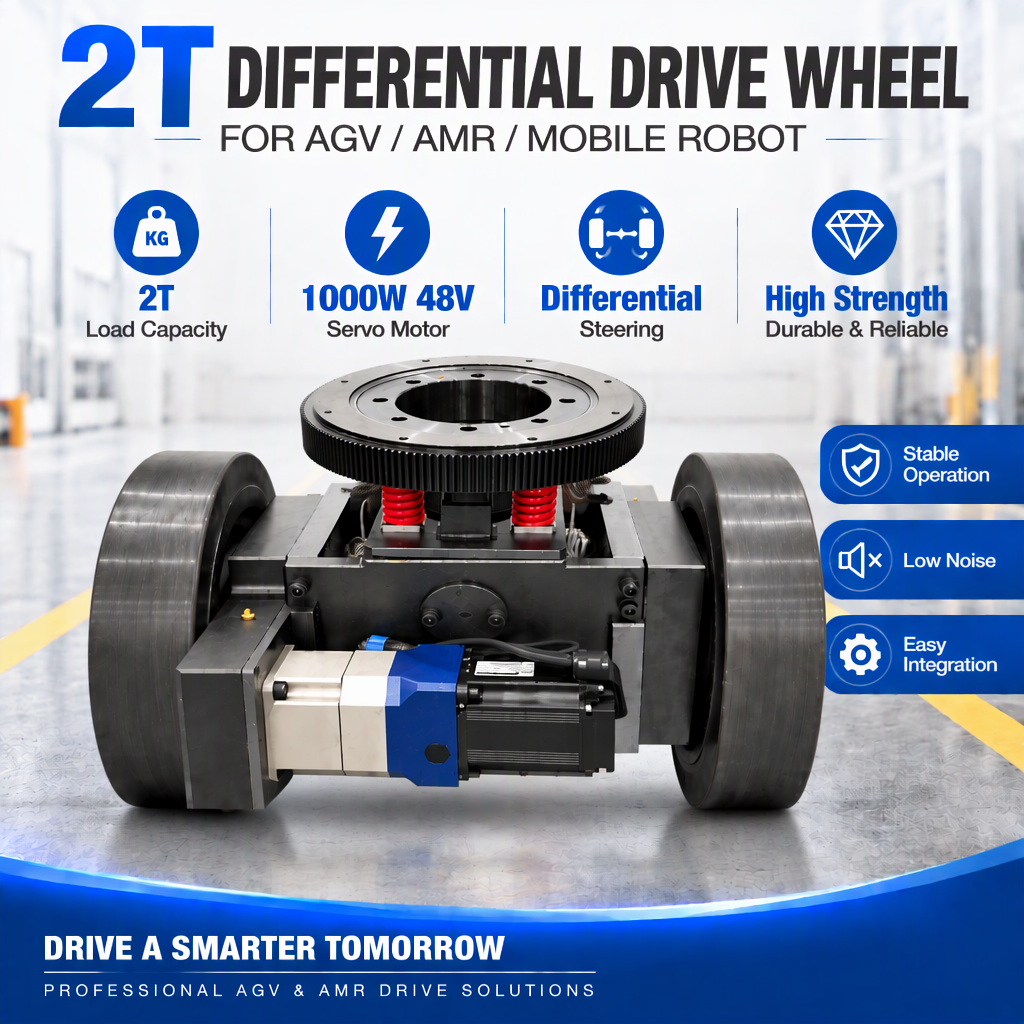
TZBOT 2000kg Traction Capacity Logistic Robot Part AGV AMR Differential Steering Drive Wheel for Sale
Recommended for towing AGV tractors that need stable traction under a trailer train. The 2,000 kg class differential steering wheel supports reliable start-stop control on concrete warehouse floors.
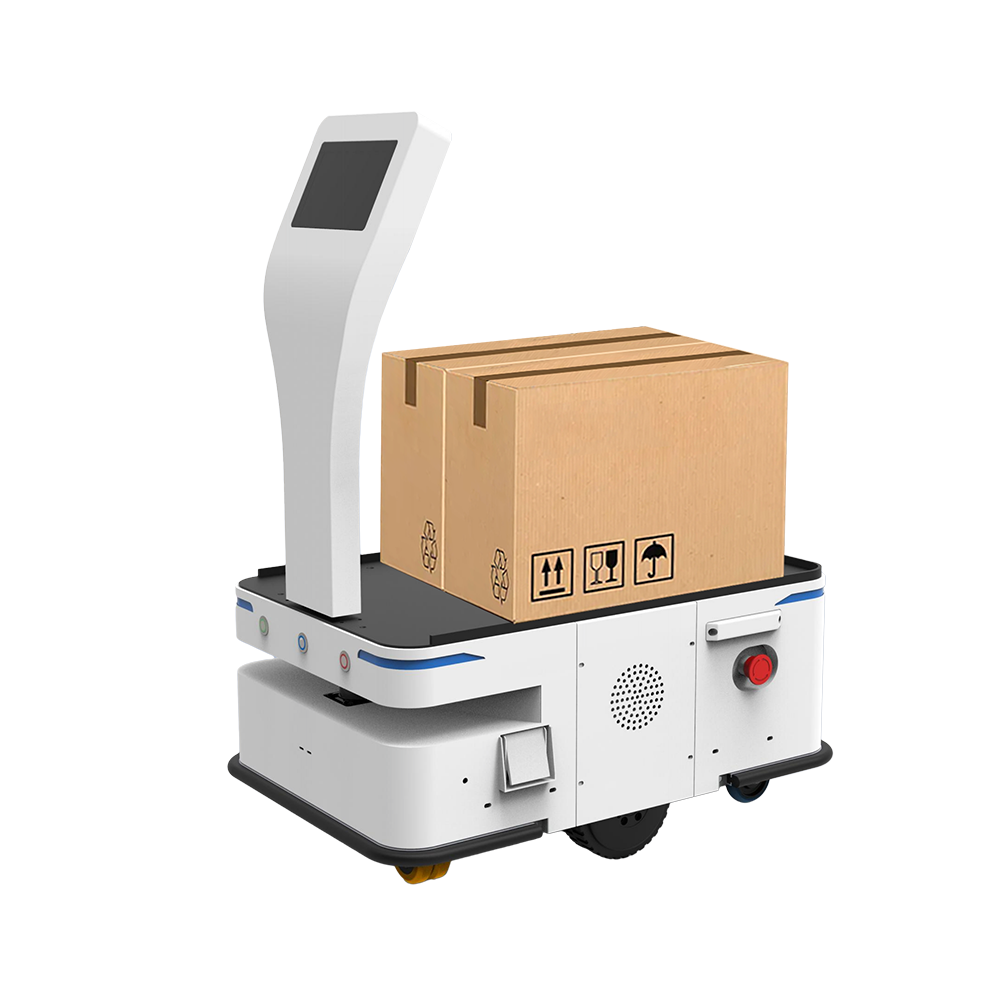
TZBOT High Precision Guidance Laser Slam Navigation AMR Robot 80kg Carrying Capacity Material Handling AMR Robot with 7 Inch HMI
Useful for flexible material handling where routes change frequently. Laser SLAM reduces floor-infrastructure work and the 7-inch HMI simplifies workstation deployment.
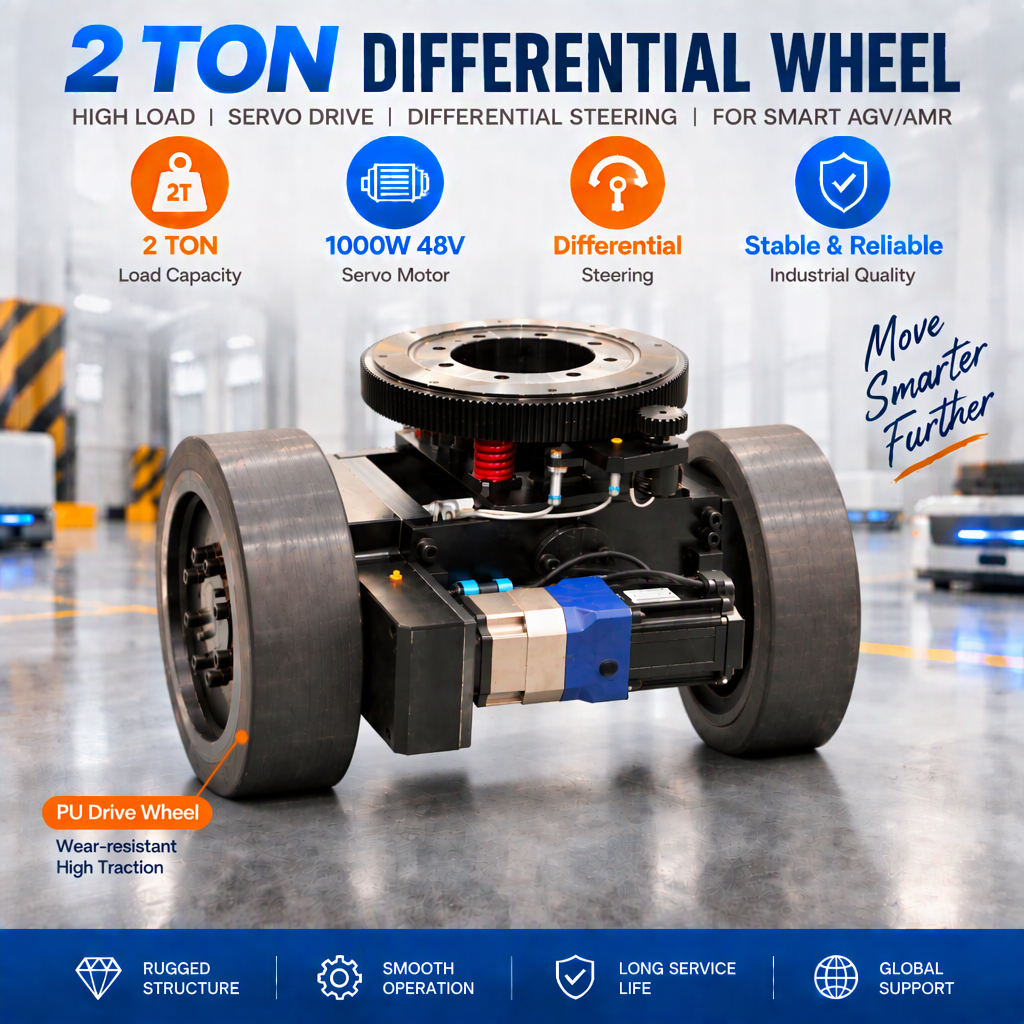
TZBOT Customized 2000kg Bearing Duty AGV Wheel 1000w 48V Heavy Duty Series Mobile Robot Differential Drive Wheel with Suspension
Built for heavy mobile robots and high-load towing platforms where suspension improves floor contact. The 1000 W, 48 V configuration is suitable for demanding multi-shift operations.
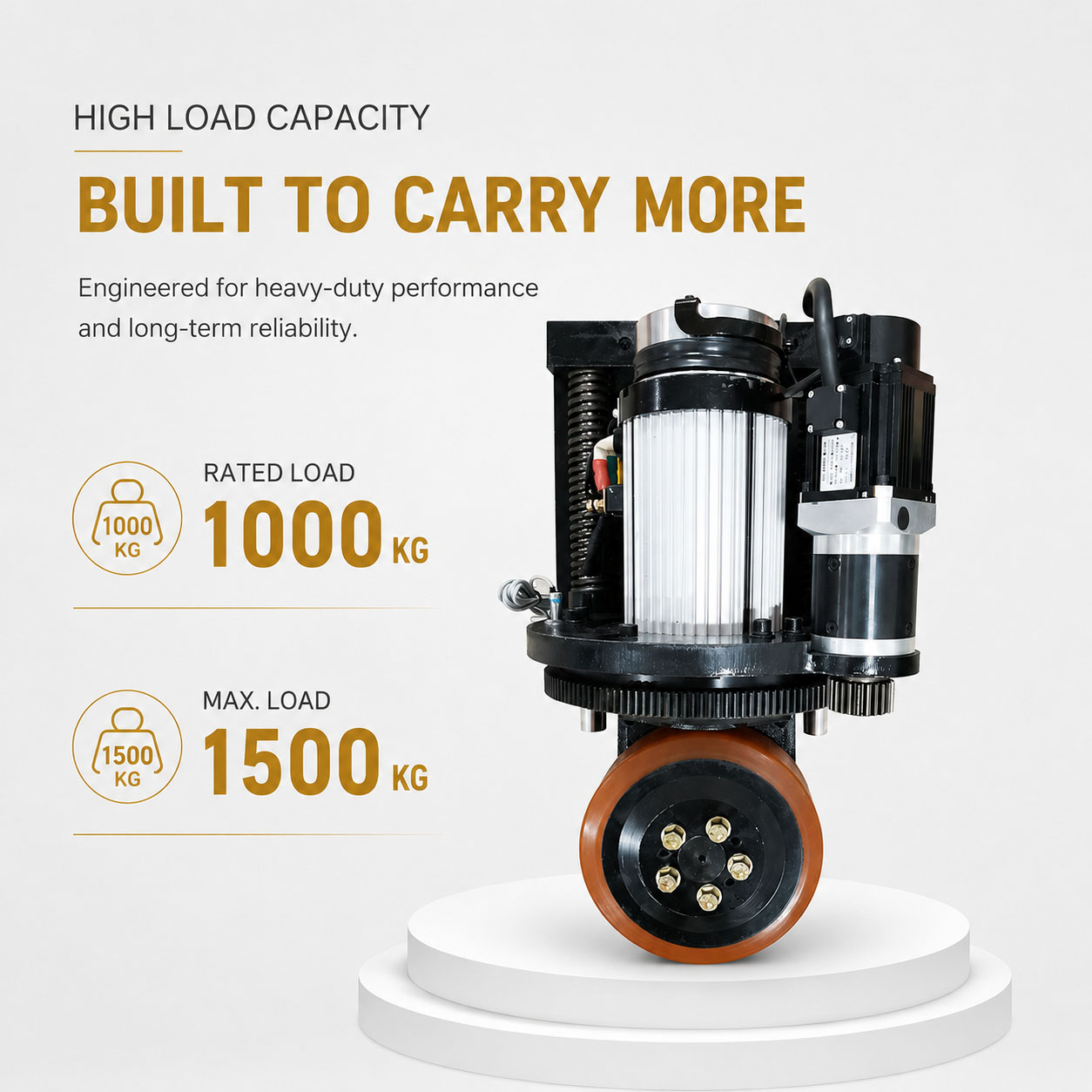
TZBOT 1000KG Bearing Duty 1500w Servo Motor AGV Forklift Driving Wheel with Suspension for Automatic Forklift
An appropriate choice for automatic forklifts and steering-driven towing tractors. The 1500 W servo motor and suspension package help maintain traction during acceleration and braking.
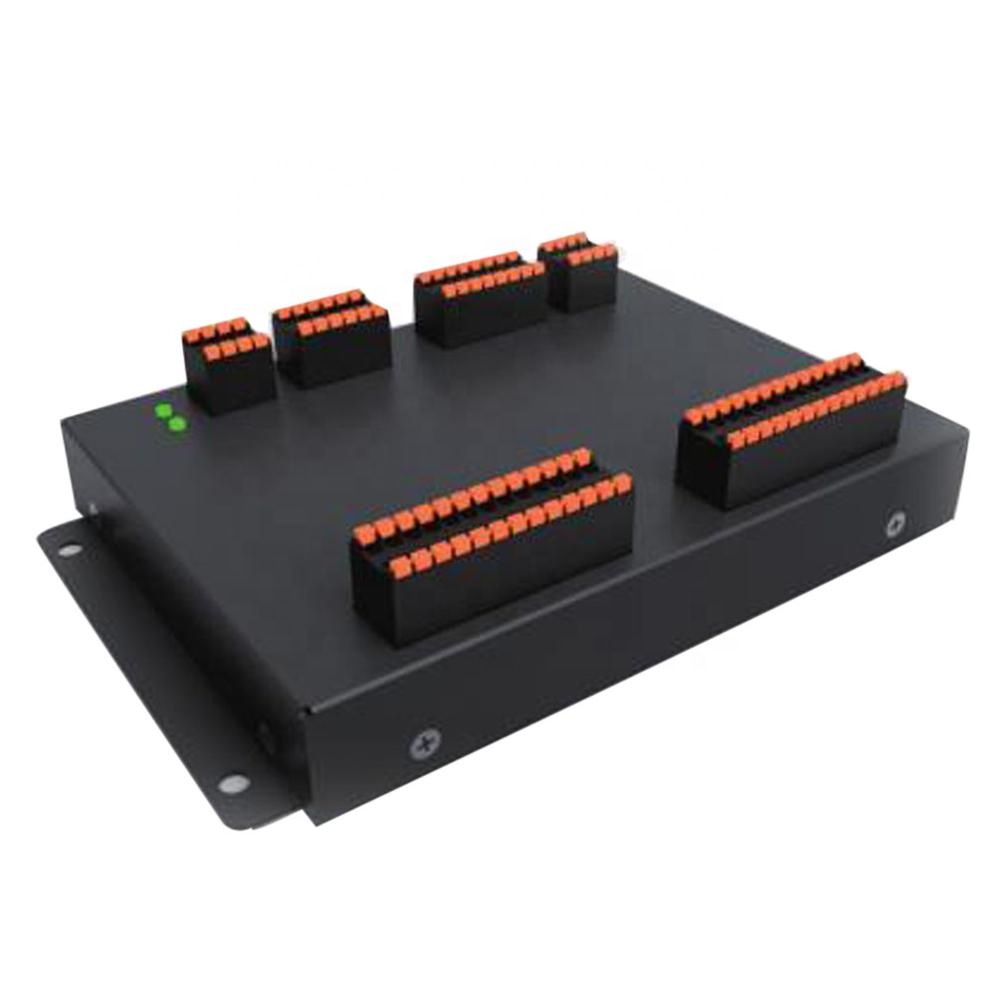
TZBOT Smart Controller TZC-MST-FX200D-A for Guiding the AGV Robot
The central control layer for a towing AGV project. It supports route logic, vehicle I/O coordination and integration with safety, navigation and drive subsystems.
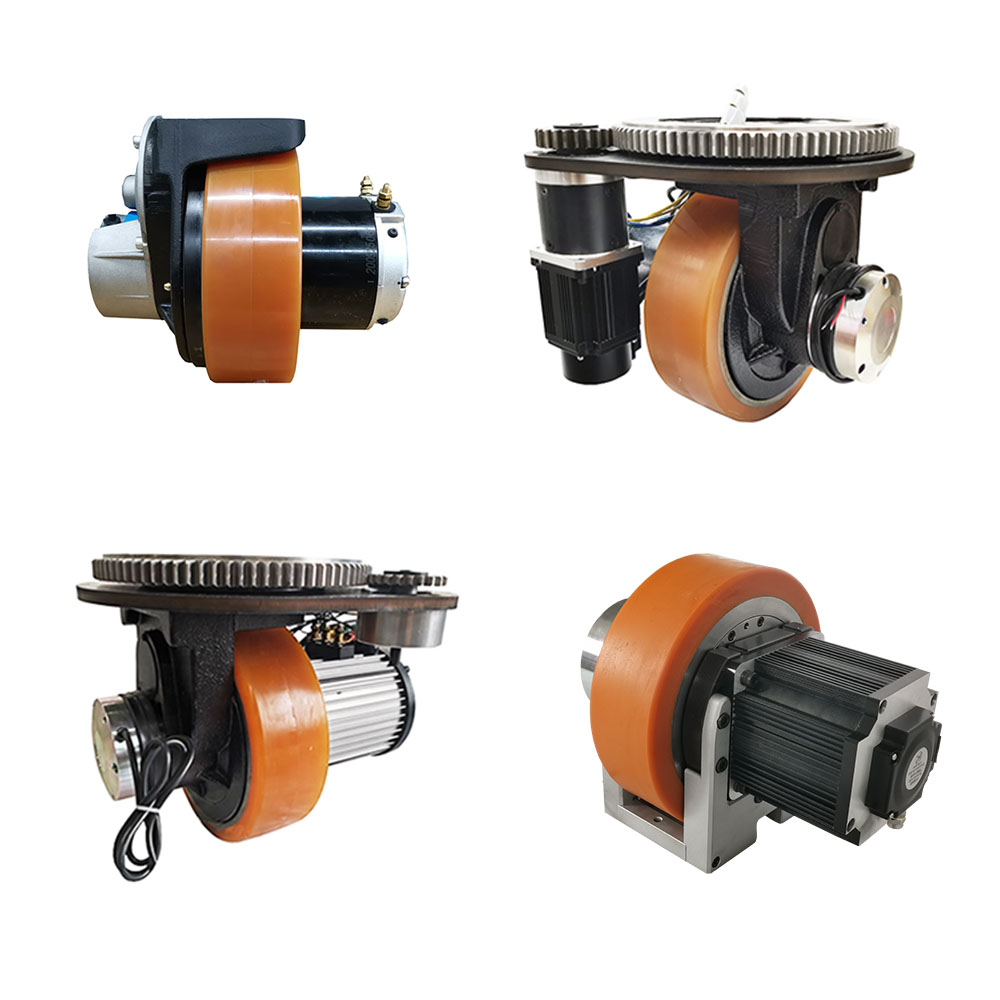
TZBOT 750W 1000KG Load Capacity Horizontal Drive Wheel Assembly AGV Wheel for Wholesale Automated Guided Robot
Designed for low-clearance AGV chassis. The horizontal layout allows a compact vehicle profile for latent towing robots and under-ride transport platforms.
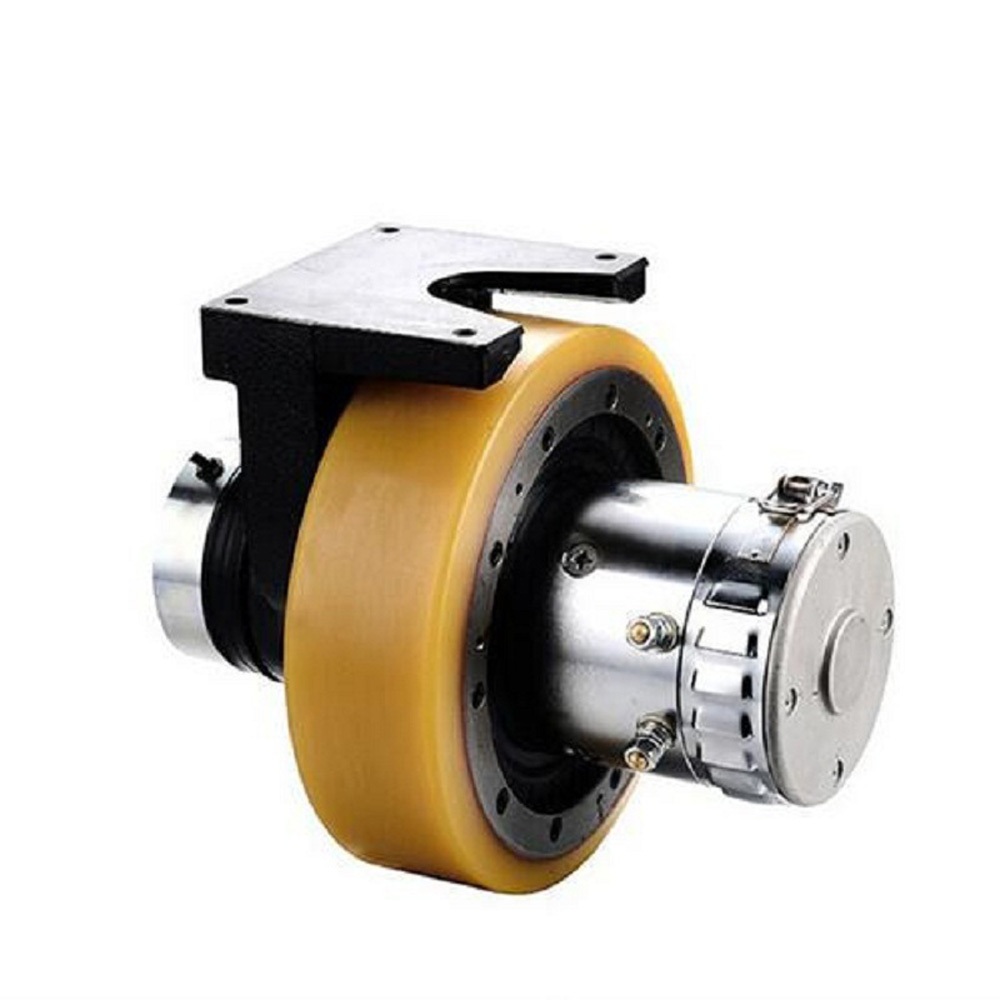
TZBOT TZ18-D12 1200W 24V Horizontal Drive Wheel Assembly Horizontal Wheel Unit Omnidirectional Automatic Steering Wheel
For compact aisles and precise docking, this omnidirectional steering wheel unit enables flexible vehicle motion. It suits projects where space is constrained and maneuverability matters.
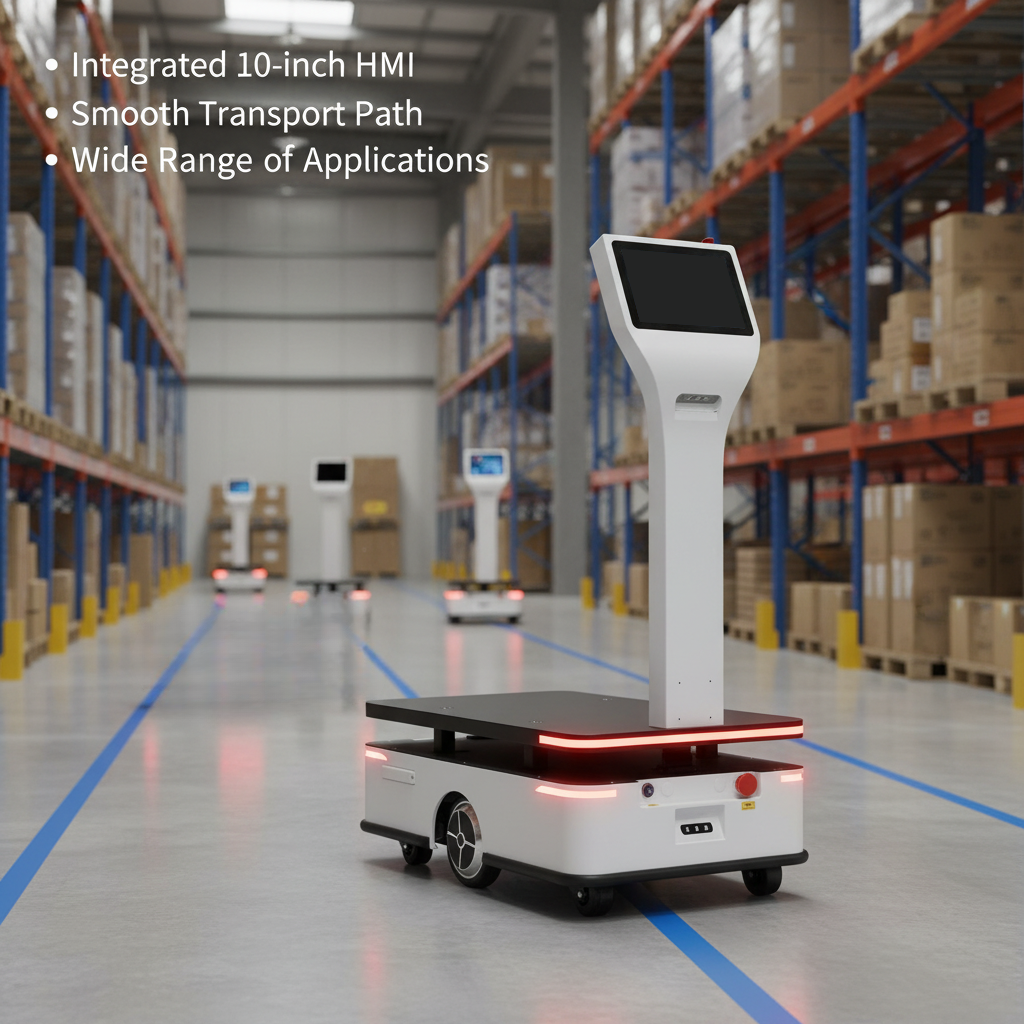
TZBOT Intelligent Warehouse Logistic Robot Unmanned Control System Customizable 80kg Payload AGV Transfer Cart Slam AMR
A vehicle-level option for warehouse logistics teams that need a customizable, unmanned transfer platform. Suitable for pilot projects, internal logistics and flexible route validation.
Zhejiang Torqen established, focused on motion control and AGV components
Patents awarded through in-house R&D and drive-technology development
Inquiry response rate, supported by an international sales and technical team
Buyer rating based on verified cooperation feedback and repeat orders
Why China Top Towing AGV Factories & Exporters Matter in 2025
Sourcing a towing AGV is not the same as buying a standalone pallet truck. A tugger AGV must start, stop, turn and reverse while pulling one or more trailers. That changes the engineering equation: the drive wheel, servo or BLDC controller, steering method, navigation sensor and safety logic must be matched as a system, not selected as isolated parts. For buyers evaluating China top towing AGV factories & exporter options, the decisive question is no longer “Who has the lowest FOB price?” It is “Who can prove that the complete drive train will behave predictably under my route, load and duty cycle?”
This is where a factory-level supplier becomes more valuable than a trading listing. Zhejiang Torqen Technology Co., Ltd. has manufactured automatic guided vehicles, AGV drive wheel assemblies, DC/AC motors, encoders, reducers, motor controllers, caster and PU wheels, and in-wheel motor units since 2015. The company operates under an ISO 9001:2015 quality management system, has been verified onsite by Intertek, holds eight patents and serves OEM integrators from a 1,000–3,000 m² facility with a 51–100 person team.
The information gain in this guide is a procurement model: begin with route physics, then choose the drive configuration, then verify the controller and navigation stack, and finally compare the exporter on test evidence, spare-parts support and total cost of ownership. That sequence prevents the most expensive failure mode in towing AGV projects — a vehicle that passes a short demo but loses traction, overheats a driver or mispositions a trailer during a full production shift.
Procurement signals that separate a component seller from a towing AGV partner
How to Match a Drive Wheel and Navigation Method to a Towing AGV
The same towing AGV body can behave very differently depending on drive layout and navigation. Use this engineering comparison before requesting samples.
| Drive configuration | How it steers | Best-fit towing AGV | Procurement check |
|---|---|---|---|
| Differential drive unit | Two independently driven wheels create turning through speed difference. | Compact latent, jacking and tugger AGVs with predictable routes. | Check floor friction, trailer sway, wheel tread and controller current margin. |
| Single steering drive wheel | A drive motor plus steering motor controls wheel angle. | Forklift-style tractors, tricycle chassis and controlled trailer towing. | Confirm steering encoder resolution, brake logic and zero-radius maneuverability. |
| Horizontal drive assembly | The motor is mounted horizontally to reduce chassis height. | Low-clearance AGVs, under-ride carts and compact towing platforms. | Verify suspension travel, ground clearance and service access. |
| Omnidirectional steering wheel | Drive and steering combine for flexible, precise docking motion. | Narrow aisles, tight transfer stations and high-value docking points. | Compare control complexity, sensor fusion and total cost against route value. |
| Navigation method | Infrastructure | Strength | Best use in towing AGV projects |
|---|---|---|---|
| Magnetic guide sensor | Magnetic tape on the floor. | Low cost, fast deployment and stable repeat routes. | Fixed towing loops in warehouses and production lines. |
| RFID position sensor | RFID tags at stations or junctions. | Reliable station recognition and speed-zone control. | Pickup, drop-off, charging and traffic-control points. |
| QR code navigation | Floor QR grid. | High grid accuracy and straightforward fleet logic. | Goods-to-person systems and dense storage areas. |
| Laser SLAM / LiDAR | Natural features, usually no floor infrastructure. | Flexible routing and faster layout changes. | Mixed production areas and routes that change frequently. |
What Smart Buyers Will Demand from Towing AGV Exporters
Procurement teams are moving from catalogue purchasing to evidence-based supplier evaluation. These four trends are already visible in serious OEM and warehouse automation projects.
TCO replaces unit price
Buyers now model purchase price, integration engineering, energy, spare parts, downtime and route-change cost over five years. A slightly higher drive-wheel price can be cheaper if it reduces commissioning hours and unplanned stops.
Single-source drive trains
Wheel, servo motor, reducer, encoder, driver and sensor from one matched supplier reduce interface risk. Exporters that can provide parameter files, wiring diagrams and test data move ahead of sellers who only ship boxes.
Verification becomes a gate
ISO certificates, onsite audit reports, patent records, inspection instruments and endurance-test summaries are now requested before samples. Buyers want traceable quality evidence, not generic promises.
Hybrid safety and navigation
Towing AGVs increasingly combine magnetic guidance, RFID stations, LiDAR obstacle avoidance and remote fleet monitoring. The exporter must support the full control architecture and after-sales spare-parts plan.
Where Towing AGV and Mobile Robot Technology Is Heading
The next generation of towing AGV factories will compete on integration depth, energy efficiency, safety diagnostics and the ability to customize around a real route.
Integrated steering drive modules
Steering, drive, encoder, brake and suspension are increasingly packaged as one serviceable module. This shortens chassis design time and improves consistency across vehicle batches.
Higher torque density at 24 V and 48 V
Warehouse fleets want more payload and acceleration without increasing battery size. Efficient servo and BLDC systems, matched reducers and thermal design become key differentiators.
Redundant navigation
Pure magnetic or pure SLAM is giving way to hybrid systems. Towing AGVs need robust docking plus flexible transport, so sensors and controllers must support multiple guidance modes.
Functional safety and diagnostics
Emergency stop, bumper logic, speed zoning, current monitoring and fault history are becoming standard buyer requirements. Exporters must provide clear I/O maps and fault codes.
Customization at the interface level
Motor power, voltage, reduction ratio, wheel diameter, tread, mounting pattern, encoder type and brake options will be customized around the chassis rather than forced into a catalogue standard.
Serviceability by design
Fleets are planned for years, not demos. Quick-change wheels, accessible controllers, spare-parts traceability and export packaging quality are becoming part of the product specification.
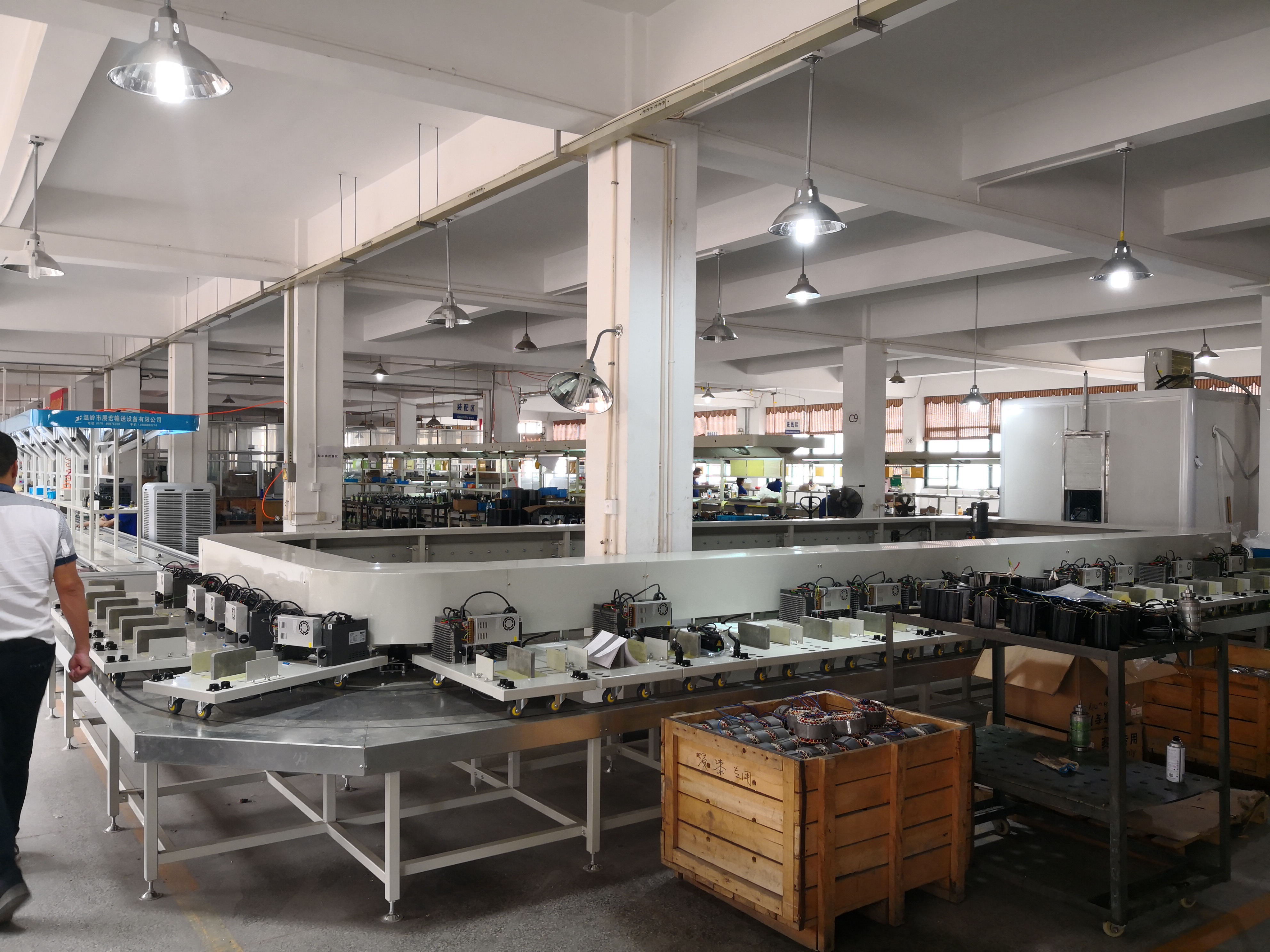
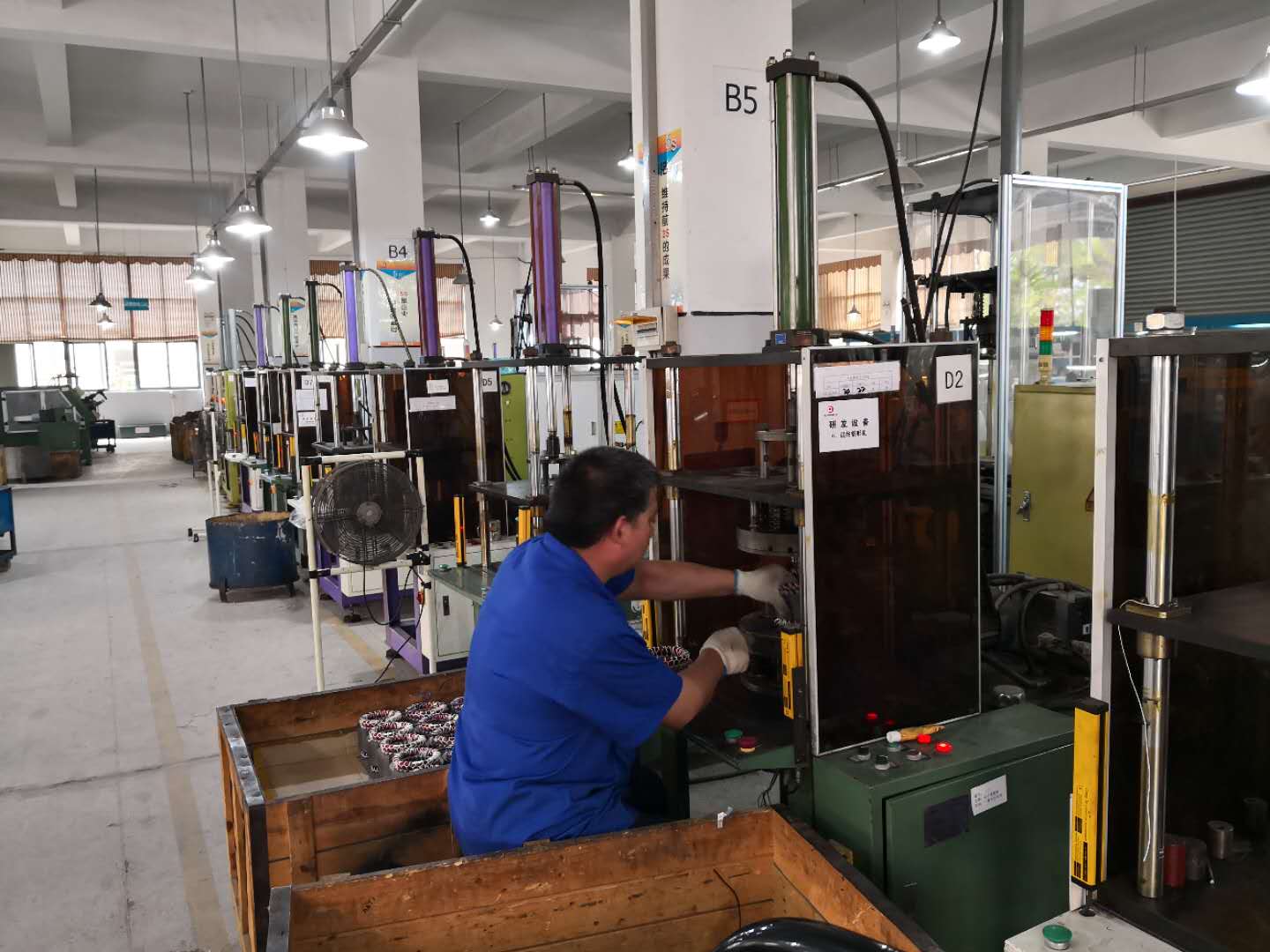
Inside a China Towing AGV Factory: Verifiable Advantages, Not Just Claims
Zhejiang Torqen Technology Co., Ltd. combines drive-wheel manufacturing, motor and controller matching, sensor supply and vehicle know-how in one organization. That overlap is what reduces integration risk for global buyers.
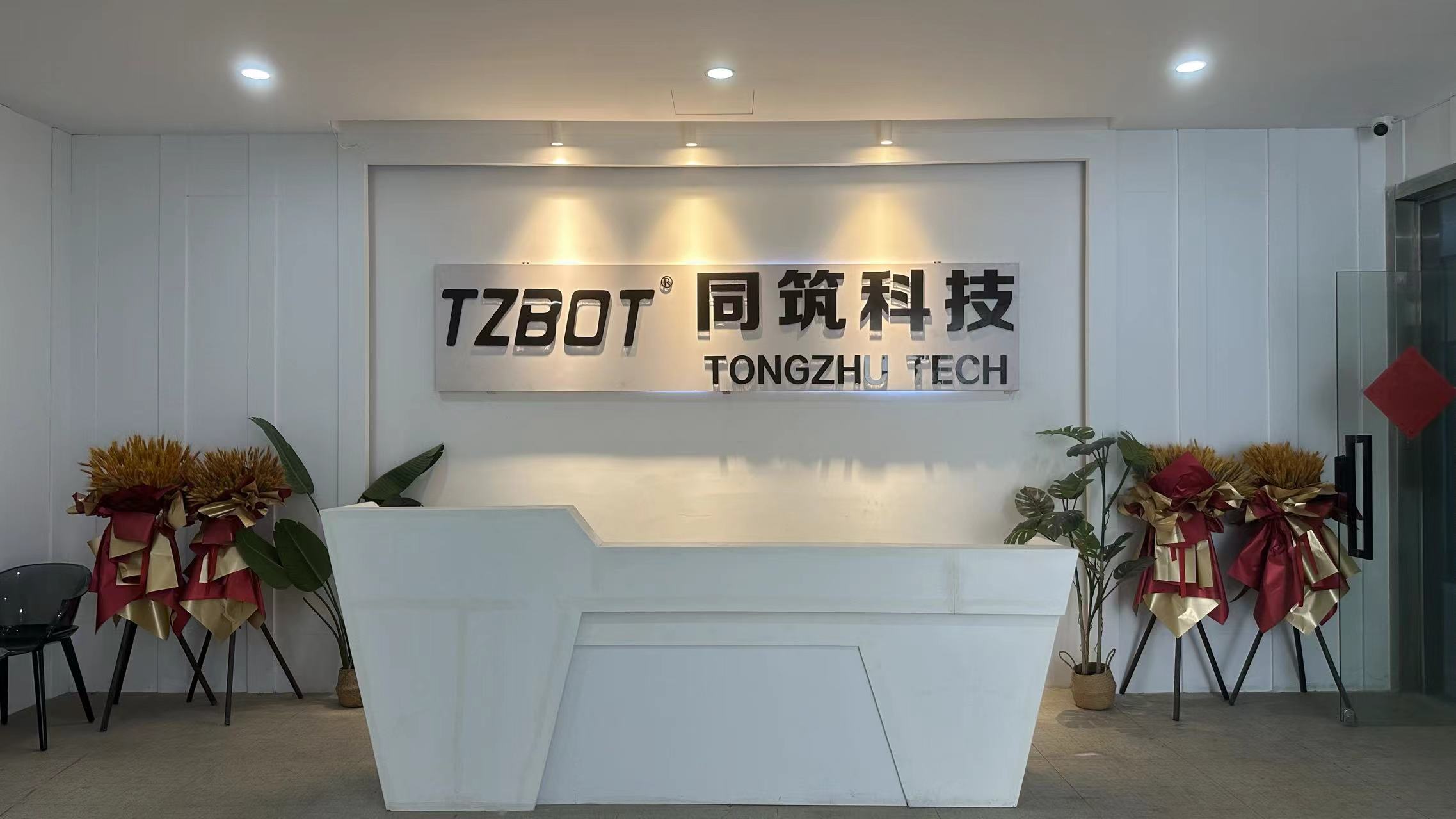
Founded in 2015 in Zhejiang, China, Torqen designs and manufactures automatic guided vehicles, AGV drive wheel assemblies, DC/AC motors, encoders, reducers, motor controllers, caster and PU wheels, and in-wheel motor units. The business type is manufacturer and trading company, with a factory size of 1,000–3,000 m², annual output in the US$5M–10M range and a team of 51–100 people.
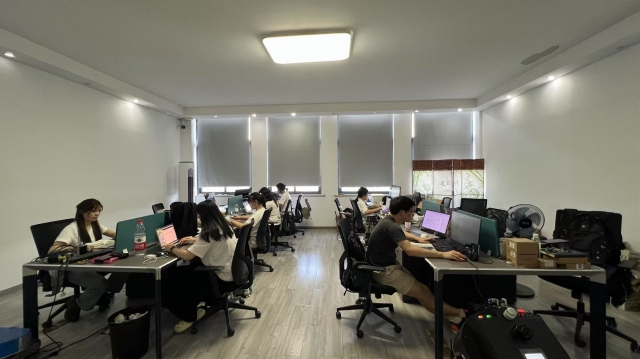
For a towing AGV project, the advantage is practical: engineering buyers can discuss payload, speed, gradient, chassis height and battery voltage with the same team responsible for the wheel, motor, controller and sensor recommendation. Typical customizations include motor power and voltage, reduction ratio, wheel diameter, tread material, encoder type, brake options and mounting interfaces. Samples can be built around a drawing or around an existing design, then tested before mass production.
The quality system is certified to ISO 9001:2015, and the facility has been verified onsite by Intertek. Finished-product inspection uses five in-house testing instruments, and prototypes undergo extended-duration testing before production parts are released. For export buyers, this creates a documented path from requirement review to inspection and shipment.

Custom drive engineering
Motor power, voltage, reduction ratio, wheel tread, encoder and brake adapted to the vehicle rather than a one-size catalogue.
Matched electronics
Servo and BLDC drivers tuned to our own drive wheels, with magnetic, RFID and LiDAR sensor options for a single-source bill of materials.
Tested before shipping
Five testing instruments, finished-product inspection and extended prototype runs before production parts leave the factory.
Export-ready support
FOB, CFR, CIF, EXW, CIP, FCA, CPT, DDU and express delivery, with payment options across major currencies.
Compare Towing AGV Quotes Beyond the FOB Price
When comparing China top towing AGV factories & exporter quotations, ask each supplier to normalize the offer around a five-year ownership model. The chart below is an illustrative allocation for a multi-shift towing AGV; real values depend on route length, trailer weight, battery strategy, floor condition and maintenance labor. The main point is that the drive train and integration quality influence several cost lines at once.
A low-cost wheel that causes current overload can increase controller failures, energy loss and downtime. A well-matched servo or BLDC drive train may cost more at the quotation stage but reduce commissioning time, spare-parts consumption and route-change friction. That is why experienced buyers request test data at rated load, gradient and acceleration — not only a dimensions drawing.
Use the model with your own data: annual operating hours, average towing load, charging ratio, spare-wheel replacement interval, controller failure rate and expected service life. Then ask the exporter to explain which variables they can control and which are site-dependent.
Illustrative five-year TCO allocation
Buyer action: request a bill of materials, spare-parts list, controller parameter file and commissioning guide with every quotation. These documents reveal whether the exporter is selling components or supporting a production vehicle.
What to Verify Before You Place a Towing AGV Order
This checklist is written for procurement engineers, automation integrators and warehouse operators who need a repeatable way to evaluate factories and exporters.
Where Torqen Drive Components Are Used
Torqen products are used in AGVs and AMRs, forklifts, aerial work platforms, airport equipment, agricultural machines, hydraulic applications, floor scrubbers and sweepers, wind energy, marine equipment and medical devices. The applications below show where a matched drive train creates the clearest operational value.
From Specification to Shipment in Six Controlled Steps
The process is designed for buyers who need predictable sampling, traceable inspection and a clear handover from engineering to production.
Requirement review
Load, speed, gradient, voltage, chassis height and navigation route are assessed.
Engineering proposal
Motor, reducer, wheel and controller are matched; drawings and parameters are shared.
Prototype build
Sample-based or design-based customization is produced for validation.
Endurance testing
Extended-duration runs, parameter checks and inspection records are completed.
Mass production
Manufacturing is controlled under the ISO 9001:2015 quality system.
Inspection & delivery
Final inspection, export packing, documentation and global shipping are coordinated.
Questions Buyers Ask Before Ordering Towing AGV Components
What makes a China towing AGV factory reliable for export projects?
A reliable exporter should provide factory identity, quality certification, onsite verification, product test evidence and a clear spare-parts plan. For towing AGVs, the supplier should also understand trailer load, acceleration, braking, floor friction and navigation docking. Zhejiang Torqen Technology Co., Ltd. supports this with ISO 9001:2015 certification, Intertek onsite verification, eight patents, five in-house testing instruments and export terms including FOB, CIF, EXW and DDU.
How do I choose between differential and steering drive wheels for a towing AGV?
Differential drive units suit compact latent, jacking and tugger AGVs that turn by wheel-speed difference. Steering drive wheels suit forklift-style tractors, tricycle chassis and applications that need controlled steering angles. Horizontal drive assemblies fit low-clearance chassis, while omnidirectional steering wheels are useful in very tight aisles. Share payload, towing load, speed, gradient, chassis height and battery voltage so an engineer can recommend the correct configuration.
Which navigation method is best for a towing AGV route?
Magnetic guidance is cost-effective for fixed routes, RFID is strong for station recognition and speed zones, QR codes work well in grid warehouses, and laser SLAM is flexible when layouts change. Many towing AGV projects use hybrid navigation: deterministic tape or tags for docking, plus LiDAR or SLAM for transport segments and obstacle avoidance. Test on the actual floor before approving the final sensor set.
Does Torqen support OEM and ODM customization?
Yes. Torqen offers sample-based customization, design-based customization, OEM production, design services and buyer-label packaging. Typical customizations include motor power and voltage, reduction ratio, wheel diameter, tread material, encoder type, brake options and mounting interfaces. The engineering team can work from a drawing, a sample or a vehicle requirement description, then validate the prototype before mass production.
What quality evidence should I request before placing an order?
Request the ISO 9001:2015 certificate, Intertek onsite verification report, product drawings, inspection records, controller protection specifications and prototype endurance-test summary. For drive wheels, ask for rated load, speed and gradient data. For controllers, ask about current margin, thermal performance and fault codes. For sensors, confirm repeatability, interface type and commissioning method.
What payment and delivery terms are accepted?
Accepted payment methods include T/T, L/C, D/P, D/A, MoneyGram, credit card, PayPal, Western Union, cash and escrow, in USD, EUR, JPY, CAD, AUD, HKD, GBP or CNY. Delivery terms include FOB, CFR, CIF, EXW, CIP, FCA, CPT, DDU and express delivery. Buyers should confirm the final Incoterm, packaging method, shipping port and documentation requirements in the quotation.
How can I reduce integration risk and total cost of ownership?
Buy the drive wheel, motor, controller, encoder and sensor set as a matched system where possible. Ask the exporter to provide wiring diagrams, parameter files and commissioning guidance. Run a pilot on the real route before scaling. Compare five-year TCO rather than FOB price alone, and keep a critical spare-parts stock for wheels, drivers and sensors. These steps usually cost less than one unplanned production stop.
Which industries use Torqen drive products?
Torqen products are used in AGVs and AMRs, forklifts, aerial work platforms, airport equipment, agricultural machines, hydraulic applications, floor scrubbers and sweepers, wind energy, marine equipment and medical devices. The common requirement is reliable motion control in a compact, serviceable package that can be customized around the machine chassis.
Send Your Towing AGV Specification to Torqen
Share your gross towing load, target speed, maximum gradient, battery voltage, chassis height and navigation route. Our engineers will recommend a drive wheel, servo/BLDC controller and sensor set, then confirm sampling, testing, payment and export delivery terms.
Email: info@torqenbot.com · Hangzhou, Zhejiang, China
