8 Recommended Custom OEM Material Transport Robot Wholesale Options
These eight configurations reflect common OEM requests from material transport robot wholesalers, systems integrators and warehouse automation contractors. Each model links to its current specification page. If your project needs a different voltage, reduction ratio, tread material, encoder, brake or mounting pattern, request a custom sample directly through the inquiry button.
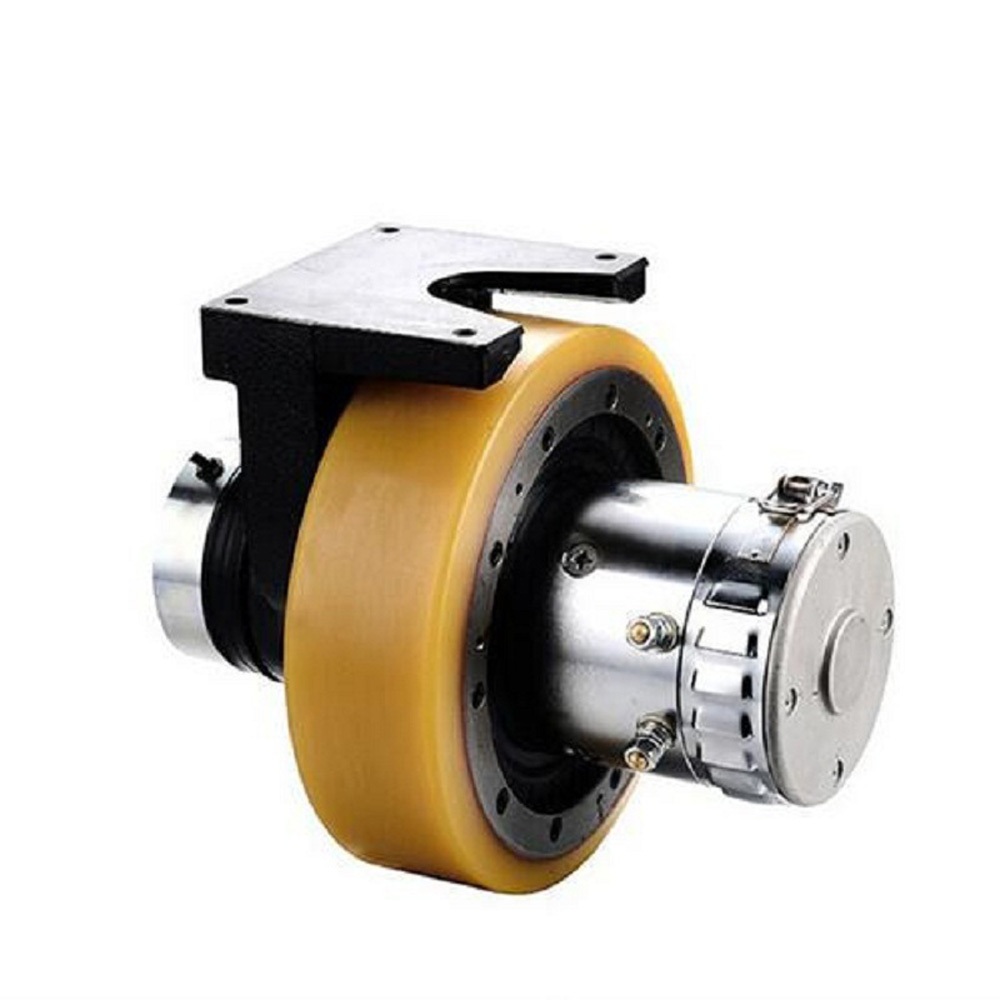
TZBOT TZ18-D12 1200W 24V Horizontal Drive Wheel Assembly Horizontal Wheel Unit Omnidirectional Automatic Steering Wheel
A low-clearance horizontal drive wheel for omnidirectional AGVs and compact material transport robots that need high torque in a shallow chassis.
- 1200 W
- 24 V
- Omnidirectional
- Horizontal layout
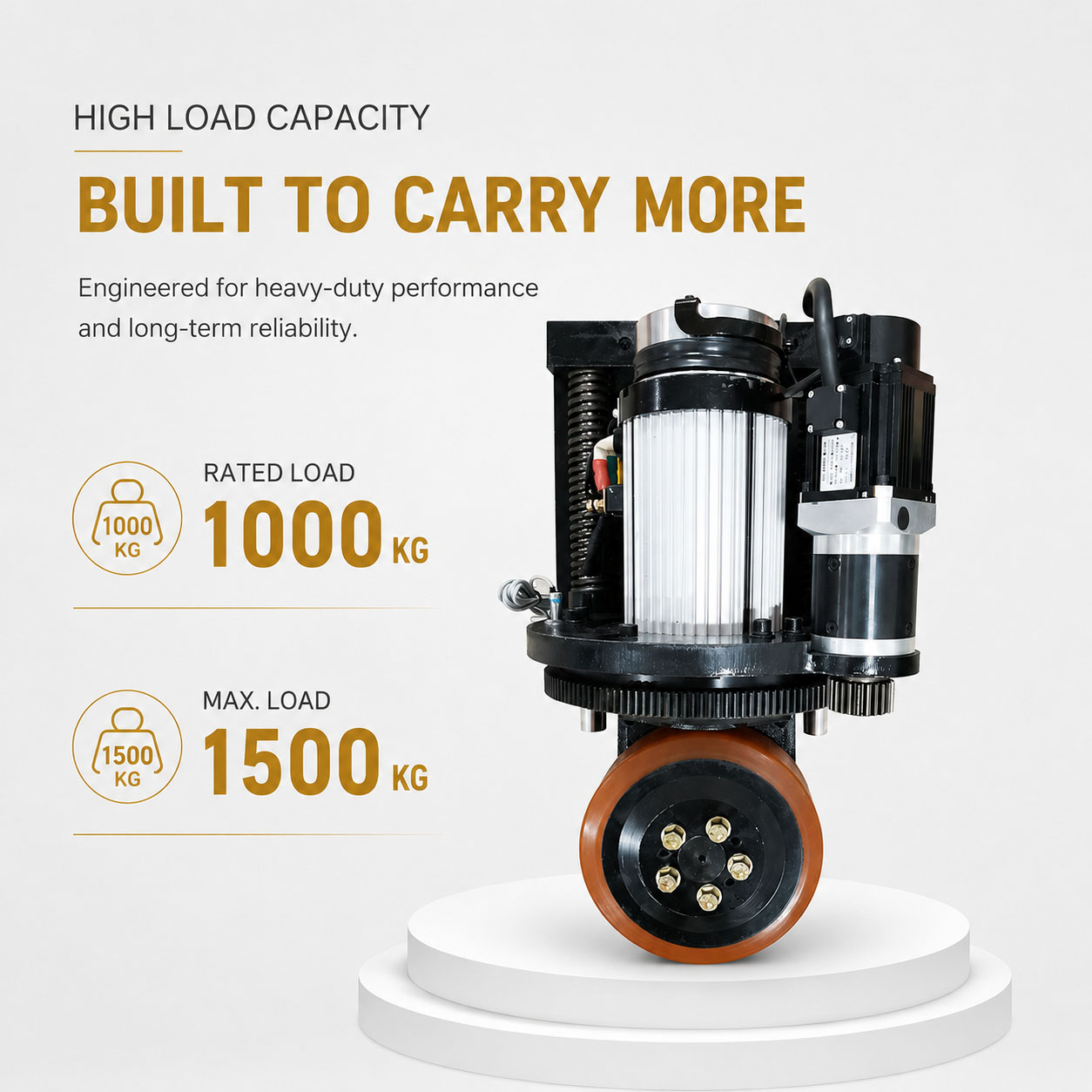
TZBOT 1000KG Bearing Duty 1500w Servo Motor AGV Forklift Driving Wheel with Suspension for Automatic Forklift
A 1,000 kg-duty forklift drive wheel with suspension and 1.5 kW servo motor for stable traction, shock absorption and controlled automatic forklift movement.
- 1000 kg
- 1500 W
- Servo motor
- Suspension
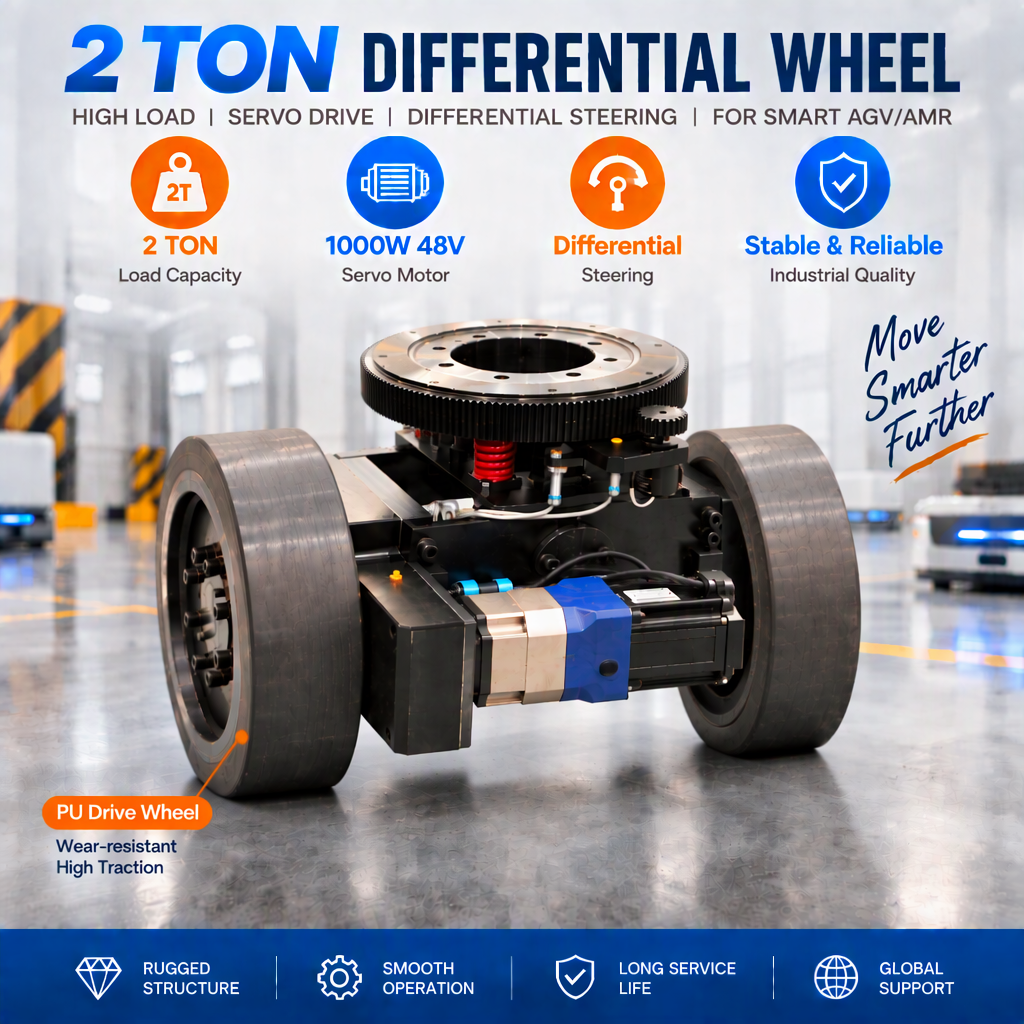
TZBOT 2000KG Heavy Duty Series AGV Wheel 1000w 48V Strong Power Mobile Robot Differential Drive Wheel with Spring Suspension
A 2,000 kg heavy-duty differential drive wheel with spring suspension, 48 V power and strong climbing capability for demanding mobile robot platforms.
- 2000 kg
- 1000 W
- 48 V
- Spring suspension
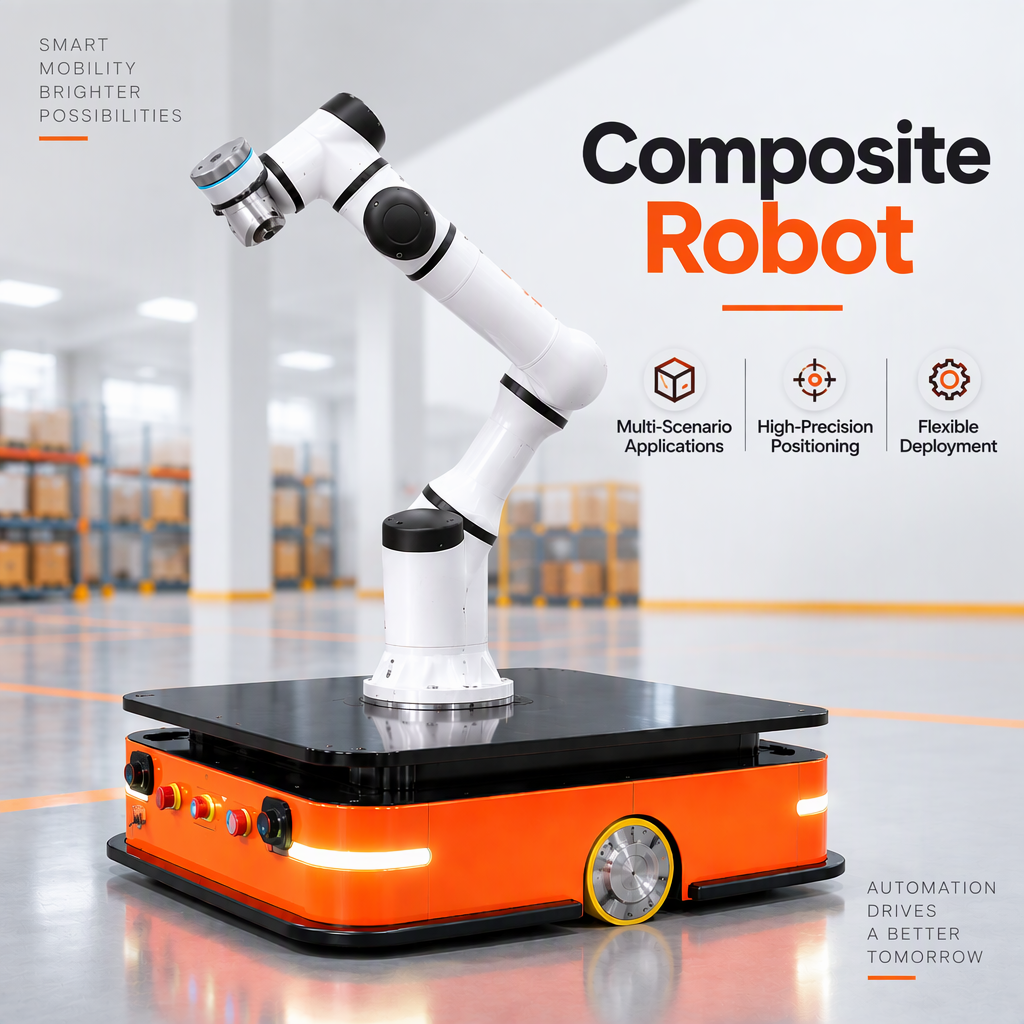
TZBOT Customizable Composite Robot Multi Applications 600kg Bearing Chassis AGV AMR with Robotic Arm
A customizable 600 kg chassis with robotic arm integration for composite robot applications that combine mobility, handling and station-based automation.
- 600 kg
- AGV/AMR
- Robotic arm
- Customizable
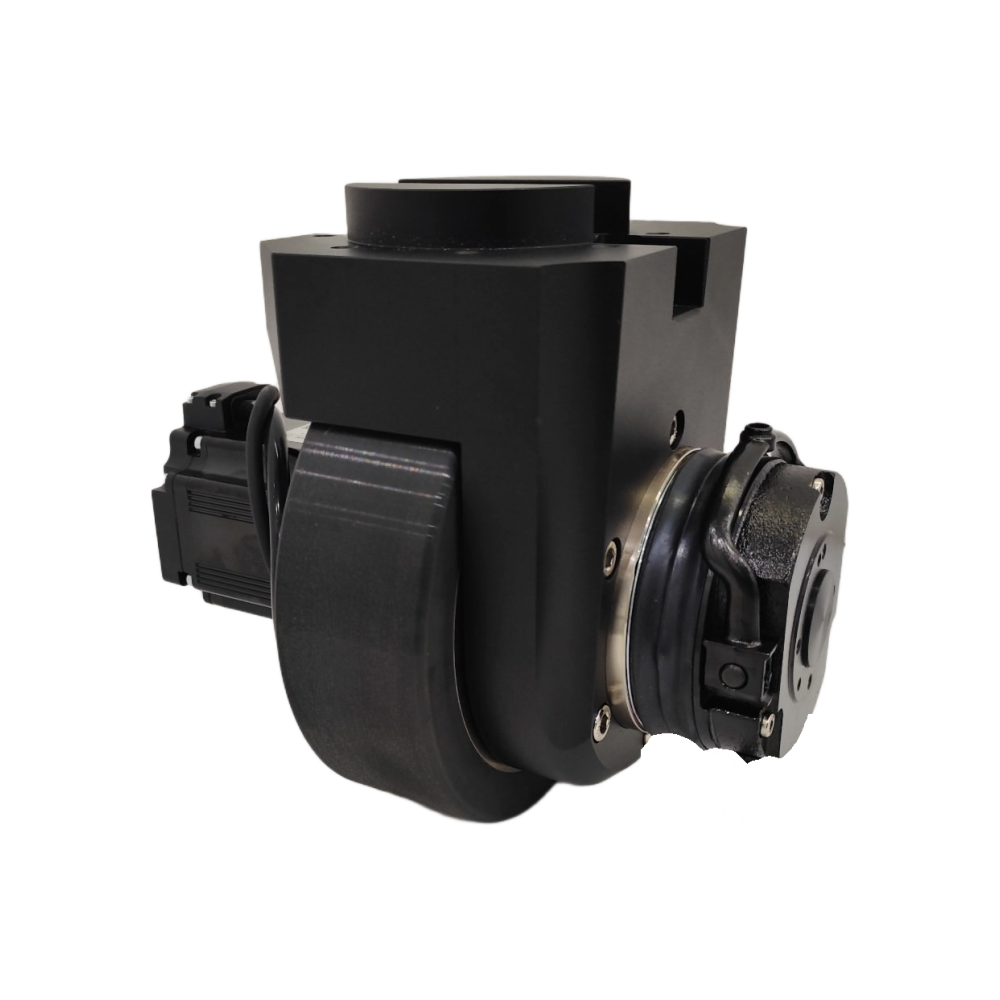
TZBOT Compact Structure agv Wheel Imported Polyurethane 1000kg Load Duty Mobile Robot Horizontal Drive Wheel Unit
A compact 1,000 kg horizontal drive wheel unit with imported polyurethane for quiet indoor transport, tight chassis packaging and reliable floor contact.
- 1000 kg
- Horizontal unit
- Imported PU
- Compact structure
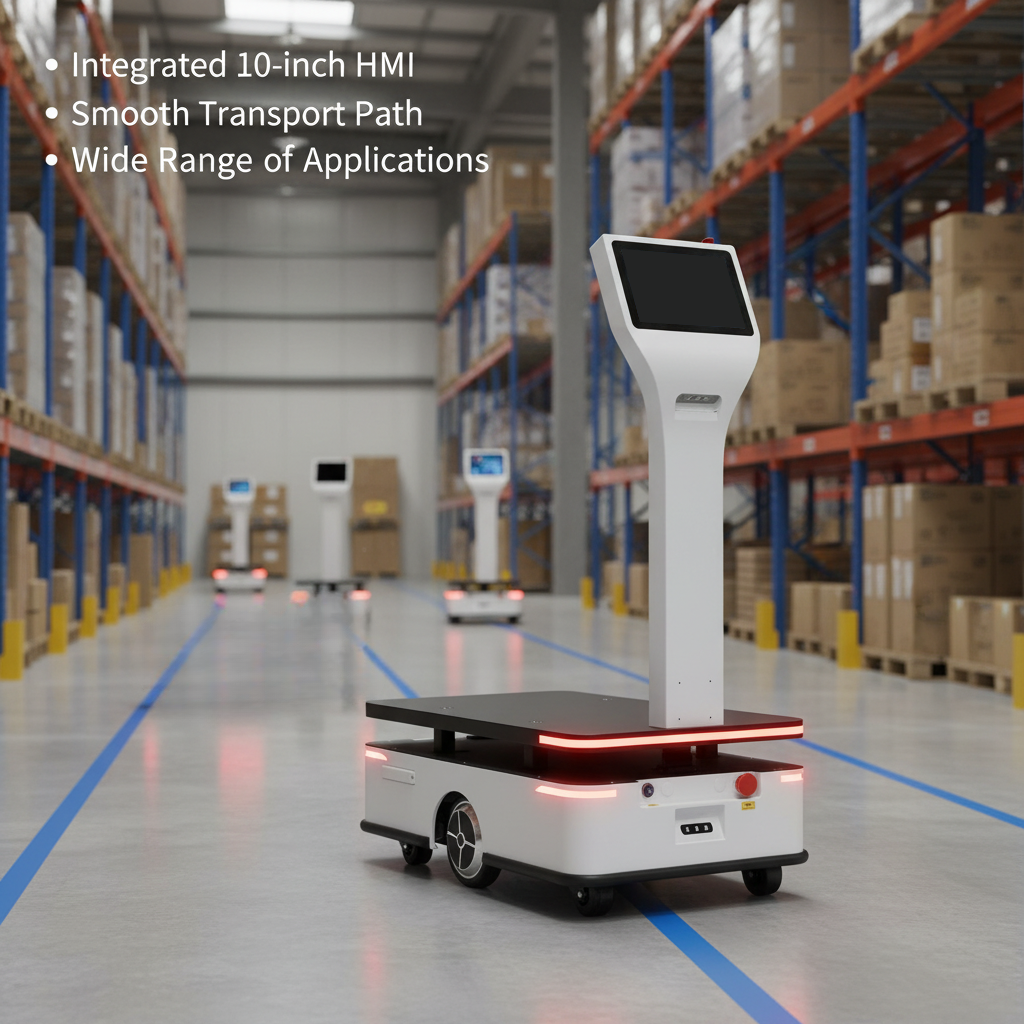
TZBOT Intelligent Warehouse Logistic Robot Unmanned Control System Customizable 80kg Payload agv Transfer Cart Slam Amr
An 80 kg payload SLAM AMR transfer cart for intelligent warehouse logistics, unmanned control and flexible route deployment without fixed magnetic guide paths.
- 80 kg payload
- SLAM AMR
- Transfer cart
- Unmanned control
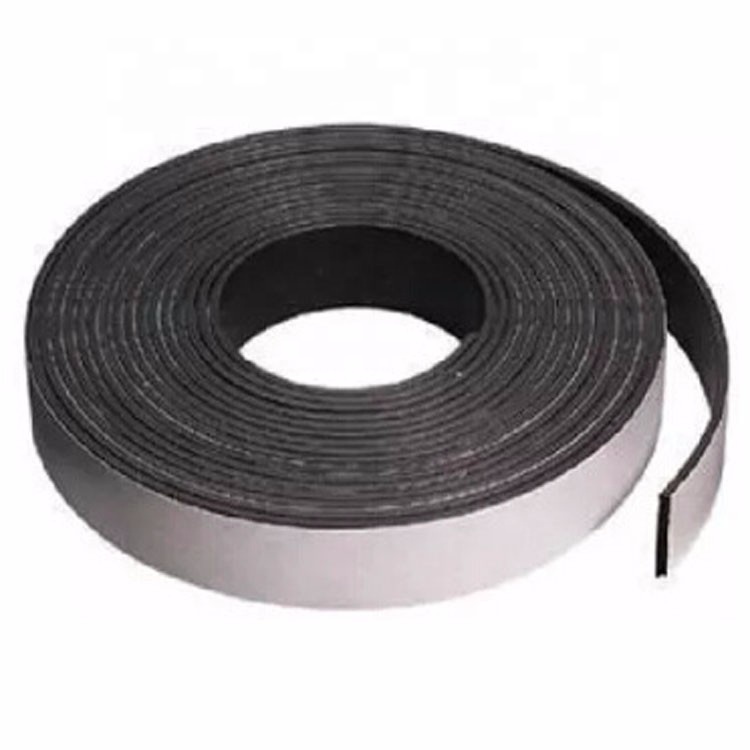
Sell Well Magnetic Tape Which N Pole up of 5cm Weith,25m One Roll for AGV Paved Path Can Retail or Wholesale
N-pole magnetic guidance tape in a 5 cm × 25 m roll for AGV route deployment. Suitable for retail, wholesale and replacement path projects.
- 5 cm width
- 25 m roll
- N pole up
- Retail/wholesale
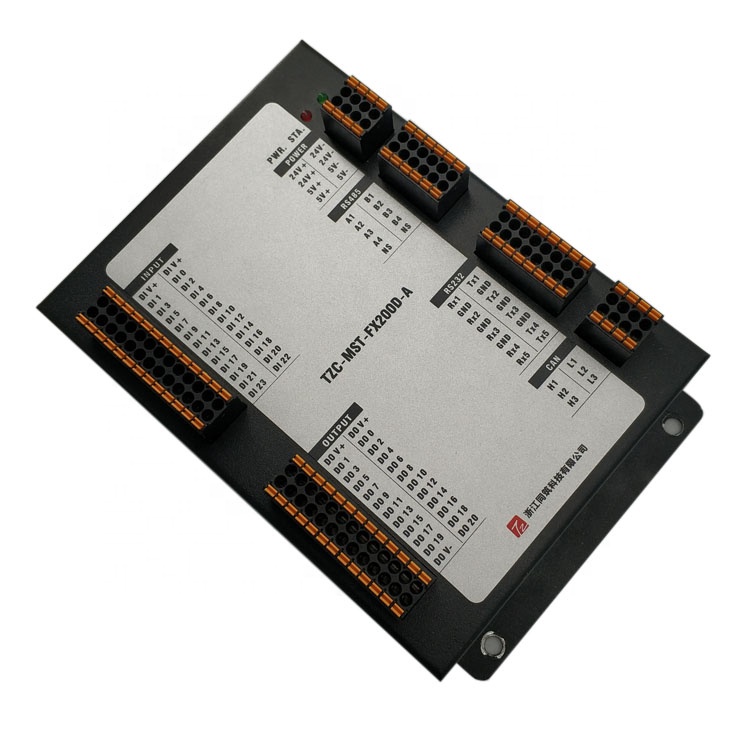
TZBOT AGV Smart Controller TZC-MST-FX200D-A with Function of Mapping and Auto Guide for agv
A smart mapping and auto-guide controller for AGV trajectory planning, route guidance and navigation coordination in custom material transport robots.
- Mapping
- Auto guide
- AGV control
- OEM integration
The Real Search Intent Behind “Custom OEM Material Transport Robot Wholesaler & Wholesalers”
A buyer searching this phrase is usually not looking for a single retail robot. The intent is closer to supplier discovery: finding a wholesale manufacturing partner that can co-engineer robots or robot subassemblies, adapt them to a specific payload and environment, and support repeat orders.
For OEM buyers, systems integrators and warehouse automation contractors, the phrase contains several signals at once: custom, OEM, material transport robot, and wholesaler / wholesalers. The useful answer is not a generic catalogue page. It is a supplier page that explains how the robot is specified, how the drive train is matched, how quality is verified, and how spare parts and export logistics are handled after the first order.
That is why information gain matters here. A thin page repeats “wholesale robot” and “custom manufacturer” without helping the buyer make a decision. A high-value page answers the questions a procurement team, mechanical engineer, electrical engineer and project manager will ask in the same meeting: Can the supplier customize wheel diameter, tread material, motor power, voltage, encoder and brake? Are the motor, servo or BLDC driver and controller tuned together? Can samples be tested under load? What evidence exists for ISO 9001:2015, onsite verification, patents and finished-product inspection? Which payment and delivery terms are available for international buyers?
The most practical approach is to treat the search as an engineering sourcing moment, not a retail purchase. Start with the five values that determine most drive-system decisions: gross vehicle weight, target travel speed, maximum gradient, battery voltage and available chassis height. Add the floor condition, required stopping distance, navigation method, duty cycle and daily operating hours. With those inputs, a wholesaler can recommend a differential drive, steering drive or horizontal drive unit instead of guessing from a photo. This is exactly the kind of practical guidance that separates a manufacturer from a catalogue middleman.
Differential, Steering and Horizontal Drive Units: How to Specify the Right Motion Platform
The drive unit is the mechanical heart of a material transport robot. Choosing the architecture first prevents expensive changes later in the chassis design, electrical architecture and navigation stack.
Differential Drive Unit
Two independently driven wheels use a speed difference to turn. This architecture suits compact latent, jacking and shelf-lifting AGVs where the chassis must rotate in place or follow tight aisle paths. It is mechanically simpler than a steering axle, but the integrator must manage wheel spacing, center-of-gravity and tire slip. In the RFQ, specify load, floor friction, acceleration, braking distance and whether the robot must turn in a zero-radius maneuver.
Single Steering Drive Wheel
A steering drive wheel combines a traction motor with a dedicated steering motor, so the controller can command both travel speed and wheel angle. It is a natural fit for automatic forklifts, tricycle chassis and tugger vehicles that need controlled steering angles and stable straight-line tracking. The trade-off is additional control complexity and wiring. Buyers should confirm steering encoder resolution, zero-point calibration, limit protection and emergency-stop behavior.
Horizontal Drive Assembly
Horizontal drive assemblies place the motor in a low-profile layout, which is valuable when the chassis height is constrained by an under-ride cart, a low-clearance mobile platform or a compact AMR. These units often combine gear reduction, wheel, encoder and suspension in one module. The procurement checklist should include clearance height, mounting bolt pattern, wheel diameter, tread hardness, permissible axial and radial load, and the required battery voltage.
Material Transport Robot Procurement Trends: What Smart Buyers Will Expect
Purchasing behavior is moving away from one-off component buying toward validated sub-systems, traceable test data and long-term spare-part continuity.
Co-Engineered Sub-Systems Beat Catalogue Parts
Buyers increasingly want the drive wheel, motor, reducer, encoder, brake and controller matched as one validated sub-system. This reduces interface risk and shortens commissioning for integrators.
TCO and Spare-Part Continuity
Procurement teams compare total cost of ownership, not only unit price. Spare-wheel availability, replacement drivers, technical documents and fast response reduce downtime across a fleet.
Voltage and Battery Strategy
24 V and 48 V platforms remain common, but buyers now ask for better efficiency, charger compatibility and safe cutoff behavior. Drive systems should be selected around the battery strategy, not retrofitted afterward.
Traceability and Test Evidence
ISO 9001:2015 certification is a baseline. Buyers increasingly expect onsite verification, inspection records, endurance-run notes and traceable production data for critical drive components.
Safety in Mixed Traffic
Material transport robots must work near people, forklifts and manual carts. Procurement specifications now include emergency-stop response, bumper integration, lidar coverage and predictable braking.
Export-Ready Terms and Communication
Global buyers expect flexible payment methods, clear Incoterms, export packing and fast technical replies. Response speed is a procurement metric because it predicts how commissioning issues will be handled.
Where Material Transport Robot Products Are Heading Next
The next generation of OEM material transport robots is being shaped by low-profile mechanics, sensor fusion, modular electronics and application-specific customization.
Lower-Clearance, Higher-Torque Drives
Compact horizontal drive wheels and integrated gear reducers allow AMRs to slide under carts and racks without increasing chassis height. The engineering challenge is balancing torque density, heat and service access.
Integrated Suspension and Steering
Spring suspension, steering encoders and traction motors are increasingly packaged as one modular unit. This improves floor contact, ride stability and installation speed for automatic forklifts and transport platforms.
Sensor Fusion: Magnetic, RFID, LiDAR and SLAM
No single navigation method fits every site. Magnetic tape and RFID tags remain cost-effective for fixed routes, while SLAM and LiDAR provide flexibility where layouts change. Hybrid systems are becoming the practical default.
Composite Robots with Open Control Layers
Material transport robots are becoming mobile platforms for robotic arms, conveyors, lifts and inspection tools. Open controllers and customizable chassis help OEMs add application modules without redesigning the drive base.
Zhejiang Torqen Technology Co., Ltd. — OEM/ODM Advantages That Reduce Integration Risk
Founded in 2015 in Zhejiang, China, Zhejiang Torqen Technology Co., Ltd. designs and manufactures automatic guided vehicles, AGV drive wheel assemblies, DC/AC motors, encoders, reducers, servo/BLDC controllers, caster and PU wheels, and in-wheel motor units for automation builders worldwide.
Single-Factory Motion Train
Drive wheels, motors, servo/BLDC controllers and navigation sensors can be matched under one supplier relationship. This reduces interface risk, simplifies the bill of materials and speeds commissioning.
Sample and Design Customization
OEM/ODM support includes sample-based customization, design-based customization, buyer-label packaging and adaptation of motor power, voltage, reduction ratio, wheel diameter, tread material, encoder, brake and mounting interfaces.
Verified Quality Management
The quality management system is certified to ISO 9001:2015, and the facility has been verified onsite by Intertek. Five in-house testing instruments support finished-product inspection, and prototypes undergo extended-duration testing before production release.
Export and After-Sales Support
Payment methods include T/T, L/C, D/P, D/A, credit card, PayPal, Western Union and others, with delivery terms such as FOB, CFR, CIF, EXW, CIP, FCA, CPT, DDU and express delivery. Technical support covers wiring, driver parameters and commissioning guidance.
Common Questions Buyers Ask Before Ordering Custom Material Transport Robots
These answers focus on the practical questions that appear in OEM and wholesale sourcing conversations, from drive selection to quality verification and export terms.
What does “Custom OEM Material Transport Robot Wholesaler & Wholesalers” mean in practice?
It usually means a buyer wants a wholesale manufacturing partner that can supply material transport robots or core robot subassemblies with customization. Typical custom work includes payload, chassis height, drive type, wheel tread, motor power, voltage, navigation method, connector layout and private-label packaging. The best supplier will ask for operating data before recommending a model.
How do I choose between differential, steering and horizontal drive units?
Choose differential drive for compact latent, jacking and shelf-lifting AGVs that turn by wheel-speed difference. Choose a steering drive wheel for automatic forklifts, tricycle chassis and tugger vehicles that need controlled steering angles. Choose a horizontal drive assembly when chassis height is limited and the motor must sit in a low-profile layout. Share load, speed, gradient, voltage and chassis height for an exact recommendation.
Can Torqen customize motor power, voltage, wheel tread and mounting interface?
Yes. The original supplier profile lists sample-based customization, design-based customization, OEM production, design services and buyer-label packaging. Customization options include motor power and voltage, reduction ratio, wheel diameter and tread material, encoder type, brake options and mounting interfaces. For best results, provide drawings, load conditions and target service life.
How is product quality verified before shipment?
The quality management system is certified to ISO 9001:2015, and the facility has been verified onsite by Intertek. Finished-product inspection is supported by five in-house testing instruments, and prototypes undergo extended-duration testing before production release. Buyers can request inspection records and traceable production information for critical components.
What payment and delivery terms are available for international buyers?
Accepted payment methods include T/T, L/C, D/P, D/A, MoneyGram, credit card, PayPal, Western Union, cash and escrow, in currencies such as USD, EUR, JPY, CAD, AUD, HKD, GBP and CNY. Delivery terms include FOB, CFR, CIF, EXW, CIP, FCA, CPT, DDU and express delivery. Confirm the final Incoterm, packing method and lead time in the quotation.
Which industries use these material transport robot drive products?
Torqen drive products are used in AGVs and AMRs, forklifts, aerial work platforms, airport equipment, agricultural machines, hydraulic applications, floor scrubbers and sweepers, wind energy, marine equipment and medical devices. For a new application, describe the environment, duty cycle, floor type, ambient conditions and safety requirements so the drive and controller can be matched correctly.
Ready to Specify a Custom Material Transport Robot?
Send your payload, target speed, maximum gradient, battery voltage, chassis height and navigation preference. Our engineering team will recommend a drive wheel, motor, controller and sensor combination for your application.
