8 Products That Shorten Pallet Handling Robot Development
Start from a proven module instead of a blank chassis. Each product below is a production-ready building block for custom pallet handling robots, pallet AGVs, stacker AGVs and mobile manipulators. Torqen engineers can adapt motor power, voltage, reduction ratio, wheel diameter, tread material, encoder, brake and mounting interface.
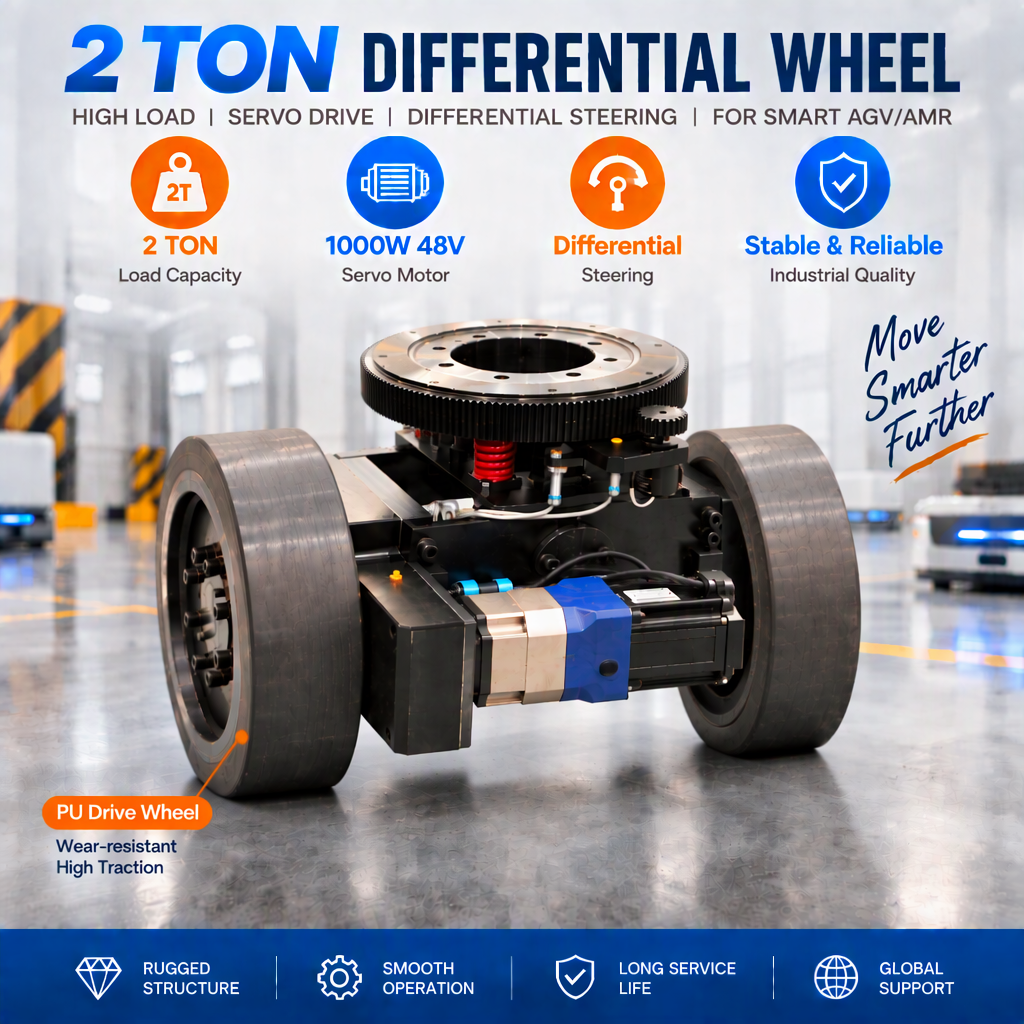
TZBOT 2000KG Heavy Duty Series AGV Wheel 1000w 48V Strong Power Mobile Robot Differential Drive Wheel with Spring Suspension
For 2-ton pallet stackers, towing platforms and heavy mobile chassis that need high traction and spring suspension.
- 2000 kg class
- 1000 W / 48 V
- Spring suspension
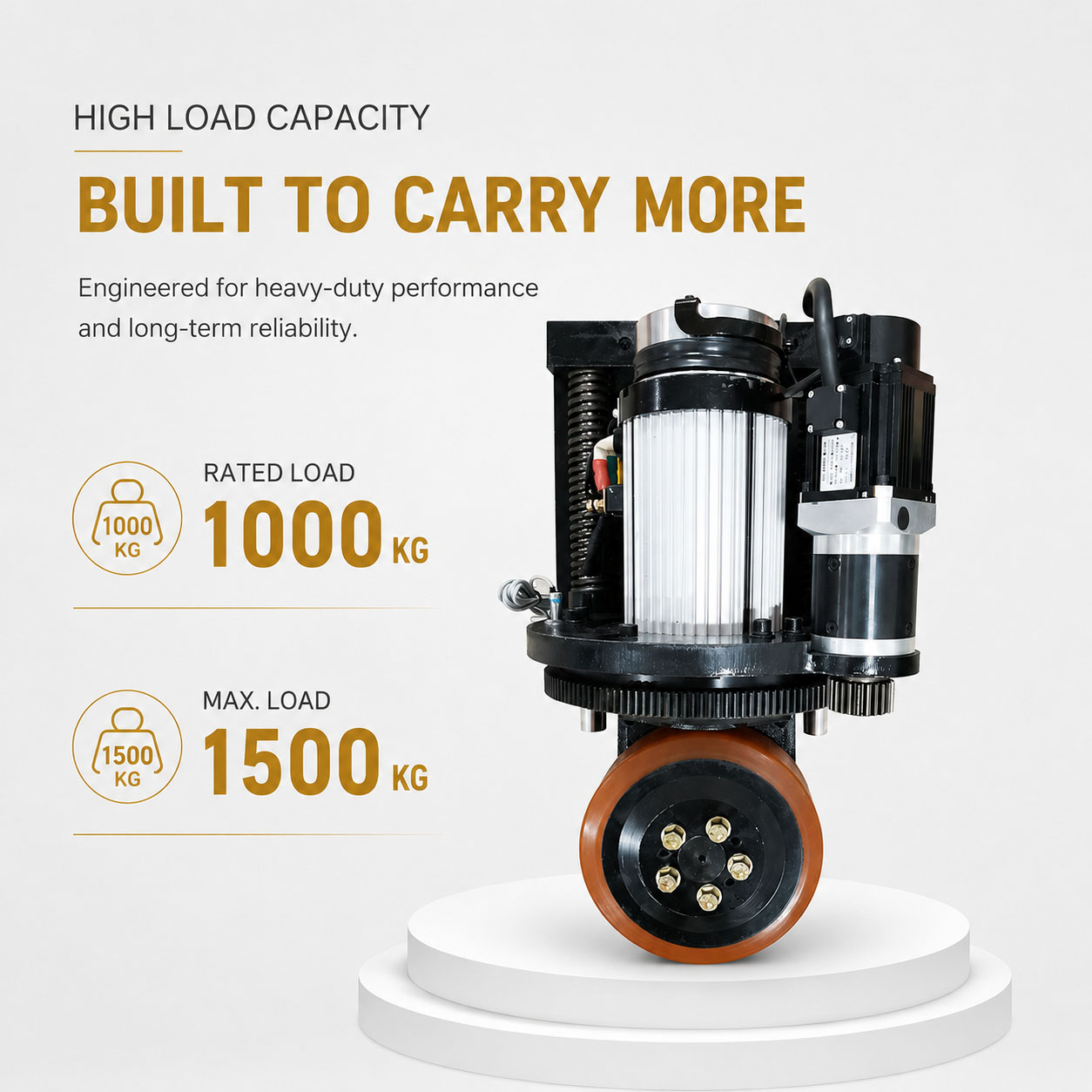
TZBOT 1000KG Bearing Duty 1500w Servo Motor AGV Forklift Driving Wheel with Suspension for Automatic Forklift
Forklift-style drive axle for pallet lifting, towing and automatic warehouse trucks with servo control.
- 1000 kg class
- 1500 W servo
- Suspension included
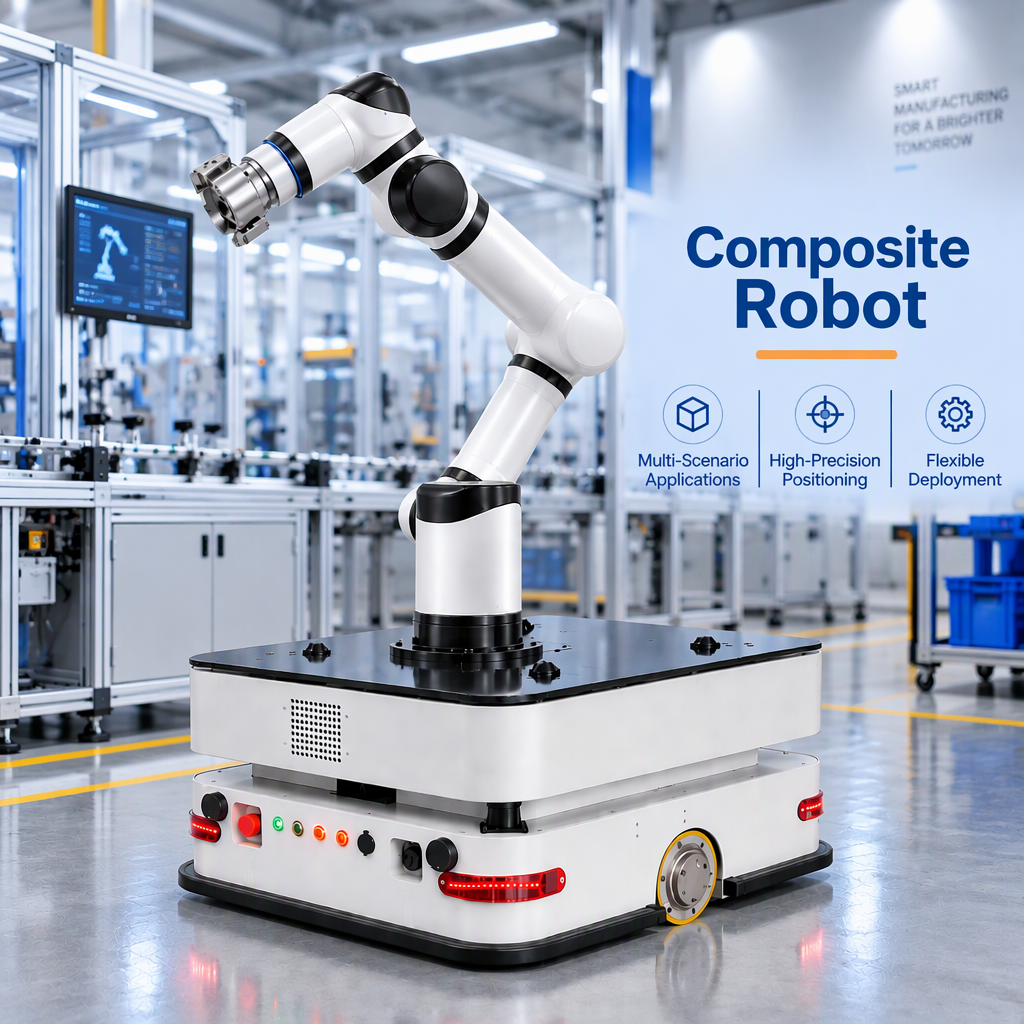
TZBOT Auto Guidance Mobile Chassis 1000kg Payload AGV Integrate Arm Robotic Intelligent Composite Robot
Mobile manipulator platform for pallet pick-and-place, machine tending and flexible material transfer.
- 1000 kg chassis
- Robotic arm integration
- Intelligent composite robot
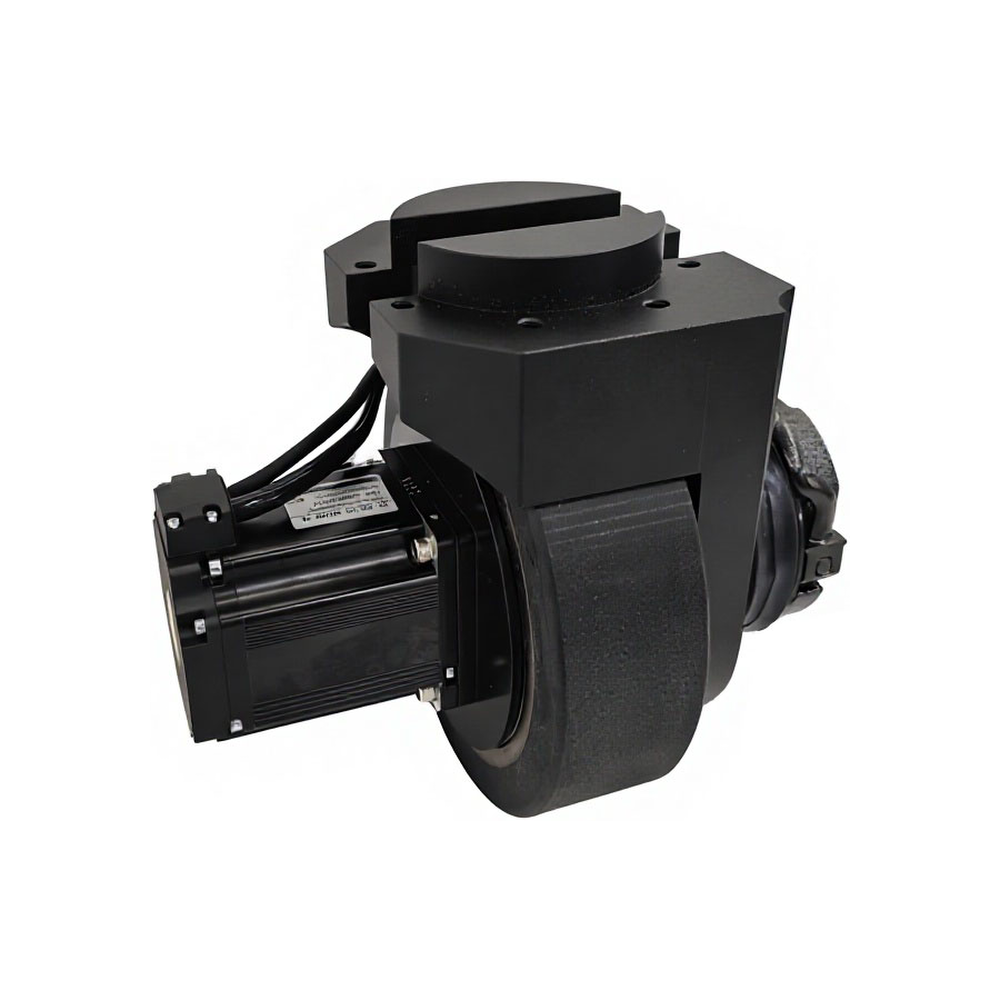
TZBOT agv Wheel Traction Accessories 1000kg Heavy Duty Capacity Material Handling Equipment Part Horizontal Drive Wheel Assembly
Horizontal drive assembly for low-clearance pallet trucks, under-ride carts and compact material handling chassis.
- 1000 kg capacity
- Horizontal layout
- Material handling part
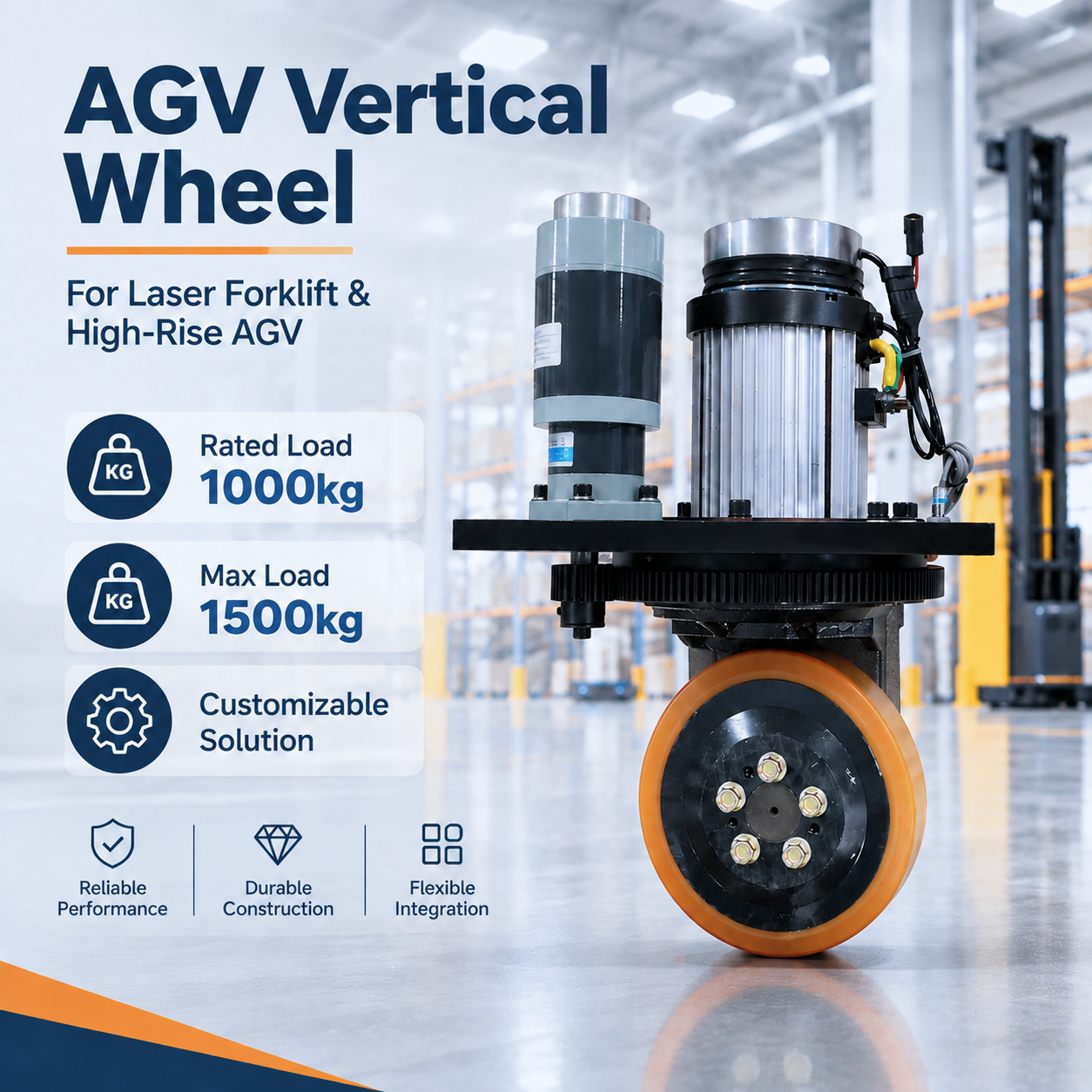
TZBOT 2590r/min Vertical Driving Unit Electric Traction Wheel 1500W Steering Forklift Accessories
Steering drive unit for narrow-aisle pallet handling, tricycle AGVs and forklift automation.
- 1500 W
- 2590 r/min
- Vertical steering unit
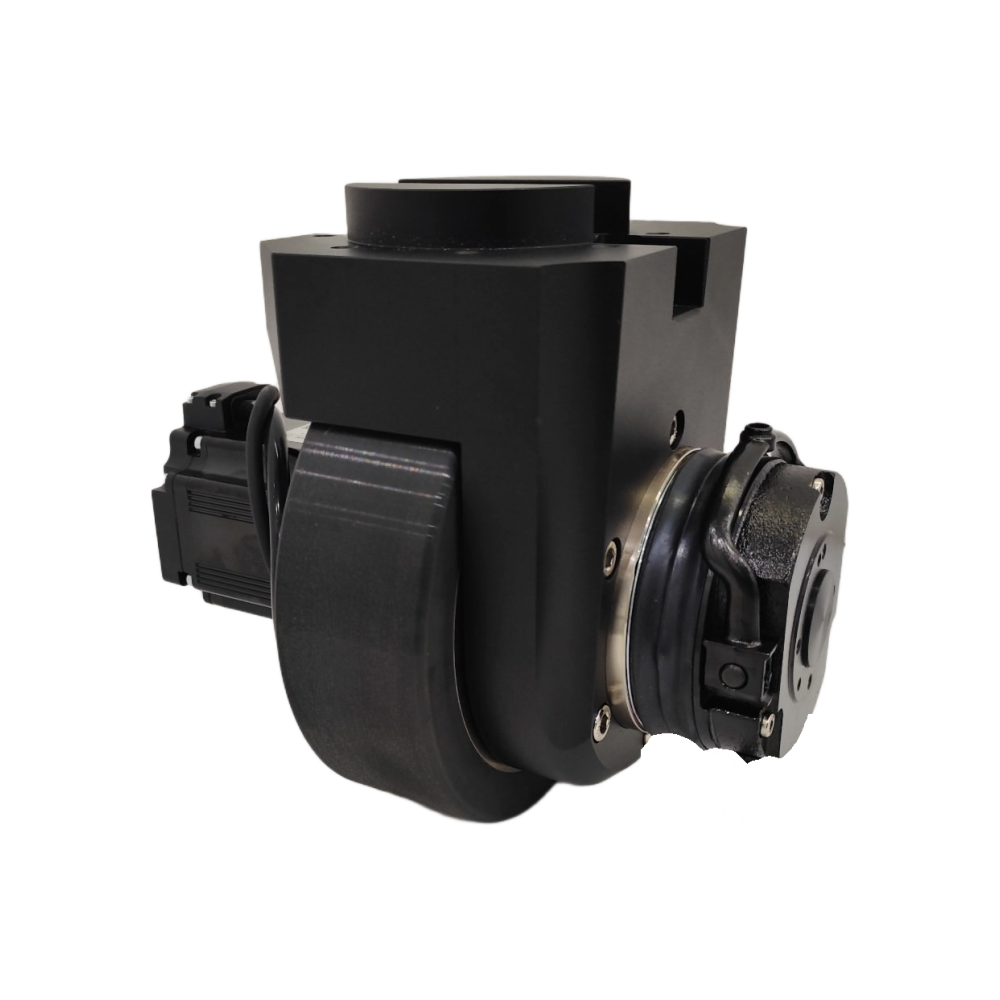
TZBOT Compact Structure agv Wheel Imported Polyurethane 1000kg Load Duty Mobile Robot Horizontal Drive Wheel Unit
Space-saving horizontal drive wheel unit for compact pallet AGVs and smooth-floor warehouse robots.
- 1000 kg load duty
- Imported polyurethane
- Compact structure
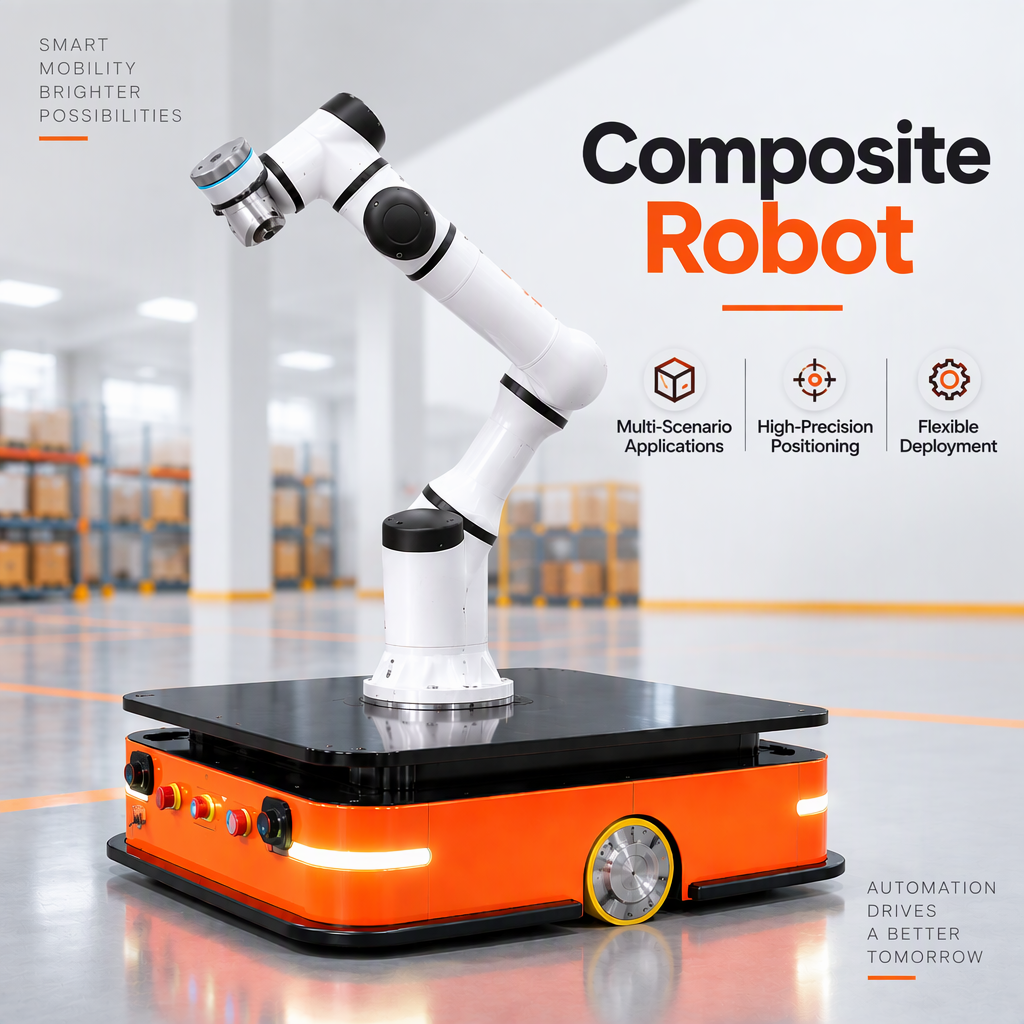
TZBOT Customizable Composite Robot Multi Applications 600kg Bearing Chassis AGV AMR with Robotic Arm
Smaller mobile manipulator for mixed pallet and tote workflows, kitting, inspection and flexible assembly.
- 600 kg bearing chassis
- AGV / AMR platform
- Customizable arm
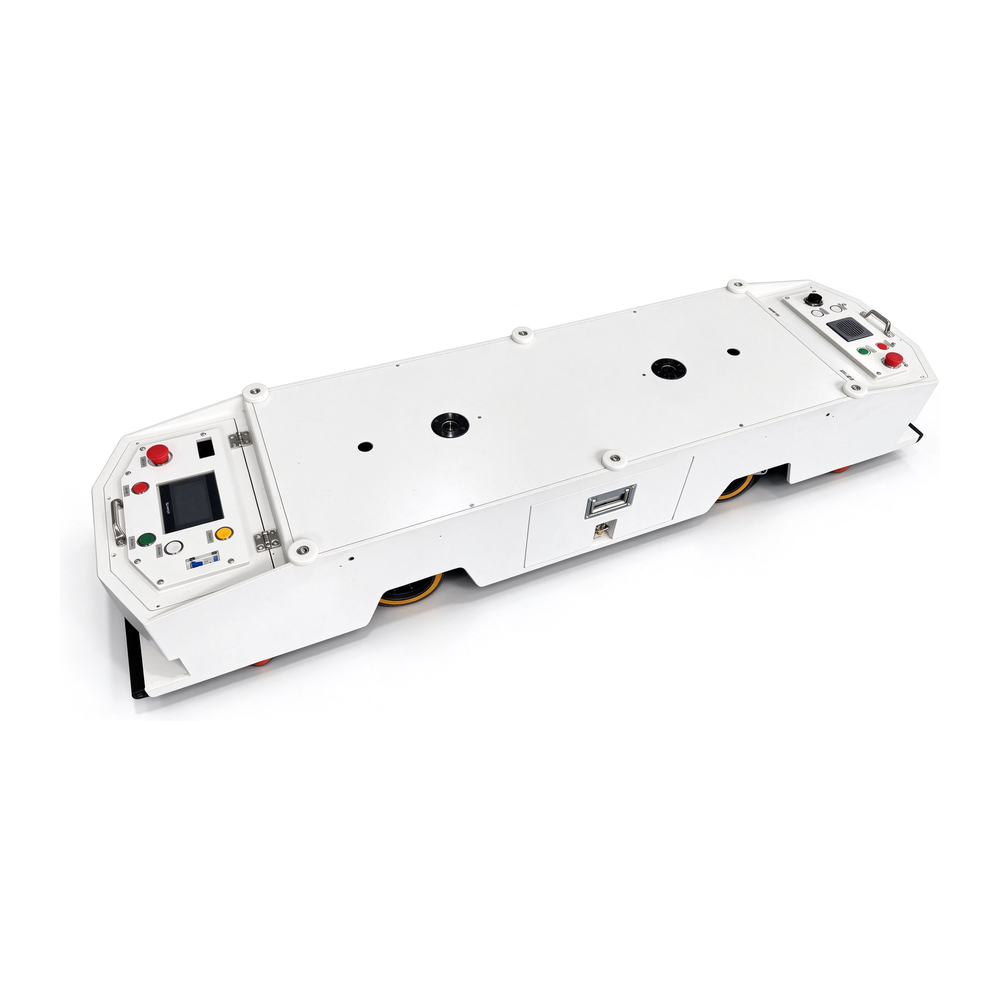
TZBOT 2500KG Lurking AGV Unmanned Control 8H Long Endurance Material Handling Mobile Robot for Shelf Towing
Heavy-duty latent towing robot for pallet shelves, cart trains and long-endurance warehouse transport.
- 2500 kg towing
- 8H endurance
- Unmanned control
Why the Custom Pallet Handling Robot Is Now an OEM Platform Decision
Pallet handling automation has moved beyond the single-purpose pallet jack. Warehouse operators now expect modular pallet AGVs and AMRs that can tow, lift, stack, transfer to conveyors, or carry a robotic arm for pick-and-place. For OEM buyers, the defining question is not whether a factory can assemble a robot body. It is whether that factory controls the motion train, controllers, navigation sensors and validation data that determine throughput and uptime.
Zhejiang Torqen Technology Co., Ltd. has manufactured automatic guided vehicles, differential and steering drive wheels, DC/AC motors, servo and BLDC controllers and navigation sensors since 2015. That scope matters for a custom pallet handling robot project because drive wheel, motor, reducer, encoder, driver and sensor choices are validated together. Instead of managing four vendors, OEMs can shorten the design review, reduce interface risk and move from a drawing to a tested prototype with one engineering contact.
Integration Risk
Mismatched wheel torque, reduction ratio and servo driver parameters can appear only after the first full-load pallet test. Single-source motion validation reduces that late-stage risk.
Safety Documentation
Pallet robots interact with people, racks and forklifts. Buyers increasingly ask for test records, parameter files, wiring diagrams and traceable production information.
Spares Lifecycle
A pallet fleet is a ten-year asset. A custom robot factory must support replacement drive units, controllers, sensors and mounting parts after the initial shipment.
Eight Variables That Determine a Custom Pallet Handling Robot's Throughput
Most RFQs mention payload and speed. High-performing pallet automation projects define eight variables before selecting a drive wheel or navigation method.
Gross Payload + Load Center
A 1,500 kg pallet is not the same as a 1,500 kg load at a 600 mm load center. State both values so motor torque and wheel diameter are sized correctly.
Lift, Tow or Manipulate
Lifting, towing and mobile manipulation create different duty cycles. Specify whether the pallet robot will insert, jack, stack, tow a cart train or pick with an arm.
Chassis Height and Ground Clearance
Low-clearance pallet trucks need horizontal drive units. Forklift-style robots may prefer a steering drive wheel with suspension. The chassis envelope drives the layout.
Floor, Ramp and Gap Conditions
Epoxy floors, expansion joints, dock ramps and warehouse debris affect traction, suspension travel and wheel tread. Share floor photos and aisle dimensions.
Travel Speed and Acceleration
The same payload at a higher acceleration can require more current and thermal headroom. Confirm the real acceleration profile, not only the maximum speed.
Navigation Method
Magnetic guidance, RFID station control, QR grids and lidar SLAM can be combined. The navigation plan determines sensor kits, stopping accuracy and route flexibility.
Safety Zoning and Human Traffic
Pallet handling robots often work near pedestrians. Define lidar fields, bumper zones, speed limits, warning modules and emergency-stop behavior early.
Battery, Duty Cycle and Spares
Voltage, charge strategy, run time and spare parts strategy influence motor selection and controller thermal design. A fleet plan should include expected mean time to repair.
Matching Torqen Components to Pallet Handling Duty
These recommendation paths help OEM buyers start an RFQ with a realistic component platform rather than a generic parts list.
Latent Towing and Shelf Movement
For pallet shelves, cart trains and goods-to-person transport, begin with the 2500 kg lurking AGV platform and validate traction with the 2000 kg heavy-duty AGV wheel. The combination targets long endurance, high towing capacity and stable route following.
View Towing RobotForklift-Style Pallet Handling
For automatic forklifts, stacker AGVs and narrow-aisle lifting, evaluate the 1000 kg servo motor forklift driving wheel with suspension and the 1500 W vertical steering drive unit. These parts suit controlled steering angles and repeated lift cycles.
View Steering UnitMobile Manipulation and Mixed Loads
For pallet-to-conveyor transfer, kitting or inspection, the 1000 kg payload AGV arm composite robot and the customizable 600 kg composite robot provide a mobile base for robotic-arm deployment without rebuilding a chassis from scratch.
View Composite RobotWhat Pallet Robot Buyers Will Require from 2026 to 2030
The next procurement cycle will reward suppliers who can provide evidence, not only hardware. These four trends are already visible in OEM sourcing discussions.
Drive-Train Modules with Single-Source Validation
Buyers will compare not just wheel price but the validated combination of wheel, motor, reducer, encoder, servo driver and parameter file. A modular drive train shortens the engineering cycle and reduces field failures caused by mismatched components.
Safety and Test Evidence
Procurement teams will ask for inspection records, endurance data, wiring diagrams and traceable production information. ISO 9001:2015 certification and onsite verification become baseline requirements for custom pallet handling robot factories.
Mixed-Fleet and Open Interfaces
Pallet robots will not operate alone. They will hand off to conveyors, forklifts, elevators and warehouse control systems. Open interface documentation and controller compatibility will be part of the purchase decision.
Lifecycle Cost and Spares Availability
OEMs will evaluate the total cost of ownership across five to ten years. Spare drive units, sensors, controllers and technical support must be available after the initial fleet delivery, with clear replacement and upgrade paths.
The Next Generation of Pallet Handling Automation
Engineering roadmaps for pallet robots are converging on higher payload density, smarter motion control and lower integration effort.
Lower Chassis, Higher Capacity
Compact horizontal drive units let designers lower the deck while maintaining load capacity. This improves pallet visibility, stability and access under low-clearance racks.
Integrated Steering and Drive
Single steering drive wheels combine traction and controlled steering angles. They suit narrow aisles, automatic forklifts and tricycle chassis that need precise docking.
Servo Drivers with Functional Safeguards
BLDC and servo controllers are adding current, thermal, encoder and fault protections. OEMs benefit from fewer external safety components and easier commissioning.
3D Vision plus Lidar
Pallet pose detection and obstacle avoidance increasingly combine 3D vision with lidar and safety bumpers. This supports mixed pallets, damaged pallets and dynamic warehouse traffic.
Higher Duty Cycle and Battery Exchange
Long-endurance towing robots and fast battery exchange are becoming procurement requirements for multi-shift operations. Motor efficiency and controller thermal design directly affect uptime.
Diagnostics, OTA and Digital Twins
Fleet operators expect remote diagnostics, parameter backup and upgradeable controller firmware. Digital service data helps OEMs plan maintenance and reduce downtime.
Torqen Manufacturing Advantages: One Source for Motion, Control and Navigation
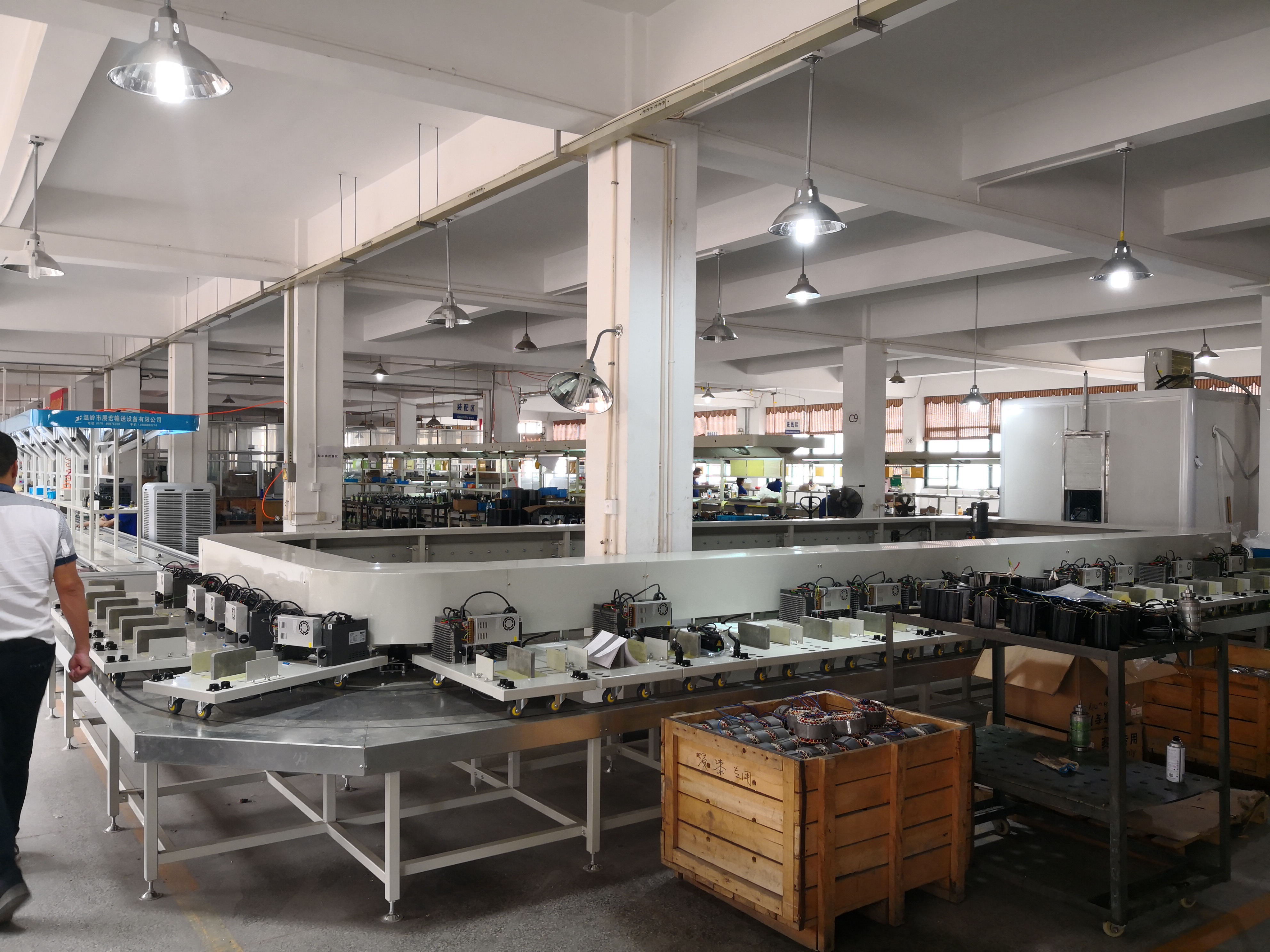
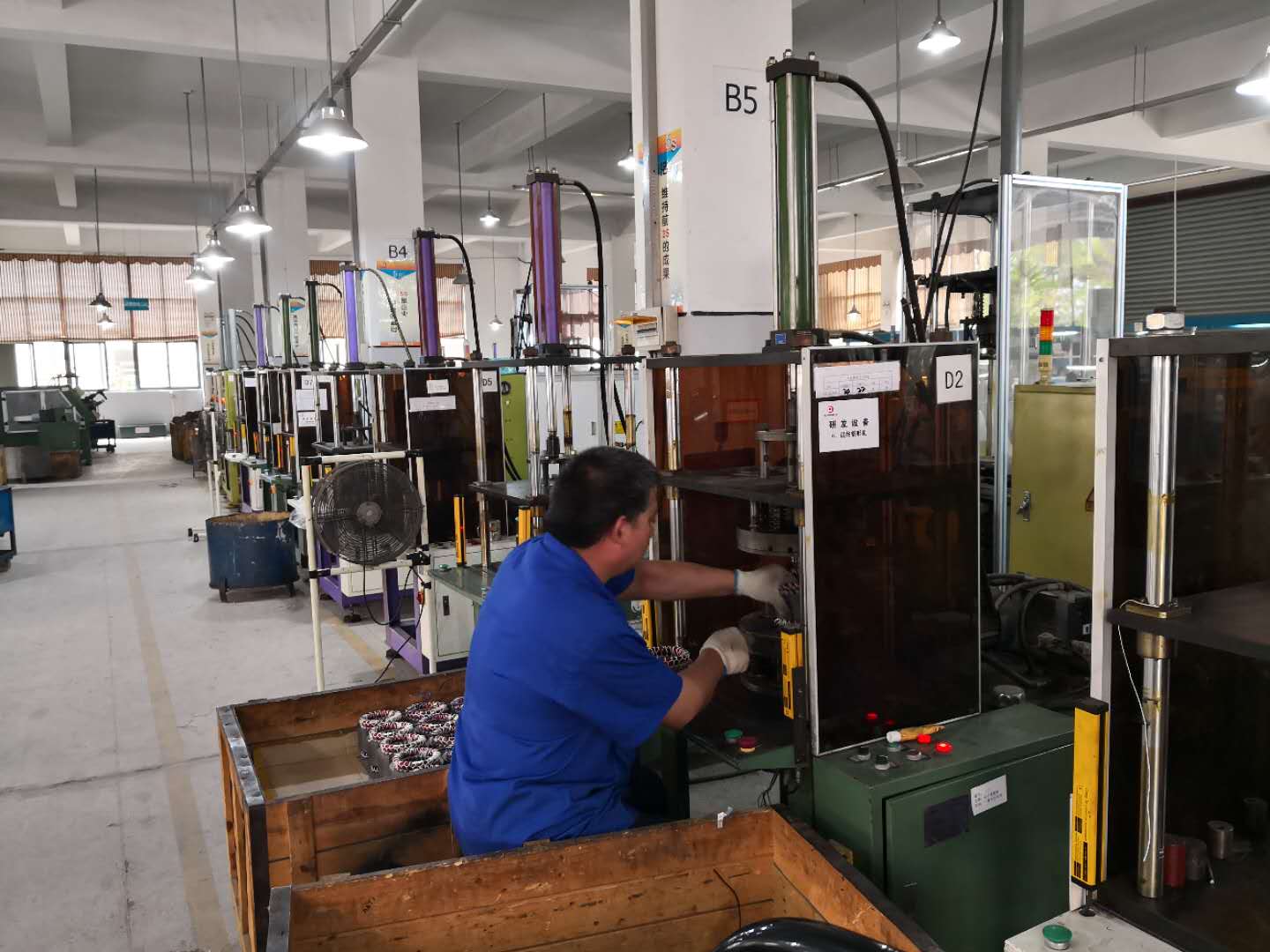
Zhejiang Torqen Technology Co., Ltd. is an ISO 9001:2015 certified manufacturer and trading company, founded in 2015 in Zhejiang, China, with an onsite-verified facility and export-ready support for global OEM buyers.
ISO 9001:2015 Quality System
Controlled manufacturing and inspection processes support repeatable production for custom pallet handling robot components.
Intertek Onsite-Verified
Factory assessment supports buyer confidence when evaluating a new OEM manufacturer for pallet automation components.
Five In-House Testing Instruments
Finished-product inspection and extended-duration prototype testing happen before production parts are released.
Eight Patents Awarded
In-house engineering covers drive wheels, motors, reducers, controllers and navigation accessories for mobile robots.
1,000–3,000 m² Factory
A 51–100 person team and US$5M–10M annual output support prototype builds and repeat production orders.
Export-Ready Support
FOB, CIF, EXW, DDU and express delivery, flexible payment methods and a 97.9% inquiry response rate for global buyers.

From Drawing to Production for Pallet Handling Robots
OEM buyers rarely need a catalog wheel exactly as drawn. Torqen supports sample-based customization, design-based customization, OEM production, design services and buyer-label packaging.
Motor Power and Voltage
Match torque and speed to the pallet load, ramp, acceleration and battery platform. Common adaptations include power, voltage, winding and thermal design.
Reduction Ratio and Wheel Diameter
Change gear ratio and wheel size to balance travel speed, climbing ability and chassis height without redesigning the whole drive assembly.
Wheel Tread and Suspension
Select polyurethane, rubber or application-specific tread and spring suspension for smooth floors, dock ramps and washdown environments.
Encoder, Brake and Feedback
Encoder type, brake options and feedback signals can be specified to match your controller, safety logic and stopping accuracy.
Mounting Interface and Wiring
Mounting plates, shaft interfaces, connector types and wiring definitions can be adapted for your chassis and production assembly process.
Label Packaging and Documentation
Buyer-label packaging, manuals, parameter files and inspection records support OEM brands that need a consistent delivery package.
A Transparent OEM Process from Specification to Shipment
Custom pallet handling robot projects need predictable sampling and production. The process below keeps engineering and procurement aligned.
Requirement Review
Payload, load center, speed, voltage, chassis height, floor condition and safety requirements are assessed.
Engineering Proposal
Drive wheel, motor, reducer, controller and sensor options are matched, and drawings are shared for review.
Prototype Build
Sample-based or design-based customization is produced for integration with your pallet robot chassis.
Endurance Testing
Extended-duration runs and parameter checks are performed with in-house testing instruments.
Controlled Production
Mass production follows the ISO 9001:2015 quality management system and approved inspection points.
Inspection and Export Packing
Final inspection, export packing and delivery terms are confirmed for global shipment.
Pallet Handling Robot Applications Across Industries
Torqen drive products and mobile platforms are used in AGVs, AMRs, forklifts, aerial work platforms, airport equipment, agricultural machines, hydraulic applications, floor scrubbers, wind energy, marine equipment and medical devices.
Custom OEM Pallet Handling Robot Manufacturer & Factory FAQ
Questions global buyers ask before requesting a quotation for pallet handling robots, drive wheels, controllers or sensors.
Can Torqen customize a pallet handling robot for our payload and aisle width?
Yes. We support sample-based customization, design-based customization, OEM production and design services. Changes may include motor power and voltage, reduction ratio, wheel diameter, tread material, encoder type, brake options and mounting interfaces. For a faster review, share gross payload, load center, aisle width, lift height or tow force, chassis height and battery voltage.
Which drive wheel type is best for a pallet handling robot?
Differential drive units suit compact latent and jacking AGVs that turn by wheel-speed difference. Steering drive wheels suit forklift-style and tricycle-type robots that need controlled steering angles. Horizontal drive wheel assemblies suit low-clearance pallet trucks and under-ride chassis. Torqen engineers can recommend a configuration after reviewing your chassis layout and duty cycle.
Do you support OEM and ODM customization and private labeling?
Yes. We offer sample-based customization, design-based customization, OEM production, design services and buyer-label packaging. Customization can cover mechanical interfaces, motor parameters, controller settings, documentation and packaging. The goal is to let OEM buyers integrate our motion modules into their own pallet robot brand and production process.
How is product quality verified?
Our quality management system is certified to ISO 9001:2015, and our facility has been verified onsite by Intertek. We run finished-product inspection with five in-house testing instruments, and prototypes undergo extended-duration testing before production parts ship. Inspection records and production traceability can be discussed during the RFQ process.
What is the minimum order and lead time?
MOQ and lead time depend on the degree of customization, the selected drive wheel or platform, and whether the project starts from a sample or a full drawing. Sample-based customization and design-based customization are both available. Prototype timing is confirmed after engineering review, and production timing is set after drawing approval and final inspection requirements are agreed.
What payment and delivery terms are accepted?
Accepted payment methods include T/T, L/C, D/P, D/A, MoneyGram, credit card, PayPal, Western Union, cash and escrow, in USD, EUR, JPY, CAD, AUD, HKD, GBP or CNY. Delivery terms include FOB, CFR, CIF, EXW, CIP, FCA, CPT, DDU and express delivery. The final terms are confirmed in the quotation.
Which navigation sensors can be supplied for pallet handling robots?
Torqen supplies magnetic guide sensors, RFID position sensors with tags, and lidar sensors for obstacle avoidance and navigation support. These can be combined with QR code navigation or laser SLAM according to the route plan, stopping accuracy, traffic environment and budget of the project.
How do I start an RFQ for a custom pallet handling robot?
Send your application description and engineering variables to our team: payload, load center, lift or tow mode, aisle width, floor condition, travel speed, acceleration, duty cycle, battery voltage, navigation method and safety requirements. If you already have drawings or a target chassis, include them. Our engineers will propose a drive wheel, motor, controller and sensor configuration for review.
Send Your Pallet Handling Robot Requirements to the Factory
For a faster engineering review, include gross payload, load center, lift height or tow force, aisle width, floor condition, target speed, duty cycle, battery voltage, navigation method and required delivery terms. Our team will respond with a configuration proposal, drawing review and next-step sampling plan.
