8 TZBOT Products for Custom Smart Warehouse Robot Builds
Below are eight factory-direct building blocks for OEM and wholesale buyers. Each product can be specified as a standalone replacement part or integrated into a complete smart warehouse robot platform — from a low-profile horizontal drive wheel to a 3000 kg differential drive unit, a laser SLAM AMR, a composite robotic-arm chassis and a smart AGV controller.
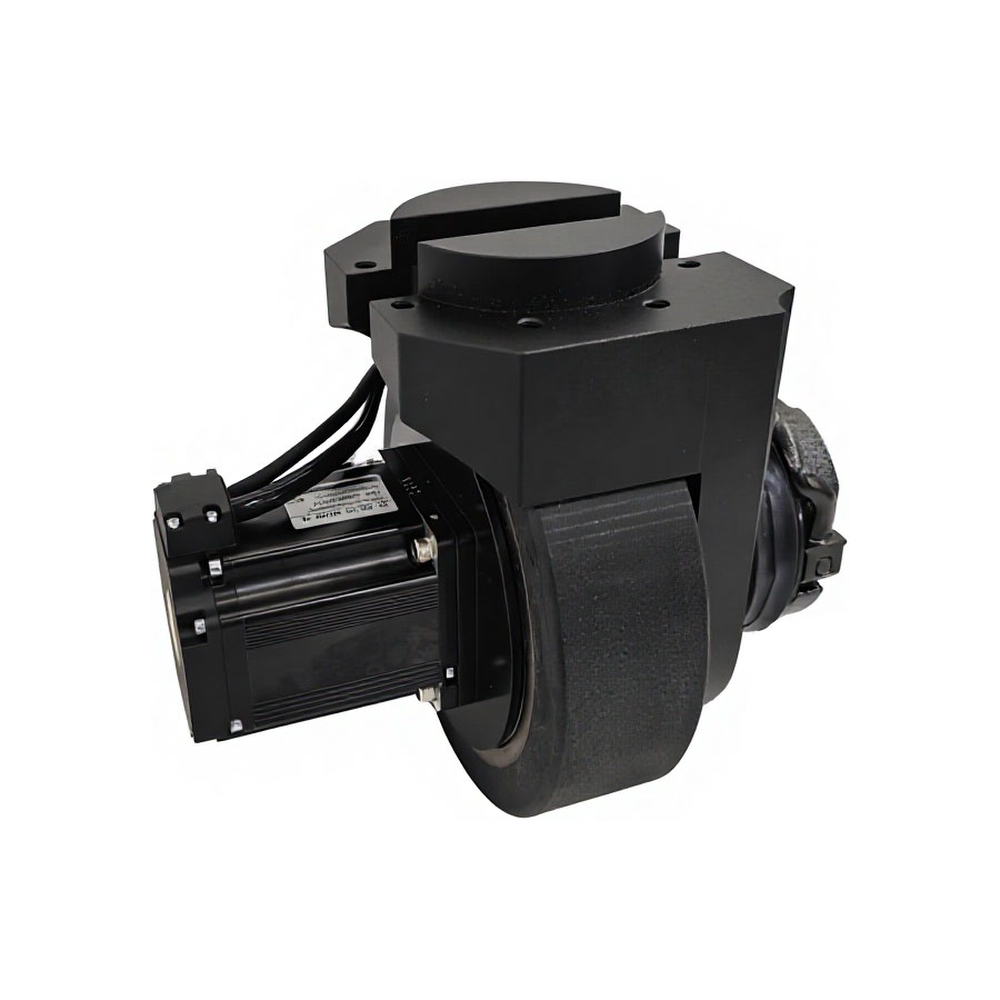
TZBOT 1000kg Bearing Capacity AGV Wheel 1000W Servo Motor Horizontal Drive Wheel
A low-profile horizontal drive solution for compact AGV and AMR chassis. The 1000 kg bearing capacity and 1000 W servo motor support stable material handling in tight aisles, while the horizontal layout helps reduce deck height for under-ride and low-clearance platforms.
View product details →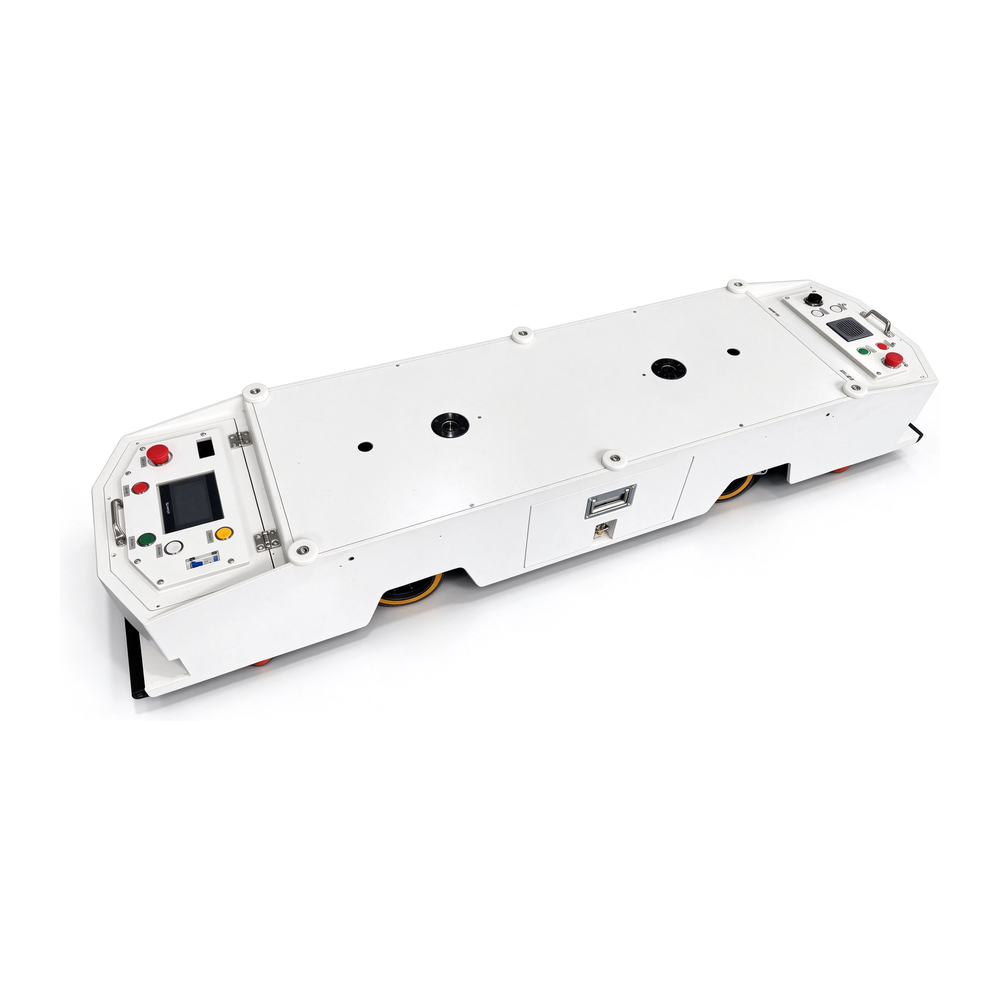
TZBOT 2500KG Lurking AGV Unmanned Control 8H Long Endurance Material Handling Mobile Robot for Shelf Towing
For shelf-towing and latent lifting tasks, this 2500 kg lurking AGV combines unmanned control with up to 8 hours of endurance. It is designed for warehouse replenishment, line-side delivery and flexible production logistics where racks must move without extra aisle space.
View product details →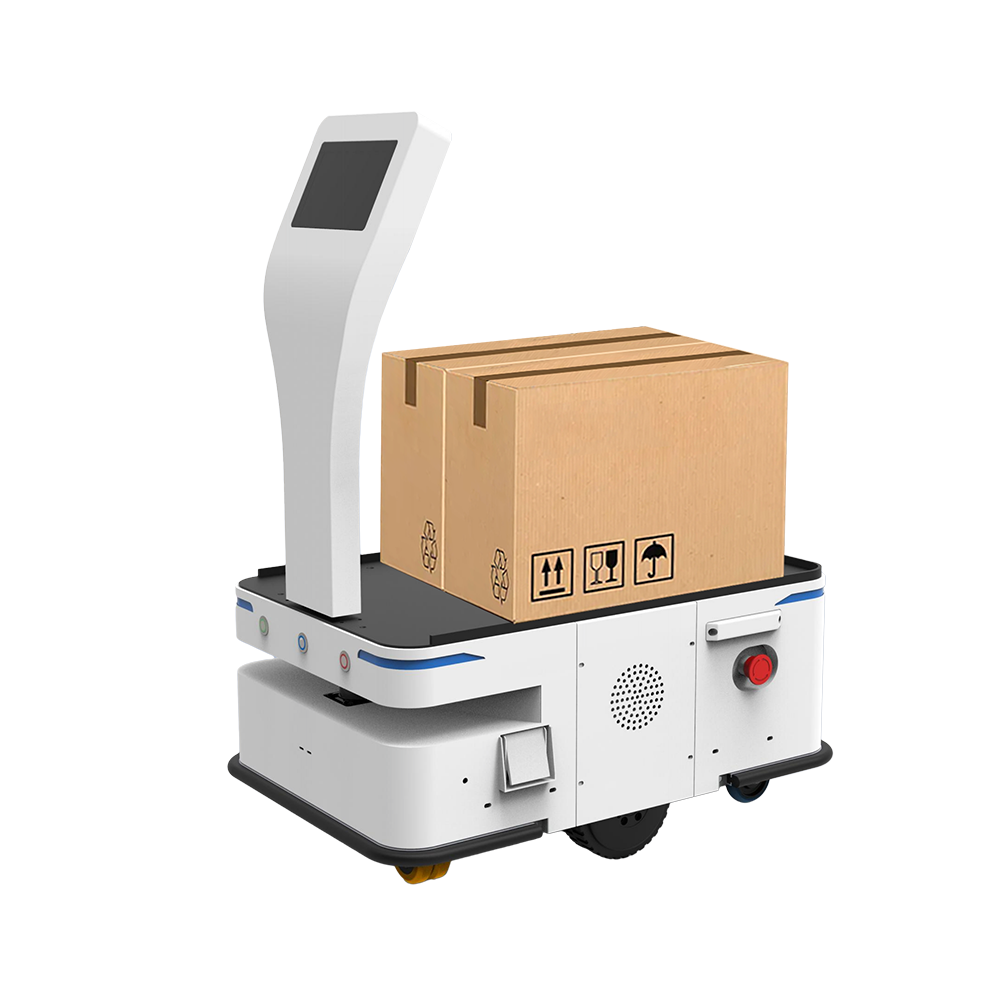
TZBOT High Precision Guidance Laser Slam Navigation AMR Robot 80kg Carrying Capacity with 7 Inch HMI
This 80 kg AMR uses laser SLAM navigation and high-precision guidance to operate without fixed floor infrastructure. The 7-inch HMI supports route setup and status monitoring, making it suitable for electronics assembly, small-parts handling and flexible intralogistics projects.
View product details →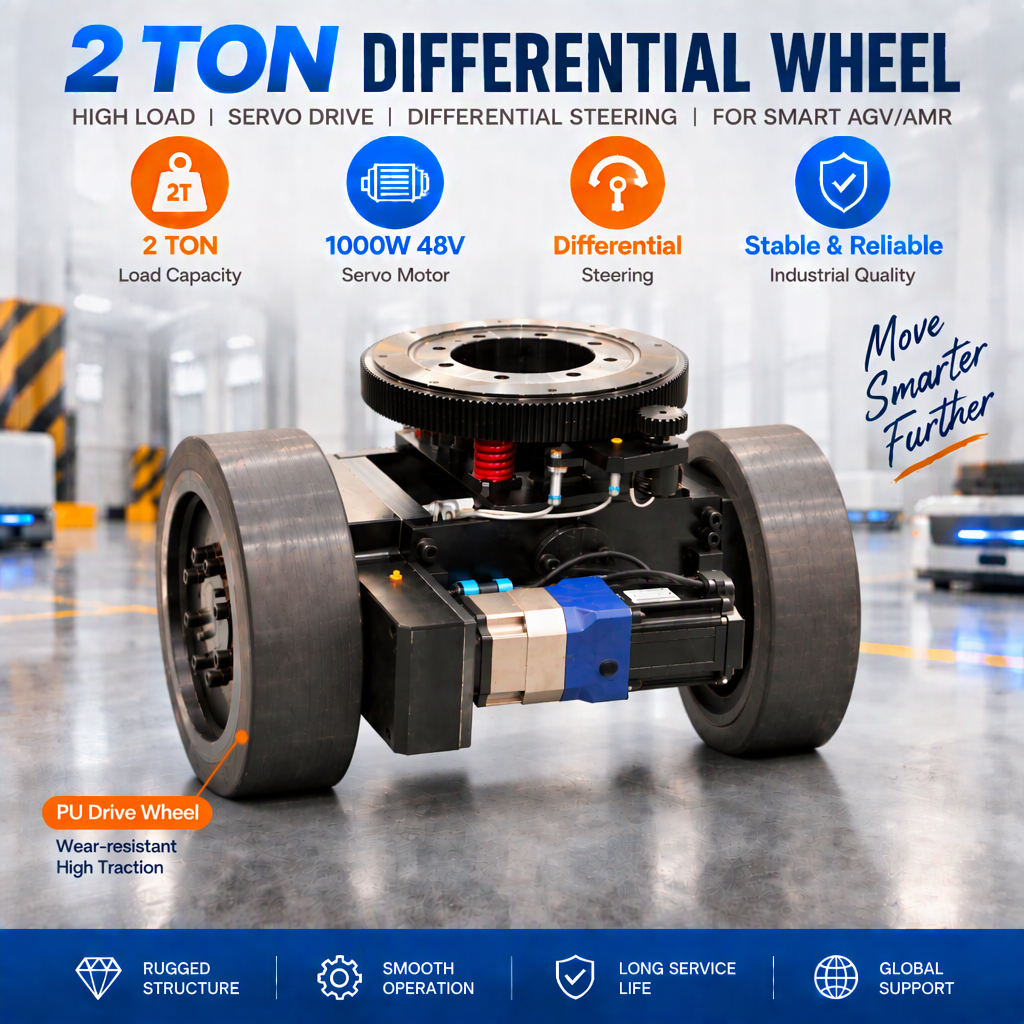
TZBOT Customized 2000kg Bearing Duty AGV Wheel 1000W 48V Heavy Duty Differential Drive Wheel with Suspension
A 2000 kg heavy-duty differential drive wheel with 1000 W, 48 V drive and suspension. It is built for AGV platforms that need shock absorption, consistent wheel contact and reliable traction on uneven industrial floors or ramps.
View product details →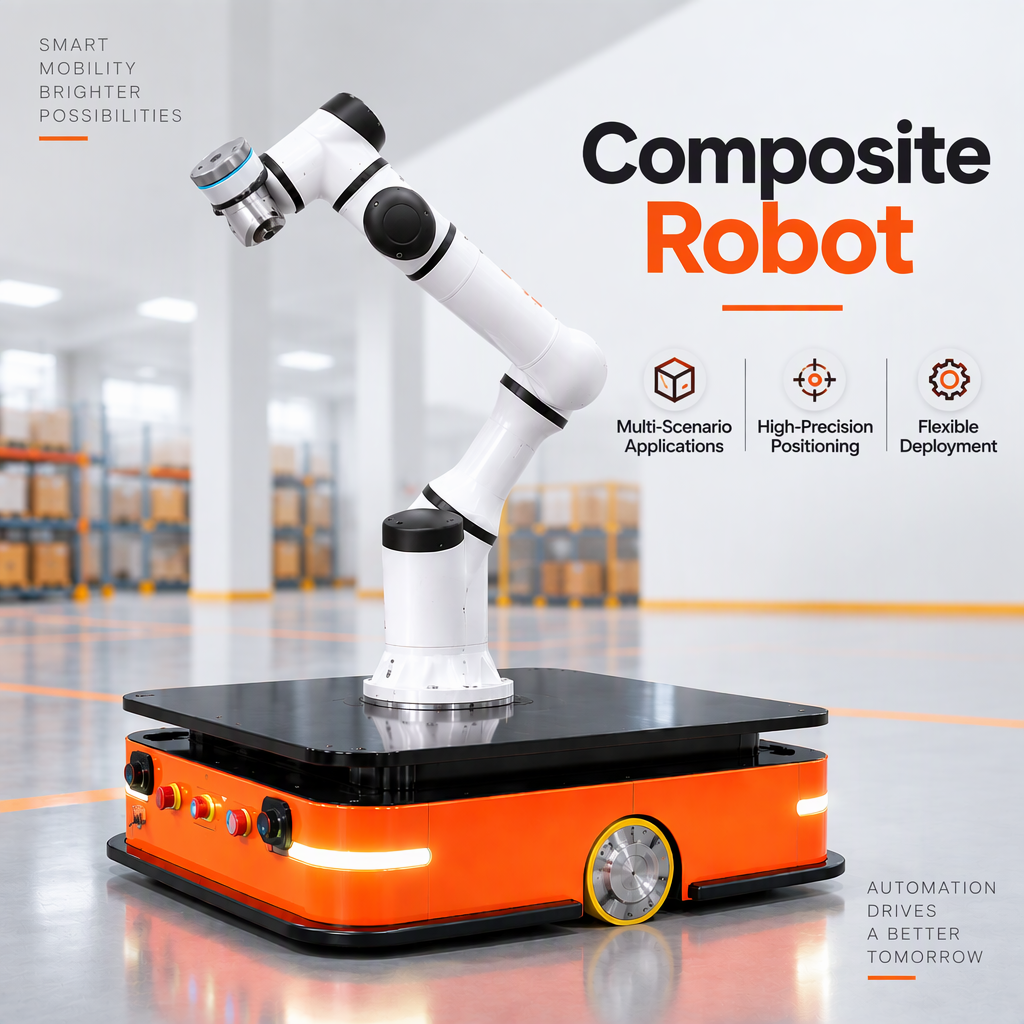
TZBOT Customizable Composite Robot Multi Applications 600kg Bearing Chassis AGV AMR with Robotic Arm
Combine a 600 kg bearing AGV/AMR chassis with a robotic arm to create a mobile manipulation platform. This composite robot concept supports multi-application layouts in machine tending, inspection, palletising and laboratory automation.
View product details →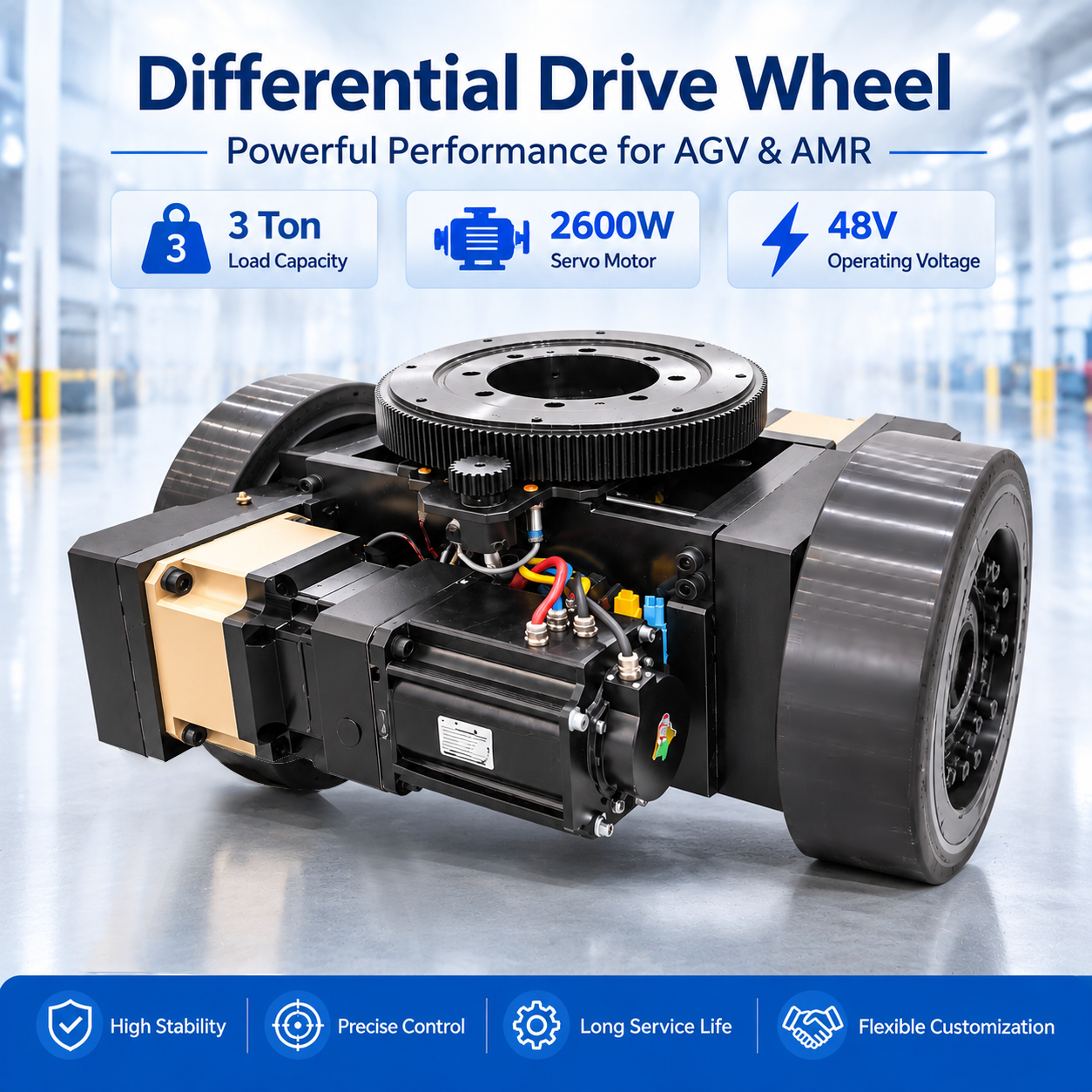
TZBOT Customizable 3000kg Load Capacity AGV Wheel Differential Drive Wheel with 2600W 48V Servo Motor
When payload density increases, this 3000 kg load-capacity differential drive wheel uses a 2600 W, 48 V servo motor to maintain acceleration and gradeability. It suits heavy material handling, automotive line-side delivery and large-tow applications.
View product details →
TZBOT 48V DC 2 Ton Heavy Duty Differential Unit AGV Wheel TZCS-750-30
A 2 ton heavy-duty differential wheel unit with 48 V DC drive. The TZCS-750-30 is a robust building block for low-speed, high-torque AGV platforms and can be matched with TZBOT controllers and navigation sensors.
View product details →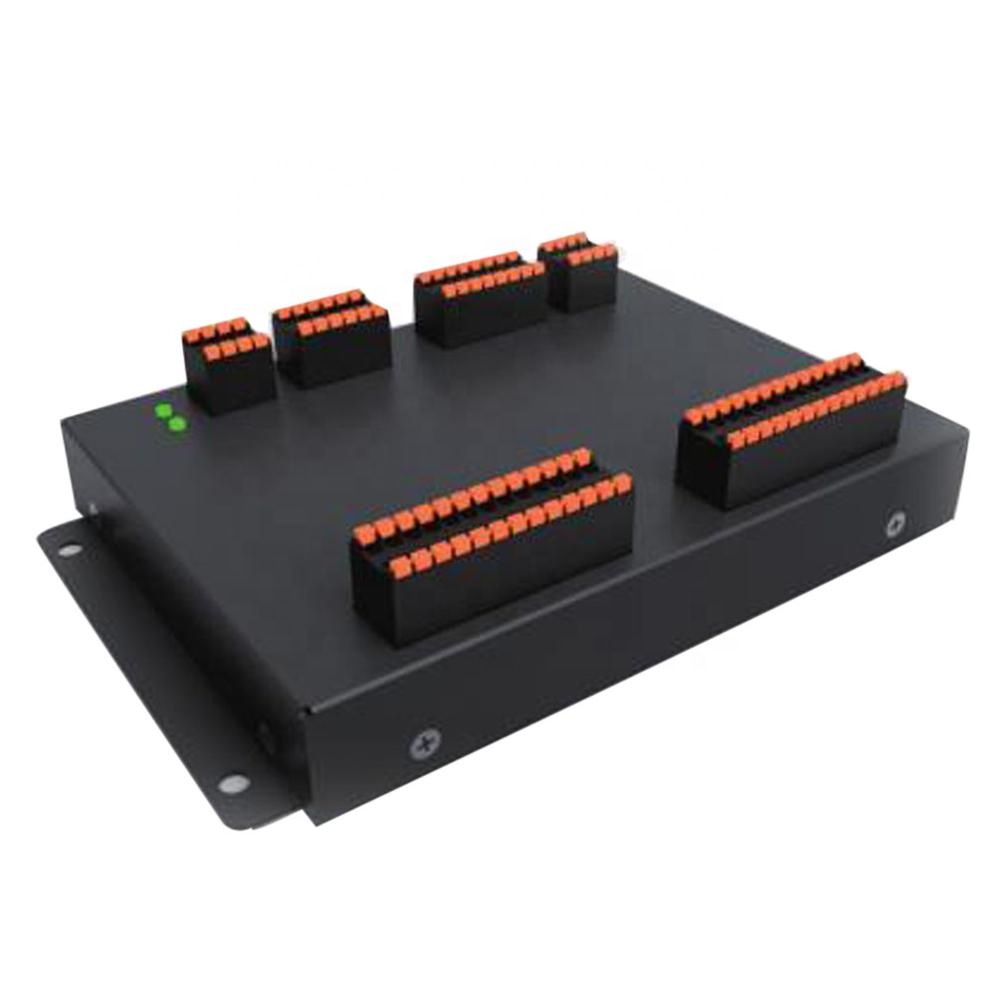
TZBOT Smart Controller TZC-MST-FX200D-A for Guiding the AGV Robot
A smart AGV controller for guiding TZBOT robots and drive systems. It centralises motion commands, navigation inputs and safety logic, helping OEM integrators reduce wiring complexity when building custom warehouse robots.
View product details →Why Torqen Is a Reliable OEM/ODM Partner for Smart Warehouse Robots
Zhejiang Torqen Technology Co., Ltd. has manufactured AGVs, AGV drive wheel assemblies, DC/AC motors, servo and BLDC controllers, and navigation sensors since 2015. For buyers comparing custom OEM smart warehouse robot suppliers and wholesalers, the value is not only in a component price — it is in engineering fit, traceable quality and repeatable delivery.
ISO 9001:2015 & Intertek Onsite Verification
Our quality management system is certified to ISO 9001:2015, and the factory has been verified onsite by Intertek. This gives procurement teams a documented baseline for supplier audits, new-product introduction and repeat-order consistency.
8 Patents & Custom Engineering
We support sample-based customization, design-based customization, OEM production and buyer-label packaging. Typical adaptations include motor power and voltage, reduction ratio, wheel diameter and tread material, encoder type, brake options and mounting interfaces.
Five In-House Testing Instruments
Finished-product inspection is supported by five in-house testing instruments. Prototypes undergo extended-duration testing before production parts are released, which helps catch thermal, wear and alignment issues before they reach your assembly line.
Matched Drive, Controller & Sensor Stack
Buying wheels, motors, drivers and sensors from separate vendors creates integration risk. We match servo and BLDC drivers to our own drive wheels and offer magnetic, RFID and lidar sensors for a single-source bill of materials.
Factory Capacity & Experienced Team
Founded in 2015, the company operates a 1,000–3,000 m² factory with a team of 51–100 people and annual output in the US$5M–10M range. Continued investment in machining equipment supports the path from drawing to tested prototype.
24/7 Online Support & 97.9% Response Rate
Our sales and technical team answers buyer inquiries around the clock, with a 97.9% inquiry response rate and a 4.9/5 buyer rating. Integration support includes wiring diagrams, driver parameter files and commissioning guidance.
Smart Warehouse Robot Procurement Trends Buyers Should Plan For
Procurement teams are moving away from isolated component purchases. For custom OEM smart warehouse robots, the next buying cycle will be shaped by modular sourcing, total cost of ownership, mixed-fleet compatibility and lifecycle support.
Modular Sourcing Replaces One-Off Buying
Instead of purchasing a wheel, motor, driver and sensor separately, buyers increasingly source a matched drive train. This shortens integration cycles, reduces interface risk and simplifies spare-parts planning.
Total Cost of Ownership Becomes the Main KPI
Unit price alone is no longer enough. Procurement models now include installation time, commissioning effort, energy consumption, spare-parts lead time, maintenance access and field-replacement downtime across the robot lifecycle.
Mixed-Fleet Interoperability & Open Interfaces
Warehouses rarely run one robot type forever. Buyers are asking for open communication interfaces, standard mounting patterns and controllers that can integrate with fleet-management software and third-party safety devices.
Localised Spare Parts & Dual Sourcing
Supply-chain resilience is now part of the specification. Buyers ask suppliers to hold repeatable documentation, offer export-ready terms and support local assembly or regional spare-parts stocking for critical drive and control components.
Product Development Trends in Smart Warehouse Robotics
Hardware roadmaps are converging around higher payload density, hybrid navigation, integrated motion control and safer human-robot collaboration. These trends directly affect the drive wheel, controller and sensor specifications buyers should request today.
Low-Profile, High-Torque Drive Wheels
Warehouse robots are getting lower and heavier. Horizontal drive assemblies and compact differential units are being developed to fit under low-clearance chassis while still delivering high torque, stable traction and serviceable brake access.
Hybrid Navigation: SLAM, Magnetic & QR
No single navigation method fits every aisle. Laser SLAM supports flexible routes, magnetic tape delivers low-cost fixed paths, and QR codes provide reliable grid positioning. Hybrid designs let one robot switch modes as the warehouse layout changes.
Integrated Servo/BLDC Drive & Controller
Integrating the motor, driver and encoder reduces cabinet space, cable count and failure points. For custom OEM projects, matched drive-and-controller packages also shorten parameter tuning and make spare-part replacement more predictable.
Composite Robot Chassis + Robotic Arms
Mobile manipulation is moving from demonstration to production. A composite robot combines a 600 kg-class AGV/AMR chassis with a robotic arm, enabling machine tending, inspection and palletising tasks without fixed conveyors.
Functional Safety & Human-Robot Collaboration
Bumper strips, lidar obstacle avoidance, emergency-stop logic and speed-zone control are becoming standard requirements. Buyers should request documented safety inputs and controller behaviour, not only a sensor list.
Energy Efficiency, Fast Charging & Battery Intelligence
Longer shifts demand smarter energy use. Efficient servo motors, regenerative braking options, opportunity charging and battery-management data help buyers reduce fleet downtime and plan charging around peak warehouse schedules.
How to Specify a Drive Wheel and Navigation Kit for a Custom AGV/AMR
A practical starting point for OEM engineers. The right configuration depends on payload, speed, chassis height, floor conditions and battery voltage — not on the wheel alone.
Differential Drive Unit
Two independently driven wheels turn by speed difference. Best for latent, jacking and shelf-lifting AGVs that need compact turning and a straightforward mechanical layout. Specify traction, brake and suspension requirements early.
Single Steering Drive Wheel
A drive motor plus a dedicated steering motor sets the wheel angle. This suits forklift AGVs, tricycle chassis and tugger vehicles that need controlled steering angles, tighter path tracking or precise docking.
Horizontal Drive Assembly
The motor is mounted horizontally for a low build height. It is a strong fit for low-clearance chassis and under-ride carts where vertical space is limited but load capacity and service access still matter.
Engineer’s tip: before requesting a drive wheel or wholesale quotation, prepare five values: gross vehicle weight, target speed, maximum gradient, battery voltage and available chassis height. These determine motor power, reduction ratio, wheel diameter and controller current — and shorten the sampling cycle considerably.
Industries Powered by Torqen Drive Components
Torqen electric drives and TZBOT components are used far beyond standard warehouse AGVs. They support demanding mobile equipment across industrial, logistics and medical sectors.
Engineering Support, Payment Methods and Delivery Terms for Global Buyers
Wholesale and OEM projects require more than a product list. Torqen supports overseas buyers with technical response, integration guidance, spare-parts planning and flexible trade terms.
24/7 Online Response
Messages are handled around the clock so overseas buyers do not wait a full working day for a technical answer. A 97.9% inquiry response rate reflects the team’s focus on early-stage project communication.
Integration Assistance
We provide wiring diagrams, driver parameter files and commissioning guidance for your engineers. For OEM projects, we can review mounting interfaces, voltage requirements and sensor placement before sampling.
After-Sales Assurance
Spare-parts supply and fault analysis are backed by traceable production records. The goal is to reduce unplanned downtime after delivery, not simply to close the initial order.
Payment Methods
Flexible options for different buyer profiles and order values.
Delivery Terms
Export-ready terms for factory-direct and wholesale shipments.
Supported Currencies
Quotation and settlement options for global procurement teams.
Frequently Asked Questions About Custom OEM Smart Warehouse Robot Procurement
Common questions from OEM integrators, warehouse automation distributors and wholesale buyers comparing AGV/AMR drive and control components.
Does Torqen support OEM and ODM customization for smart warehouse robots and components?
Yes. We offer sample-based customization, design-based customization, OEM production, design services and buyer-label packaging. Typical customizations include motor power and voltage, reduction ratio, wheel diameter and tread material, encoder type, brake options and mounting interfaces. For integrated projects, we can also match drive wheels with servo/BLDC controllers and navigation sensors.
Which drive wheel type should I choose for my AGV or AMR?
Differential drive units suit compact latent and jacking AGVs that turn by wheel-speed difference. Single steering drive wheels suit forklift and tricycle-type AGVs that need controlled steering angles. Horizontal drive wheel assemblies suit low-clearance chassis. Share your payload, speed, chassis height, floor conditions and battery voltage, and our engineers will recommend a configuration.
How does Torqen verify product quality before shipment?
Our quality management system is certified to ISO 9001:2015, and the facility has been verified onsite by Intertek. We run finished-product inspection with five in-house testing instruments, and prototypes undergo extended-duration testing before production parts ship. This helps confirm thermal performance, alignment, wear behaviour and electrical compatibility.
What are the typical sampling and production steps for a custom project?
A standard project moves through requirement review, engineering proposal, prototype build, endurance testing, mass production, and final inspection and delivery. The requirement review should cover load, speed, voltage, chassis data and operating environment so the motor, reducer and wheel can be matched before sampling begins.
What payment, delivery and currency terms are accepted?
Accepted payment methods include T/T, L/C, D/P, D/A, MoneyGram, credit card, PayPal, Western Union, cash and escrow. We can quote in USD, EUR, JPY, CAD, AUD, HKD, GBP or CNY. Delivery terms include FOB, CFR, CIF, EXW, CIP, FCA, CPT, DDU and express delivery.
Which navigation method is best for a smart warehouse robot?
Magnetic guide sensors are cost-effective for fixed routes. RFID position sensors are useful for station recognition, speed zones and junctions. QR code navigation suits grid warehouses and goods-to-person systems. Laser SLAM is preferred for flexible routes and frequent layout changes. Many projects use a hybrid approach to balance cost, flexibility and reliability.
Do you provide after-sales support and spare parts?
Yes. We provide 24/7 online response, integration assistance, wiring diagrams, driver parameter files, spare-parts supply and fault analysis. For wholesale and OEM buyers, we can help plan critical spare parts based on fleet size, duty cycle and maintenance strategy.
Which industries use Torqen and TZBOT drive products?
Our products are used in AGVs and AMRs, forklifts, aerial work platforms, airport equipment, agricultural machines, hydraulic applications, floor scrubbers and sweepers, wind energy, marine equipment and medical devices. This broad application base helps us recommend drive and control configurations for non-standard chassis as well as standard warehouse robots.
Request the 2025 TZBOT Smart Warehouse Robot Catalog
Tell us your payload, target speed, chassis height and battery voltage. Our engineers will recommend a drive wheel, controller and navigation kit for your OEM/ODM build — and confirm the most practical wholesale configuration for your market.
