OEM/ODM Magnetic Navigation AGV Suppliers & Exporters
A buyer-focused whitepaper on magnetic-guided AGV chassis, differential drive wheels, servo controllers, navigation sensors, and the customization decisions that determine total cost of ownership.
Eight Magnetic Navigation AGV Products for OEM/ODM Export Programs
The shortlist below is organized for engineering buyers who need a complete magnetic-guided AGV drive train, a composite robot platform, or a replacement control component. Each product links to its original detail page and uses the manufacturer’s published image assets.
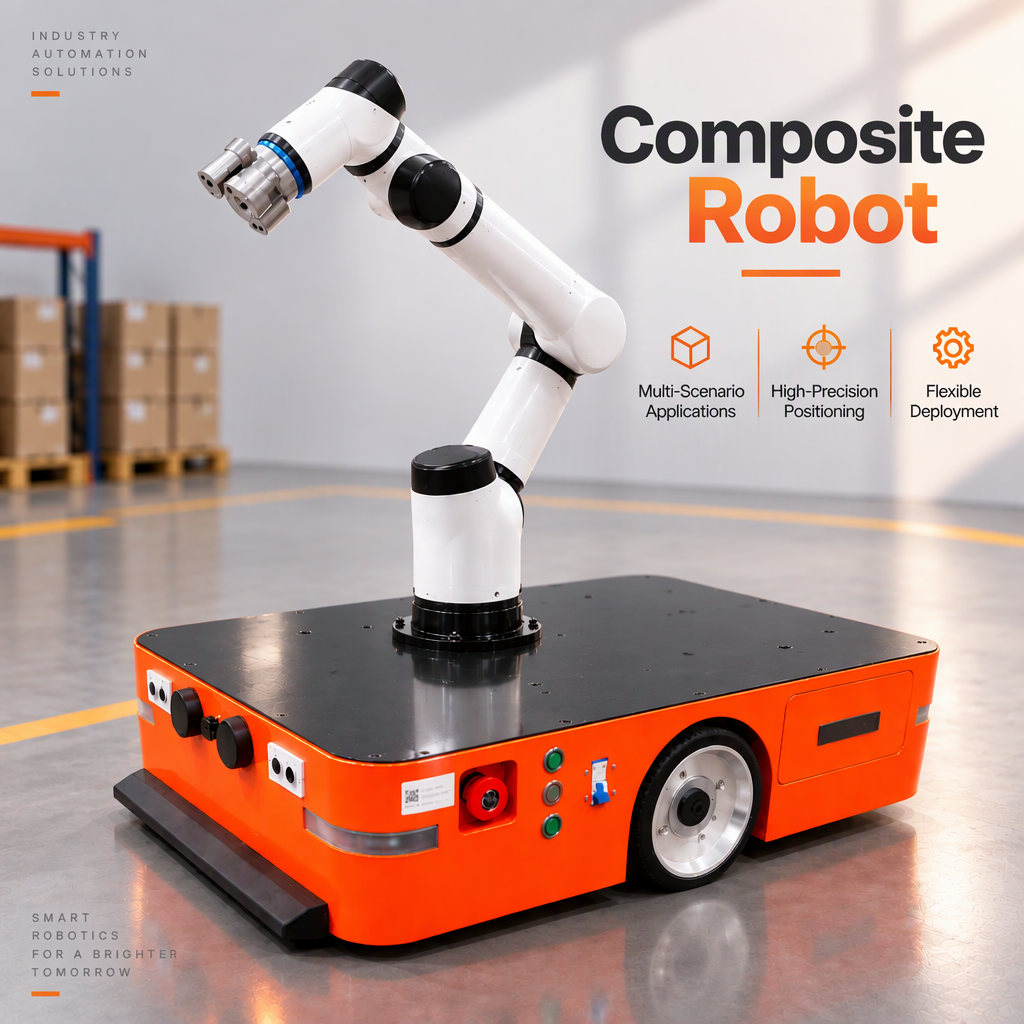
TZBOT Backpack AGV 200kg Load Capacity Chassis Magnetic Guidance Composite Robot with Robotic Arm
A compact composite-robot base for robotic arm integration, designed around a 200 kg chassis class and magnetic guidance for repeatable production or warehouse routes.
View product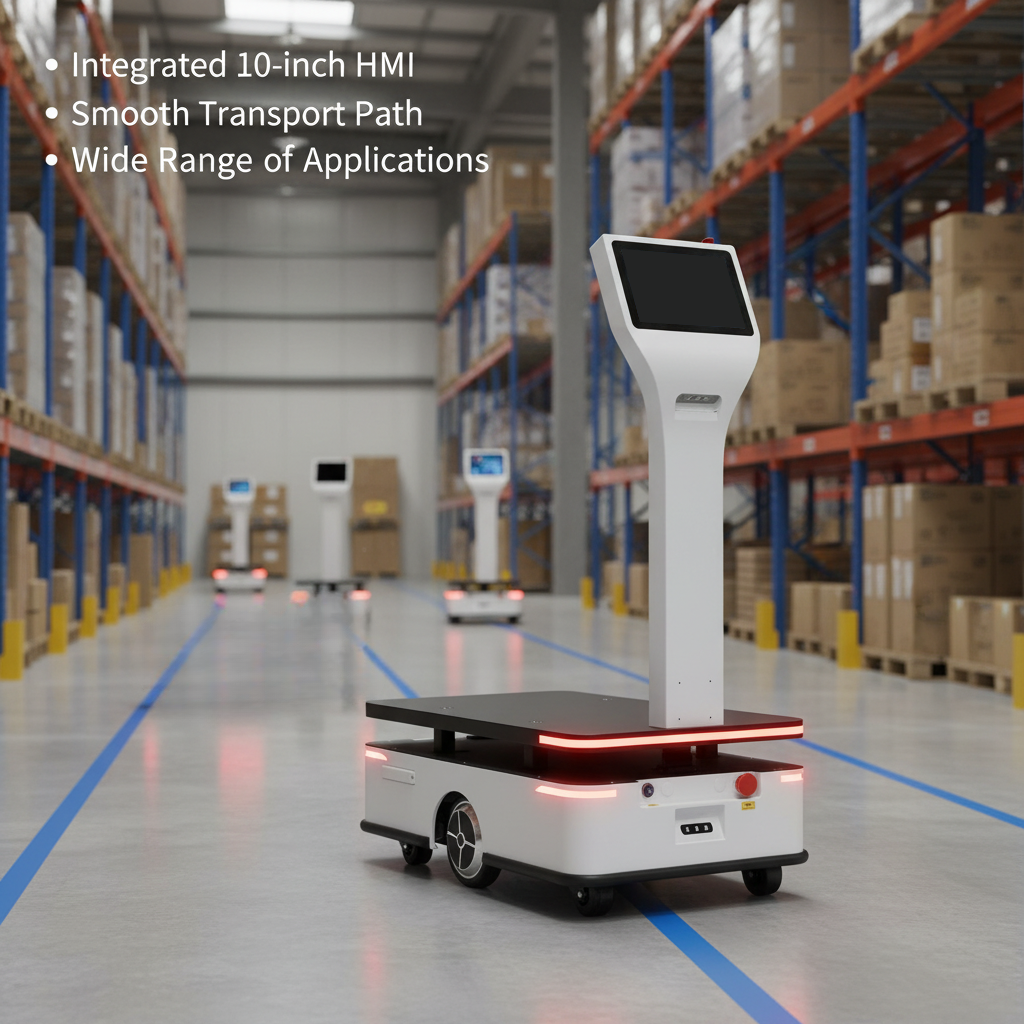
TZBOT Intelligent Warehouse Logistic Robot Unmanned Control System Customizable 80kg Payload agv Transfer Cart Slam Amr
A flexible transfer cart platform for warehouse logistics where buyers may combine SLAM routing with conventional AGV transport logic and customized top modules.
View product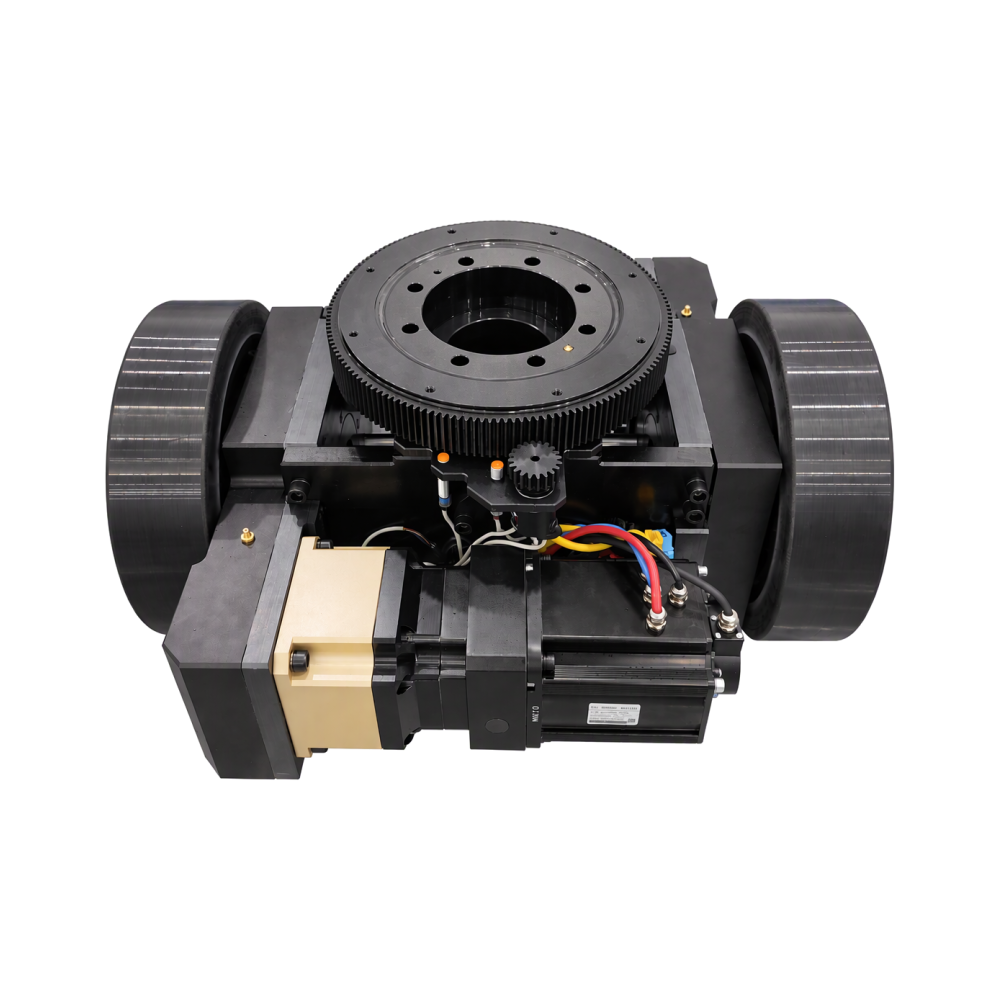
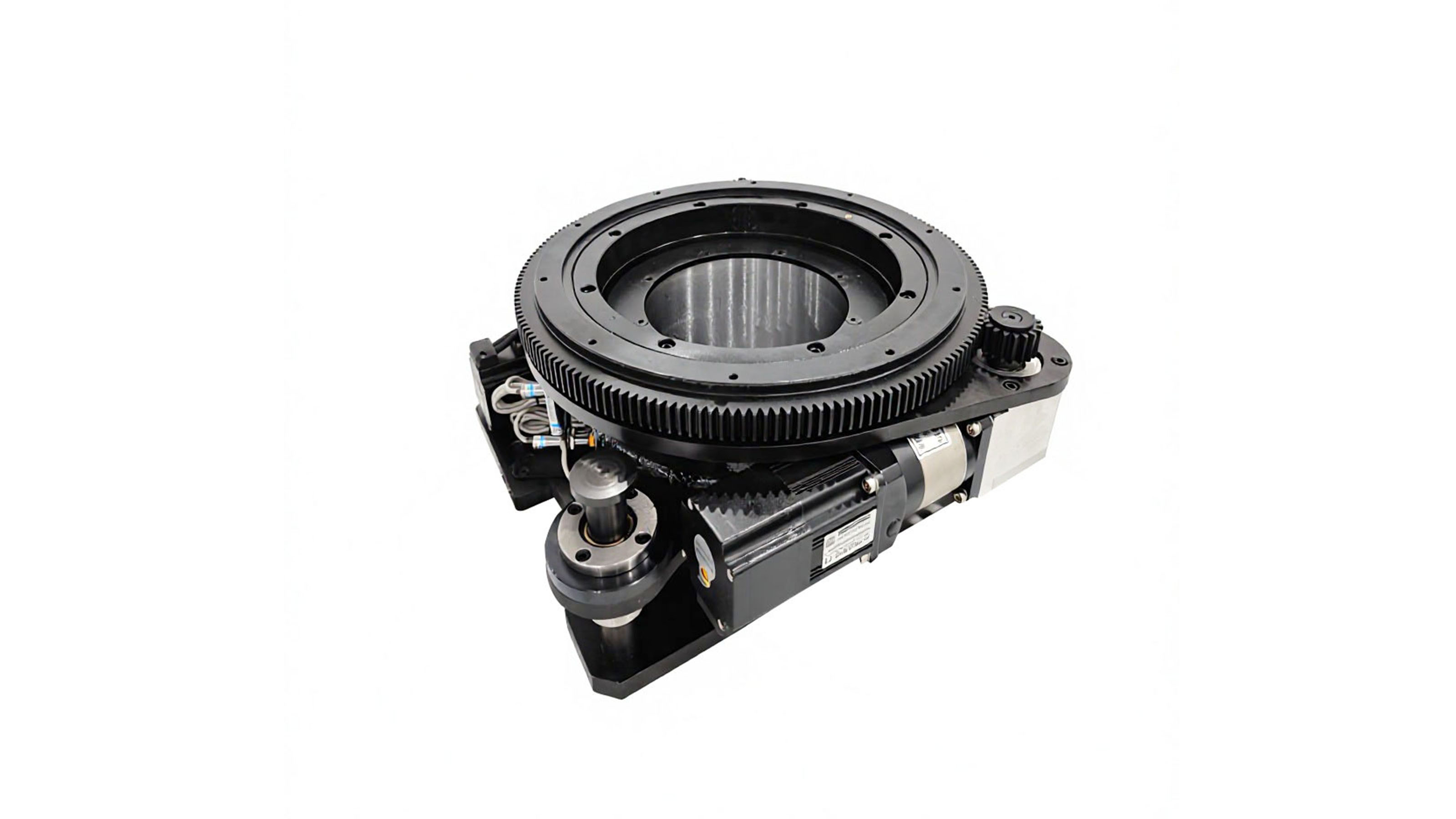
TZBOT Heavy Duty Series Robot Wheel 3000kg Bearing Capacity AGV Material Handling Equipment Differential Drive Wheel Assembly
A high-load differential drive wheel assembly for heavy AGV platforms, focusing on bearing capacity, frame integration, and predictable traction under industrial duty cycles.
View product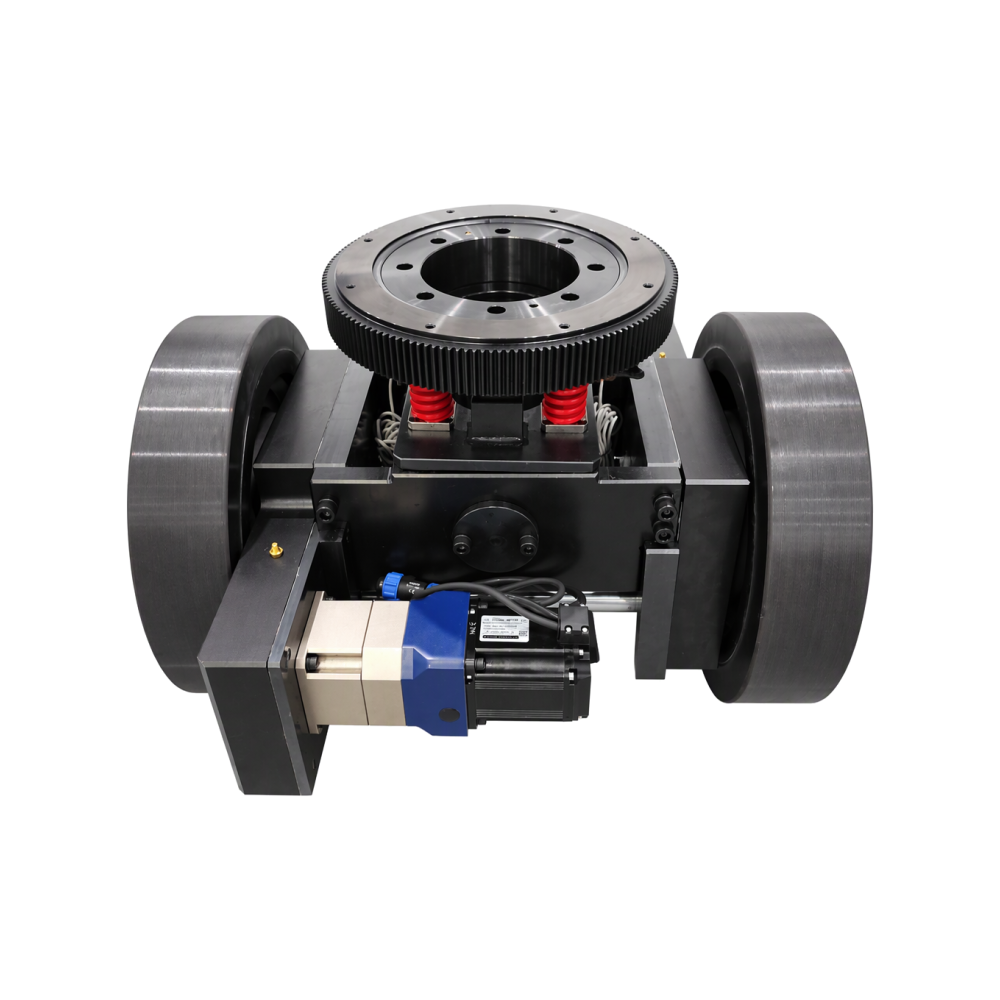
TZBOT Heavy Duty Series agv Wheel 1000w 48v Servo Motor Control Mobile Robot Differential Drive Wheel with Spring Suspension
A servo-driven differential wheel with spring suspension for mobile robots that need better floor contact, shock absorption, and controlled acceleration on uneven surfaces.
View product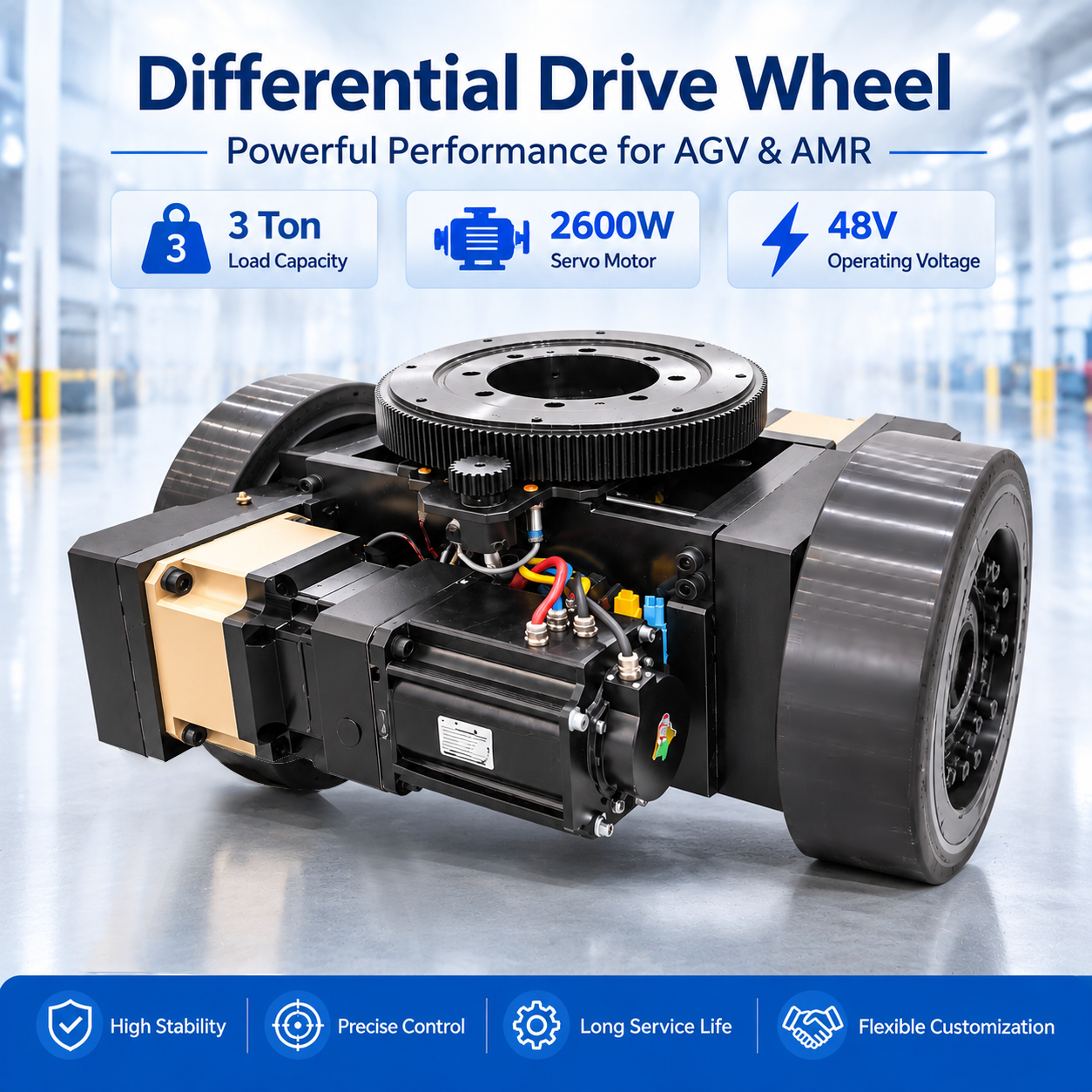
TZBOT Customizable 3000kg Load Capacity agv Wheel Automatic Guided Vehicle Differential Drive Wheel with 2600w 48V Servo Motor
A customizable heavy-load drive wheel for OEM chassis programs, suited to buyers who need to align motor power, mounting geometry, and wheel performance with a specific vehicle envelope.
View product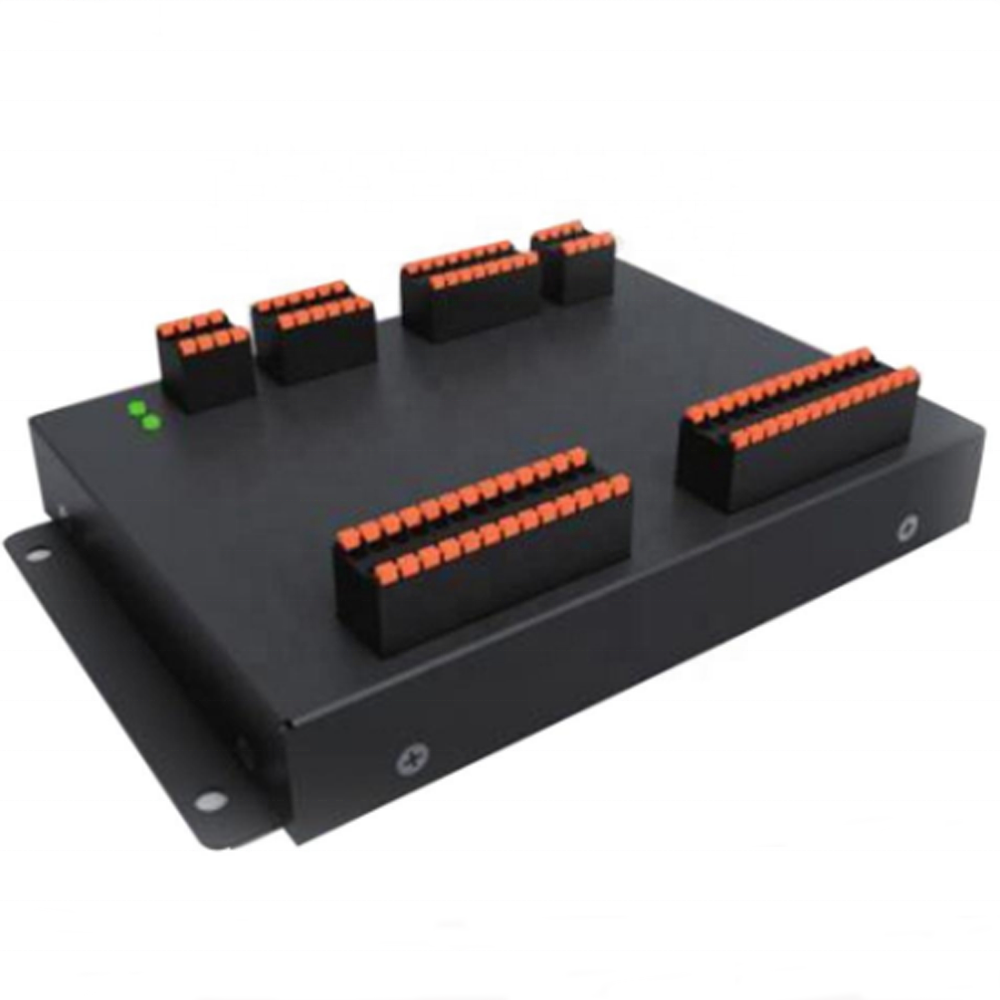
TZBOT FX Series Controller of HX Support Magnetic Tap Guided AGV
A controller option for magnetic-tape-guided AGV platforms, useful for vehicle builders who need a familiar guidance architecture with engineering customization.
View product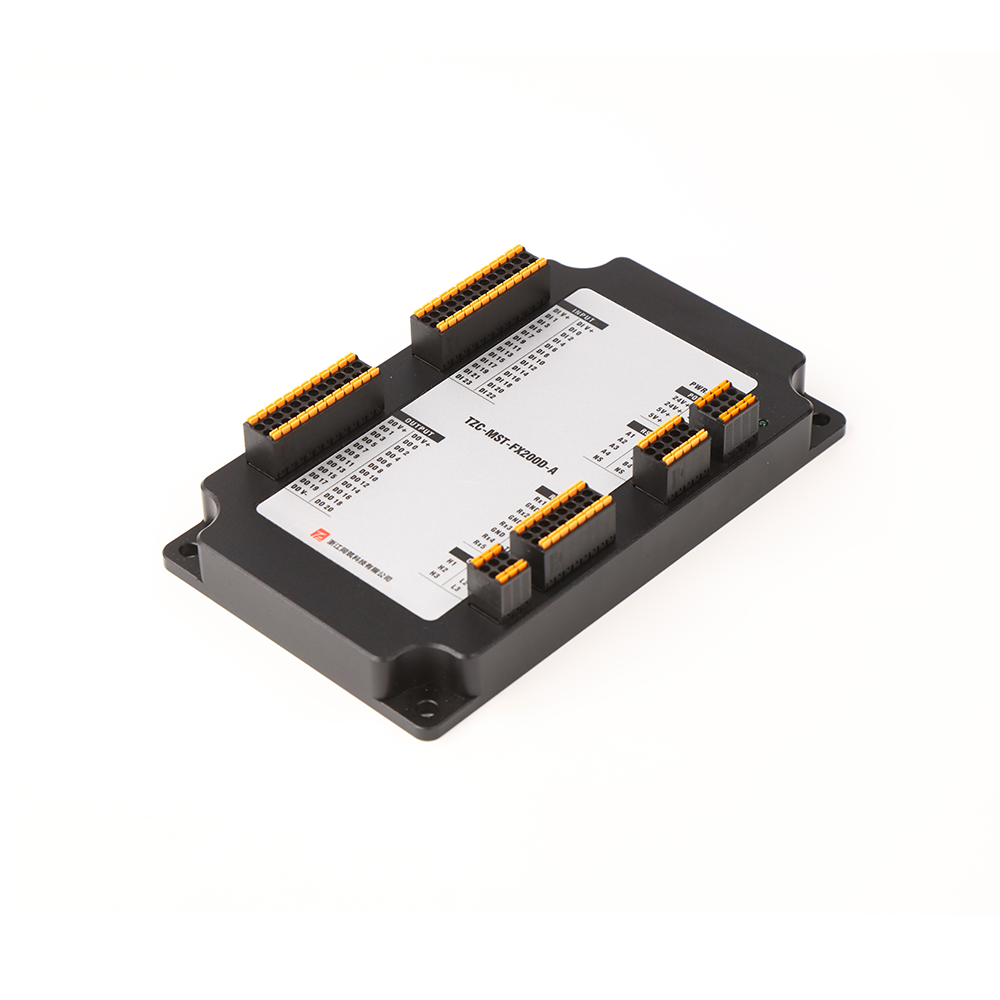
AGV Accessories Automated Guided Vehicle Controller with 19V~29V Power for AGV Robot
A 19 V–29 V AGV controller for accessory integration and robot control architectures where power range, interface compatibility, and replacement availability matter.
View product
TZBOT Auto Guidance Mobile Chassis 1000kg Payload AGV Integrate Arm Robotic Intelligent Composite Robot
A heavier composite-robot chassis for 1000 kg payload programs, integrating an auto-guidance mobile base with robotic arm deployment for flexible manufacturing cells.
View productWhat OEM/ODM Magnetic Navigation AGV Buyers Are Really Buying
Magnetic navigation is often described as a sensor choice. In practice, it is a system contract between the route, the chassis, the drive wheel, the motor controller, the stopping logic, and the maintenance plan. A magnetic navigation AGV that follows tape accurately but lacks braking discipline, floor-contact stability, or spare-parts traceability will still create hidden cost after installation. That is why experienced OEM buyers evaluate suppliers on integration evidence, not only on catalog photographs.
For exporters, the commercial challenge is equally important. A magnetic-guided AGV program usually requires customization of motor power, voltage, reduction ratio, wheel diameter, tread material, encoder type, brake behavior, and mounting interface. The buyer must know whether those changes are supported by drawings, test records, and a production process that can repeat the first approved sample. The strongest supplier is the one that can move from a written requirement to a tested configuration without losing engineering intent between sales, design, and production.
- Route determinism versus flexibility: magnetic tape guidance gives repeatable paths and fast deployment where the layout is stable; SLAM and QR code options add flexibility for changing warehouse zones.
- Drive-wheel geometry: wheel diameter, suspension, tread, and load rating decide floor contact, chassis height, climbing behavior, and service life.
- Controller matching: servo or BLDC drivers should be parameter-matched to the motor, encoder, and wheel assembly rather than selected as isolated catalog items.
- Sensor fusion: magnetic guide sensors, RFID position readers, and lidar obstacle avoidance solve different problems and should be designed as one navigation stack.
- Export readiness: packaging, documentation, Incoterms, currency options, and after-sales response are part of the product offer, not administrative details.
Zhejiang Torqen at a Glance
Published company profile signals for global OEM/ODM buyers.
Anatomy of a Reliable Magnetic Navigation Drive Train
A magnetic navigation AGV is only as stable as the weakest interface between chassis, wheel, motor, controller, and sensor. These four layers should be specified together.
Chassis & Composite Robot Base
The chassis defines payload distribution, deck height, service access, and the attachment strategy for lifting, conveyor, or robotic arm modules. A well-designed base leaves room for cable routing and sensor calibration.
Differential & Steering Wheels
Differential units suit compact AGVs that turn by wheel-speed difference. Steering drive wheels provide controlled steering angles for forklift or tricycle layouts. Suspension and tread choice affect traction and stopping repeatability.
Servo / BLDC Control
Motor drivers should be matched to the wheel assembly, encoder feedback, current limits, and thermal margin. Parameter files, wiring diagrams, and fault codes shorten commissioning for the buyer’s engineering team.
Magnetic, RFID & Lidar
Magnetic guide sensors provide continuous path following; RFID tags identify stations, junctions, and speed zones; lidar adds obstacle detection. The best architecture defines how the vehicle recovers after guidance loss.
Product Recommendations Mapped to Real AGV Programs
Instead of asking which product is “best,” define the vehicle duty cycle, load, path logic, and service strategy. Then match the component set.
Compact Warehouse Transfers
For lower-payload logistics carts and flexible transfer stations, start with an 80 kg SLAM AMR platform when route changes are expected, or a magnetic-guided chassis when routes are fixed.
- TZBOT 80kg SLAM AMR transfer cart
- 19–29 V AGV robot controller
- Best fit: warehouse replenishment, line-side delivery, light assembly
Robotic Arm Composite AGVs
When the AGV carries a robotic arm, chassis stability and payload margin become critical. A 200 kg backpack chassis or 1000 kg composite platform should be selected with cable routing and arm reaction torque in mind.
- 200kg backpack AGV with robotic arm
- 1000kg payload composite robot chassis
- Best fit: machine tending, inspection, flexible assembly cells
Heavy-Duty Material Handling
Heavy AGVs need more than a larger motor. Review bearing capacity, wheel tread, suspension, floor conditions, braking distance, and the maintenance plan for wheel replacement.
- 3000kg bearing differential drive wheel
- 1000W 48V suspended drive wheel
- 2600W customizable drive wheel
Magnetic-Line Guidance & Retrofits
For fixed-route upgrades, the controller and guidance logic often determine project speed. Choose a magnetic-guided controller when the site already uses tape and station markers.
- FX series magnetic guided AGV controller
- 19–29 V AGV controller
- Best fit: existing lines, station recognition, controlled retrofits
Procurement Trends Shaping Magnetic Navigation AGV Sourcing
Buyer behavior is moving away from isolated component purchases and toward verified, lifecycle-oriented AGV programs.
System-Level Risk Balancing
Buyers still compare multiple suppliers, but they increasingly avoid splitting the drive wheel, motor driver, and sensor stack across vendors that do not share test data. A single accountable motion-control partner reduces integration friction, especially when the first prototype must be validated quickly.
Lifecycle Cost Over Unit Price
Procurement teams now model wheel replacement intervals, controller tuning time, spare-parts lead time, and engineering response into the landed cost. A lower unit price can be expensive if the exporter cannot supply matched replacement components or stable parameter files after commissioning.
Safety Files in the RFQ
Industrial AGV projects increasingly ask for risk-assessment support, emergency-stop behavior, bumper logic, speed-zone control, and references to applicable safety standards. Exporters that provide structured technical documentation are easier to approve than suppliers that offer only a product photo and a price.
Spare-Parts Velocity
AGV fleets cannot afford long downtime. Buyers are asking for recommended spare lists, wear-part identification, and clear replacement procedures at the quotation stage. For magnetic navigation systems, guide sensors, drive wheels, controllers, and RFID components should all be considered in the service plan.
Product Development Trends to Design Into Your Next RFQ
The next generation of magnetic navigation AGV platforms will be judged by integration quality, data continuity, and serviceability rather than by one headline specification.
Integrated Drive-Wheel Modules
Motor, reducer, encoder, brake, and wheel are increasingly specified as one module. This reduces assembly tolerance problems and gives the buyer a single set of performance data for torque, speed, and stopping behavior. Integrated modules also simplify spare-parts planning.
Sensor Fusion With Magnetic Reference
Magnetic tape is no longer an alternative to modern navigation; it is often the stable reference layer inside a fused system. Magnetic guide sensors can handle repeatable path following while RFID, lidar, and QR code logic manage exceptions, station recognition, and flexible zones.
Higher Efficiency at 48 V
Many mobile robot platforms are standardizing around 48 V architectures to improve power density and reduce current for a given load. Buyers should confirm motor, controller, and charger compatibility as a set, especially when upgrading an existing AGV chassis.
Traceable Parameters
Digital records for motor parameters, controller firmware, and test results are becoming part of the product. When an exporter can trace a production unit back to its test data, the buyer can troubleshoot faster and maintain consistent behavior across multiple AGV units.
How to Audit OEM/ODM Magnetic AGV Suppliers and Exporters
Use this matrix to separate marketing claims from engineering evidence. The goal is not to collect documents; it is to confirm that the supplier can repeat a validated configuration in mass production.
| Audit Area | Evidence to Request | Why It Matters |
|---|---|---|
| Quality management | ISO 9001:2015 certificate, onsite verification report, inspection records for finished products. | Shows whether quality control is a system rather than a final visual check. |
| Mechanical design control | Drawings for wheel diameter, tread, load rating, suspension, brake, and mounting interface. | Prevents unexpected chassis height, traction, or service-access problems after sampling. |
| Drive-train matching | Motor, reducer, encoder, controller, current limit, and thermal margin data. | Confirms that the components were engineered together instead of assembled from unrelated catalogs. |
| Navigation validation | Magnetic sensor test data, RFID station logic, lidar behavior, and recovery procedure after guidance loss. | Reveals whether the vehicle behaves predictably in real routes, not only in a demonstration aisle. |
| Safety and compliance | Risk-assessment support, emergency-stop design, bumper logic, speed-zone control, and applicable standard references. | Helps the buyer align the AGV with site safety reviews and applicable industrial vehicle requirements. |
| Testing and traceability | Prototype endurance runs, test-instrument list, serial-number traceability, and production inspection criteria. | Reduces batch-to-batch variation and supports faster fault analysis after delivery. |
| Export readiness | Incoterms, supported currencies, packaging method, spare-parts list, and technical documentation package. | Prevents commercial delays and clarifies responsibility before the purchase order is issued. |
Information-gain checkpoint: ask each supplier to explain one failure mode in detail, such as loss of magnetic guidance, wheel slip on a wet floor, or controller over-current during emergency stopping. The quality of the answer is often more revealing than a certificate alone.
Why Zhejiang Torqen Technology Co., Ltd. Merits a Shortlist Review
Torqen combines AGV vehicle experience with drive-wheel, motor, controller, sensor, and accessory manufacturing — a useful scope for buyers who want fewer integration handoffs.
Founded in 2015
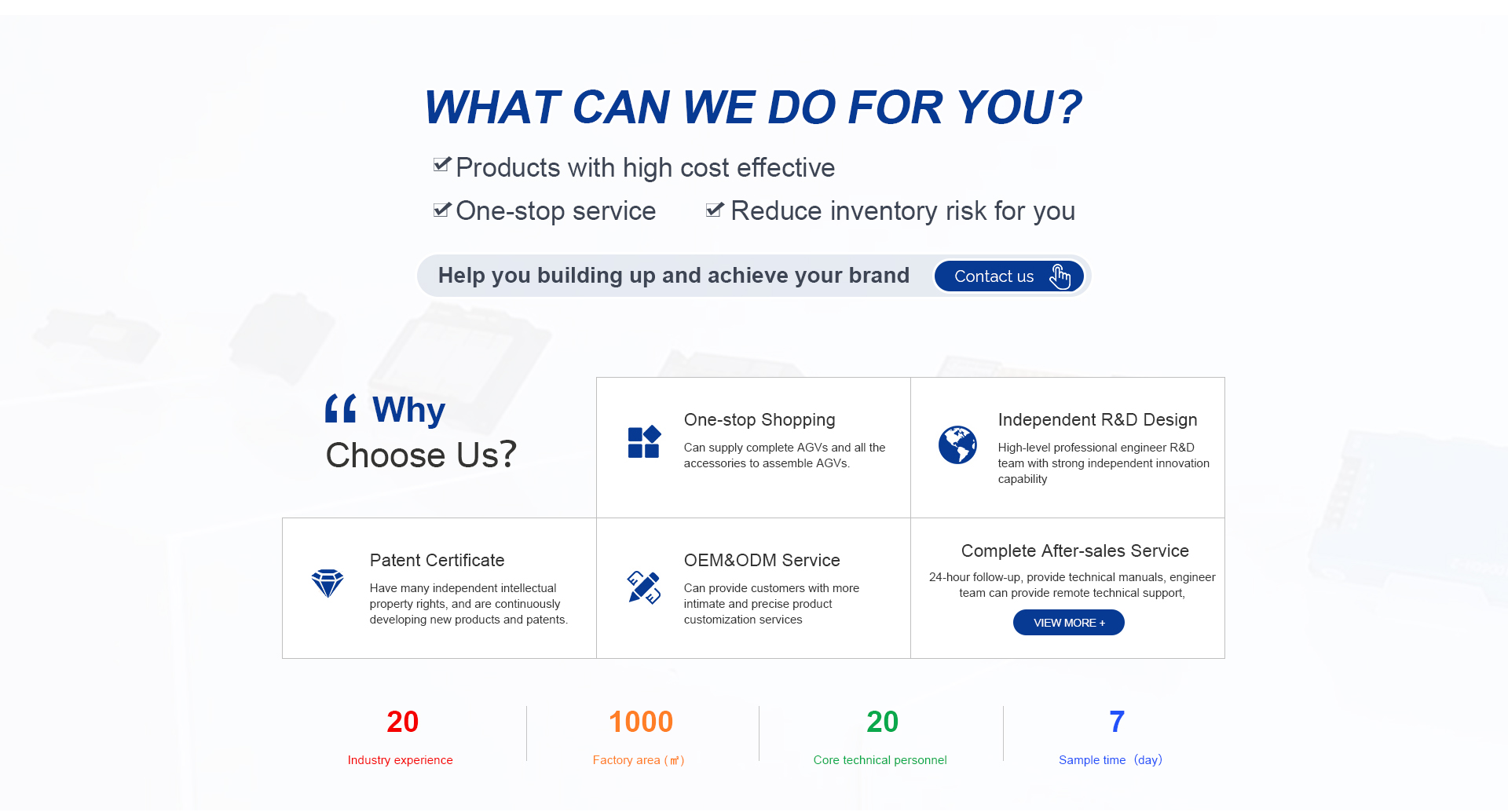
Zhejiang Torqen Technology Co., Ltd. was founded in 2015 in Zhejiang, China. The published profile describes a 1,000–3,000 m² factory, 51–100 team members, and annual output in the US$5M–10M range.
ISO 9001:2015 & Intertek
The quality management system is certified to ISO 9001:2015, and the facility has been verified onsite by Intertek. Finished products are inspected with in-house testing instruments before shipment.
Patents & Engineering
The company profile lists eight awarded patents and continued investment in machining and testing equipment. Prototypes undergo extended-duration testing before production parts are released.
Complete Drive-Train Scope
Product coverage includes automatic guided vehicles, differential and steering drive wheels, DC/AC motors, encoders, reducers, servo and BLDC controllers, magnetic guide sensors, RFID position sensors, lidar sensors, and AGV accessories.
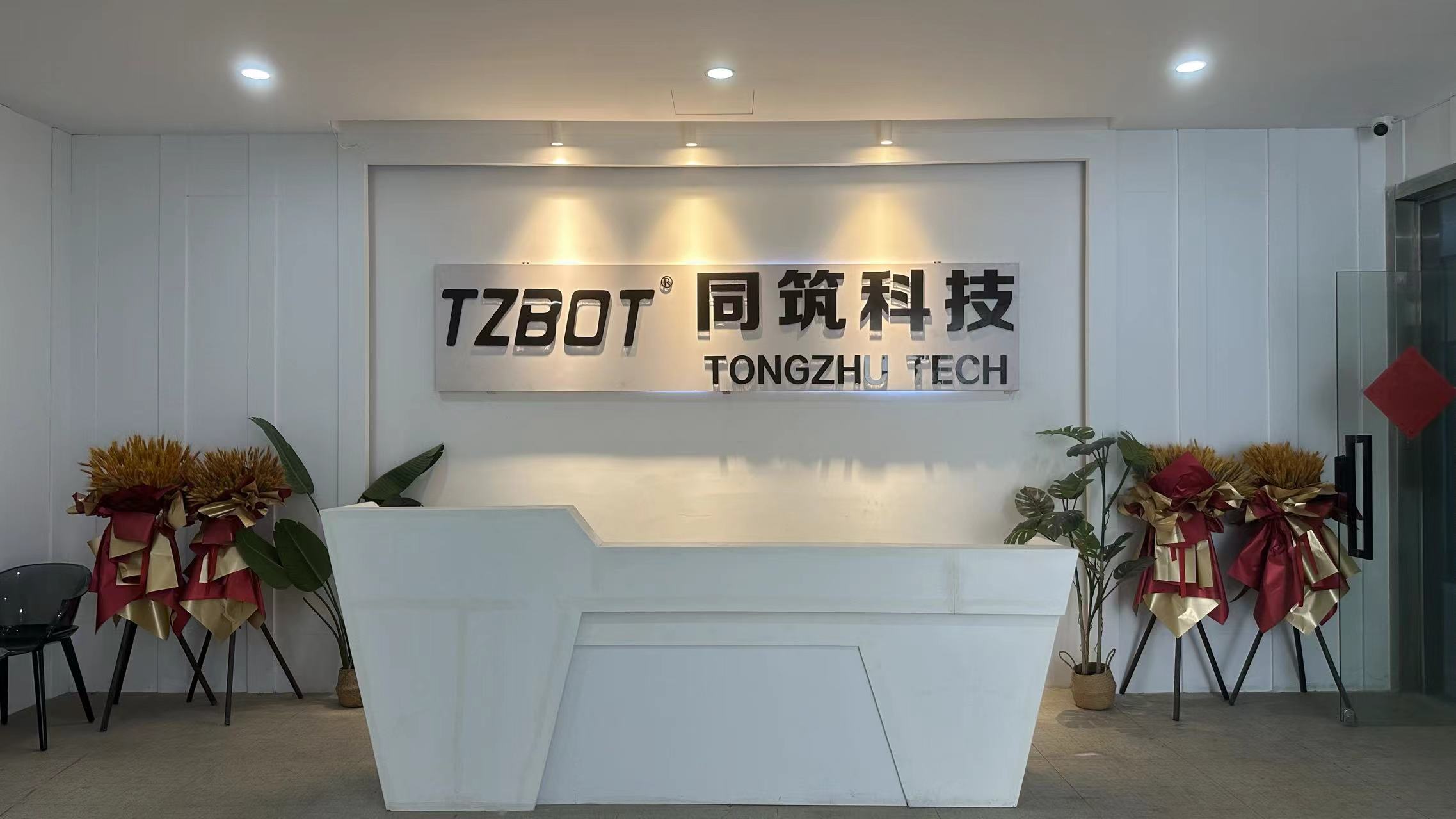
Company overview and production capability
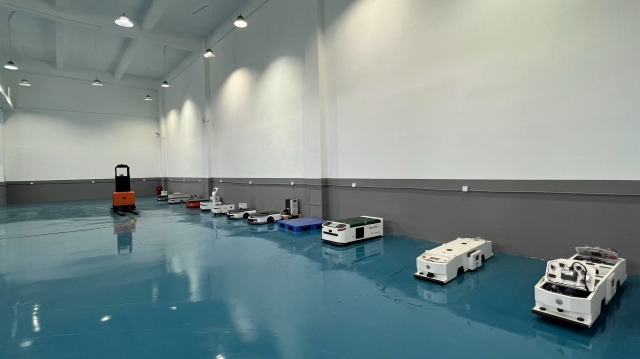
Production workshop and assembly environment
Testing and inspection discipline
Trade exhibitions and buyer communication
OEM/ODM customization covers sample-based customization, design-based customization, buyer-label packaging, motor power and voltage, reduction ratio, wheel diameter and tread material, encoder type, brake options, and mounting interfaces. Export support includes FOB, CFR, CIF, EXW, CIP, FCA, CPT, DDU, and express delivery, with payment options that include T/T, L/C, D/P, D/A, credit card, PayPal, Western Union, cash, and escrow in USD, EUR, JPY, CAD, AUD, HKD, GBP, or CNY.
From RFQ to Mass Production: A Four-Stage Workflow
A clear workflow protects both the buyer and the exporter when a magnetic navigation AGV project moves from concept to repeatable production.
Requirement Review
Share gross vehicle weight, target speed, gradient, battery voltage, chassis height, route logic, stopping accuracy, and desired safety features. These values determine the drive-wheel and controller envelope.
Engineering Proposal
The supplier matches motor power, reduction ratio, wheel diameter, encoder, brake, and sensor stack. Ask for drawings, interface definitions, and a parameter plan before approving the sample.
Prototype & Validation
Prototype testing should cover loaded acceleration, emergency stopping, guidance-loss recovery, wheel slip, thermal behavior, and endurance. Document the approved settings for future production.
Production & Export
Mass production should follow the approved inspection criteria, packaging method, and traceability plan. Confirm spare parts, documentation language, Incoterms, and after-sales escalation before shipment.
Common Questions From Magnetic Navigation AGV Buyers
These are the questions engineering, sourcing, and operations teams usually raise before approving an OEM/ODM magnetic navigation AGV supplier.
What is a magnetic navigation AGV, and when is it better than SLAM?
A magnetic navigation AGV follows a magnetic tape or magnetic marker path on the floor. It is usually chosen when routes are stable, repeatability is important, and the site wants fast deployment with predictable behavior. SLAM is more flexible when the layout changes often, but it can require more mapping, commissioning, and environmental control. Many industrial programs combine magnetic guidance with RFID station recognition and lidar obstacle avoidance.
Which drive wheel type should an OEM choose for a compact AGV?
Differential drive units are common for compact latent, jacking, and shelf-lifting AGVs because two independently driven wheels can turn by speed difference. Steering drive wheels are preferred when controlled steering angles are needed, such as forklift or tricycle layouts. Horizontal drive assemblies help when chassis height is limited. The final choice depends on payload, floor condition, speed, braking distance, and available mounting space.
Can a buyer customize motor power, wheel diameter, voltage, encoder, brake, and mounting interface?
Yes, OEM/ODM programs commonly require these changes. A reliable supplier should confirm which parameters can be customized, provide drawings for approval, and define how the prototype will be tested. For magnetic navigation AGV projects, the most important custom values are usually wheel diameter, tread material, reduction ratio, encoder type, brake behavior, rated voltage, and mounting geometry.
How can an importer verify quality before mass production?
Request the ISO 9001:2015 certificate, onsite verification evidence, finished-product inspection records, and prototype endurance data. Ask for the test criteria used on the exact configuration you are buying. A factory visit or video audit should review incoming material control, assembly fixtures, motor and controller pairing, load testing, and packaging. The sample approval should be linked to a written specification so production units can be compared against it.
What safety and documentation topics should accompany an AGV export order?
At minimum, define emergency-stop behavior, bumper and obstacle detection logic, speed zones, warning devices, and manual recovery procedures. Depending on the destination and application, the buyer should review applicable industrial vehicle and machinery safety requirements with a qualified engineer. Export documentation should include wiring diagrams, controller parameter files, maintenance instructions, spare-parts lists, and inspection records.
What payment, currency, and delivery terms are accepted?
Published trade terms include T/T, L/C, D/P, D/A, MoneyGram, credit card, PayPal, Western Union, cash, and escrow in USD, EUR, JPY, CAD, AUD, HKD, GBP, or CNY. Delivery terms include FOB, CFR, CIF, EXW, CIP, FCA, CPT, DDU, and express delivery. Buyers should confirm the final term, packaging method, and spare-parts scope in the quotation.
What should be included in an RFQ for a magnetic navigation AGV?
Include the vehicle type, gross load, speed profile, route length, floor condition, gradient, required stopping accuracy, battery voltage, available chassis height, control interface, safety features, annual volume, target sample date, and destination country. Add drawings or reference images where possible. If the project is a retrofit, describe the existing tape, RFID markers, drive wheels, and controller architecture so the supplier can propose compatible parts.
Turn Your Magnetic Navigation AGV Specification Into a Testable Prototype
Send your load, speed, chassis height, battery voltage, route logic, and customization requirements. The team can match the drive wheel, servo or BLDC controller, magnetic guide sensor, and RFID positioning components for your OEM/ODM program.
