Top China Material Handling AGV Factory & Wholesaler
A factory-direct sourcing guide for automation integrators comparing AGV drive wheels, smart controllers, automatic charger pads, heavy-duty differential drives and composite robot chassis from China.
8 Material Handling AGV Products from One Factory-Matched Supply Chain
Product images and URLs are preserved from the original Torqen material handling range. Compare drive, control, charging and composite robot options before requesting a sample.
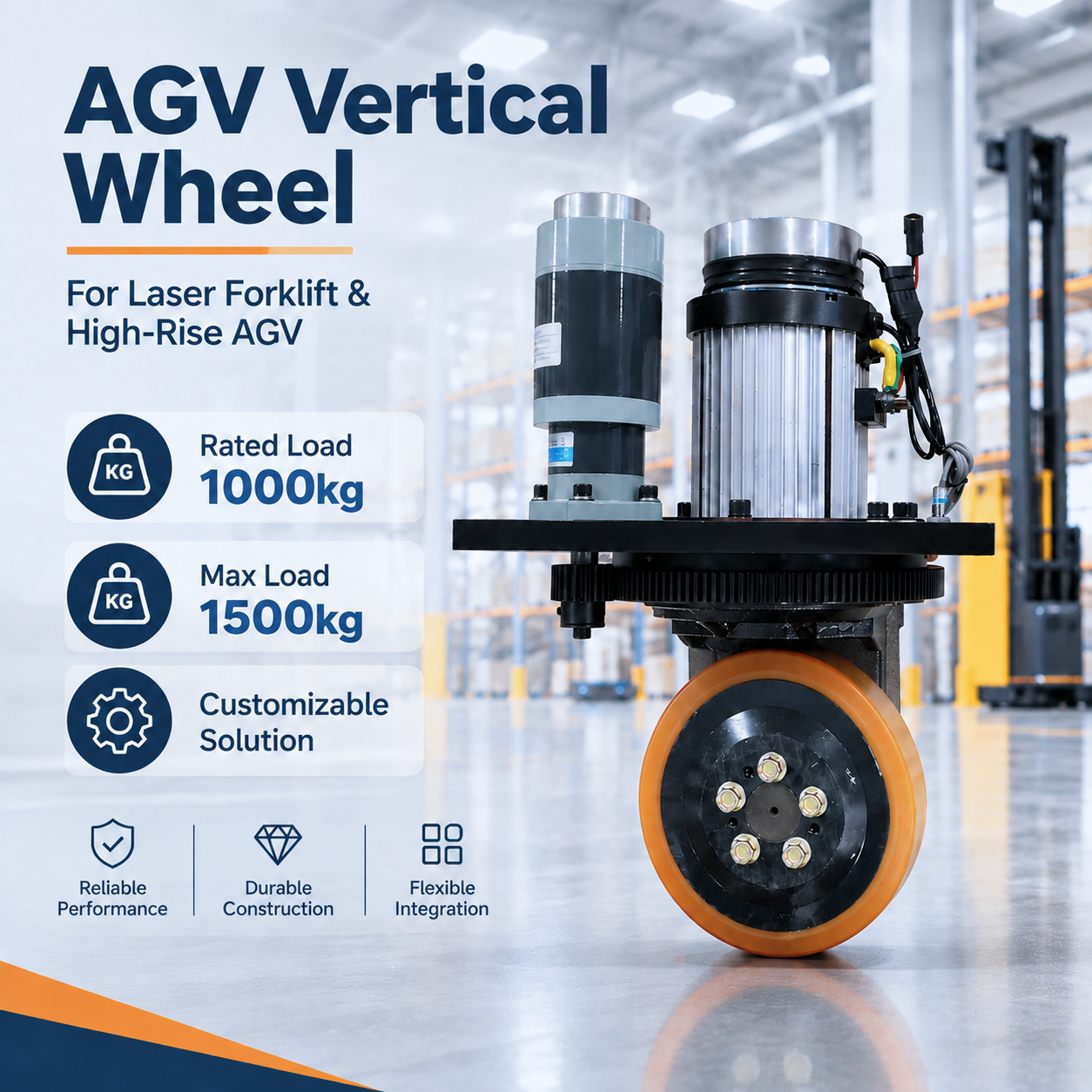
TZBOT 2590 r/min Vertical Driving Unit Electric Traction Wheel 1500W Steering Forklift Accessories
A vertical traction unit for steering forklift accessories and compact AGV chassis. The 1500W motor and 2590 r/min output suit layouts where motor height must stay low while steering control remains precise.
- 1500W
- 2590 r/min
- Steering forklift
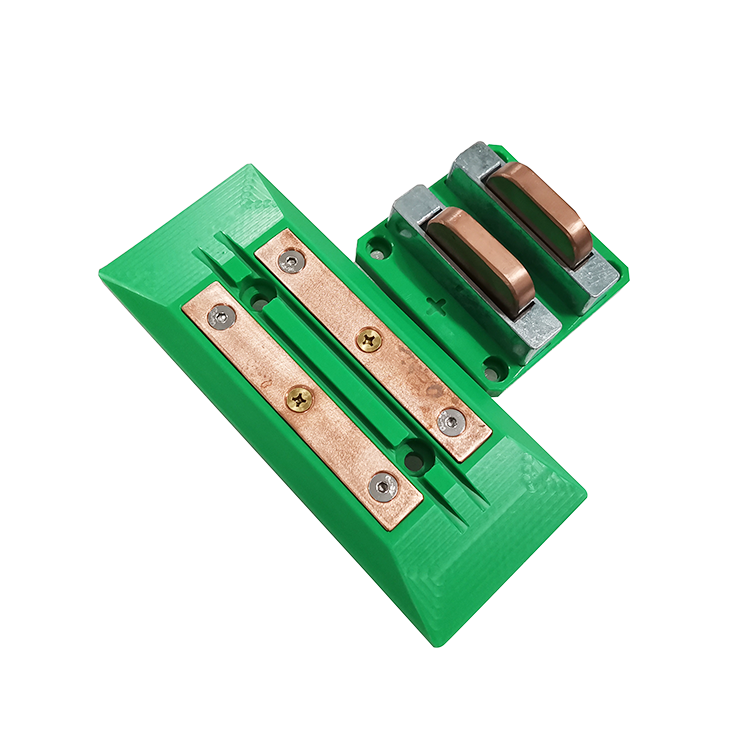
TZBOT Charger Pad Model TZ-CP-50A with Brush Plate and Brush Block for AGV Navigation Vehicles
Automatic charging interface for AGV navigation vehicles. The brush plate and brush block support repeatable docking, helping fleets move from manual charging to opportunity charging without an extra station operator.
- TZ-CP-50A
- Brush plate
- AGV charging
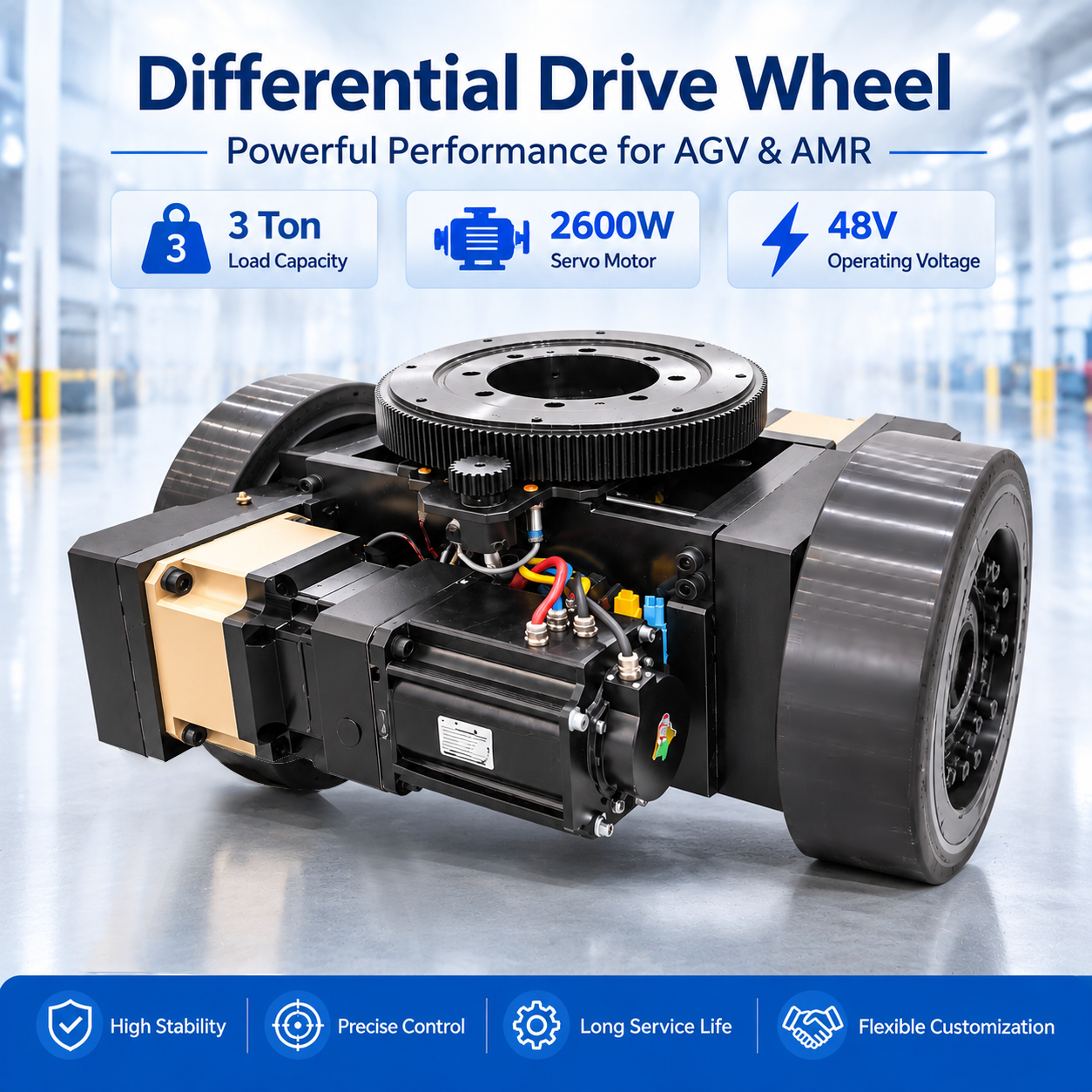
TZBOT Customizable 3000kg Load Capacity AGV Wheel Automatic Guided Vehicle Differential Drive Wheel with 2600W 48V Servo Motor
A heavy-load differential drive wheel for pallet-sized AGVs and mobile platforms. The 3000kg capacity, 2600W 48V servo motor and customizable reduction ratio suit production-line feeding and heavy warehouse transfer.
- 3000kg
- 2600W / 48V
- Customizable
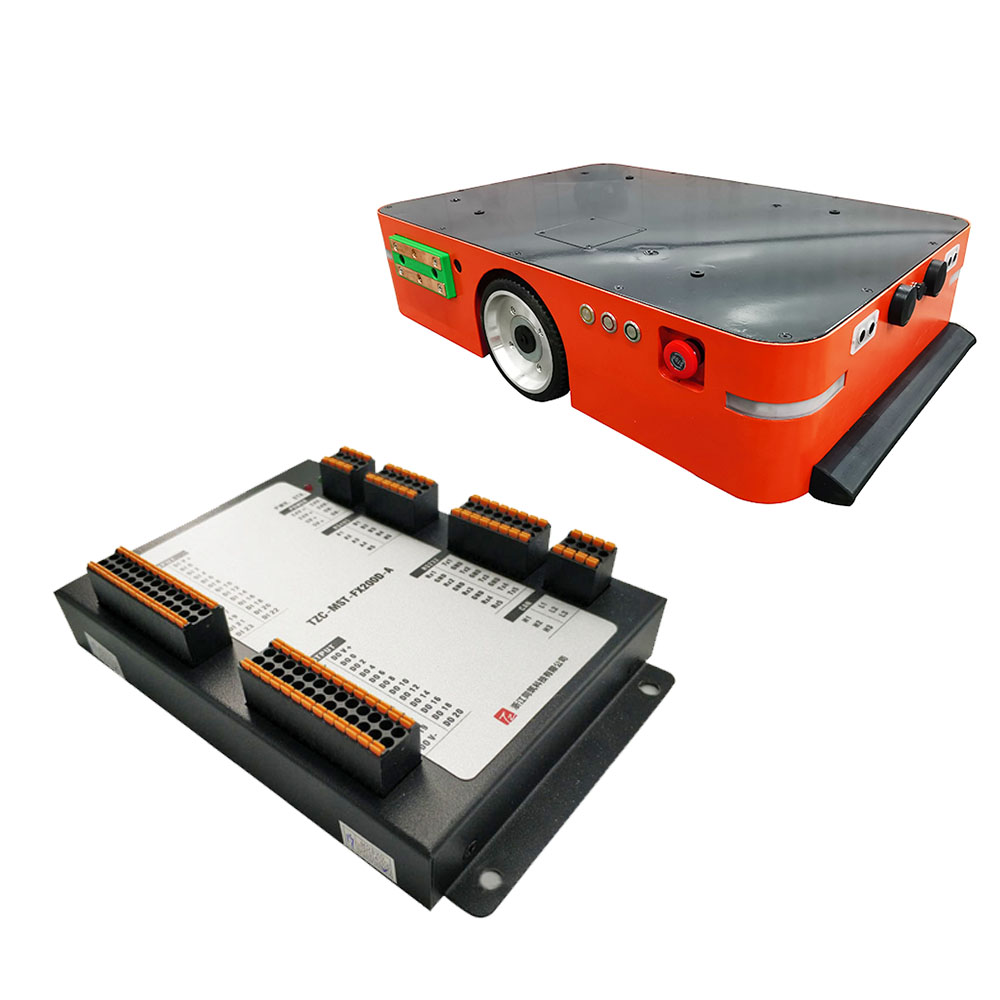
TZBOT Smart AGV Controller for Commanding the AGV
A central smart controller for commanding movement, navigation and safety logic. It is a practical choice for OEMs that want to standardize control architecture across several AGV models and shorten commissioning.
- Command control
- OEM ready
- Safety logic
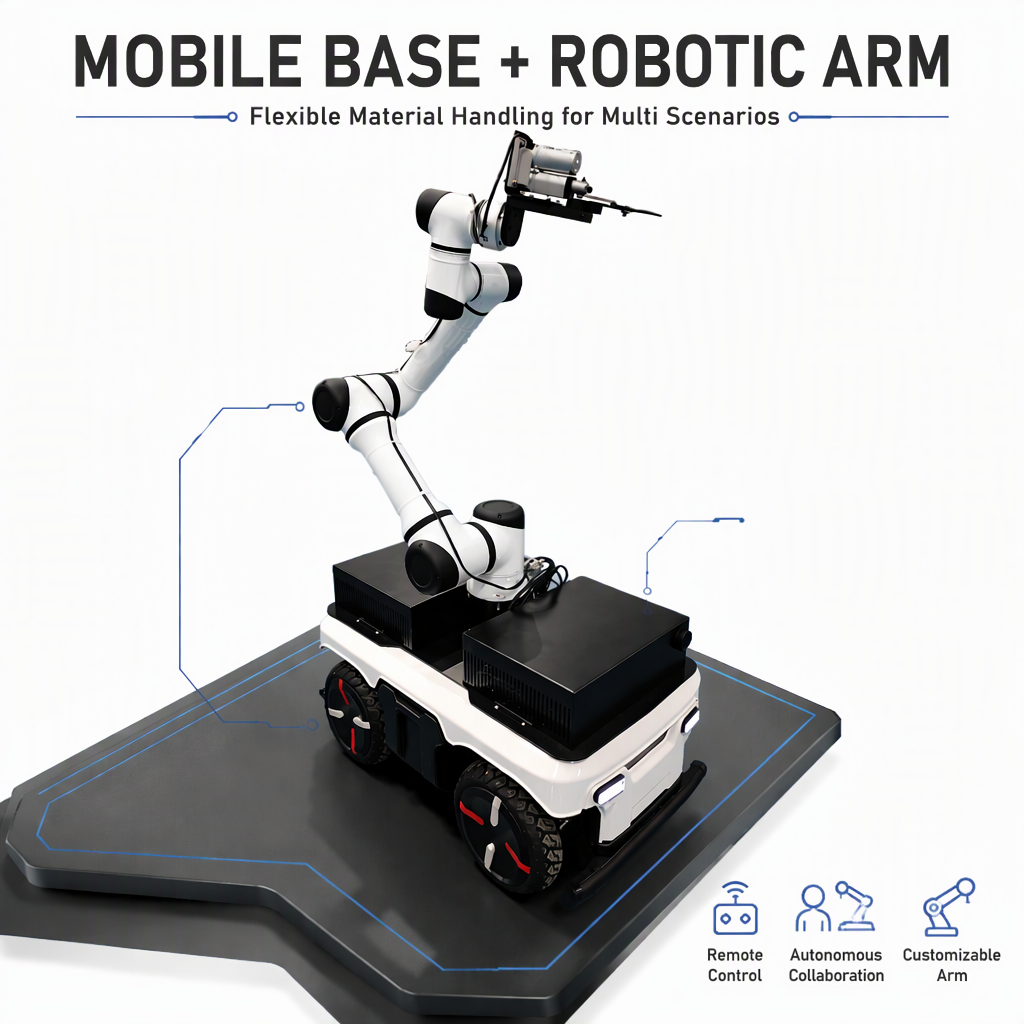
TZBOT Four Wheel Drive Ackerman Chassis AGV Collaborative Remote Control Composite Robot with Arm
Ackerman chassis AGV with a collaborative robot arm for mobile manipulation. Four-wheel drive and remote control support flexible pick-and-place, inspection and machine-tending tasks in reconfigurable production areas.
- Ackerman
- 4WD
- Collaborative arm
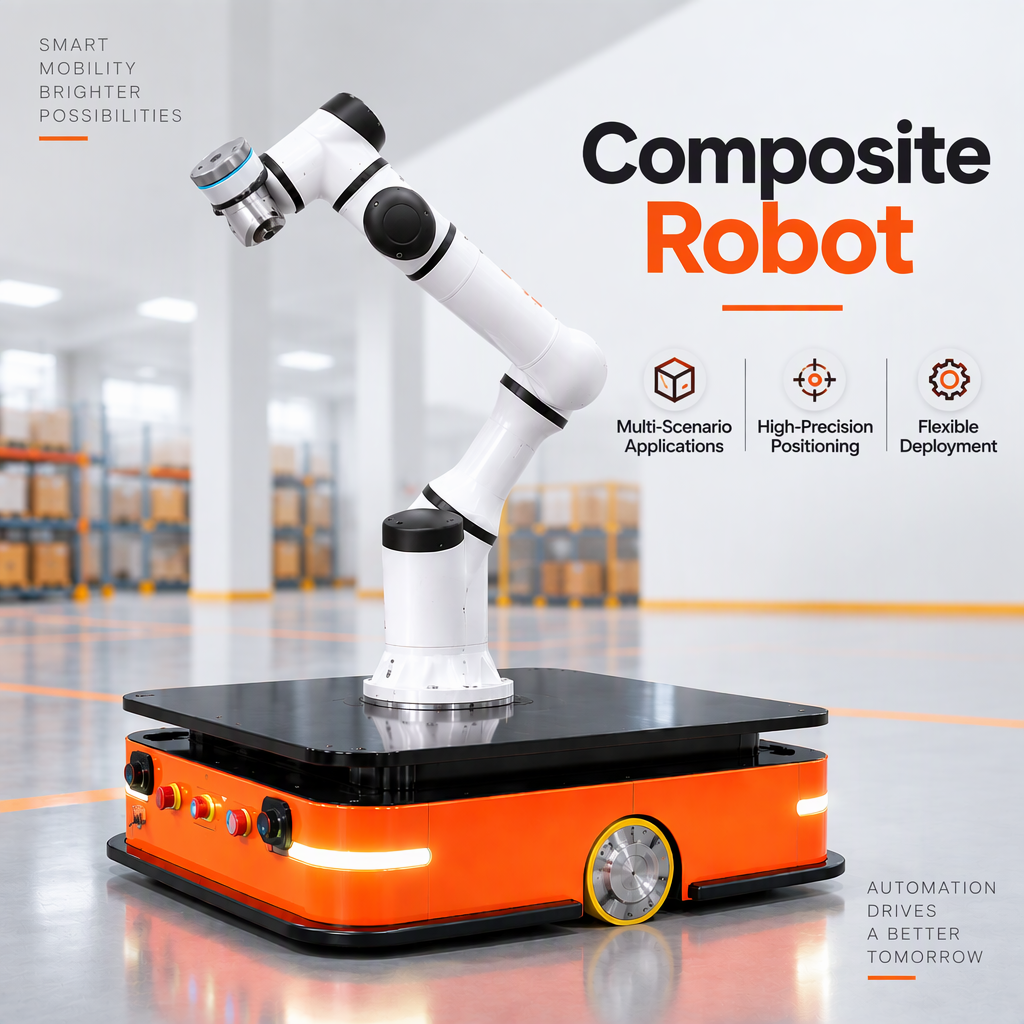
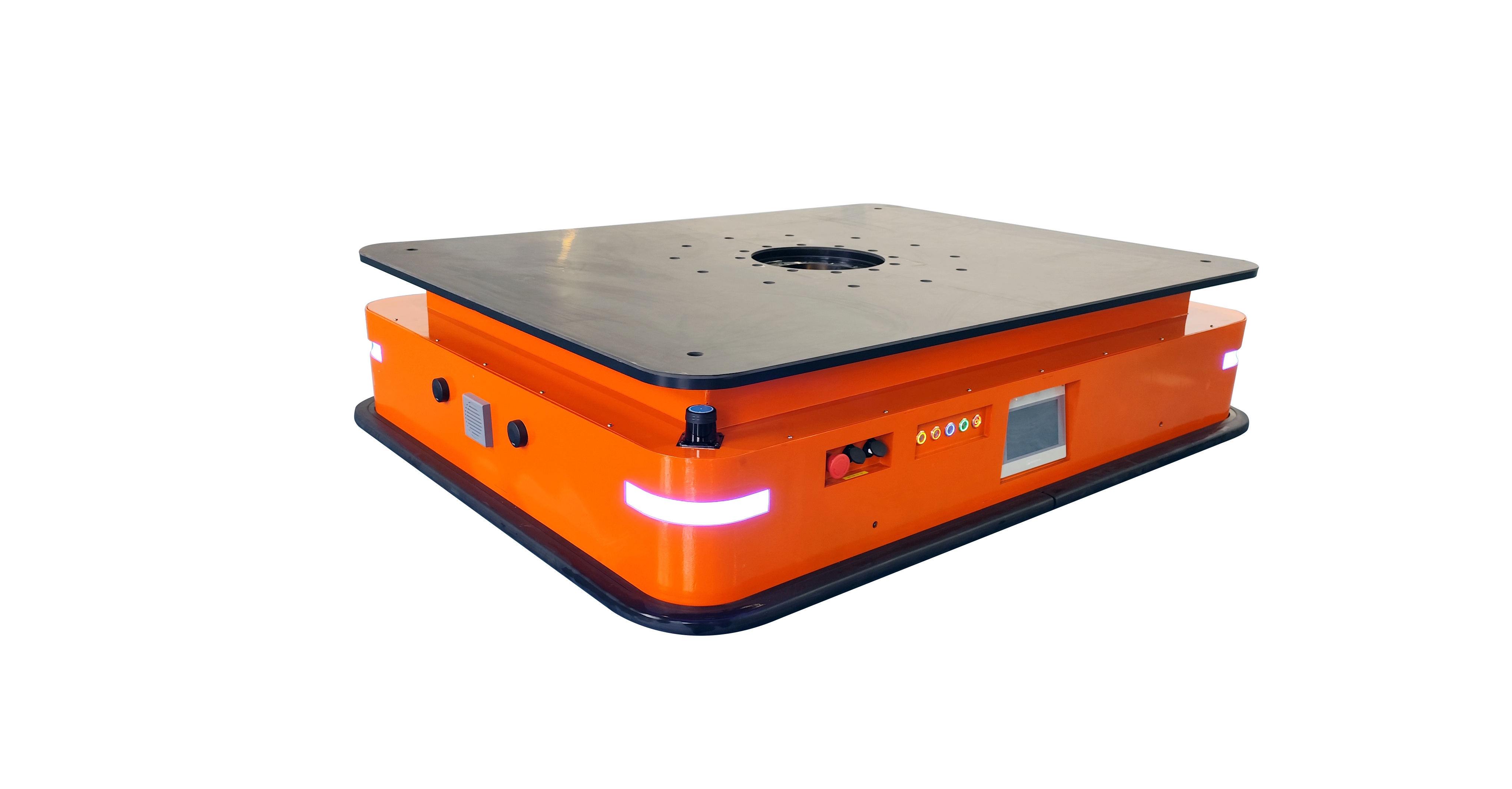
TZBOT Customizable Composite Robot Multi Applications 600kg Bearing Chassis AGV AMR with Robotic Arm
A 600kg-bearing composite robot platform that combines an AMR chassis with a robotic arm. It is designed for multi-application deployment where one mobile base must serve different end-effectors and station layouts.
- 600kg
- AGV / AMR
- Robot arm
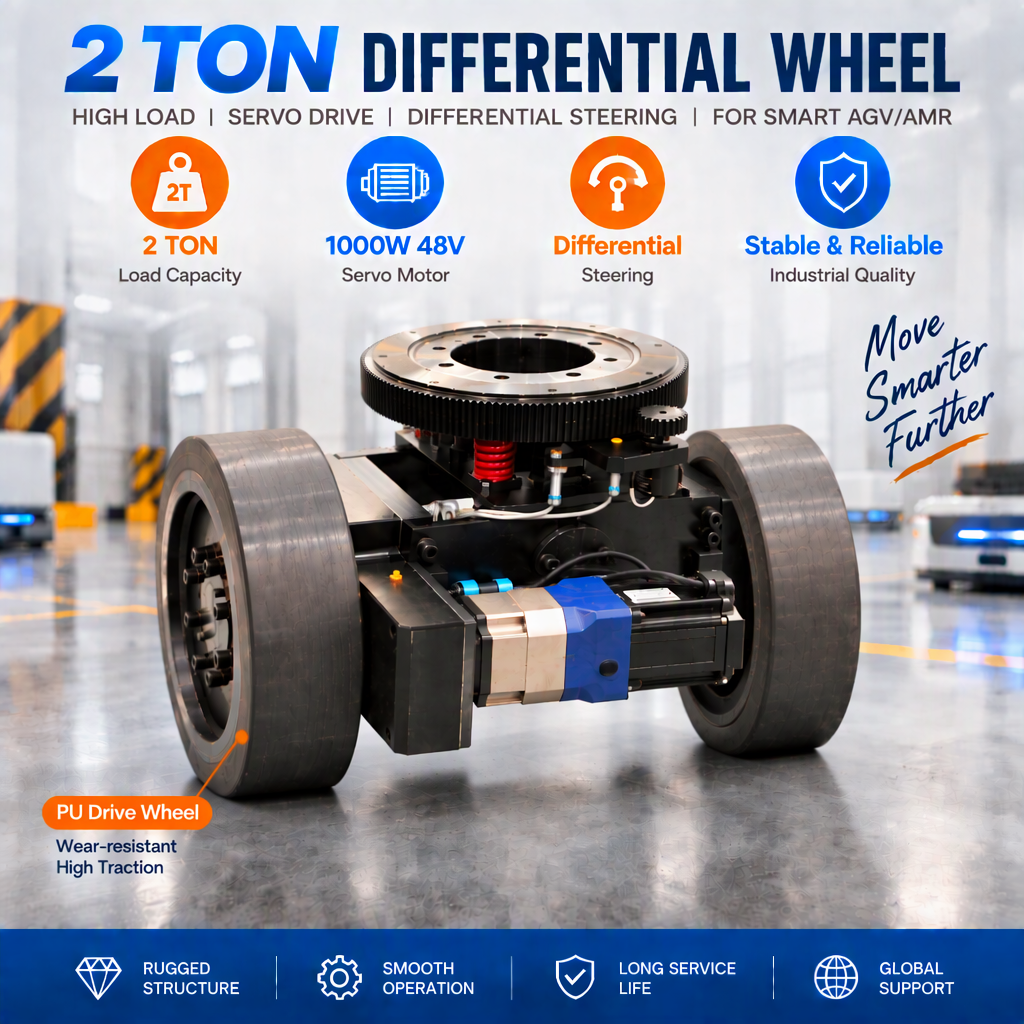
TZBOT 2000KG Heavy Duty Series AGV Wheel 1000w 48V Strong Power Mobile Robot Differential Drive Wheel with Spring Suspension
Heavy-duty differential drive wheel with spring suspension for uneven industrial floors. The 1000W 48V drive and suspension geometry improve ground contact, traction and ride stability for mobile robots carrying heavy loads.
- 2000kg
- 1000W / 48V
- Spring suspension
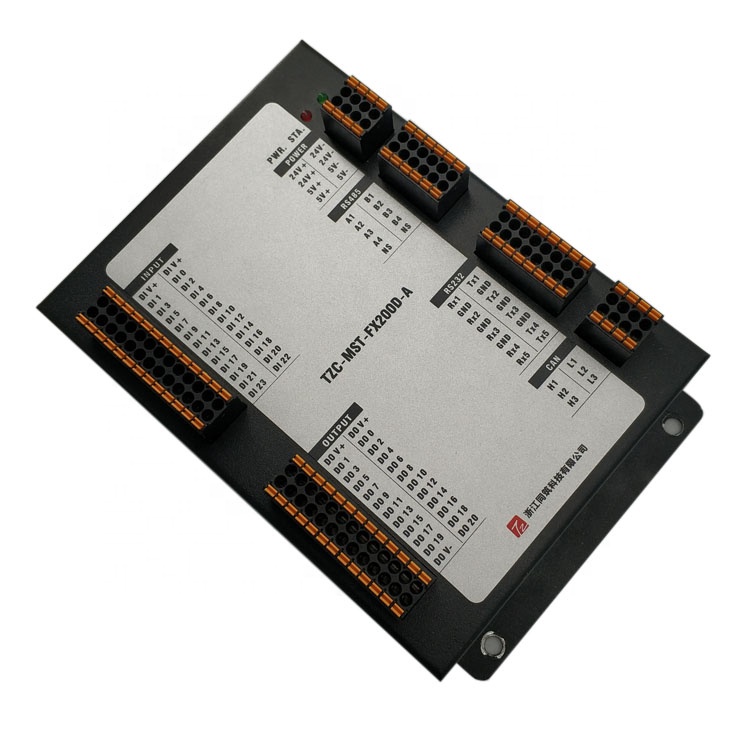
TZBOT AGV Smart Controller TZC-MST-FX200D-A with Function of Mapping and Auto Guide for agv
A mapping and auto-guide controller for AGV navigation. It supports route logic for magnetic, QR or hybrid guidance and reduces integration work when a buyer needs a controller and drive package from the same supplier.
- Mapping
- Auto guide
- TZC-MST-FX200D-A
Why This Guide Is Different for AGV Procurement Teams
Most B2B supplier pages stop at a product name and a photograph. For a material handling AGV project, that is not enough. A buyer must compare the mechanical interface, motor and reducer matching, controller parameters, charging cycle, safety sensors and export terms.
This guide is structured around those decision points. It combines product recommendations with manufacturing evidence from Zhejiang Torqen Technology Co., Ltd., a China-based manufacturer and trading company founded in 2015. The aim is genuine information gain: not more marketing copy, but usable criteria for supplier shortlisting.
The company profile used here includes ISO 9001:2015 certification, Intertek onsite verification, eight awarded patents, a 1,000–3,000 m² factory, a 51–100 person team and an annual output range of US$5–10 million. Those facts matter because they show whether a wholesaler can support repeat orders, customization and after-sales spare parts rather than one-off transactions.
Years in drive and motion technology
Patents awarded for in-house R&D
Employees and application engineers
Verified buyer rating and repeat cooperation
Inquiry response rate across export markets
In-house testing instruments for inspection
China Material Handling AGV Factory: Market Context and Sourcing Logic
China remains a deep manufacturing base for AGV and AMR components because motor, reducer, servo drive, sensor, battery and sheet-metal suppliers sit close together. That density shortens engineering iteration.
A buyer can request a different wheel diameter, tread material, encoder, brake or mounting flange and receive a drawing and prototype faster than in many fragmented supply chains. It also creates a sorting problem: many companies market themselves as factories, but only some can match the drive wheel, motor, servo driver and controller as one system.
For 2025–2030 procurement, the winning strategy is not simply to chase the lowest unit price. The better question is: which supplier can reduce total integration cost? A matched drive package can lower engineering hours, avoid parameter mismatch, shorten commissioning and reduce unplanned downtime. That is why a top China material handling AGV factory should be evaluated like an engineering partner, not a catalogue.
One Factory, Complete Drive Train
Drive wheels, motors, reducers, servo/BLDC controllers, navigation sensors and charger pads can be sourced from one supplier. This reduces interface risk between mechanical, electrical and firmware teams.
Custom Engineering, Not Catalogue-Only
Sample-based and design-based customization covers motor power, voltage, reduction ratio, wheel diameter, tread material, encoder type, brake options and mounting interfaces for OEM/ODM projects.
Quality Evidence Buyers Can Audit
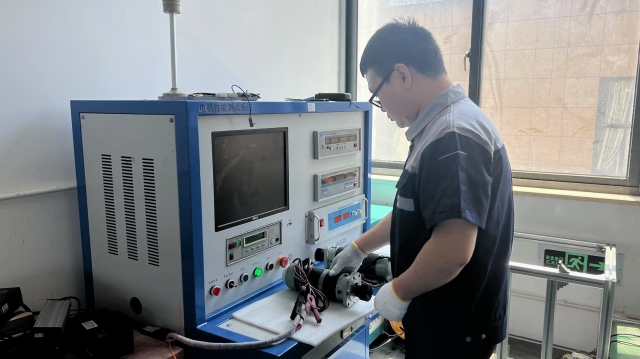
ISO 9001:2015 certification, Intertek onsite verification, five in-house testing instruments, finished-product inspection and extended-duration prototype testing provide evidence beyond a brochure claim.
Matched Electronics and Commissioning
Servo and BLDC drivers tuned to the supplier's own drive wheels, plus magnetic, RFID and lidar sensors, help buyers receive wiring diagrams and parameter files rather than isolated parts.
Export-Ready Commercial Terms
FOB, CFR, CIF, EXW, CIP, FCA, CPT, DDU and express delivery are available, with payment methods including T/T, L/C, D/P, D/A, credit card, PayPal, Western Union and escrow.
Responsive Support After the PO
A 97.9% inquiry response rate and 24/7 online response help overseas buyers resolve integration questions quickly. Spare parts supply and fault analysis are backed by traceable production records.
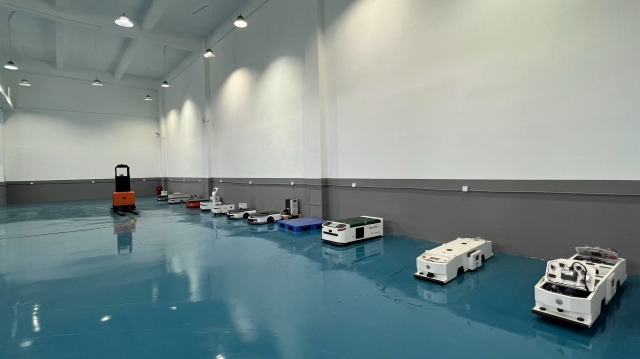
 Production workshop
 Testing and inspection
 Export packing
Choose by Duty Cycle, Not by Catalogue Page
Material handling AGV projects rarely fail because one component looks weak on paper. They fail when the wheel, motor, driver, controller and charging cycle are not matched to the real route.
Compact Latent AGV
Use a vertical traction drive wheel, smart AGV controller and compact charger pad. This combination suits latent, jacking and shelf-lifting AGVs where low build height and repeatable docking matter more than high speed.
Heavy Pallet Transfer
Choose the 2000kg or 3000kg differential drive wheel when the AGV carries pallets, racks or production fixtures. Spring suspension and a matched 48V servo driver protect traction on imperfect floors.
Composite Robot Cell
Combine a 600kg AMR chassis with a collaborative robot arm. For outdoor or mixed-floor areas, evaluate the Ackerman four-wheel-drive chassis and confirm safety zones around the arm.
24/7 Fleet Operation
Pair an auto-guide controller with a brush-type charger pad, magnetic guide or RFID station tags. Opportunity charging strategy should be decided before the battery and docking layout are frozen.
Material Handling AGV Procurement Trends for 2025–2030
Buyers are moving from unit-price comparison to lifecycle evaluation. The following trends are visible in requests from warehouse integrators, OEMs and regional distributors.
Total Integration Cost Replaces Lowest Price
Procurement teams now count engineering hours, adapter plates, parameter tuning and downtime risk. A slightly higher component price can be cheaper if it arrives with drawings, matched drivers and test records.
Dual Sourcing with a Matched Core
Many buyers keep a second supplier for commercial protection, but standardize the core drive train on one matched platform. This protects performance while reducing single-source risk at the module level.
Modular Platforms and Standard Interfaces
OEMs want one controller family across latent AGV, tugger and composite robot models. Standard mounting patterns, voltage classes and communication interfaces reduce redesign when a new model is introduced.
Supplier Validation Becomes Data-Driven
Certifications, onsite audit reports, patent counts, buyer ratings, response rates and transaction history are now part of the scorecard. Export buyers can compare these signals before scheduling a sample.
AGV Drive and Control Product Development Trends
The next generation of material handling AGV components is being shaped by integration, safety and serviceability. These trends directly affect how buyers should specify a new platform.
Integrated Servo Drive Wheels
Motor, reducer, encoder and brake are increasingly packaged into one drive wheel. This improves alignment and reduces the number of brackets an AGV builder must design, test and stock.
Higher Power Density at 48V
Heavy-duty material handling platforms now use 1000W to 2600W drive wheels within compact envelopes. The goal is more torque and better thermal behavior without increasing chassis height.
Hybrid Navigation and Safety Stacks
Magnetic guide, RFID position sensors, QR code navigation and lidar/SLAM are being combined rather than chosen exclusively. The right mix depends on route flexibility, station count and safety assessment.
Opportunity Charging and Charger Pads
Brush plate and charger pad designs support short, frequent charging during natural idle windows. This reduces battery size and avoids long manual charging stops in multi-shift warehouses.
Composite Robots and Mobile Manipulators
AGV chassis and collaborative robot arms are converging into composite robots. Buyers must now evaluate stability, safety zoning, payload at height and the controller architecture that coordinates base and arm.
Digital Traceability and Remote Diagnostics
Production records, firmware versions, driver parameter files and inspection results are becoming part of the delivered package. This shortens fault analysis and supports spare-parts planning across a fleet.
Evidence from Zhejiang Torqen Technology Co., Ltd.
Founded in 2015 in Zhejiang, China, Torqen is a manufacturer and trading company focused on automatic guided vehicles, drive wheel assemblies, DC/AC motors, encoders, reducers, motor controllers and AGV accessories.
Our engineers work directly with OEM integrators to adapt torque, speed and mounting geometry to each vehicle. Continued investment in modern machining equipment allows a fast move from drawing to tested prototype, and every prototype is run for extended periods before production parts are released.
Customization covers sample-based customization, design-based customization, OEM production, design services and buyer-label packaging. Typical changes include motor power and voltage, reduction ratio, wheel diameter and tread material, encoder type, brake options and mounting interfaces.
Quality management is certified to ISO 9001:2015, and the facility has been verified onsite by Intertek. Finished-product inspection uses five in-house testing instruments, while prototypes undergo extended-duration testing before production parts ship. This is the practical meaning of E-E-A-T for AGV buyers: experience in real chassis integration, engineering expertise, verifiable authority and reliable delivery.
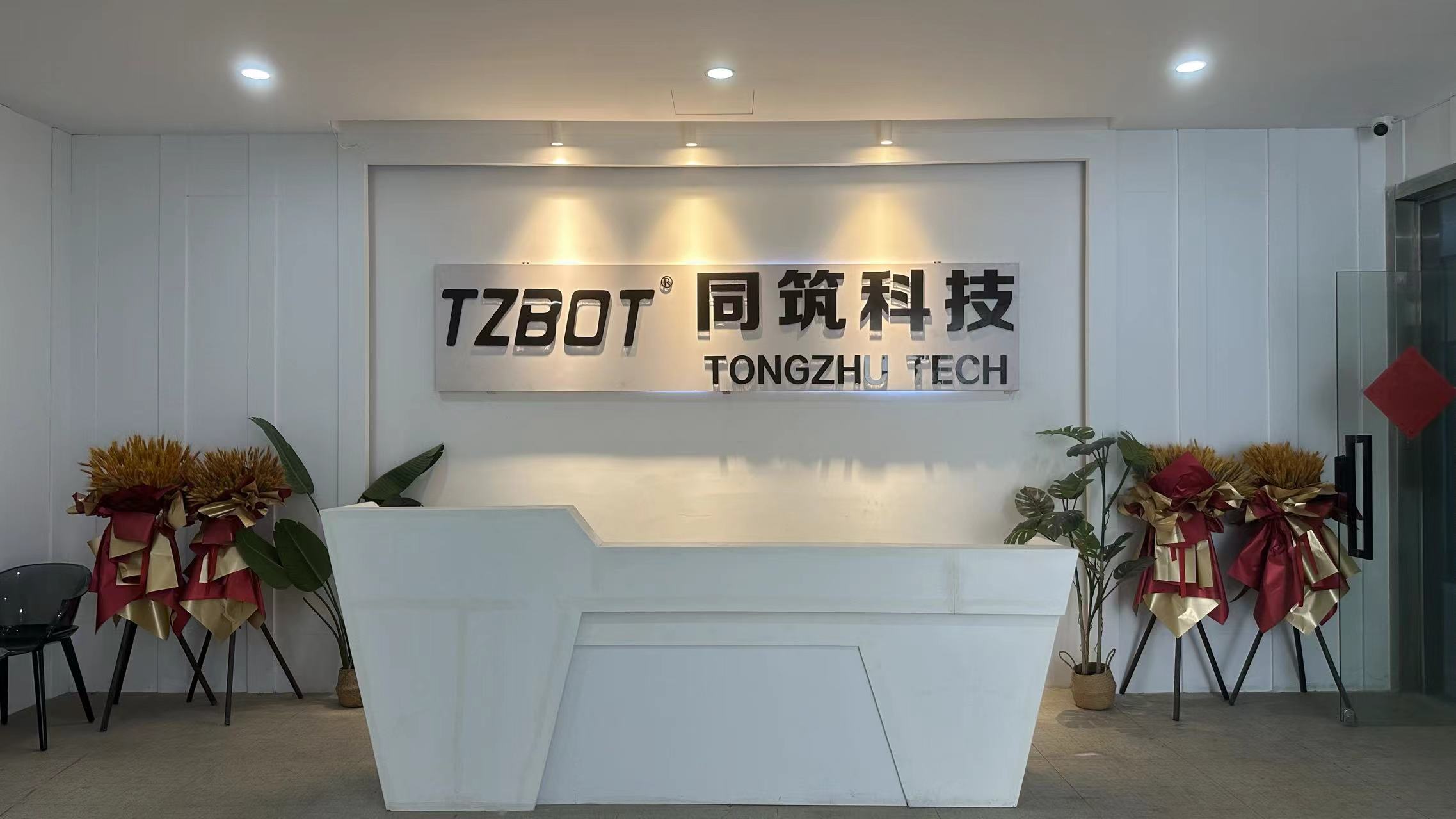
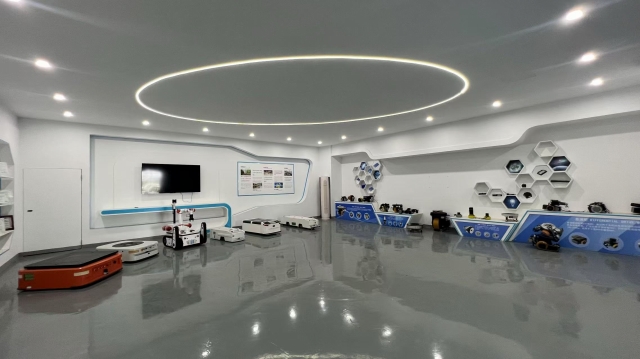
 Company facility
 Sales and support team
 Motor and reducer machining
 Certifications and patents
Where the Drive Train Earns Payback
Torqen drive products are used in AGVs and AMRs, forklifts, aerial work platforms, airport equipment, agricultural machines, hydraulic applications, floor scrubbers and sweepers, wind energy, marine equipment and medical devices.
Warehouse AGV & AMR
Latent, jacking and shelf-lifting platforms for goods-to-person and line-side replenishment.
Forklift and Tugger AGVs
Steering drive wheels and Ackerman chassis for controlled turning and heavier towed loads.
Composite Robot Cells
Mobile manipulators for machine tending, inspection, pick-and-place and flexible assembly.
Electronics and 3C Lines
Low-clearance horizontal drive assemblies and RFID station recognition for clean production floors.
Food, Beverage and Clean Floors
Floor scrubbers, sweepers and hygienic material transport platforms with sealed drive options.
Automotive and Heavy Equipment
Heavy-duty differential drive wheels, spring suspension and matched servo control for high payloads.
A Practical Checklist Before You Request a Quote
Use these four checks to shorten the sampling cycle and avoid a drive train that fits on paper but fails in the aisle.
Prepare Five Engineering Inputs
Gross vehicle weight, target speed, maximum gradient, battery voltage and available chassis height determine motor power, reduction ratio and wheel diameter. Include them in the first inquiry.
Ask for the Matched Parameter File
Request the driver parameter file, wiring diagram, encoder type and brake logic with the sample. This turns a component purchase into a commissioning-ready package.
Validate Floor and Suspension
Check floor flatness, ramps, debris, dock transitions and wash-down conditions. Spring suspension or a different tread material may be more important than a small price difference.
Confirm Commercial and After-Sales Terms
Confirm payment method, delivery term, packaging, spare-parts list and traceability records. A supplier that documents these items is easier to scale with than one that quotes only a unit price.
Common Questions Before Sourcing from a China AGV Wholesaler
These are the questions engineering and procurement teams ask most often when comparing a China material handling AGV factory.
Are you a factory or a trading company?
Zhejiang Torqen Technology Co., Ltd. is a manufacturer and trading company founded in 2015. The facility has a 1,000–3,000 m² factory area, a 51–100 person team and an annual output range of US$5–10 million. Its quality management system is certified to ISO 9001:2015, and the facility has been verified onsite by Intertek.
Can Torqen customize AGV drive wheels and controllers?
Yes. Sample-based customization, design-based customization, OEM production, design services and buyer-label packaging are available. Typical changes include motor power and voltage, reduction ratio, wheel diameter and tread material, encoder type, brake options and mounting interfaces. For controllers, buyers can request matched parameter files and wiring support.
Which drive wheel type should I choose for my material handling AGV?
Differential drive units suit compact latent and jacking AGVs that turn by wheel-speed difference. Steering drive wheels suit forklift and tricycle-type AGVs that need controlled steering angles. Horizontal drive wheel assemblies suit low-clearance chassis. Share your payload, speed, chassis height and battery voltage, and the application team can recommend a configuration.
How is product quality verified before shipment?
The quality management system is certified to ISO 9001:2015, and the facility has been verified onsite by Intertek. Finished-product inspection uses five in-house testing instruments, and prototypes undergo extended-duration testing before production parts are released. Buyers can request inspection records and traceable production information with the shipment.
What payment and delivery terms are available?
Payment methods include T/T, L/C, D/P, D/A, MoneyGram, credit card, PayPal, Western Union, cash and escrow, in USD, EUR, JPY, CAD, AUD, HKD, GBP or CNY. Delivery terms include FOB, CFR, CIF, EXW, CIP, FCA, CPT, DDU and express delivery.
What is a sensible first order for a new AGV project?
A matched pilot set is usually more useful than a single isolated part. For a first evaluation, consider a drive wheel, matched servo or BLDC driver, smart controller and charger pad as a system. Run the pilot on the actual route, then confirm wheel tread, suspension, charging window and spare-parts plan before scaling to production orders.
How do I reduce integration risk with multiple component vendors?
Keep the mechanical drive and electronic control within one matched platform where possible. When the drive wheel, motor, reducer, driver and controller are supplied together, the parameter file, wiring diagram and fault analysis share one reference. This reduces the time your engineering team spends resolving interface disputes between vendors.
Send Your AGV Specification to a Factory Engineer
Share your gross vehicle weight, target speed, maximum gradient, battery voltage, wheel diameter limit, floor condition, navigation method and annual demand. The engineering team will recommend a drive wheel, servo or BLDC driver, controller and charging option, then confirm sampling and production steps.
info@torqenbot.com · Zhejiang Torqen Technology Co., Ltd.