8 Recommended AMR & AGV Components for Trusted Procurement
These eight products are taken from the original Torqen product inventory. Together they cover the practical heart of an autonomous mobile robot: command control, power control, automatic charging, mapping, traction, steering and heavy-duty drive integration.
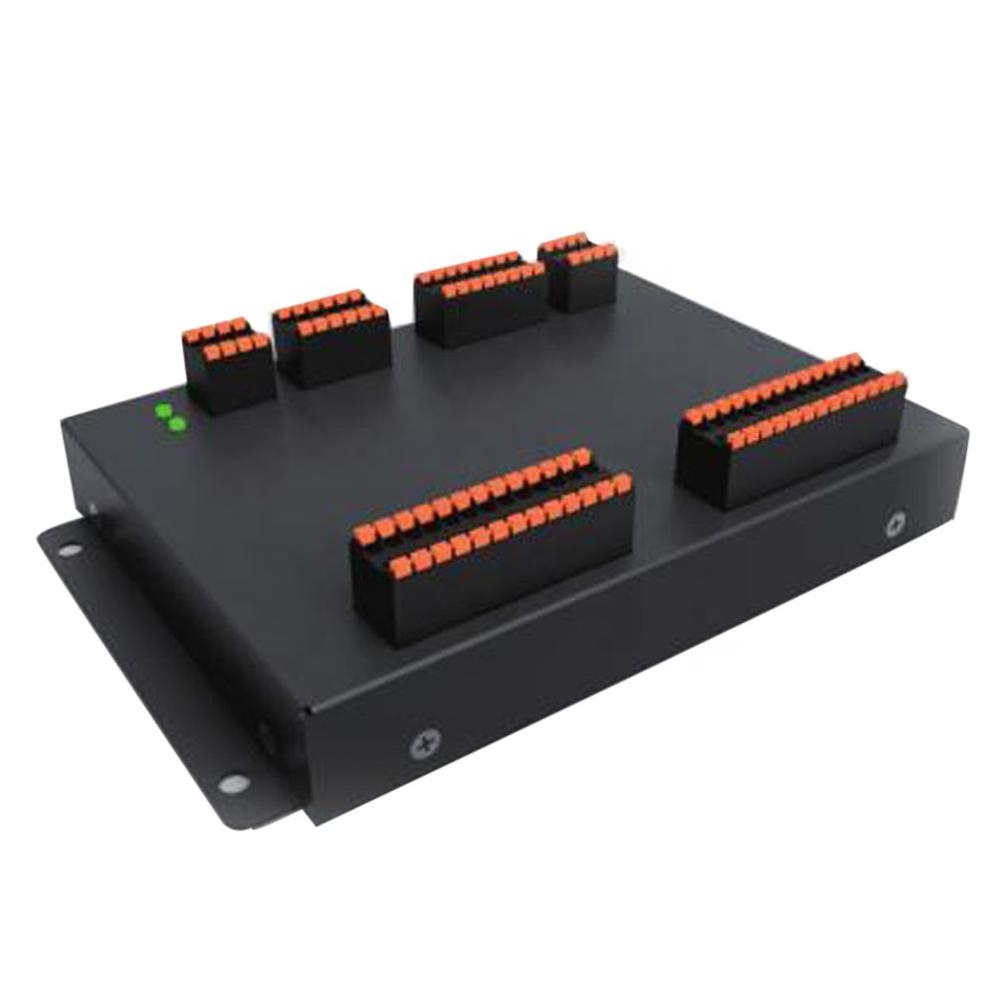
TZBOT TZC-MST-FX200D-A Controller for Commanding the AGV
A dedicated AGV command controller for route execution, vehicle I/O and coordinated movement. A practical reference point when auditing firmware support and spare-part availability.
- Command control
- AGV I/O
- Service spares
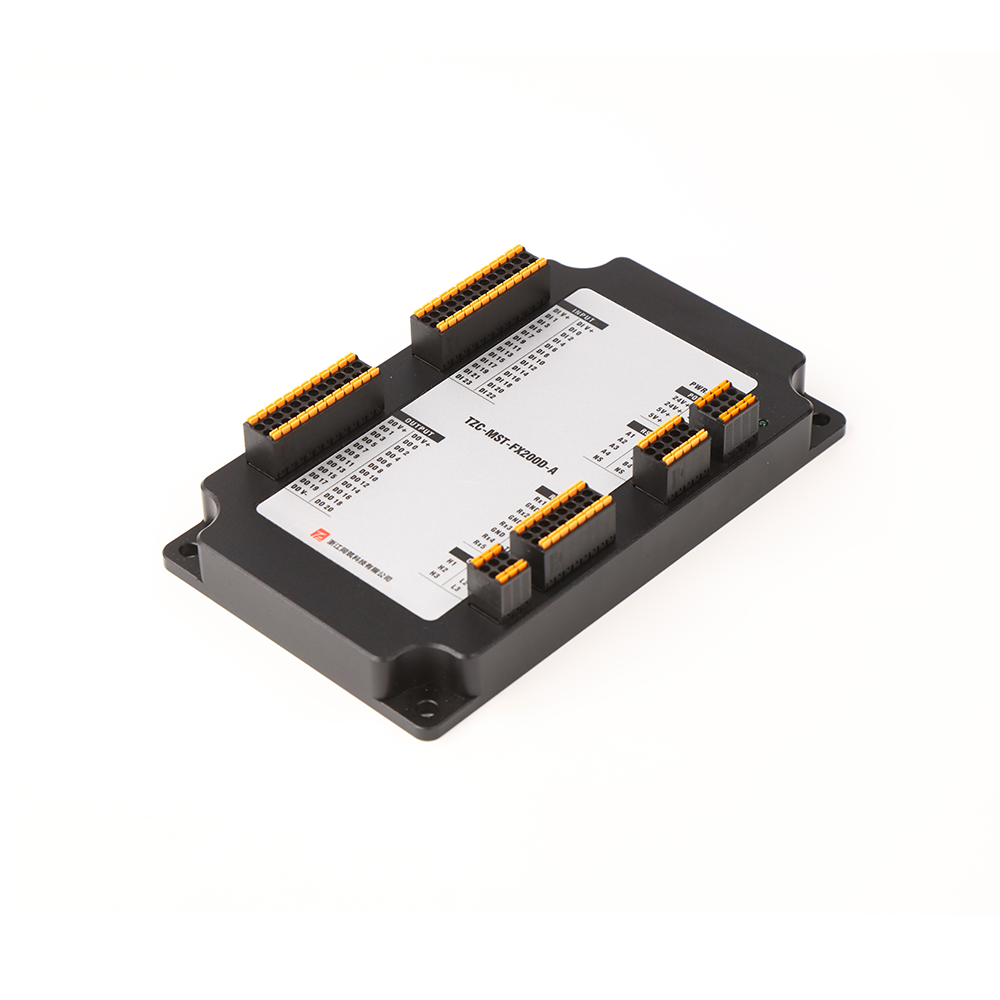
AGV Accessories Automated Guided Vehicle Controller with 19V~29V Power for AGV Robot
A 19V~29V power controller for AGV robot accessories. Useful for electrical architects who need a compact control module inside a defined voltage window.
- 19V~29V
- Accessory power
- Compact AGV
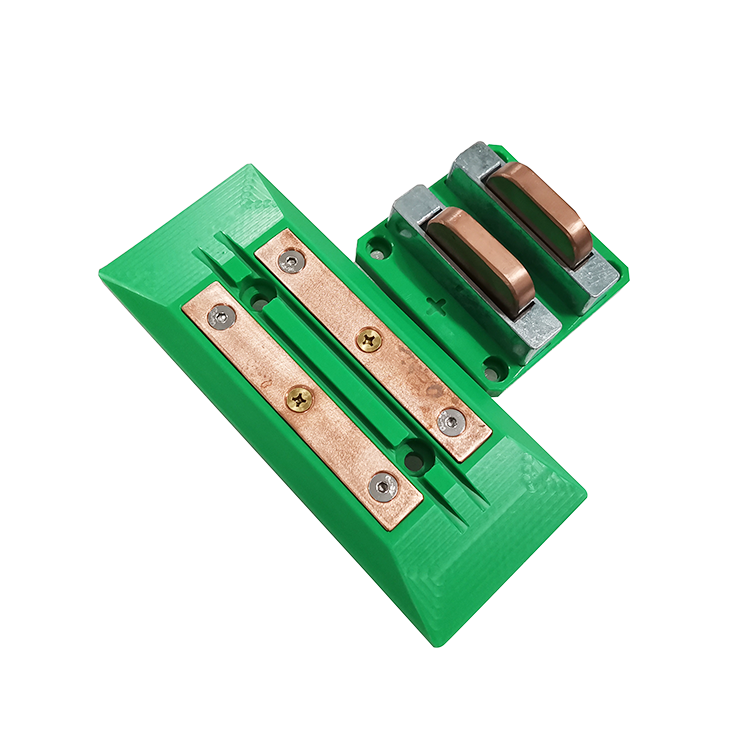
TZBOT Charger Pad Model TZ-CP-50A with Brush Plate and Brush Block for AGV Navigation Vehicles
Automatic charging contact reliability has a direct effect on fleet uptime. The TZ-CP-50A charger pad with brush plate and brush block belongs on the shortlist for opportunity-charging AGV designs.
- TZ-CP-50A
- Brush plate
- Auto charging
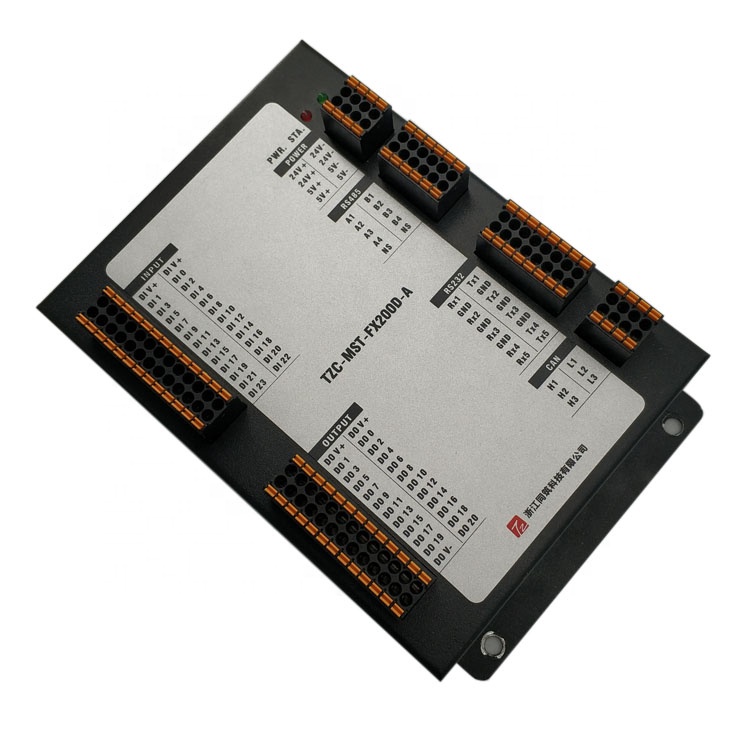
TZBOT AGV Smart Controller TZC-MST-FX200D-A with Function of Mapping and Auto Guide for agv
A smart controller with mapping and auto-guide functions. Buyers should ask how maps are versioned, how station parameters are stored and how the controller behaves during fault recovery.
- Mapping
- Auto guide
- Recovery logic
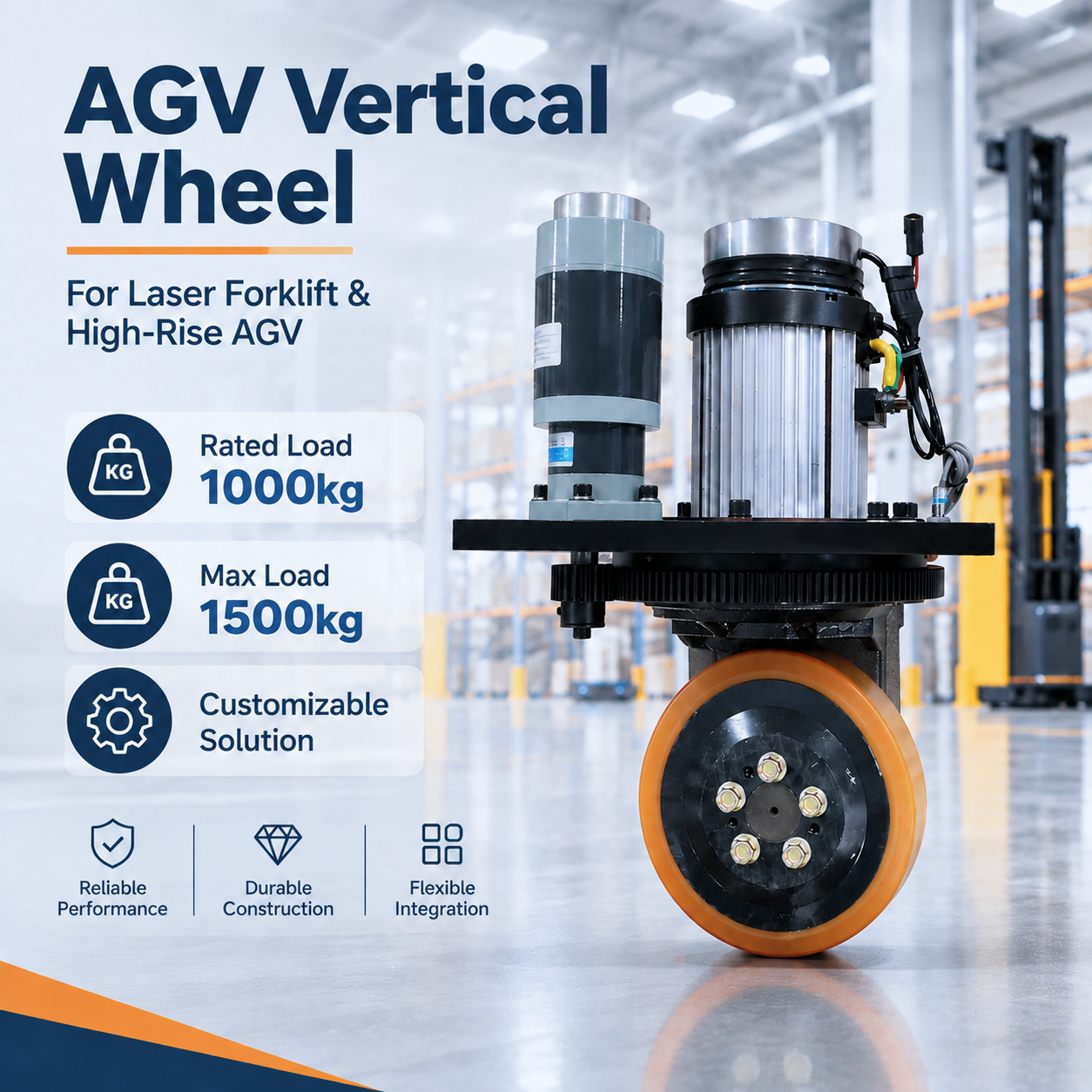
TZBOT 2590r/min Vertical Driving Unit Electric Traction Wheel 1500W Steering Forklift Accessories
A 1500W vertical electric traction wheel rated at 2590r/min. This type of steering drive unit suits forklift AGVs and tricycle chassis where steering angle and traction are controlled separately.
- 1500W
- 2590r/min
- Steering AGV
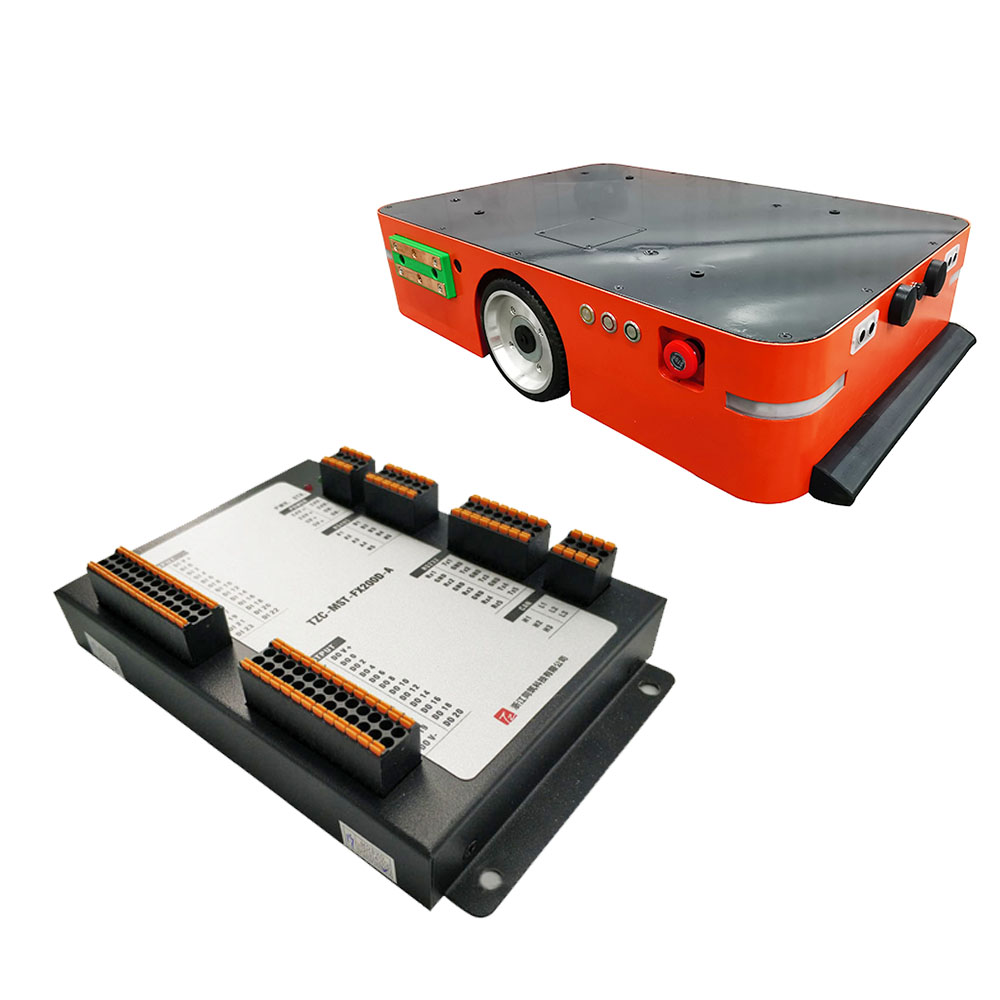
TZBOT Smart agv Controller for Commanding the AGV
A smart AGV controller for commanding the vehicle. It is a practical control building block for integrators who need command logic without redesigning the entire electrical architecture.
- Smart control
- Vehicle command
- Integrator friendly
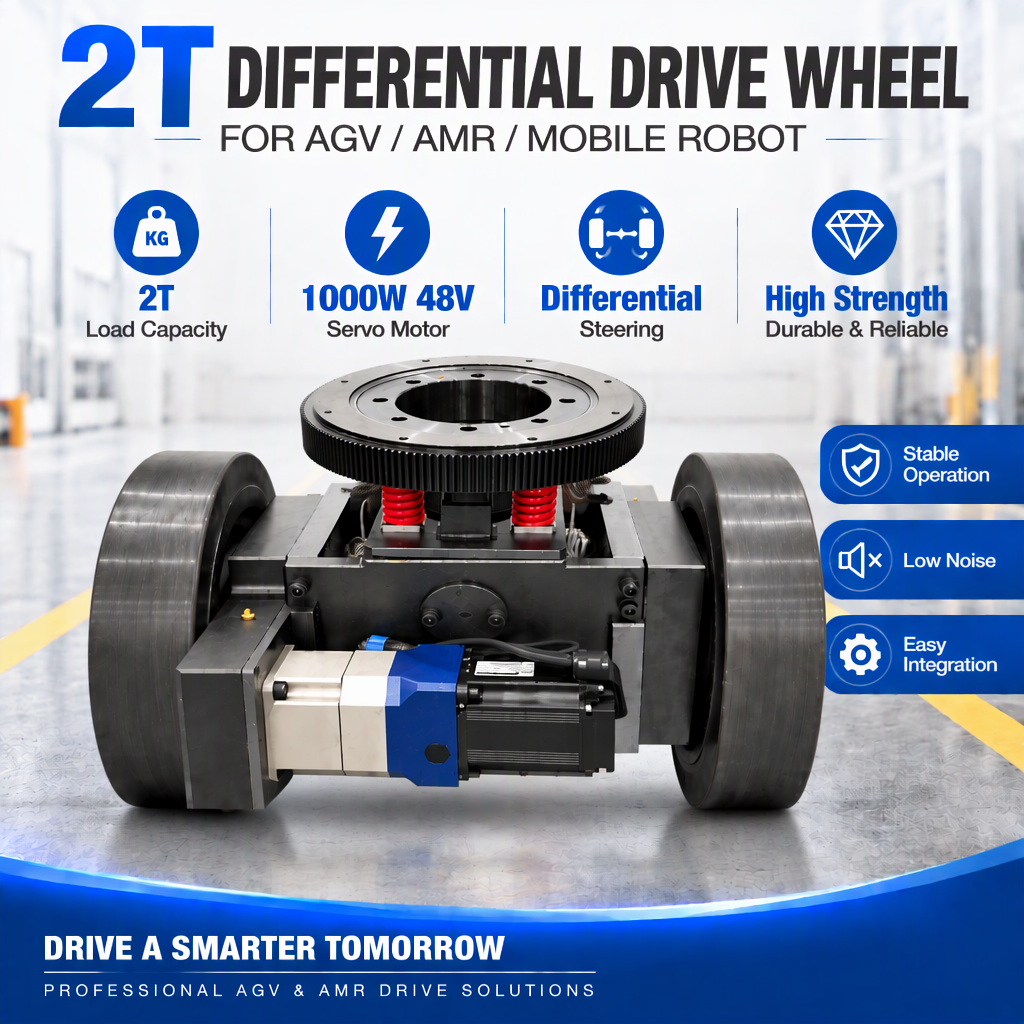
TZBOT 2000kg Traction Capacity Logistic Robot Part agv Amr Differential Steering Drive Wheel for Sale
A 2000kg traction-capacity differential steering drive wheel for logistics robots. Payload capacity, steering geometry, wheel diameter and brake data should be reviewed together before approval.
- 2000kg traction
- Differential steering
- Logistics AMR
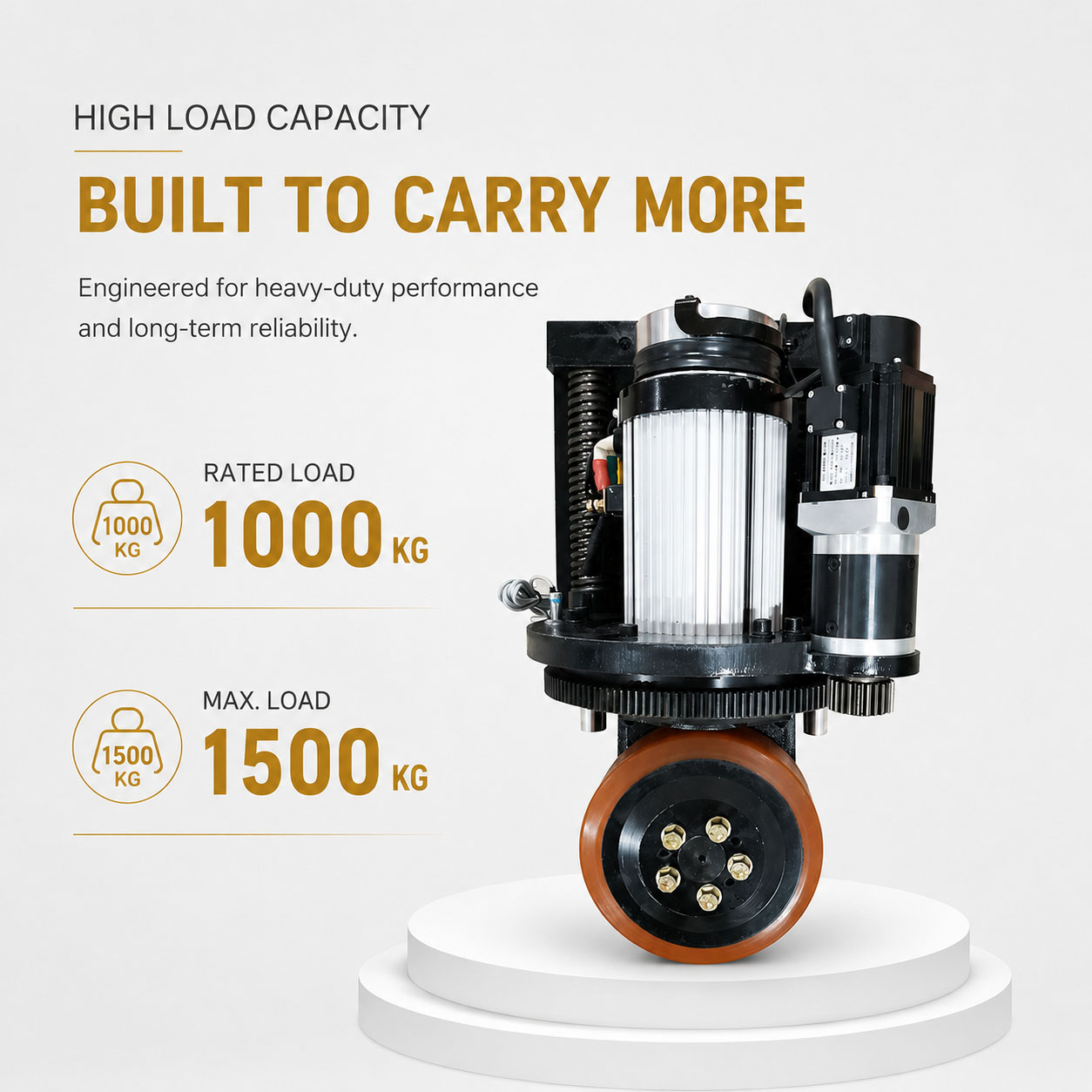
TZBOT 1000KG Bearing Duty 1500w Servo Motor AGV Forklift Driving Wheel with Suspension for Automatic Forklift
A 1000kg bearing-duty, 1500W servo-motor driving wheel with suspension for automatic forklifts. Suspension helps maintain wheel contact on uneven floors, supporting traction and positioning stability.
- 1000kg duty
- 1500W servo
- Suspension
What Makes an Autonomous Mobile Robot Factory or Wholesaler Trusted?
Trust in this category is not created by a headline claim. It is created by traceable engineering decisions, repeatable quality control and a commercial team that understands how the component will be integrated.
When procurement teams compare autonomous mobile robot factories and wholesalers, the first risk is rarely the visible specification. The bigger risks are interface mismatch, undocumented changes, slow spare-parts replacement and weak application support after the first prototype. A trustworthy factory should behave like an engineering partner: it should ask for the vehicle mass, speed, slope, battery voltage, chassis height and duty cycle before recommending a drive unit. A wholesaler that only forwards a price list without these questions is not providing enough information gain to reduce your project risk.
Second, trust should be supported by verifiable evidence. ISO 9001:2015 certification, onsite factory verification, product inspection records, patent records, test reports and sample evaluation policies all help a buyer separate a real manufacturing partner from an assembly or trading intermediary. The strongest suppliers also publish clear trade terms, accepted currencies, payment methods and delivery terms so that international procurement teams can compare offers on a consistent basis.
Engineering Fit
The supplier should match motor power, reducer ratio, wheel tread, encoder, brake and mounting geometry to your chassis — not simply sell a catalogue part.
Verification & Traceability
ISO 9001:2015, onsite verification, inspection records and stable part numbers help procurement defend the decision internally and reduce lifecycle surprises.
Sample-to-Production Discipline
Ask how prototypes are tested, which parameters are recorded and how design changes are controlled before mass production begins.
Lifecycle Support
Spare wheels, controller replacement, wiring diagrams and after-sales fault analysis matter as much as the first shipment price.
Procurement Trends Reshaping AMR Factory & Wholesaler Selection
Buyers are shifting from price-only sourcing toward risk-adjusted sourcing. The following four trends are especially visible in AGV and AMR projects that require customization, fleet uptime and global delivery.
Verified Supplier Lists
Procurement teams are moving toward supplier lists supported by onsite verification, certification and documented test capability. The lowest quote is no longer accepted without evidence of process control.
Single-Source Drive Trains
Buying the wheel, servo motor, controller and navigation sensor from one qualified supplier reduces interface risk. It also shortens commissioning because the supplier can support the whole motion chain.
Small-Batch Customization
AMR developers iterate quickly. Flexible sampling, OEM/ODM support and buyer-label packaging are becoming more important than large minimum order quantities for early-stage projects.
Total Cost of Ownership
The purchase price is only one part of the calculation. Integration time, spare-parts availability, freight, payment terms and after-sales response are now included in supplier scorecards.
AMR Drive, Control and Charging Trends Buyers Should Track
Product development is moving toward modularity, safety, interoperability and lower lifetime cost. These trends should influence both the technical specification and the supplier selection process.
Modular Drive & Steering Units
Integrated motor, reducer, encoder and wheel assemblies are becoming easier to specify and replace. Modular units help OEMs shorten development cycles and simplify spare-parts planning.
Smart Mapping Controllers
Controllers with mapping and auto-guide functions are becoming more capable. Buyers should ask about map version control, station configuration and recovery behaviour after power loss.
Sensor Fusion & Safe Navigation
Magnetic guidance, RFID station tags, lidar and mapping controllers are increasingly combined. The practical question is how the vehicle validates its position and what happens when a sensor fails.
Opportunity Charging
Automatic charging pads and brush-block designs are being evaluated for contact life, alignment tolerance and cleaning routines. Charging uptime is now treated as a fleet-level design decision.
Suspension & Payload Density
Heavy-payload AMRs need stable wheel contact under load. Suspension driving wheels and higher bearing-duty configurations can protect traction, motor life and positioning repeatability.
Fleet-Ready Interoperability
Controllers and drives must support the data, diagnostics and safety expectations of modern fleets. Clear wiring diagrams, parameter files and fault codes are part of the product, not optional extras.
How to Evaluate Factories, Wholesalers and Total Cost of Ownership
A structured scorecard makes supplier comparison more objective. Use the technical evidence and commercial terms below to separate a trusted autonomous mobile robot factory from a catalogue-only wholesaler.
| Evaluation Area | Evidence to Request | Why It Matters |
|---|---|---|
| Quality System | ISO 9001:2015 certificate, onsite verification, inspection records | Shows that production and final inspection follow a controlled process rather than ad hoc assembly. |
| Engineering Fit | Motor torque curves, wheel diameter, reducer ratio, brake and encoder data | Confirms that the drive unit matches your vehicle mass, speed, slope and stopping requirements. |
| Documentation | Drawings, pinout, wiring diagram, parameter file, testing report, packaging specification | Reduces commissioning time and prevents delays caused by missing technical information. |
| Customization | OEM/ODM scope, sample policy, design review process, buyer-label packaging | Supports differentiation and repeat production for AMR developers with evolving chassis designs. |
| Lifecycle Support | Spare-parts availability, fault-analysis process, replacement lead time | Protects fleet uptime after the initial shipment and lowers the total cost of ownership. |
| Trade Terms | Payment methods, currencies, delivery terms, export packing | Allows procurement to compare suppliers fairly and avoid hidden logistics or payment friction. |
Inside Zhejiang Torqen Technology Co., Ltd.
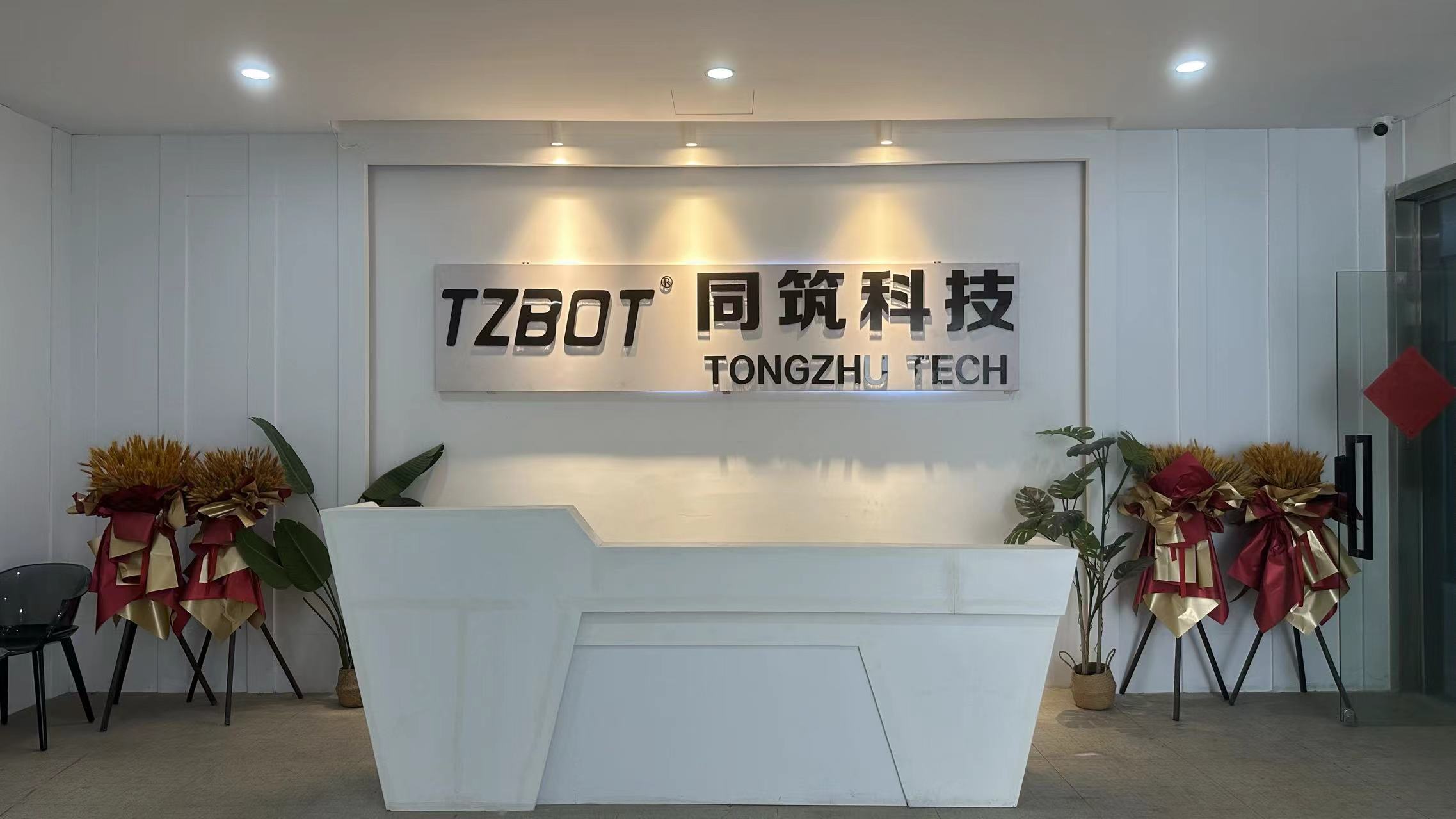
Founded in 2015 in Zhejiang, China, Zhejiang Torqen Technology Co., Ltd. designs and manufactures automatic guided vehicles, AGV drive wheel assemblies, DC/AC motors, encoders, reducers, motor controllers, caster and PU wheels, and in-wheel motor units for automation builders worldwide.
Torqen’s factory advantage is the ability to align the complete motion chain: drive wheel, servo or BLDC motor, reducer, encoder, motor driver and navigation sensor. This matters because an AMR can fail at the interface between excellent components. A wheel may be strong but poorly matched to the controller; a controller may be capable but undocumented; a charging pad may work in the lab but not in daily fleet use. Matching and testing these elements together is the information gain that reduces integration risk.
The company operates as a manufacturer and trading company with a factory area of 1,000–3,000 m², annual output of US$5M–10M and a team of 51–100 people. Its quality management system is certified to ISO 9001:2015, its facility has been verified onsite by Intertek, and it holds eight patents. Five in-house testing instruments support finished-product inspection, while prototypes undergo extended-duration testing before production parts are released. Buyer feedback shown on the original website includes a 4.9/5 rating and a 97.9% inquiry response rate.
Established in Zhejiang, China
Patents awarded
Team and engineering support
Verified buyer rating
Inquiry response rate
Complete Drive Train
Drive wheels, motors, reducers, drivers and sensors can be specified from one source, reducing interface risk and improving commissioning support.
OEM / ODM Customization
Sample-based and design-based customization covers motor power, voltage, reduction ratio, wheel diameter, tread material, encoder, brake and mounting interface.
Verified Quality
ISO 9001:2015 certification, Intertek onsite verification and five testing instruments support consistent production and final inspection.
Export-Ready Support
Payment methods include T/T, L/C, D/P, D/A, credit card, PayPal, Western Union and escrow, with delivery terms such as FOB, CFR, CIF, EXW, CIP, FCA, CPT and DDU.

Autonomous Mobile Robot Factory & Wholesaler FAQ
These are the questions engineering and procurement teams ask most often when comparing AMR component suppliers and preparing an RFQ.
What information should be included in an RFQ for an AGV drive wheel?
Include gross vehicle weight, payload, target speed, maximum gradient, wheel diameter limits, battery voltage, chassis mounting height, duty cycle, braking requirement and destination country. Photos or drawings of the chassis mounting area help the supplier recommend a configuration faster.
How do I choose between differential, steering and horizontal drive units?
Differential drive units suit compact latent, jacking and shelf-lifting AGVs that turn by wheel-speed difference. Steering drive wheels suit forklift AGVs and tricycle chassis that need controlled steering angles. Horizontal drive assemblies are useful where the chassis has limited vertical clearance.
How can procurement verify a factory rather than a trading-only wholesaler?
Request the quality certificate, onsite verification report, product inspection records, patent certificates, test reports and a sample-evaluation policy. Ask for the factory address, production area, team size and the name of the engineer who will support integration. A credible factory can answer technical questions directly.
Can drive wheels, controllers and charger pads be customized?
Yes. Typical customization includes motor power and voltage, reduction ratio, wheel diameter, tread material, encoder type, brake options, mounting interfaces, cable length, connector choice and buyer-label packaging. Design-based and sample-based customization should be discussed during RFQ review.
Which documents should be requested before mass production?
Request the approved drawing, technical specification, wiring diagram or pinout, controller parameter file, test report, packaging specification and change-control process. These documents reduce commissioning risk and support maintenance after the fleet is deployed.
What payment and delivery terms are common for international AMR component orders?
Common payment methods include T/T, L/C, D/P, D/A, MoneyGram, credit card, PayPal, Western Union, cash and escrow, with currencies such as USD, EUR, JPY, CAD, AUD, HKD, GBP and CNY. Delivery terms include FOB, CFR, CIF, EXW, CIP, FCA, CPT, DDU and express delivery.
Build Your Next AMR with a Verified Drive-Train Partner
Share your load, speed, battery voltage and chassis requirements. Our engineering team will help match the drive wheel, controller, charger pad and navigation components for your project.
Get Catalog