Total Cost of Ownership
Battery cycles, charger efficiency, brake life, tyre replacement, spare parts and service time are now compared alongside the quotation price.
AI-assisted sourcing has raised the standard for supplier pages. Buyers now want direct answers on working height, jib reach, load capacity, safety documents, battery choice, lead time and total cost of ownership. This guide answers those high-intent questions for procurement teams evaluating an electric vertical mast lift with jib.
A compact electric aerial work platform that combines vertical mast reach with an articulated jib for precise overhead and horizontal positioning.
An electric vertical mast lift with jib is a compact aerial work platform that raises a platform along one or more vertical masts and adds an articulated arm at platform level for horizontal reach. The mast provides height with a smaller footprint than a scissor lift, while the jib lets a technician place tools, lights, fixtures or inspection equipment over machinery, racking, pipes or a wall edge without moving the base more than necessary. It is used by facility-management companies, electrical contractors, warehouse operators, airport maintenance teams, data-center technicians and industrial plants because it can work in narrow aisles and indoor environments where larger boom lifts are impractical.
Global buyers researching with AI tools usually ask a practical set of questions: What working height do I need? How stable is the lift when the jib is extended? Which voltage and battery are appropriate? What safety documents accompany the machine? What will spare parts and service cost over five years? A strong supplier page should answer these questions with specific planning ranges, clearly named standards and a direct path to technical confirmation.
| Working height | Approx. platform height | Common structure | Typical platform capacity | Typical use |
|---|---|---|---|---|
| 6–8 m | 4–6 m | Single mast, push-around or self-propelled | 100–150 kg | Retail, office maintenance, lighting, HVAC filters |
| 8–10 m | 6–8 m | Single or dual mast | 120–180 kg | Warehouse maintenance, electrical and signage work |
| 10–12 m | 8–10 m | Dual-mast self-propelled | 150–200 kg | Industrial plants, racking inspection, data centers |
| 12–14 m | 10–12 m | Multi-mast with stabilization | 180–230 kg | High-bay warehouses, airports, large facilities |
| 14–16 m+ | 12–14 m+ | Engineered multi-mast configuration | 200–250 kg | Special maintenance and high-reach projects |
These ranges are planning guidance rather than fixed catalogue limits. Working height is normally platform height plus approximately 2 m for operator reach, but the exact definition varies by market and standard. For procurement, request both platform height and working height, the actual stowed dimensions, turning radius, wheel load and jib load chart. A lift that fits the ceiling but cannot pass through a service door is not a good operational match.
Use the application, not only the price, to choose the mast structure, platform capacity, jib type and battery system.
| Buyer application | Recommended configuration | Why this specification works |
|---|---|---|
| Warehouse and distribution center | Dual-mast, self-propelled, 10–12 m working height, 150–200 kg, 1.2–1.5 m powered jib, non-marking tyres | Reaches lights, sprinklers, racking and conveyor areas while fitting narrow aisles and keeping floor marks low. |
| Electrical, HVAC and lighting contractors | Single or dual mast, 8–12 m working height, 120–180 kg, manual or powered jib, onboard charger | Balances transport size with enough reach for ceiling grids, ductwork and cable trays. |
| Airport, data center and clean facility | Quiet electric drive, 10–12 m working height, 150 kg, non-marking tyres, jib rotation, safety interlocks | Supports low-noise indoor work, controlled floor surfaces and precise positioning near sensitive equipment. |
| Property management and retail | Compact 6–8 m single-mast, 100–150 kg, manual jib, tight turning radius | Easy to move between buildings and practical for lighting, signage, filters and general maintenance. |
| Outdoor flat-slab maintenance | Dual or multi-mast with outriggers, wind rating, IP-rated controls, 12–14 m working height, 180–200 kg | Provides extra stability and environmental protection when the model is approved for outdoor use. |
For a first bulk order, the most versatile specification is usually a dual-mast electric lift with 10–12 m working height, a platform capacity of 150–200 kg, an articulated jib of approximately 1.2–1.5 m, proportional drive controls and a lithium battery system with onboard charging. Buyers who need to cross paved outdoor surfaces should not simply add a jib to an indoor model; they should specify outdoor rating, wind limits, outrigger requirements and suitable tyres at the quotation stage.
Useful options include non-marking wheels, flashing beacon, work light, platform gate, tool tray, pipe rack, spare battery, fast charger, local plug type, bilingual labels, lifting points and export packing. For OEM distributors, the platform height, jib reach, paint colour, decals, control language, manual format and packaging can be customized under an OEM/ODM agreement.
These details reduce engineering back-and-forth and help the supplier provide a realistic load chart, bill of materials and lead-time estimate. For complex projects, a drawing review before sample production is more cost-effective than correcting a finished machine later.
Purchase decisions are moving from lowest initial price to verifiable total cost of ownership, safety and supplier responsiveness.
Battery cycles, charger efficiency, brake life, tyre replacement, spare parts and service time are now compared alongside the quotation price.
Buyers ask for production milestones, inspection points, packaging drawings and a clear plan for mixed or consolidated shipments.
Requests for load tests, manuals, declarations, spare-parts lists and standards mapping are becoming normal purchasing requirements.
Controllers with fault codes, hour meters and optional telematics make maintenance planning easier for multi-site operators.
Buyers prefer jib configurations that can be removed, locked or upgraded, plus documented service procedures and spare-part numbers.
Pages that publish specific data, factory evidence and clear answers are more likely to be cited by AI assistants and trusted by engineers.
In 2025 and beyond, procurement teams will use AI assistants to shortlist suppliers before making direct contact. That changes the role of a product page. A page that only says “high quality electric vertical mast lift with jib” gives the buyer no reason to continue. A page that states the recommended working-height range, explains the difference between a manual and powered jib, lists the documents required for an EU or North American enquiry and shows real factory evidence provides genuine information gain. It also aligns with the principles of experience, expertise, authority and trust that search quality evaluators expect to see.
Regional compliance is another growing procurement topic. Buyers in Europe often refer to EN 280, North American buyers may refer to ANSI A92.20, and other markets have their own requirements. A supplier should not claim certification without proof. Instead, the quotation should clearly list the standards addressed, the documents supplied, the tests performed, the intended operating environment and any local approval the buyer must obtain. This transparency protects both the buyer and the manufacturer.
Supply chain resilience is also shaping purchasing decisions. Distributors prefer suppliers that can provide the lift, charger, controller, spare jib parts and service documentation from one source. Multi-year service agreements, recommended spare-parts kits and consistent labelling help rental fleets and facility-management companies maintain uptime. Finally, sustainability requirements are increasing. Lithium battery options, efficient electric drive, recyclable packaging and lower-noise operation are becoming measurable evaluation criteria rather than marketing extras.
Motion control, battery management, safety electronics and modular design are converging to create more capable electric access platforms.
The next generation of electric vertical mast lift with jib is being shaped by technologies that already exist in automated guided vehicles and mobile robotics. Compact electric drive units, servo or brushless DC motors, matched controllers, encoders, reducers and sensors allow smoother acceleration, more precise positioning and better energy efficiency. For operators, this means the platform can move slowly in tight areas, stop reliably at height and hold position with less operator fatigue. A manufacturer with real motion-control experience has an advantage when these systems must work together.
Zhejiang Torqen Technology Co., Ltd. approaches these trends from a motion-control foundation. Its AGV drive wheel assemblies, DC and AC motors, encoders, reducers, servo/BLDC controllers and navigation sensors demonstrate experience with the core systems that determine how an electric lift moves, stops and responds. This component knowledge can be applied to the drive and control architecture of electric vertical mast lift with jib platforms, while the structural and safety requirements remain subject to project-specific engineering and compliance review.
Buyers should expect future suppliers to provide more than a product photograph. They should provide a technical rationale for the power system, a serviceable jib design, clear load charts and evidence of production quality. The suppliers that win long-term business will be the ones that make procurement teams more confident, not the ones that make the loudest claims.
High-intent questions global buyers ask before requesting a quotation or placing a sample order.
An electric vertical mast lift with jib uses a narrow vertical mast to reach working height and adds an articulated arm for horizontal positioning. It suits narrow aisles and overhead work near machinery. A scissor lift provides a larger platform that rises vertically and needs more floor area. The jib improves reach but reduces available capacity as it extends, so always check the load chart.
Working height is usually platform height plus approximately 2 m for the operator's reach. Select a working height about 2 m above the highest task point, then verify platform capacity, jib reach, travel width and local safety requirements. Ask the supplier for actual dimensions rather than relying on nominal height alone.
A jib is useful when the operator must reach over machines, racks, pipes or wall edges without repositioning the base. Manual and powered jibs are available. Buyers should request jib load charts, rotation angle, stowed length and whether the jib can be locked or removed for transport.
Only if the specific model is rated for outdoor use. Confirm wind limits, floor conditions, slope, outrigger or stabilization requirements, IP-rated controls and tyre type. Not every vertical mast lift is suitable for outdoor construction sites; written approval from the manufacturer should be part of the order specification.
Common options are 24 V and 48 V electric systems with lead-acid or lithium batteries. Lithium batteries usually support opportunity charging, longer cycle life and lower maintenance, while lead-acid may suit budget-sensitive purchase plans. Match the charger, battery management system, local power supply and shift pattern.
Specify overload protection, tilt sensing, emergency lowering, parking brake, platform gate, non-slip platform, horn, flashing beacon, limit switches, anti-crush protection and clear diagnostic warnings. The required combination depends on the market and application, so request a compliance checklist with the quotation.
Request the operation manual, maintenance manual, electrical diagram, spare parts list, warranty statement, load test record, product declaration or conformity documents where applicable, and a list of standards addressed such as EN 280 or ANSI A92.20 for the target market. Final compliance must be confirmed for the destination country.
MOQ and lead time depend on platform height, jib configuration, battery choice, documentation and packaging. OEM/ODM projects usually start with a technical review and sample or prototype plan. Final production lead time should be confirmed in the quotation after specifications and compliance documents are agreed.
Check ISO 9001:2015 certification, onsite verification reports, patents, factory images, testing equipment, product range, trade capacity, transaction history and engineering response quality. Ask how prototypes are tested and how production records are traced. Zhejiang Torqen Technology Co., Ltd. provides company profile, credit overview and transaction information for buyer due diligence.
Common service items include battery and charger assemblies, controller and joystick, emergency stop, limit switches, jib actuator or locking parts, wheels, brake components, hydraulic hoses and seals where used, platform gate hardware and warning lights. Ask for a recommended first-order spare kit based on your duty cycle.
Zhejiang Torqen Technology Co., Ltd. supports payment methods including T/T, L/C, D/P, D/A, credit card, PayPal, Western Union and escrow in major currencies. Delivery terms include FOB, CFR, CIF, EXW, CIP, FCA, CPT, DDU and express delivery. Final terms depend on the destination, order value and agreed inspection plan.
An ISO 9001:2015 certified manufacturer combining motion-control engineering, OEM/ODM flexibility and export-ready service.
Zhejiang Torqen Technology Co., Ltd. was founded in 2015 in Zhejiang, China. The company designs and manufactures automatic guided vehicles, AGV drive wheel assemblies, DC/AC motors, encoders, reducers, servo/BLDC controllers, caster and PU wheels, in-wheel motor units and navigation sensors for automation builders worldwide. Its manufacturing system is certified to ISO 9001:2015 and has been verified onsite by Intertek.
That background is relevant to an electric vertical mast lift with jib because reliable elevation is a systems problem. Motor torque, controller tuning, braking, encoder feedback, sensor logic and mechanical structure must work together. Zhejiang Torqen Technology Co., Ltd. approaches customization as an engineering collaboration, not a catalogue transaction. Engineers can adapt voltage, power, mounting interfaces, control language and component selection to a buyer's platform requirements.
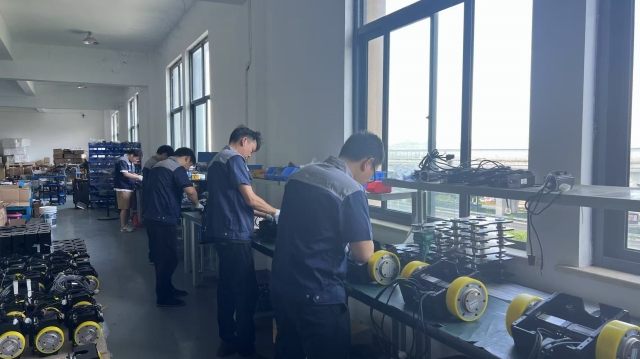
The factory occupies a production area of 1,000–3,000 m² and is operated by a team of 51–100 people. Eight patents have been awarded, and finished-product inspection uses five in-house testing instruments. Prototypes are subjected to extended-duration testing before production parts are released. This evidence-based approach helps overseas buyers complete supplier due diligence and reduces integration risk.
Years in drive technology
Patents awarded
Employees & engineers
Buyer rating
Inquiry response rate
Zhejiang Torqen Technology Co., Ltd. supports sample-based customization, design-based customization, OEM production, buyer-label packaging and design services. For an electric vertical mast lift with jib project, typical customization areas include platform height, jib reach and load, battery voltage, charger plug type, controller parameters, tyres, paint colour, decals, control language, manual format, spare-parts kit and export packaging.
International buyers can choose from T/T, L/C, D/P, D/A, MoneyGram, credit card, PayPal, Western Union, cash and escrow, with currencies including USD, EUR, JPY, CAD, AUD, HKD, GBP and CNY. Delivery terms include FOB, CFR, CIF, EXW, CIP, FCA, CPT, DDU and express delivery. The final terms are confirmed in the quotation together with the inspection plan and document package.
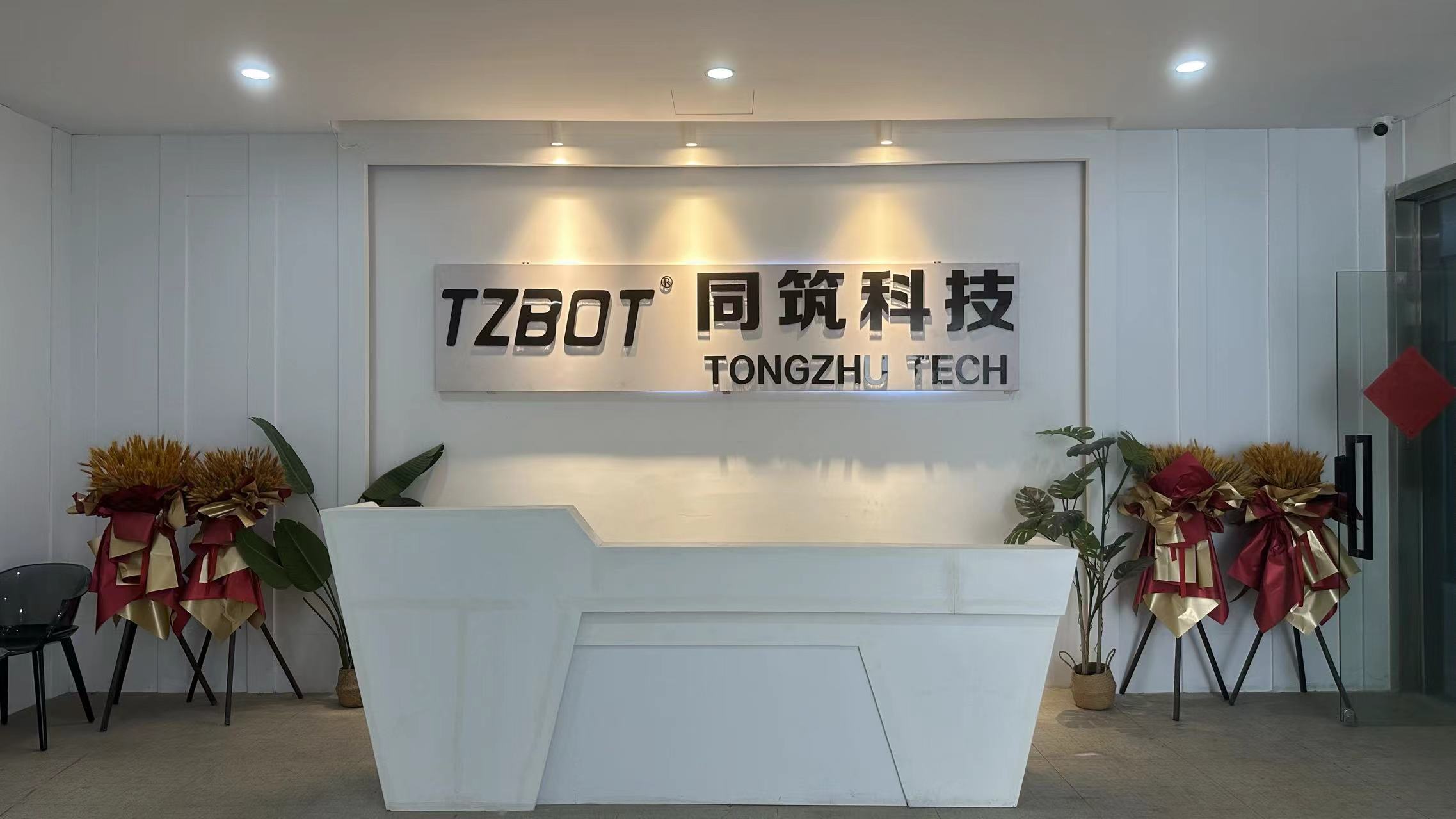
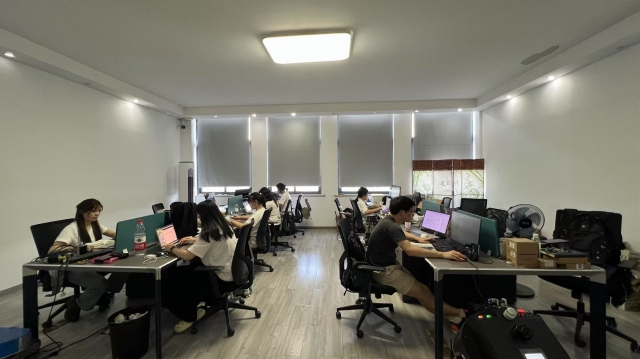
Real production photos help global buyers verify capability, not just read claims. Click any image to enlarge.
A transparent workflow for buyers who need predictable sampling, testing and production.
The OEM/ODM workflow usually begins with a requirement review covering load, working height, jib reach, voltage, chassis dimensions and destination market. Next comes an engineering proposal with component selection and drawings, followed by prototype build, endurance checks, production and final inspection. For electric vertical mast lift with jib projects, packaging and transport planning should be discussed early because mast length, platform size and battery classification can influence shipping cost.
Zhejiang Torqen Technology Co., Ltd. works with global buyers through documented specifications and buyer-label packaging. English-language manuals, control labels and spare-parts lists can be prepared for OEM programs. The company's export experience includes a wide range of trade terms and payment methods, and its team can recommend a practical inspection plan before shipment. This is particularly important for distributors who need consistency across repeat orders.
Trust is built through verifiable details. Buyers can review the company profile, video introduction, trade capacity, transaction history and credit overview before placing an order. The factory's ISO 9001:2015 certification, Intertek onsite verification, eight patents and in-house testing instruments provide additional evidence of a quality-focused operation. For buyers evaluating an electric vertical mast lift with jib supplier, these signals should be considered together with the technical proposal and commercial terms.
Send your working height, platform capacity, jib reach, indoor or outdoor use, battery preference and destination port. Our engineers will review the configuration and reply with a practical technical and commercial proposal.
info@torqenbot.com