AGV Accessories and Drive Modules Matched to Hai Phong Applications
These eight products cover the most frequent Hai Phong inquiries we receive: forklift retrofits near the port, low-clearance latent AGVs in rented warehouses, high-payload differential wheels for industrial parks, magnetic guidance for fixed routes, and laser SLAM AMRs for flexible production cells. Product links preserve the original URLs.
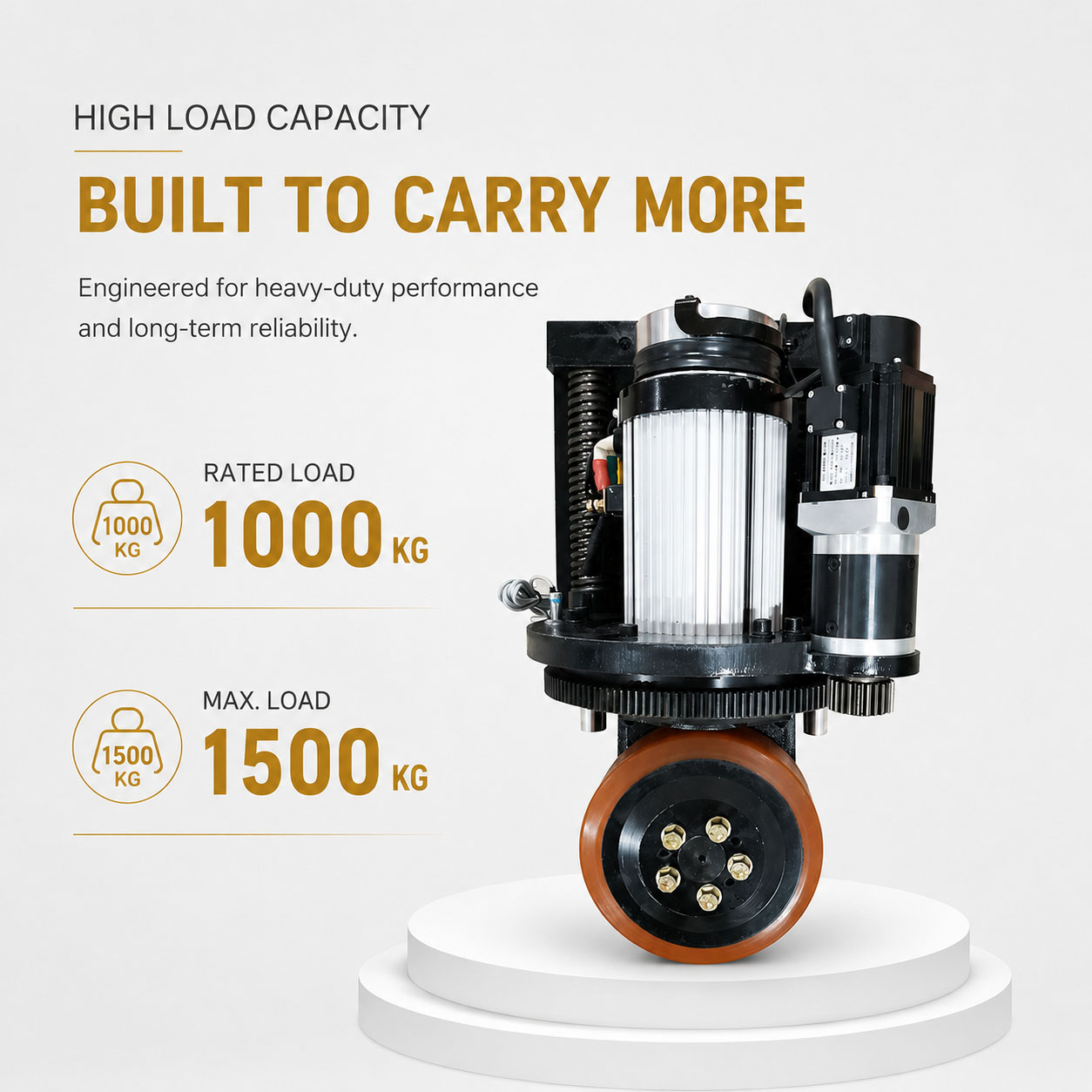
TZBOT 1000KG Bearing Duty 1500W Servo Motor AGV Forklift Driving Wheel with Suspension for Automatic Forklift
For automatic forklifts and tugger conversions around Dinh Vu, Cat Hai and Nam Dinh Vu, the suspension keeps traction across dock levelers, expansion joints and patched concrete. A 1500W servo supports repeatable stops at warehouse doors and container-yard transfer points.
- 1000 kg bearing duty
- Suspension travel
- 1500W servo

TZBOT Auto Guidance Mobile Chassis 1000kg Payload AGV Integrate Arm Robotic Intelligent Composite Robot
A mobile chassis with an integrated robotic arm for flexible pick-and-place in electronics, automotive component and medical-device lines. In Hai Phong industrial parks such as Trang Due, VSIP and Deep C, it reduces fixed conveyor reconfiguration when product variants change.
- 1000 kg payload
- Composite robot
- Flexible routing
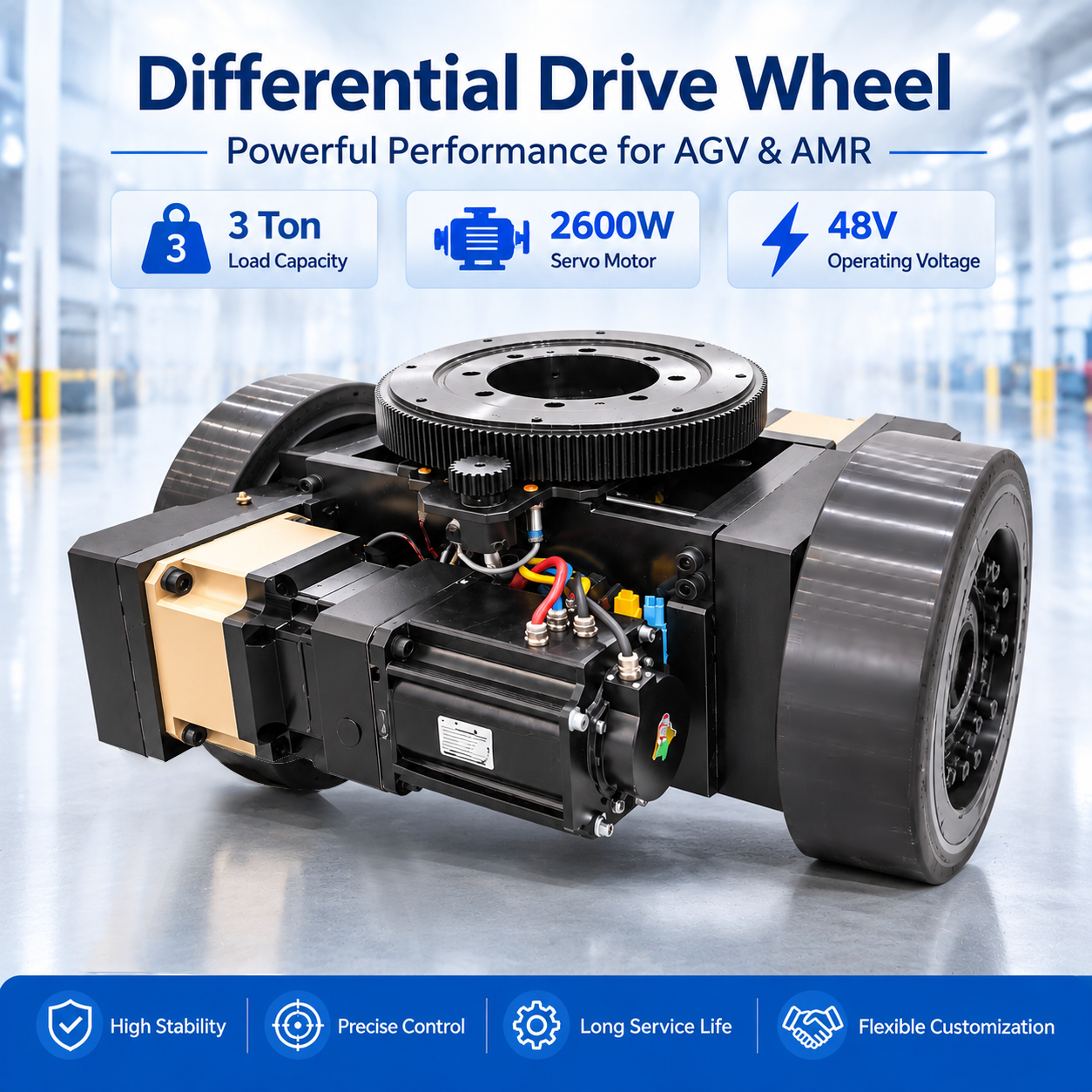
TZBOT Customizable 3000kg Load Capacity AGV Wheel Differential Drive Wheel with 2600W 48V Servo Motor
Built for steel, tire, building-material and heavy pallet handling where a standard wheel reaches its traction limit. The 3000 kg class and 2600W 48V servo are relevant for ramp transitions, washdown areas and long production halls in northern Vietnam’s industrial parks.
- 3000 kg load
- Differential drive
- 2600W 48V servo
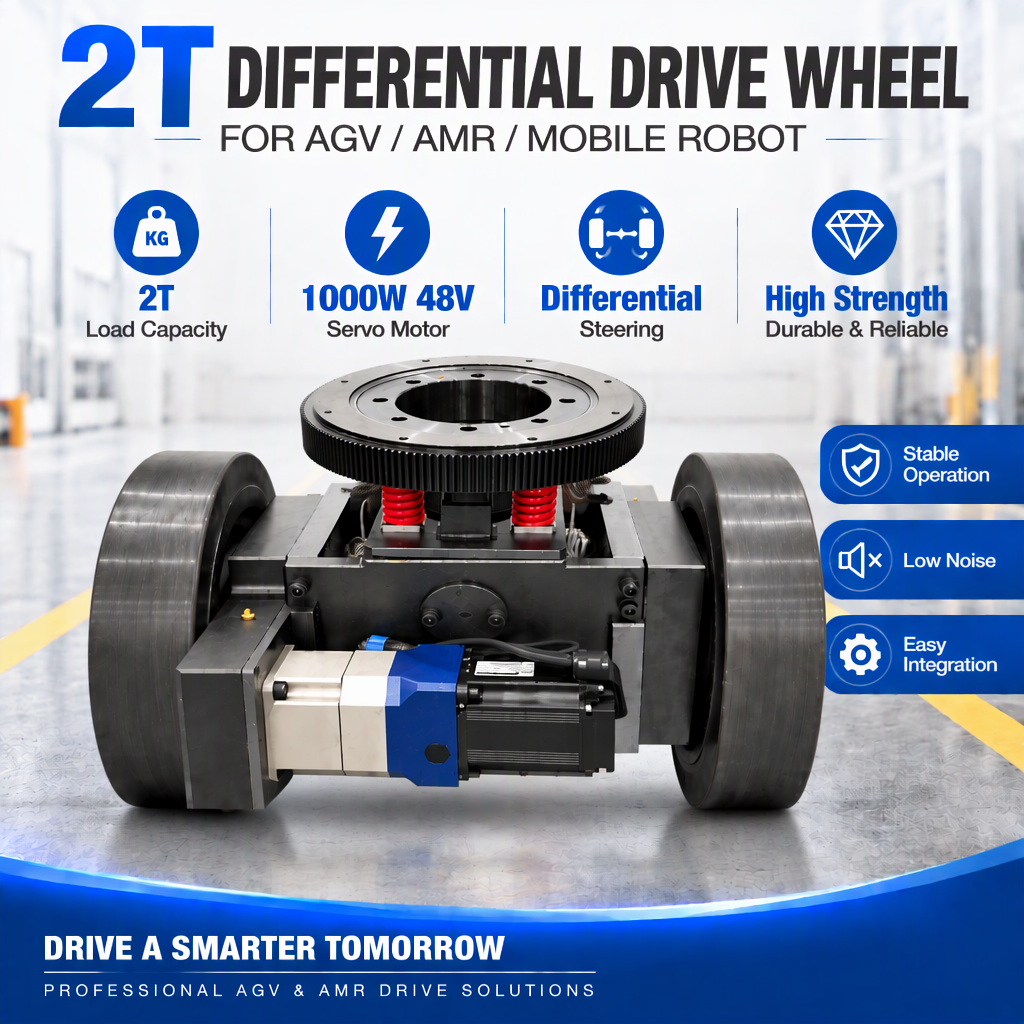
TZBOT 2000kg Traction Capacity Logistic Robot Part AGV AMR Differential Steering Drive Wheel for Sale
For tricycle and tugger layouts that need controlled steering angles rather than pure wheel-speed turning. This module is useful in cross-docking warehouses serving Hai Phong port, where mixed pallet sizes and changing aisle routes demand predictable path following.
- 2000 kg traction
- Differential steering
- Logistic robot part
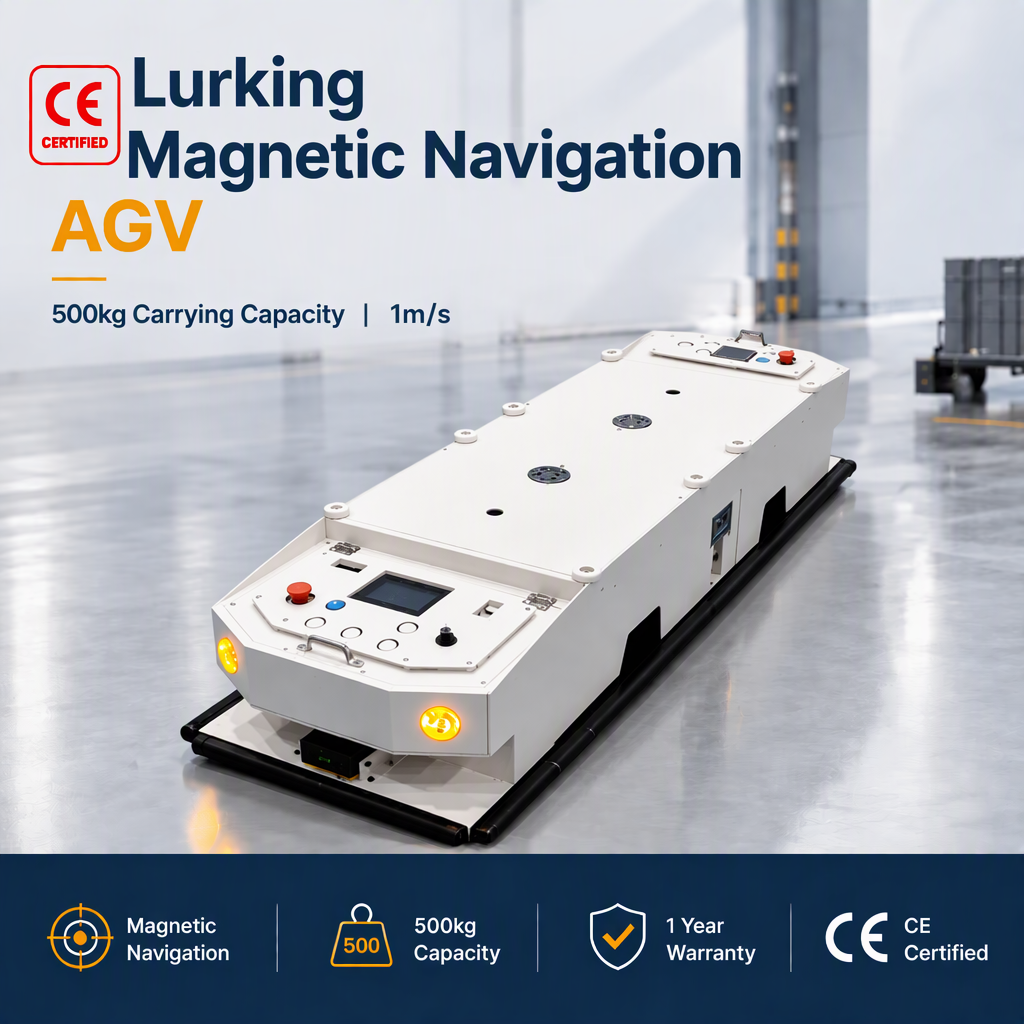
TZBOT EU CE Lurking AGV Material Handling Equipment 500kg Bidirectional Magnetic Guidance Mobile Robot
A 500 kg bidirectional lurking AGV for low-cost fixed routes and under-cart transport. Magnetic tape and RFID station tags suit rented warehouses where floor modification is limited. Ask for site-specific validation before assuming CE marking alone satisfies Vietnamese factory EHS requirements.
- 500 kg class
- Magnetic guidance
- Bidirectional
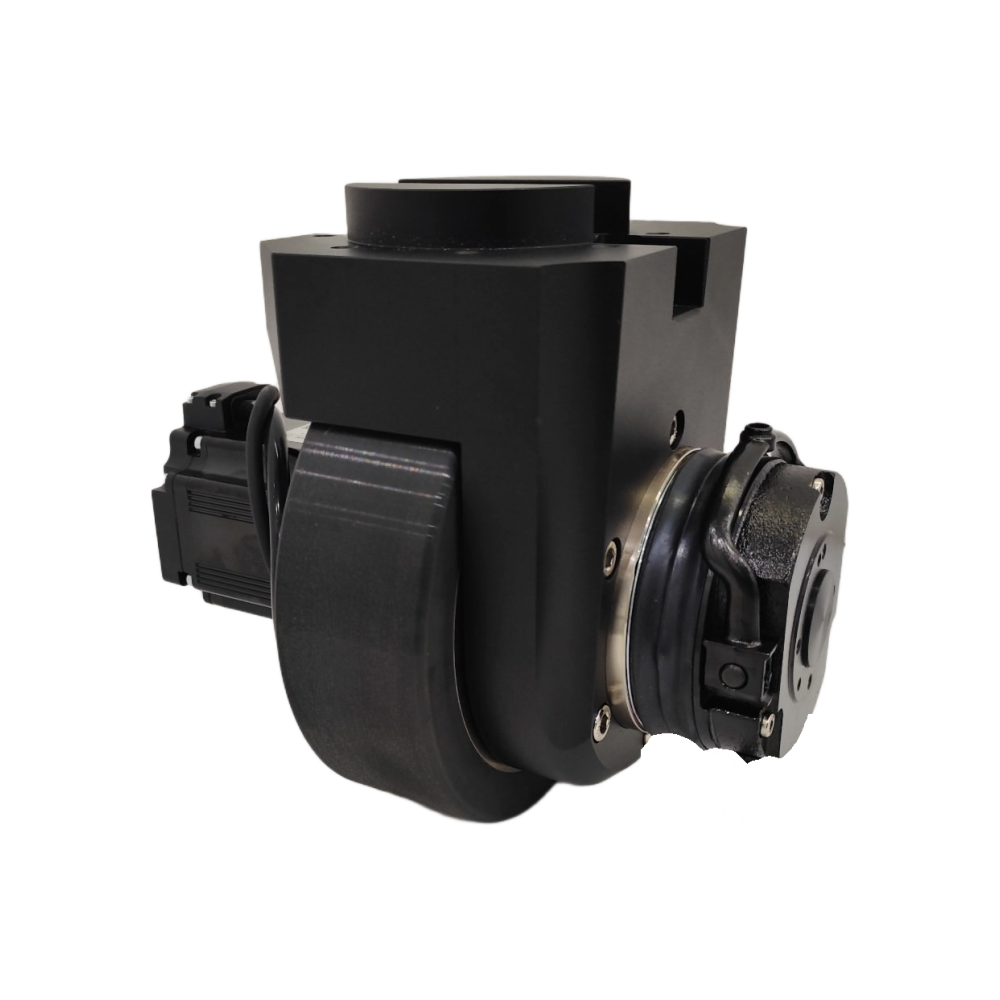
TZBOT Compact Structure AGV Wheel Imported Polyurethane 1000kg Load Duty Mobile Robot Horizontal Drive Wheel Unit
For latent lifting AGVs, under-ride carts and low-deck platforms where vertical space is tight. Imported polyurethane helps balance traction and floor marking on epoxy and concrete surfaces. This is a common request from 3PL warehouses around Dinh Vu and Nam Cau Kien.
- 1000 kg duty
- Imported PU
- Horizontal layout
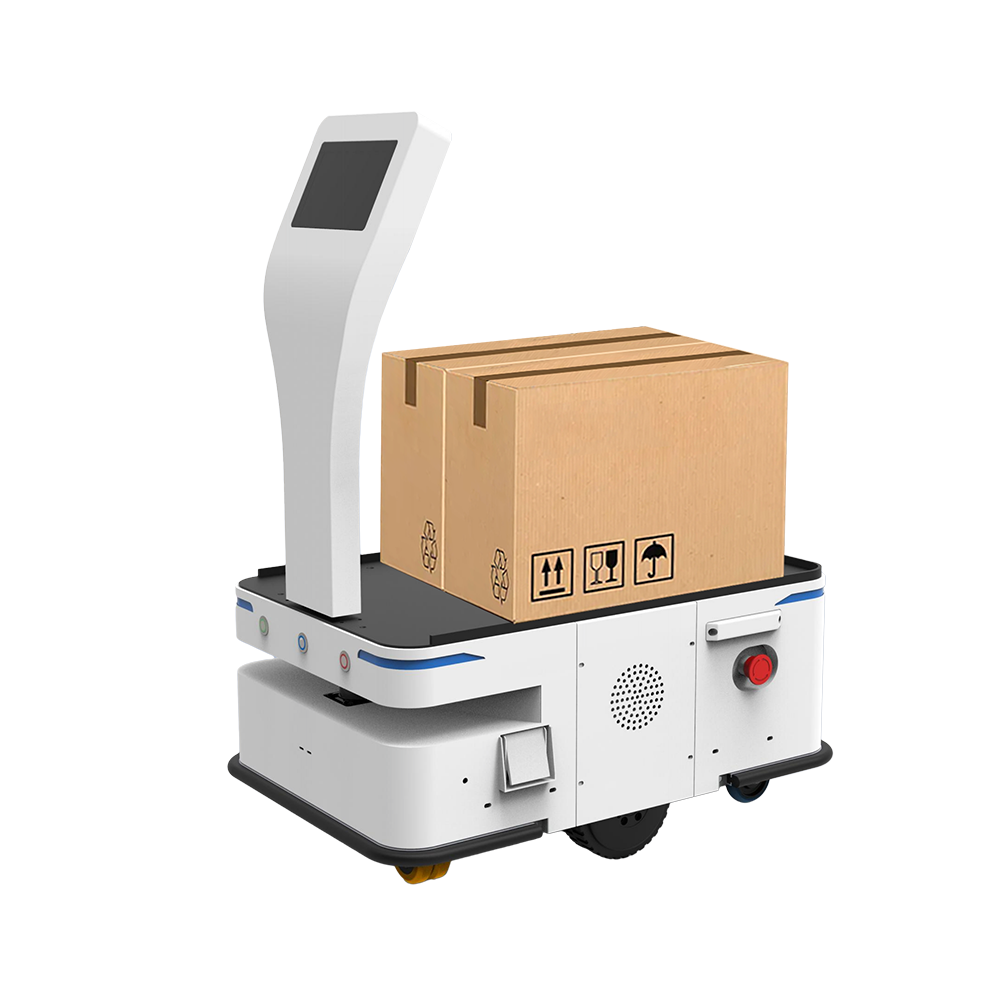
TZBOT High Precision Guidance Laser SLAM Navigation AMR Robot 80kg Carrying Capacity Material Handling AMR Robot with 7 Inch HMI
An 80 kg laser SLAM AMR with a 7-inch HMI for flexible electronics, medical-device and e-commerce picking. Lidar navigation reduces dependence on floor tape or QR grids, which is valuable when Hai Phong tenants reconfigure racks between production seasons.
- 80 kg carrying
- Laser SLAM
- 7-inch HMI
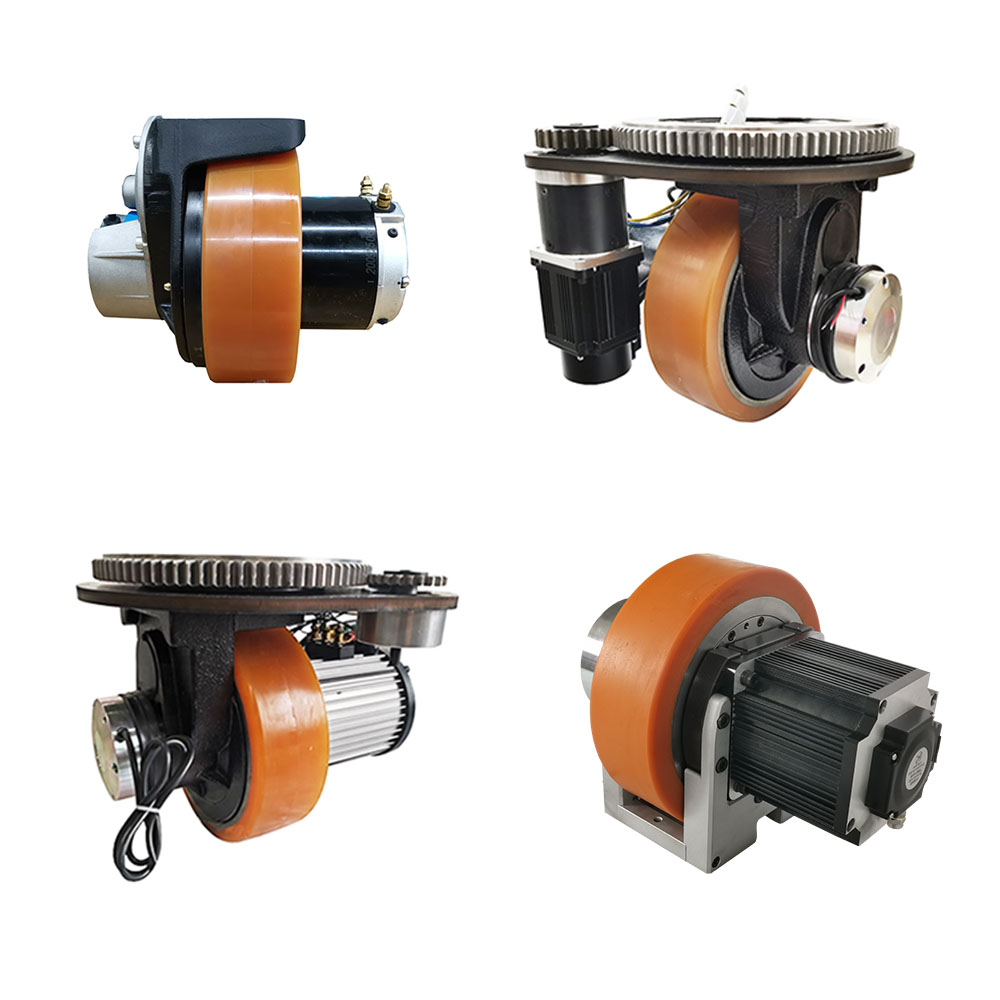
TZBOT 750W 1000KG Load Capacity Horizontal Drive Wheel Assembly AGV Wheel for Wholesale Automated Guided Robot
A value-oriented horizontal drive wheel assembly for repeatable AGV builds and series production. For Hai Phong integrators standardizing a platform, batch consistency, encoder options, brake choice and test records matter as much as the headline 750W motor rating.
- 750W motor
- 1000 kg load
- Wholesale assembly
Need a mixed bill of materials? Send your gross vehicle weight, target speed, ramp angle, battery voltage and chassis drawing; our engineers will match drive wheel, driver, sensor and brake options for a Hai Phong deployment.
Get CatalogWhy Hai Phong Is a Different AGV Accessory Market
Hai Phong is no longer only a port gateway. It is a combined port-logistics, industrial-park and urban distribution market where AGV accessories must survive humidity, salt air, mixed floor friction and fast route changes.
For procurement teams in Hai Phong, the easy part of buying an AGV accessory is comparing wattage, voltage and load capacity on a quotation. The difficult part is predicting how a drive wheel, controller and sensor set will behave after six months in a warehouse near Lach Huyen, a forklift route beside Dinh Vu, or a cold-chain room where condensation forms every shift. Localized engineering is therefore not a marketing phrase; it is a set of measurable choices around tread material, bearing protection, sealing, braking logic, mounting height and route infrastructure.
Our experience since 2015 in drive and motion technology shows that buyers often separate the drive wheel from the motor driver and navigation sensor. That creates integration risk. A wheel rated for the payload may still lose traction because the tread is wrong for a polished epoxy aisle. A controller may be powerful enough for the motor but poorly tuned for a 48V battery pack with voltage sag during peak pallet handling. A magnetic guidance sensor may be accurate on a clean floor but confused by metallic dust near a container-yard workshop. Hai Phong’s industrial settings reward suppliers who treat the drive train as one system.
A second local reality is that Hai Phong projects often run in phases. A 3PL tenant may start with magnetic tape for a fixed cross-dock route, then add laser SLAM AMRs when the rack layout changes. An automotive supplier may begin with a horizontal drive wheel on a low-clearance chassis, then request a 2000 kg or 3000 kg differential wheel for a heavier product line. This phased pattern makes modularity and documentation more valuable than a single low price. Wiring diagrams, driver parameter files, maintenance access and spare-part traceability reduce downtime when Vietnamese integrators and factory technicians take over daily operation.
“A drive wheel that performs on a dry test floor in Zhejiang can still be the wrong specification for a Hai Phong warehouse with condensation, mixed epoxy patches and 24/6 pallet turns.”
Finally, Hai Phong buyers increasingly ask for information gain, not just a catalogue. They want to know which wheel type shortens commissioning, how to estimate ambient humidity effects, how to compare total cost over five years, and which parts should be held as spares. The sections below answer those questions with local scenarios, a selection framework, company evidence and procurement FAQs.
Information gain: the three filters we apply
Salt-air and humidity footprint
Port-adjacent operations are not the same as inland factories. We ask about distance from the coast, door-open time, washdown and condensation cycles before recommending sealing and surface protection.
Floor friction and contamination
Epoxy, concrete, expansion joints, pallet debris and metallic dust change traction. Wheel diameter, tread compound and suspension have to match the floor, not only the payload.
Duty cycle and recovery time
Hai Phong logistics often runs long shifts with short charging windows. Controller current, brake release, spare battery strategy and maintenance access become part of the accessory specification.
Where AGV Accessories Are Used Across Hai Phong
Each site type creates a different failure mode. Matching the accessory to the scenario is more reliable than buying one universal wheel for every vehicle.
Port and container-yard support
At Lach Huyen, Dinh Vu and Cat Hai, AGV and forklift accessories face high dust, salt air, wind-driven rain and repeated dock-leveler impacts. Prioritize traction, sealed connectors, robust suspension and an inspection plan for exposed fasteners.
3PL and distribution warehouses
Cross-docking warehouses around Dinh Vu and Nam Cau Kien need predictable stops, high cycle counts and low floor marking. Horizontal drive wheels and differential units can balance low deck height with stable pallet movement.
Electronics and automotive lines
Factories in Trang Due, VSIP Hai Phong and Deep C often reconfigure cells faster than fixed conveyors can follow. Laser SLAM AMRs and compact composite robots reduce route infrastructure and support flexible material transfer.
Cold chain and food logistics
Cold rooms create condensation that changes floor grip and stresses electrical enclosures. Ask for sealed connectors, condensation review, suitable tread and a maintenance schedule that checks brake release and cable routing.
Heavy industry and building materials
Steel, tire, cement and construction-material sites often have ramps, dust and rough joints. A 2000–3000 kg differential or steering drive wheel with appropriate reducer and brake becomes a better basis than a high-speed light-duty unit.
Medical, clean and light assembly
Clean areas value smooth motion, low particle generation and low marking. Imported polyurethane treads, precise servo response and matched drivers help maintain repeatable station stops without adding floor guidance.
Local Trends That Change How AGV Accessories Are Specified
Hai Phong’s growth is not a single boom in one sector. Port investment, manufacturing relocation, e-commerce and labor change interact, which is why accessory demand is shifting toward modular and serviceable designs.
Port-led logistics automation
As container throughput and industrial-zone traffic grow, warehouses and yards look for repeatable material movement between gates, staging areas and production lines. Accessories must tolerate dust, humidity and high cycle counts rather than only showroom conditions.
Phased retrofits over full rebuilds
Many Hai Phong buyers begin with a few AGVs or a manual forklift conversion before scaling. This favors drive wheels, controllers and sensors that can be swapped or tuned later without redesigning the entire chassis.
More SKUs, faster layout changes
Electronics, auto parts and e-commerce fulfillment bring more product variants and shorter campaign cycles. Laser SLAM and modular AMR platforms reduce the cost of changing routes when racks move between seasons.
Safety, energy and maintenance focus
Factory teams increasingly evaluate brake logic, emergency-stop integration, battery voltage sag, energy efficiency and spare-part access. A lower-priced accessory that causes unplanned downtime is no longer accepted as a bargain.
From Hai Phong Floor Conditions to a Matched Drive Train
Use this local fit matrix as a first screen. Final selection still requires load calculations, floor survey, route review and controller matching.
Local scenario fit matrix
Inputs that shorten sampling
- 01Gross vehicle weight and payload: include attachments, battery, pallet and peak load, not only the rated AGV payload.
- 02Speed, acceleration and ramp angle: a small ramp with wet flooring can change traction and brake requirements.
- 03Battery voltage and duty cycle: 24V, 48V and 60V systems behave differently under peak current and charging windows.
- 04Chassis height and mounting envelope: horizontal, differential and steering units require different space and service access.
- 05Floor and environment: epoxy vs. concrete, joints, metallic dust, humidity, condensation, washdown and ambient temperature.
Share these five inputs with your target route and required documentation. That is enough to begin a written drive-train recommendation instead of a generic price sheet.
Total cost of ownership is not the purchase price per wheel
In Hai Phong, the cost of an unplanned AGV stop can exceed the price difference between a basic wheel and a properly sealed, serviceable assembly. A practical TCO review includes commissioning time, spare parts, brake maintenance, tire or PU replacement, driver tuning, energy losses and the labor needed to re-teach routes after layout changes. Our application engineers support this review by sharing drawings, motor parameters and inspection points so that local integrators can plan maintenance before the first production shift.
For buyers comparing local assembly with imported components, ask for traceability of motor power, voltage, reduction ratio, encoder type, brake option and mounting interface. These details determine whether a replacement wheel can be installed without modifying the chassis. A product that looks identical in a photo may have a different shaft, bolt pattern or connector, which turns a simple spare-part order into a line-stop risk.
Four Practical Configurations for Hai Phong Projects
These are not universal kits. They illustrate how product families can be combined after a survey of payload, floor, route and maintenance capability.
Port-adjacent forklift retrofit
Start with a 1000 kg bearing-duty suspension drive wheel for dock transitions, then review the 3000 kg differential unit if heavy pallets or ramps dominate. Include a salt-air inspection schedule.
Low-height latent AGV
Use a compact horizontal drive wheel with imported polyurethane when under-ride clearance is tight. For series builds, the 750W 1000 kg assembly offers a repeatable platform with configurable encoder and brake options.
Fixed-route material handling
For rented warehouses with stable routes, a 500 kg magnetic guidance lurking AGV can reduce infrastructure cost. Add RFID tags at stations and junctions, and validate floor tape protection in high-traffic areas.
Flexible AMR production cell
Choose laser SLAM navigation when line layout changes frequently. Pair an 80 kg AMR for light material with a 1000 kg composite chassis when an integrated arm or mobile workstation is required.
Why Zhejiang Torqen Technology Is a Practical Partner for Hai Phong Buyers
Founded in 2015, Zhejiang Torqen Technology Co., Ltd. is a manufacturer and trading company focused on AGVs, AGV drive wheel assemblies, DC/AC motors, servo and BLDC controllers, navigation sensors and accessories. We help overseas integrators reduce the integration risk that comes from buying each motion component from a different supplier.
One factory for the drive train
System matching: AGVs, differential and steering drive wheels, horizontal units, motors, drivers, magnetic/RFID/lidar sensors and spare parts can be specified together, with fewer interface surprises.
OEM / ODM customization
Specification fit: sample-based and design-based customization for motor power and voltage, reduction ratio, wheel diameter and tread, encoder type, brake options, mounting interfaces and buyer-label packaging.
Verified quality evidence
Traceable production: ISO 9001:2015 quality management, Intertek onsite-verified facility, 8 awarded patents, five in-house testing instruments, finished-product inspection and extended-duration prototype testing.
Export-ready commercial support
Flexible terms: T/T, L/C, D/P, D/A, credit card, PayPal, Western Union and other methods in multiple currencies; FOB, CFR, CIF, EXW, CIP, FCA, CPT, DDU and express delivery.
Established in Zhejiang, China
Patents awarded through in-house R&D
In-house testing instruments for inspection
Inquiry response rate with 4.9/5 buyer rating

Factory and office base: 1,000–3,000 m² operation with a 51–100 person team and US$5M–10M annual output scale.
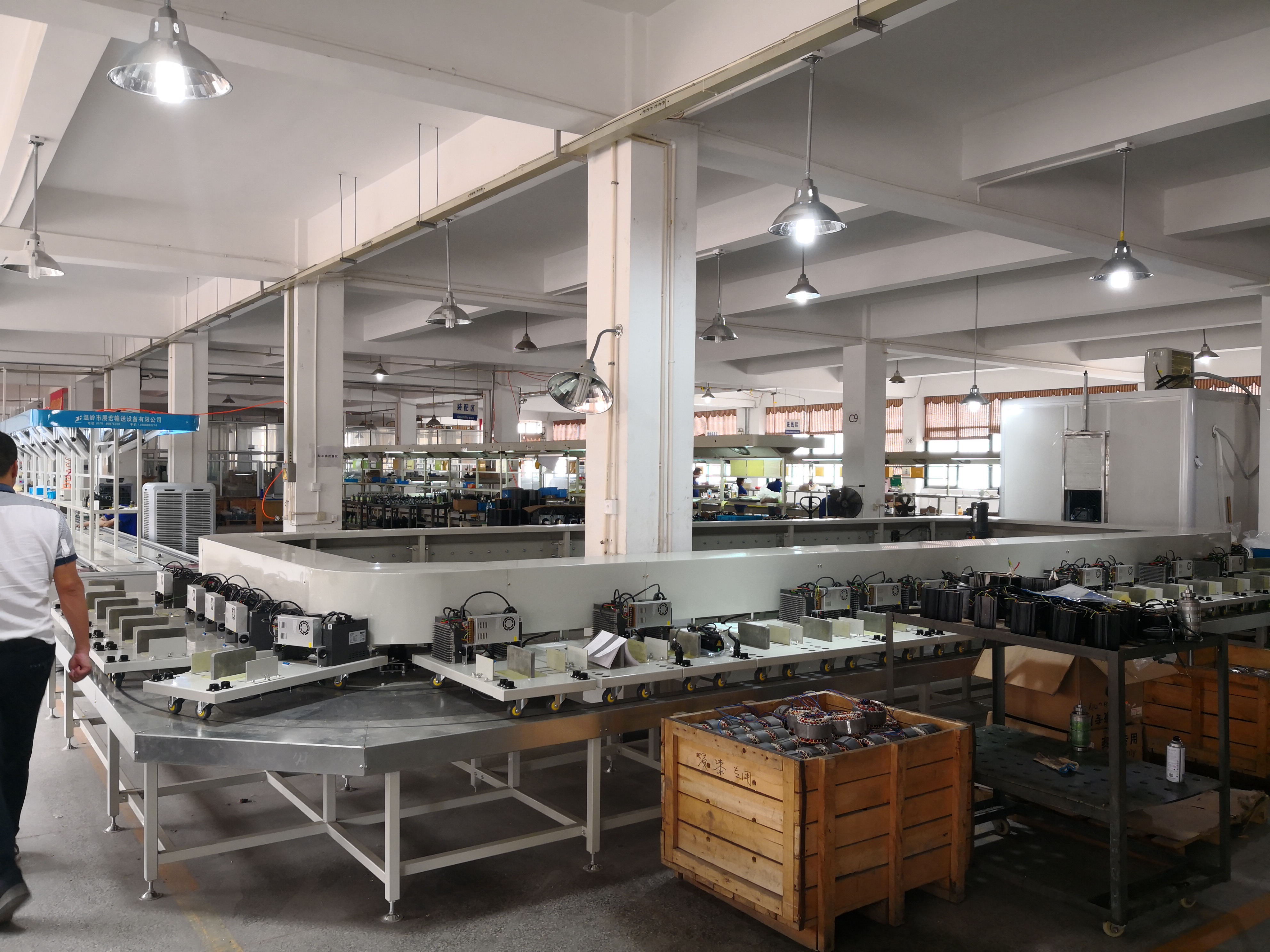
Drive wheel assembly workshop: motor, reducer, wheel and mounting interfaces matched before shipment.
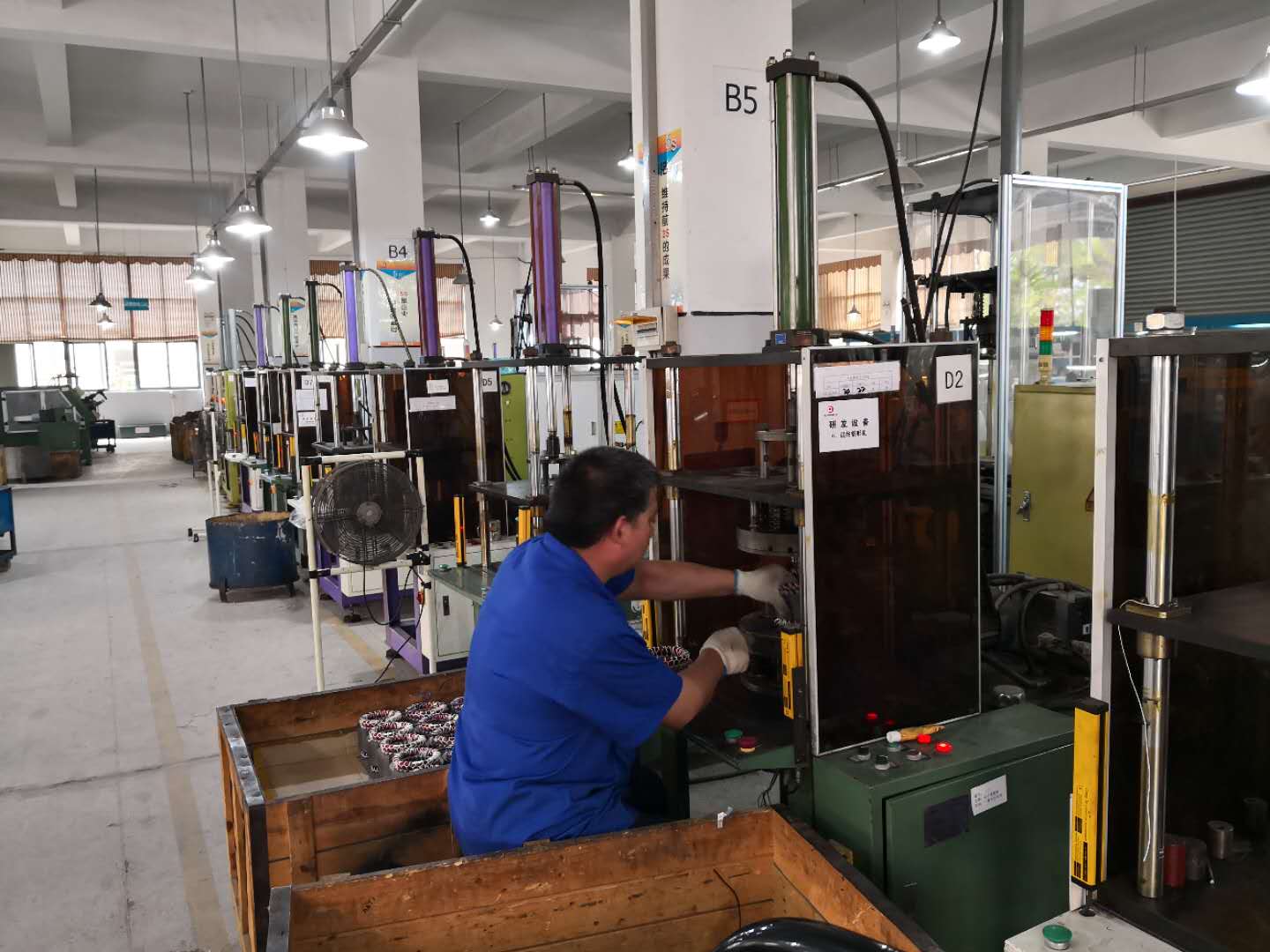
Engineering and inspection area: prototypes undergo extended-duration testing before production release.
Questions Hai Phong Buyers Ask Before Ordering AGV Accessories
These answers reflect common purchasing, engineering and logistics questions from Vietnam-based automation builders, factories and 3PL operators.
Can you deliver AGV accessories to Hai Phong and northern Vietnam?
Yes. We export to Vietnam and can quote delivery to Hai Phong port, Dinh Vu, Lach Huyen or a factory address in northern Vietnam. Typical terms include FOB, CIF, EXW, CFR, CIP, FCA, CPT, DDU and express delivery. Buyers should confirm the current HS code, import VAT and origin documentation with their customs broker before shipment.
What specifications should we send first for an accurate recommendation?
Send gross vehicle weight, payload, target speed, acceleration, ramp angle, battery voltage, wheel diameter limit, chassis height, floor material, cleaning method, ambient humidity and duty cycle. A simple sketch of the mounting envelope and the required brake or encoder logic prevents most sampling errors.
Which drive wheel type fits port-adjacent operations and 3PL warehouses?
Forklift and tugger layouts often suit a suspension drive wheel or steering drive wheel. Compact latent AGVs benefit from a horizontal assembly. Heavy differential platforms use two independent wheels. The correct answer depends on turning method, floor friction, clearance and service access, not only the load rating.
How do you address humidity, salt air, dust and floor cleaning?
We start with an environmental review: distance from the coast, door-open time, condensation, washdown chemicals, dust type and temperature range. Then we discuss sealing, connector protection, surface treatment, tread compound, brake selection and inspection intervals. Final site validation remains the buyer’s responsibility with local EHS and maintenance teams.
Do you support OEM, ODM and mixed bill-of-materials orders?
Yes. We support sample-based customization, design-based customization, OEM production, design services and buyer-label packaging. Common changes include motor power and voltage, reduction ratio, wheel diameter, tread material, encoder, brake and mounting interface. MOQ and lead time depend on the selected configuration and should be confirmed in the written quotation.
How is quality verified before shipment?
Our quality management system is certified to ISO 9001:2015, and our facility has been verified onsite by Intertek. We use five in-house testing instruments, run finished-product inspection and test prototypes for extended durations before production release. Request the inspection items and test records relevant to your order.
What payment, shipping documents and after-sales support are available?
Accepted payment methods include T/T, L/C, D/P, D/A, MoneyGram, credit card, PayPal, Western Union, cash and escrow in USD, EUR, JPY, CAD, AUD, HKD, GBP or CNY. We provide export documents, wiring diagrams, driver parameter guidance and spare-part support. Warranty and service terms are confirmed in the quotation and contract.
Can your accessories integrate with existing AGV or AMR platforms?
Often yes, but compatibility must be checked at the electrical and mechanical interface. Share motor voltage, rated current, encoder type, connector pinout, brake voltage, wheel mounting pattern and controller brand. If the existing controller cannot be tuned to the new wheel, we can quote a matched servo or BLDC driver instead of forcing an incompatible combination.
Build a Hai Phong-ready AGV Drive Train With One Factory
Send your payload, speed, ramp, voltage, chassis height and floor conditions. Our team will review the application and propose a matched combination of drive wheel, servo or BLDC driver, navigation sensor and brake option. For buyers comparing multiple local projects, request the catalogue with product families, trade terms and customization options.
