What lead time should a Palembang buyer expect?
For catalogue drive wheels and controllers, production is typically 15–25 days after drawing approval. Custom stacker platforms or OEM wheel flanges usually need 30–45 days, depending on motor and reducer availability. Sea freight from Ningbo/Shanghai to Palembang via Jakarta or Singapore is commonly 12–20 days plus clearance; air express for urgent spares is usually 5–8 days. We confirm the working schedule in the quotation because buyers often combine several SKUs in one shipment.
Can the equipment handle Palembang's humidity and dust?
Yes, if the specification is written for the environment. We recommend IP54 minimum for dusty or humid areas, sealed connectors, anti-corrosion fasteners and protected breathers. Avoid high-pressure washdown on components that are not rated for it. For long storage, use desiccant and inspect the charger cabinet for condensation. In flood-prone yards, raise chargers and control cabinets above the anticipated water line and review route drainage before commissioning.
Which drive wheel should I choose for a 1.5–2 t stacker?
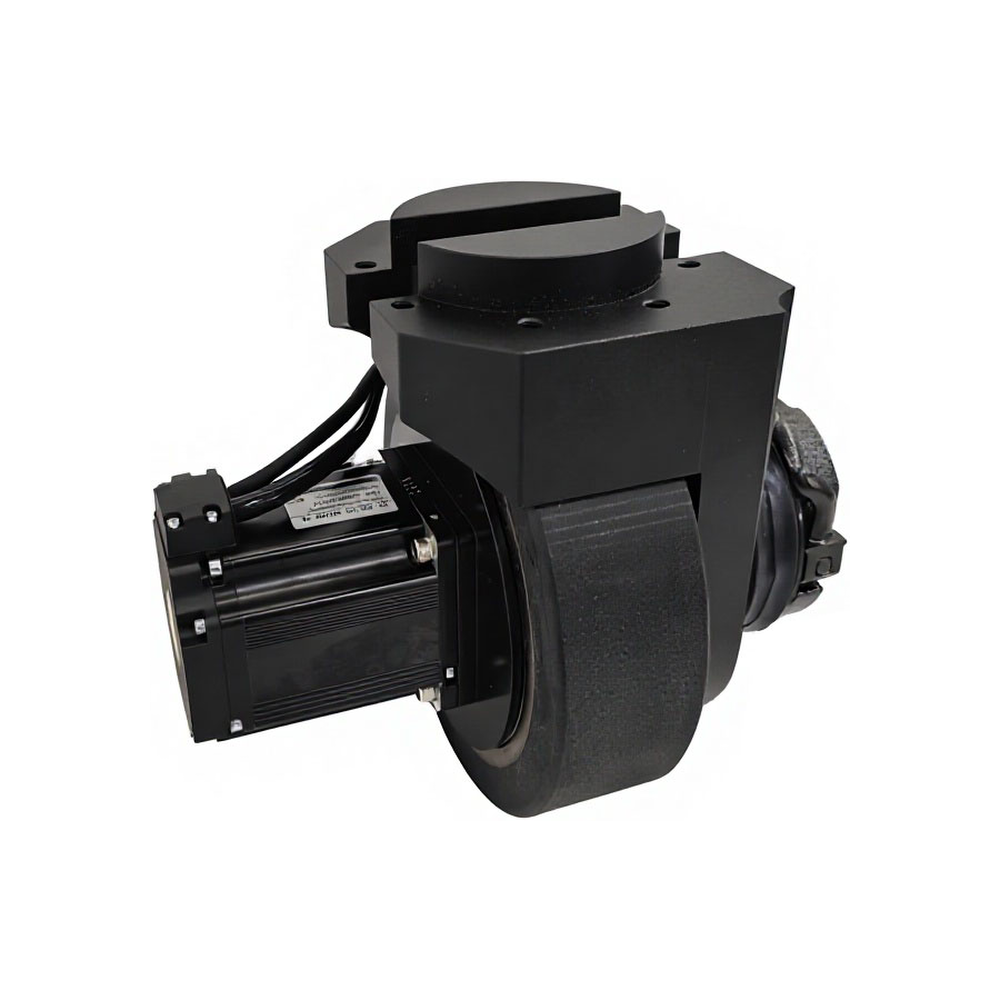
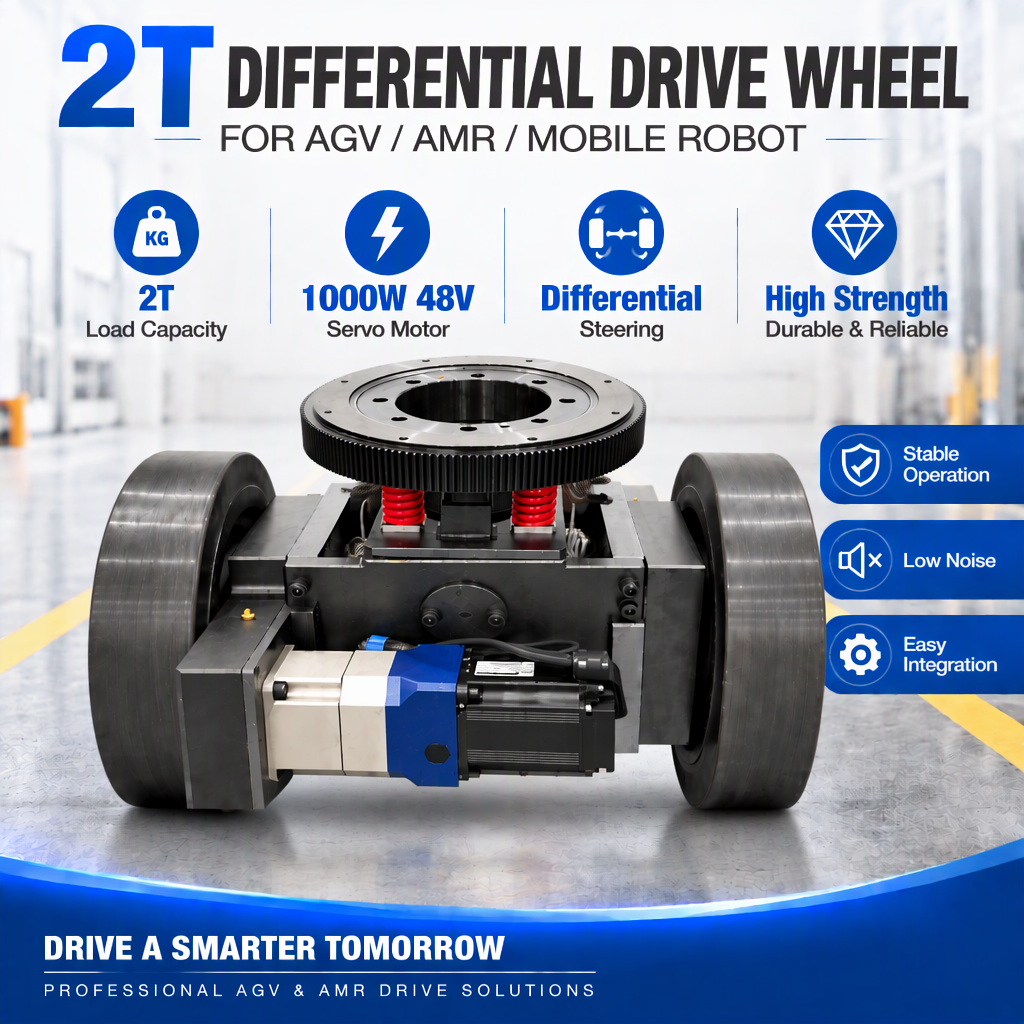
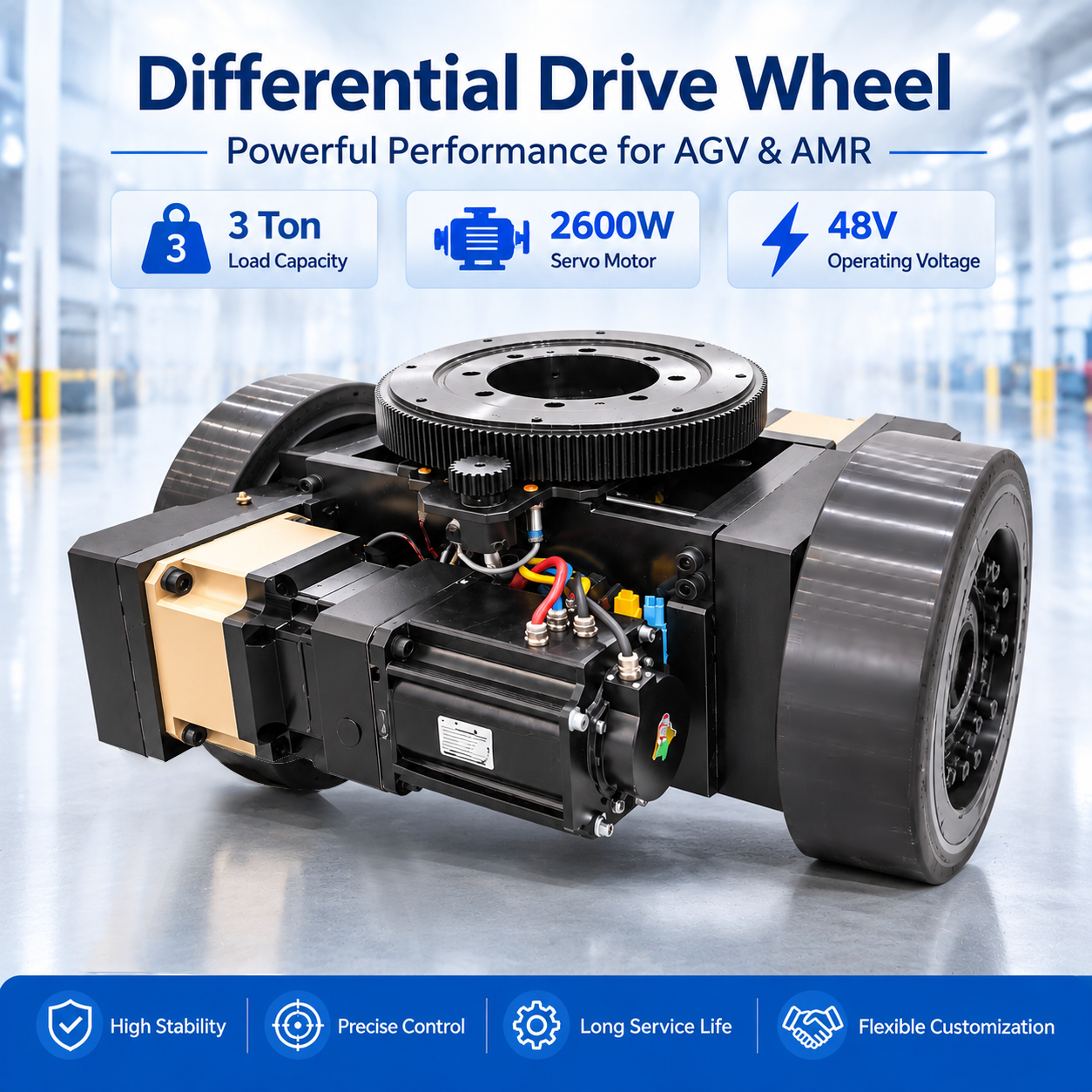
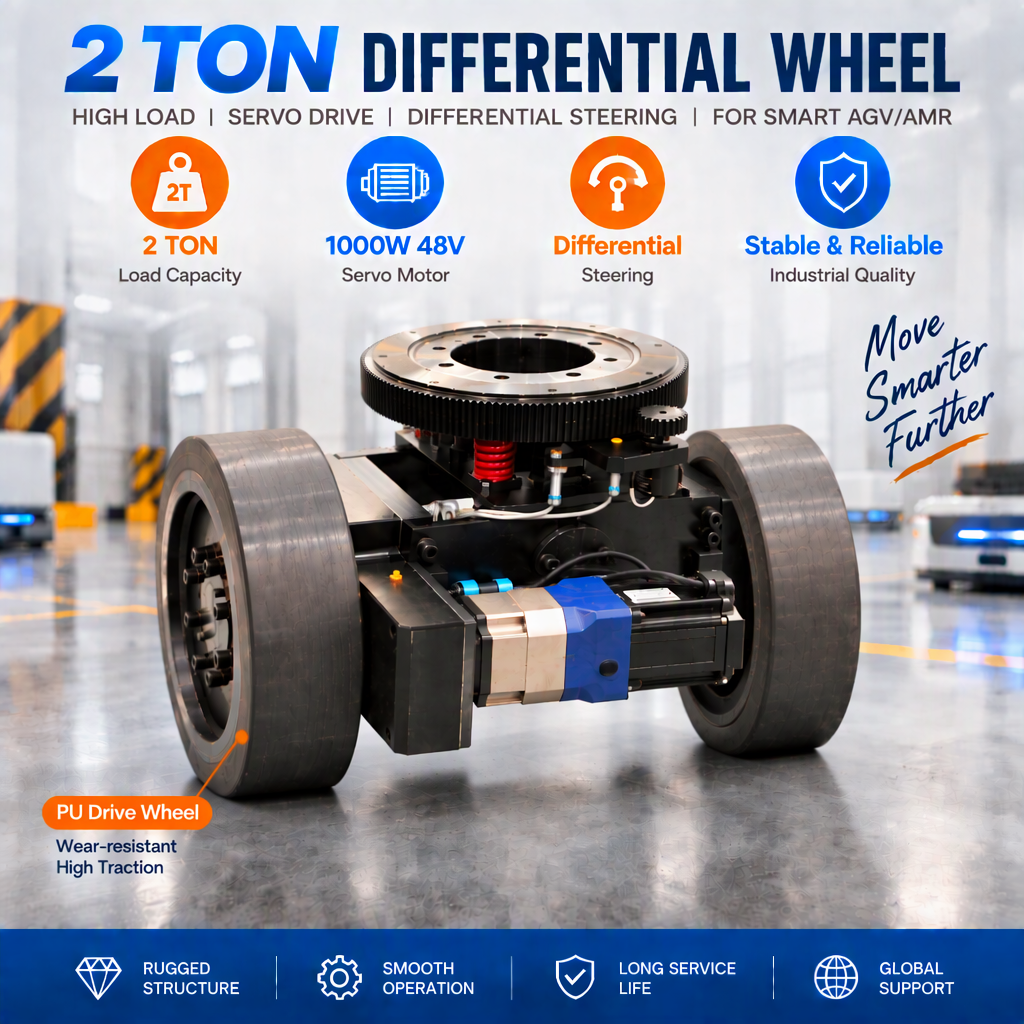
Start with the load centre and aisle, not the motor kW. A 1.5–2.0 t stacker in a 2.5–2.8 m aisle usually benefits from a differential steering wheel because it can turn tightly and hold a controlled angle. A low-deck chassis may need a horizontal drive assembly. If floors are uneven, add spring suspension. Share the gross vehicle weight, wheel diameter, ramp grade and floor flatness with our engineers; they will confirm the ratio and tread.
Do you support 380V/50Hz and local charging?
The traction system is typically 48V DC. The charger can be specified for 220V single-phase or 380V three-phase, 50Hz, to match the site supply. We provide the charger input, current and plug specification so your local electrician can prepare the circuit. For Palembang sites with voltage dips, add surge protection and confirm the breaker rating. Battery chemistry, opportunity-charging profile and charging window should be decided before the stacker platform is finalised.
What spare parts should we stock?
For a first fleet, stock one drive wheel assembly, one controller, one navigation sensor, one charger module and a set of fuses/contactors. If the site runs two or three shifts, add a motor or reducer and a spare wheel tread. Record the machine serial number and controller parameters. Remote diagnosis is faster when the maintenance team can send photos, fault codes and a short video of the symptom.
How do you handle installation and operator training?
We supply wiring diagrams, parameter files and commissioning guidance. Most integration issues can be resolved by video call, especially for drive pairing, encoder direction and sensor alignment. For multi-unit projects, we can discuss onsite support through our regional partners or a factory visit for the integrator's engineers. Operator training should cover daily checks, emergency stop, manual recovery and wheel wear limits — not only start/stop.
What payment and delivery terms are accepted?
Accepted terms include T/T, L/C, D/P, D/A, credit card, PayPal, Western Union, cash and escrow, subject to the final proforma invoice. Delivery can be quoted FOB, CFR, CIF, EXW, CIP, FCA, CPT, DDU or express. Currency options include USD, EUR, JPY, CAD, AUD, HKD, GBP and CNY. For Indonesian buyers, we recommend confirming the importer of record, HS code and tax documents before shipment.
How do I calculate ROI for replacing manual stackers?
Build a five-year comparison using labour cost per shift, forklift lease or depreciation, energy, maintenance, battery replacement, downtime and floor damage. Automation usually wins on repetitive two- or three-shift flows, but not on low-volume, highly variable routes. Our engineering team can help structure the comparison from your actual cycle count and charging window. The result should be a range, not a single number, because labour and energy inputs change.