China Top Automated Material Handling Factories & Exporters in the Cologne Market
A practical, engineering-led guide for Cologne and Rhine-Ruhr buyers comparing AGVs, AMRs, drive wheels, servo controls and navigation components from China — with product recommendations, localized application scenarios, procurement trends and export-ready quality evidence.
Eight Automated Material Handling Products for Cologne Integrators
These eight products cover common Cologne buying intents: fixed-route warehouse transport, flexible SLAM AMR pilots, mobile manipulation, high-load drive platforms and retrofit-friendly drive modules. Product links are preserved so engineering teams can review exact specifications.
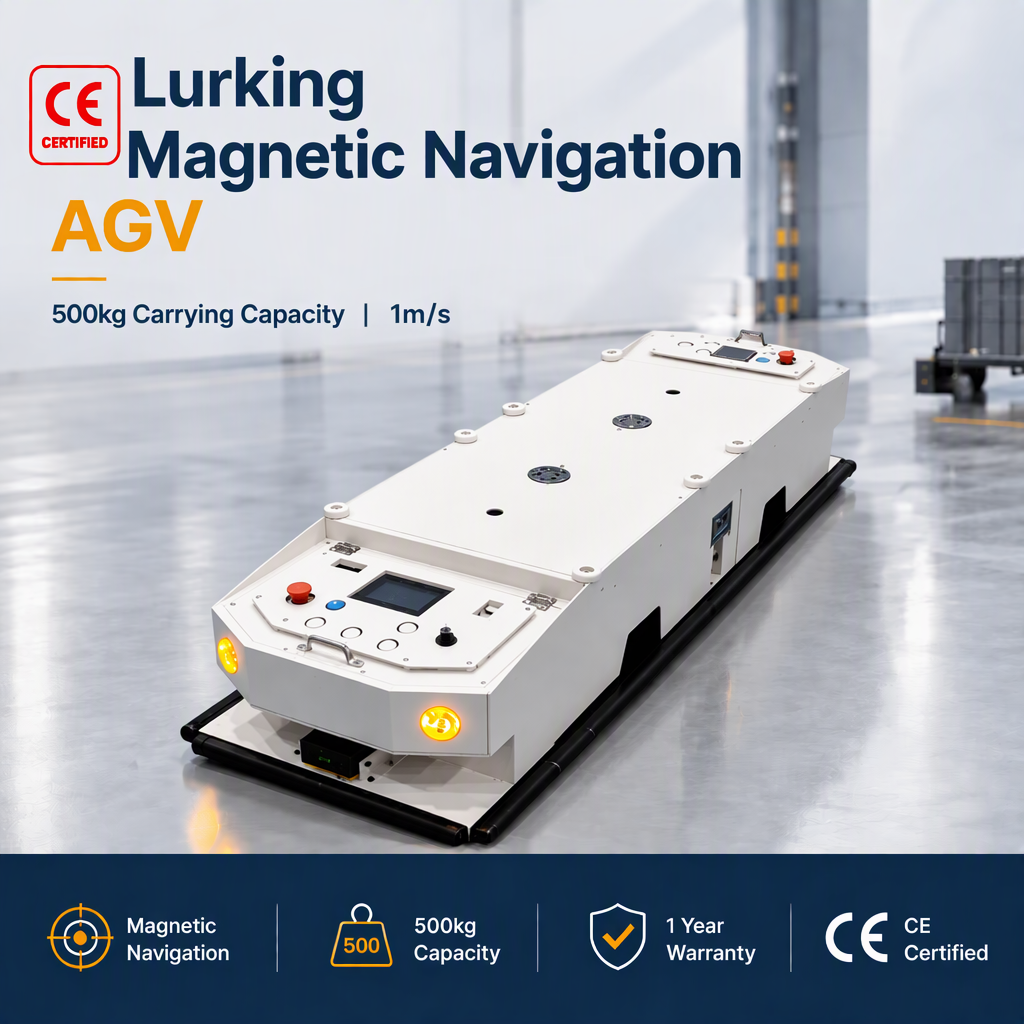
TZBOT EU CE Lurking AGV Material Handling Equipment Logistic Automation 500kg Bidirectional Magnetic Guidance Mobile Robot
A 500kg bidirectional magnetic-guidance platform for compact warehouse aisles, line-side replenishment and repeatable material movement. Recommended when a Cologne project needs fast deployment with familiar latent AGV architecture.
- 500kg
- Magnetic guidance
- Bidirectional
- EU CE model
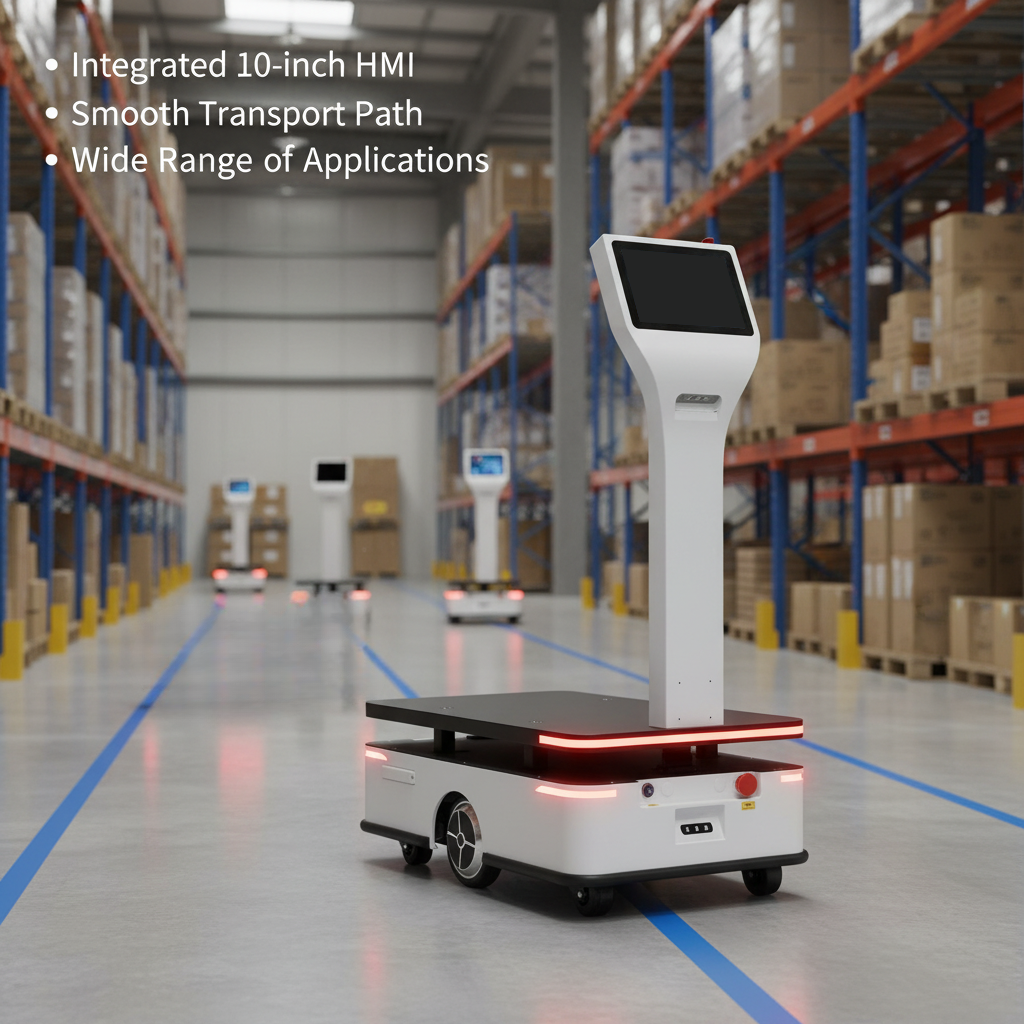
TZBOT Intelligent Warehouse Logistic Robot Unmanned Control System Customizable 80kg Payload agv Transfer Cart Slam Amr
An 80kg payload SLAM AMR transfer cart for changing routes, e-commerce micro-fulfillment, assembly kitting and intelligent warehouse logistics. A useful first-stage AMR platform when Cologne buyers want flexibility before scaling fixed infrastructure.
- 80kg payload
- SLAM AMR
- Customizable
- Unmanned control
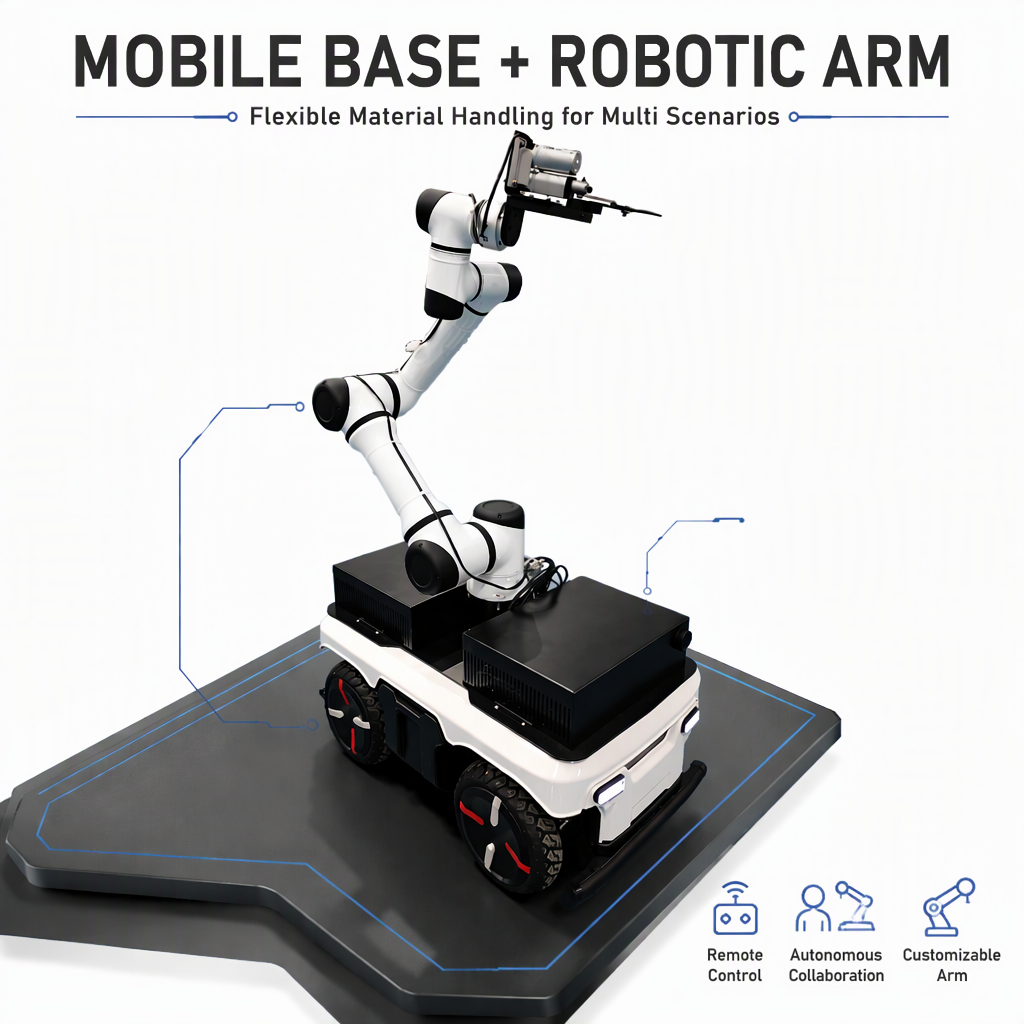
TZBOT Four Wheel Drive Ackerman Chassis AGV Collaborative Remote Control Composite Robot with Arm
A four-wheel-drive Ackerman chassis with collaborative arm for mobile picking, machine tending and tasks beyond simple transport. Suitable for integrators in NRW evaluating composite robots that combine mobility with a small manipulator.
- Ackerman chassis
- 4WD
- Collaborative arm
- Remote control
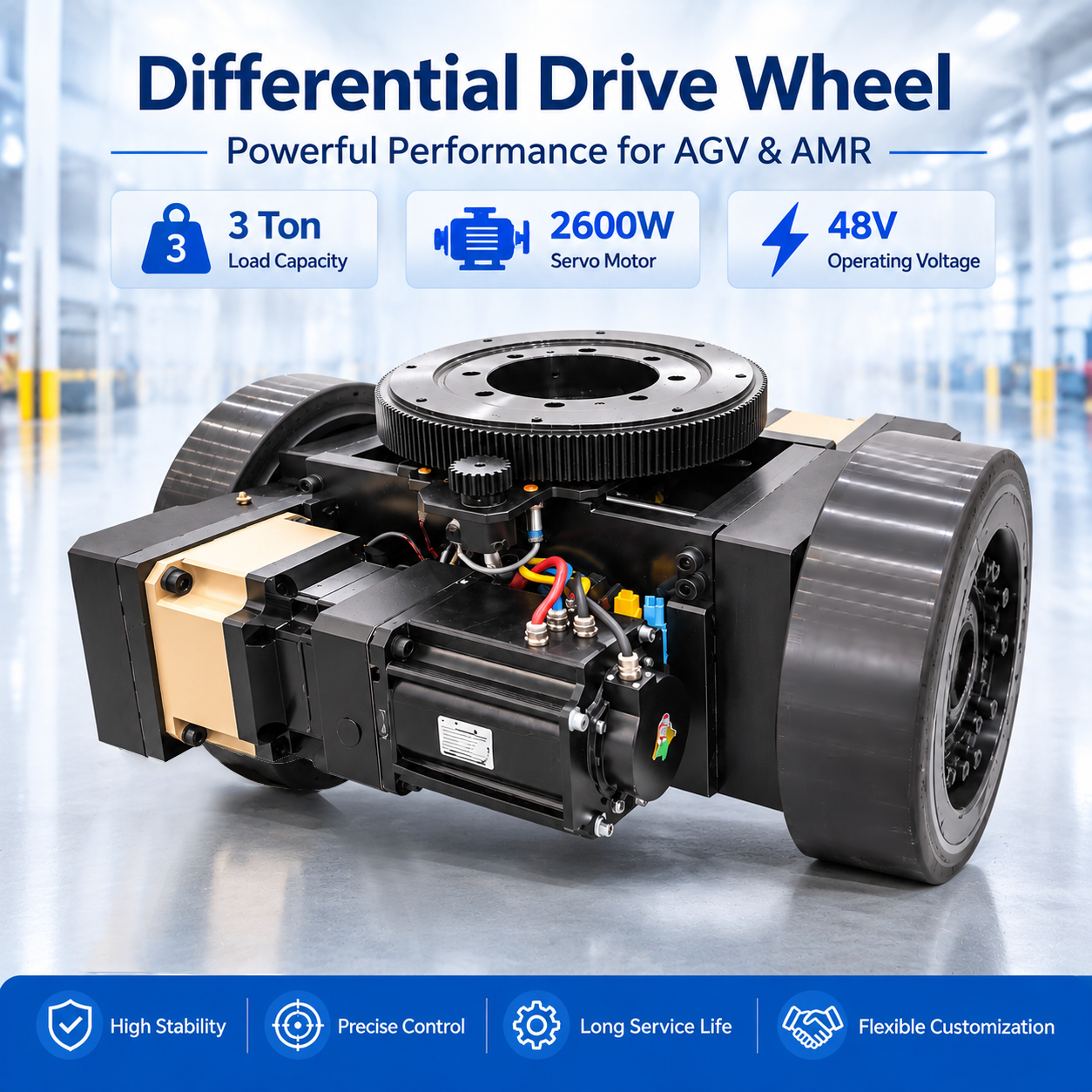
TZBOT Customizable 3000kg Load Capacity agv Wheel Automatic Guided Vehicle Differential Drive Wheel with 2600w 48V Servo Motor
A customizable 3000kg load-capacity AGV wheel with 2600W 48V servo motor for pallet-scale material flow and industrial chassis builds. Recommended for OEMs that need high traction and a serviceable differential drive module.
- 3000kg load
- 2600W 48V
- Differential drive
- Customizable

TZBOT 48V DC 2 Ton Heavy Duty Differential Unit AGV Wheel TZCS-750-30
A 48V DC 2-ton heavy-duty differential unit for robust logistic robots and retrofit projects. A practical drive building block when a Cologne integrator needs export-ready spare parts and a clear mechanical interface.
- 2-ton class
- 48V DC
- TZCS-750-30
- Heavy duty
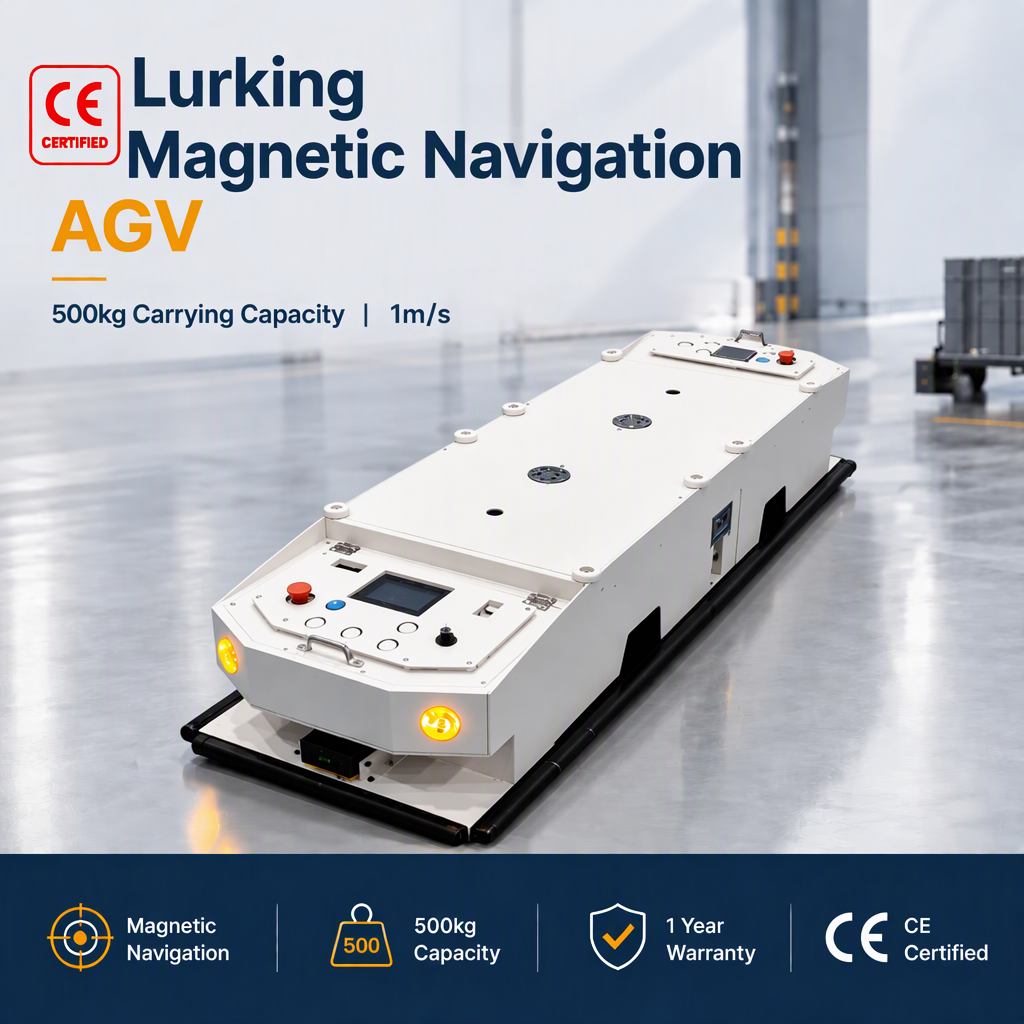
TZBOT CE Approved 500kg Bidirectional Lurking Robot 500kg Towing Capacity Material Handling Equipment Magnetic Navigation AGV
A CE-approved 500kg bidirectional lurking robot with magnetic navigation and towing capacity. Recommended for repeatable tugger routes, warehouse transfers and production replenishment where documented compliance evidence is part of the buying decision.
- 500kg towing
- CE approved
- Magnetic navigation
- Bidirectional
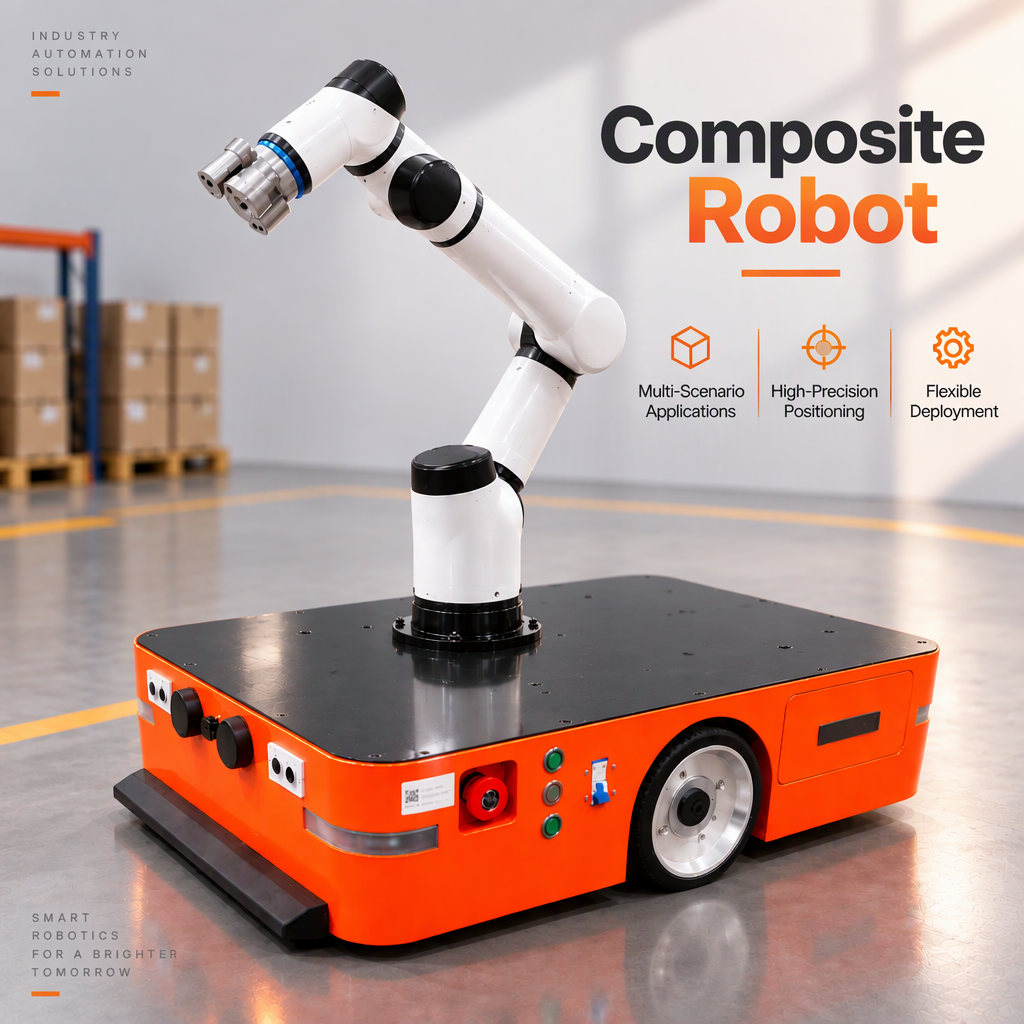
TZBOT Backpack AGV 200kg Load Capacity Chassis Magnetic Guidance Composite Robot with Robotic Arm
A 200kg backpack AGV chassis with magnetic guidance and robotic arm. This format suits compact assembly cells, laboratory material movement and high-mix production where the robot carries both the load and a small manipulator.
- 200kg load
- Backpack chassis
- Magnetic guidance
- Robotic arm
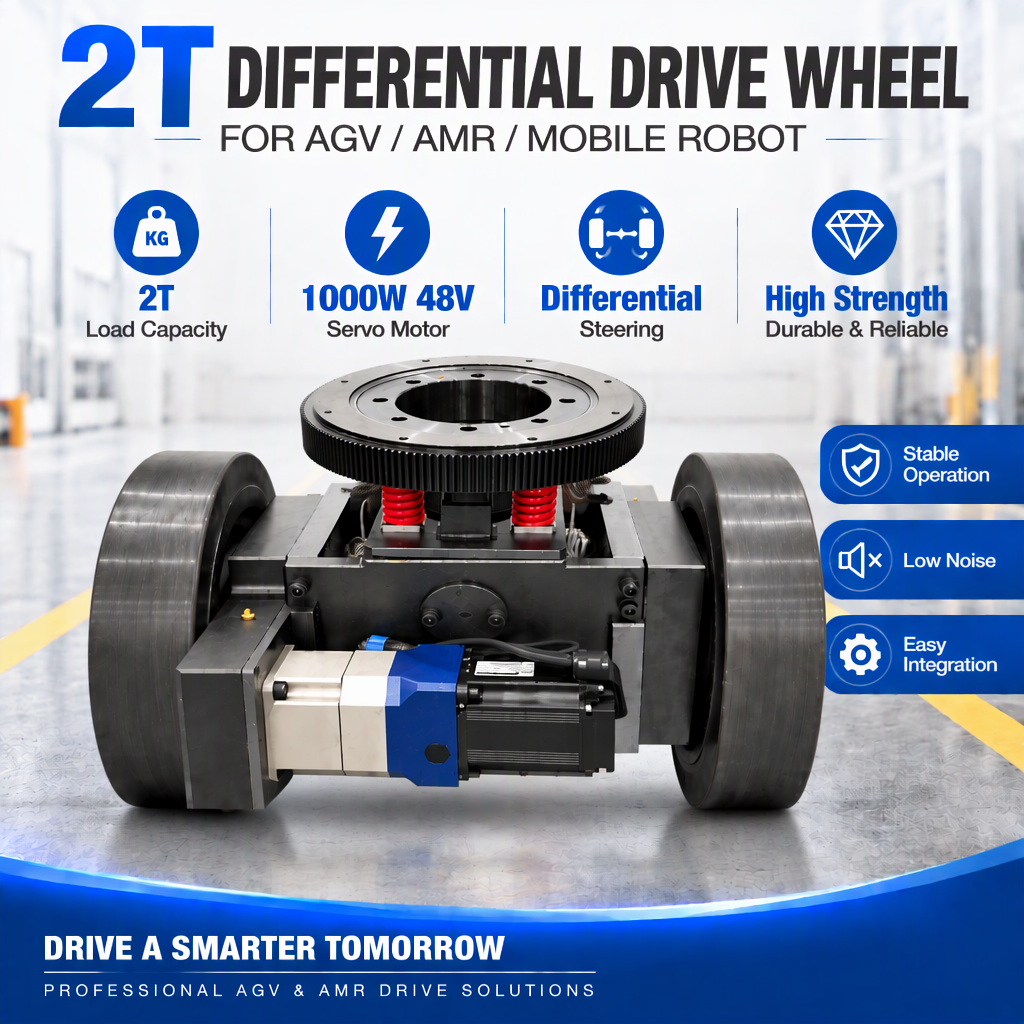
TZBOT 2000kg Traction Capacity Logistic Robot Part agv Amr Differential Steering Drive Wheel for Sale
A 2000kg traction-capacity differential steering drive wheel for logistic robot parts. Selected by AGV and AMR builders that need a steerable, high-load drive module with an export-friendly bill of materials and matched control options.
- 2000kg traction
- Differential steering
- AGV / AMR part
- Export-ready
What Cologne Buyers Are Really Solving Beyond the Product Search
In the Cologne market, automated material handling is not a catalogue decision. It is a total-cost, compliance and integration decision shaped by warehouse constraints, labour availability, safety rules and supplier responsiveness.
Buyers searching for China Top Automated Material Handling Factories & Exporters in the Cologne market usually begin with a narrow request: an AGV, an AMR transfer cart, a heavy-duty drive wheel or a magnetic guidance robot. The real intent behind that search is broader. Cologne sits inside the Rhine-Ruhr economic corridor, where logistics operators, automotive suppliers, chemical and pharmaceutical producers, food distributors and trade-fair service providers all need dependable material flow. They are not only buying a machine; they are buying fewer stoppages, faster model changes, lower integration risk and evidence that the exporting factory can support a German or EU-wide deployment.
That is why product specifications alone are not enough. A 500kg lurking AGV may look similar across suppliers, but the practical difference often sits in the drive wheel, motor, encoder, controller matching, spare-parts continuity and how quickly the supplier answers an integration question. For Cologne procurement teams, the strongest offers usually combine export-grade documentation, CE-focused project review, serviceable mechanical design and a realistic path from sample testing to repeat production. This is the information gain that separates a useful sourcing article from a plain product list.
The sourcing decision also depends on the physical setting. A brownfield warehouse near Cologne may have low clearance, narrow aisles, uneven floors and existing WMS or MES software. A new distribution centre may prioritize fast throughput, battery strategy and mixed-fleet safety. A trade-fair logistics team may need temporary routes and quick redeployment. A machine builder may need only a 2000kg steering drive wheel or a 2-ton differential unit, not a complete vehicle. The right Chinese exporter should therefore behave like an engineering partner: willing to review load, speed, gradient, voltage, chassis height and communication requirements before quoting.
Greenfield warehouse automation
Cologne operators building new intralogistics systems compare throughput, battery strategy, fleet software and spare-parts access. Product recommendation: 500kg magnetic AGV and 3000kg drive wheel for distinct payload zones.
Brownfield AGV retrofit
Existing buildings often need compact drive units, low-clearance configurations and readable wiring. Product recommendation: 2-ton differential unit and 2000kg steering drive wheel for OEM chassis retrofits.
Trade-fair and event logistics
Cologne’s event and exhibition activity rewards fast deployment and repeatable routes. Product recommendation: CE-approved 500kg bidirectional lurking robot and 80kg SLAM AMR transfer cart.
Mixed-fleet integration
German buyers rarely automate one island. They need components that fit existing traffic rules, chargers, safety scanners and PLC architectures. Product recommendation: matched drive wheel, servo driver and navigation sensor packages.
Application Scenarios Across Cologne and the Rhine-Ruhr Region
Cologne is a gateway for intralogistics, manufacturing and cross-border distribution. These localized scenarios help buyers map product choices to real operating conditions rather than brochure specifications.
Contract logistics and cross-docking
Cologne and nearby Rhine-Ruhr logistics hubs handle high volumes of pallet and tote movement. Magnetic-guidance AGVs are useful for fixed replenishment loops, while AMR transfer carts suit changing SKU zones. Buyers should compare floor preparation, route length and battery-exchange strategy before choosing magnetic or SLAM navigation.
Automotive and supplier parks
Production replenishment and returnable-container movement require predictable cycles and robust hardware. The 200kg backpack AGV with robotic arm can support compact assembly cells, while the 500kg latent AGV fits repeatable line-side routes. For chassis builders, the 3000kg drive wheel offers higher load capacity.
Food, chemical and pharmaceutical flows
For regulated or high-hygiene environments, buyers should focus on cleanable surfaces, safe obstacle avoidance, traceable components and clear maintenance access. The CE-approved 500kg lurking robot and matched magnetic/RFID navigation architecture can be evaluated for controlled-route transport, subject to the final risk assessment.
Trade fairs and temporary layouts
Cologne’s exhibition and event calendar creates projects with short set-up windows and repeated reconfiguration. A SLAM AMR transfer cart or a magnetic crawling robot can reduce manual handling, but the buying team should confirm route teaching, charging access, floor conditions and public-safety boundaries before deployment.
Localized Development Trends Cologne Buyers Should Plan For
German and EU-wide buying behaviour is moving toward evidence-based sourcing. The strongest Chinese exporters will not simply quote a product; they will align technical files, integration data and lifecycle support with the buyer’s operating model.
CE and safety evidence move earlier
Cologne buyers increasingly ask for risk assessment support, electrical schematics, EMC-related controller information, battery transport documentation and a safety concept aligned with relevant standards such as EN ISO 3691-4 where applicable. Final machine-level CE marking usually remains with the integrator, so clarity on scope is essential.
Modular drive-train sourcing
Rather than buying wheels, motors, drivers and sensors from four vendors, integrators prefer matched modules. A factory that supplies the differential drive unit, servo controller and navigation sensor can shorten commissioning and reduce finger-pointing when a fault appears during a Cologne customer acceptance test.
Brownfield retrofits and mixed fleets
Many Rhine-Ruhr facilities cannot stop production for a full rebuild. Low-clearance horizontal drive assemblies, steerable drive wheels and serviceable 2-ton differential units are therefore in demand. Buyers want drawings, mounting dimensions and spare-part identification that maintenance teams can use immediately.
Data-ready, safety-first automation
WMS, MES and ERP integration is now part of the buying brief. German buyers ask how the robot reports status, how faults are diagnosed and how safety scanners, bumpers and RFID station recognition interact. Exporters that answer these questions with diagrams and test records gain a practical advantage over catalogue-only sellers.
Why Torqen Is a Practical Factory Partner for Cologne Buyers
Zhejiang Torqen Technology Co., Ltd. was founded in 2015 and operates as a manufacturer and trading company in Zhejiang, China. The company designs and manufactures automatic guided vehicles, AGV drive wheel assemblies, DC/AC motors, encoders, reducers, motor controllers, caster and PU wheels, and in-wheel motor units for automation builders. For Cologne buyers, the value is not simply a lower unit price; it is the ability to match the drive wheel, motor, servo/BLDC controller and navigation sensor as one engineering system.
The company is certified to ISO 9001:2015 and has been verified onsite by Intertek. Torqen reports 8 awarded patents, a team of 51–100 people, a factory area of 1,000–3,000 m², annual output in the US$5M–10M range and a 97.9% inquiry response rate. Five in-house testing instruments support finished-product inspection, and prototypes are subjected to extended-duration testing before production parts are released. These facts matter when a Cologne integrator needs repeatable quality, not a one-off sample.
OEM and ODM support includes sample-based customization, design-based customization, OEM production, design services and buyer-label packaging. Typical adaptations include motor power and voltage, reduction ratio, wheel diameter and tread material, encoder type, brake options and mounting interfaces. The company also supports export logistics with payment methods such as T/T, L/C, D/P, D/A, credit card, PayPal, Western Union and escrow, and delivery terms including FOB, CFR, CIF, EXW, CIP, FCA, CPT, DDU and express delivery. For a Cologne project, those commercial options should be confirmed against the agreed Incoterm, customs broker, unloading plan and documentation pack.

A Due-Diligence Framework for Vetting China Top Automated Material Handling Factories & Exporters
Not every exporter is a factory, and not every factory is ready for a Cologne integration project. Use this framework to separate a low-cost quote from a reliable supply partner.
1. Verify factory identity and QMS
Check the legal entity, factory address, production photos, audit evidence and ISO certificate scope. An onsite verification such as Intertek is useful, but the Cologne buyer should still confirm that the exact product line is covered.
2. Match the drive train to the load case
Share load, speed, gradient, wheel diameter, chassis height and battery voltage. The correct answer may be a differential drive unit, steering drive wheel, horizontal assembly or a complete AGV platform — not simply the largest wattage.
3. Request a compliance and document pack
Confirm the CE scope, declarations, electrical drawings, controller EMC information, battery transport documents and safety concept. For EU deployments, clarify who is responsible for final risk assessment and machine-level marking.
4. Test integration and lifecycle support
Ask for wiring diagrams, parameter files, spare-part lists and a sample test plan. A supplier that supports commissioning, replacement parts and remote diagnosis is easier to qualify than a trading company that only forwards emails.
Engineer’s note: the weighting above is an illustrative procurement model, not a market statistic. Cologne buyers should adapt it to their own risk profile, payload class, safety boundary and tender requirements.
Frequently Asked Questions from Cologne and German Buyers
These are the practical questions that appear when an engineering team in Cologne moves from initial product search to supplier qualification.
Can a China-based automated material handling factory ship directly to Cologne?
Yes, export shipment to Germany can be arranged under agreed delivery terms. For a Cologne project, confirm the Incoterm, customs broker, unloading and acceptance plan, packaging method and document pack before ordering. The original supplier information lists FOB, CFR, CIF, EXW, CIP, FCA, CPT, DDU and express delivery as available commercial terms. Buyers should verify the specific term for each order rather than assuming a door-to-door service.
What CE and EU documentation should Cologne buyers request?
Request the CE declaration where the product is supplied as a CE-marked unit, the intended-use statement, electrical schematics, controller EMC information, battery transport documentation for lithium batteries and a safety concept aligned with relevant standards such as EN ISO 3691-4 where applicable. Under current EU rules, the Machinery Directive 2006/42/EC remains relevant, with the new Machinery Regulation (EU) 2023/1230 applying from 2027. Final machine-level CE marking and risk assessment are normally the integrator’s responsibility when an AGV is assembled into a larger system.
Which drive wheel configuration is best for a brownfield Cologne warehouse?
Differential drive units suit compact latent, jacking and shelf-lifting AGVs because they turn by wheel-speed difference. Single steering drive wheels suit forklift-type and tricycle chassis that need controlled steering angles. Horizontal drive wheel assemblies fit low-clearance chassis. Share your gross vehicle weight, target speed, floor gradient, battery voltage and available chassis height, and Torqen engineers can recommend a configuration from the drive wheel range.
What OEM and ODM customization is available?
Torqen supports sample-based customization, design-based customization, OEM production, design services and buyer-label packaging. Typical adaptations include motor power and voltage, reduction ratio, wheel diameter and tread material, encoder type, brake options and mounting interfaces. For Cologne buyers, this is useful when an existing AGV chassis needs a replacement drive module without redesigning the entire frame.
How can a Cologne buyer verify quality before mass production?
Review the supplier’s quality management system and factory verification evidence, then request a prototype test plan covering load, speed, endurance, braking, electrical protection and communication signals. Torqen is certified to ISO 9001:2015, has been verified onsite by Intertek, uses five in-house testing instruments for finished-product inspection and runs extended-duration prototype testing before production release.
What payment and delivery terms can be discussed?
The supplier information lists T/T, L/C, D/P, D/A, MoneyGram, credit card, PayPal, Western Union, cash and escrow, with currencies including USD, EUR, JPY, CAD, AUD, HKD, GBP and CNY. Delivery terms include FOB, CFR, CIF, EXW, CIP, FCA, CPT, DDU and express delivery. Cologne buyers should confirm currency, bank charges, inspection rights, late-delivery remedies and acceptance criteria in the purchase agreement.
Why source the drive wheel, controller and sensor from one factory?
Matching the wheel, motor, reducer, encoder, servo/BLDC controller and navigation sensor reduces integration uncertainty. One supplier can tune the drive parameters, provide compatible wiring and maintain a coherent spare-parts list. That is especially valuable for Cologne integrators running acceptance tests, mixed-fleet projects or long-life retrofit programs where fault diagnosis must be fast and traceable.
Request a Cologne-Ready Material Handling Proposal
Send your payload, speed, chassis height, battery voltage, route type and target delivery terms. Torqen can match an AGV, AMR, drive wheel, servo controller or navigation configuration to your Cologne or Rhine-Ruhr project — and provide the commercial and technical information your procurement team needs for the next review.
