Eight Factory-Direct Platforms for Nashville AGV Integrators
For Nashville-area buyers, the strongest sourcing strategy is not to purchase a wheel, motor, driver and sensor from four unrelated vendors. Match them as one drive train. The eight platforms below cover laser SLAM AMRs, magnetic-guided material handling, 2-ton heavy-duty differential wheels, low-clearance horizontal drives and steering assemblies for forklift-style AGVs.
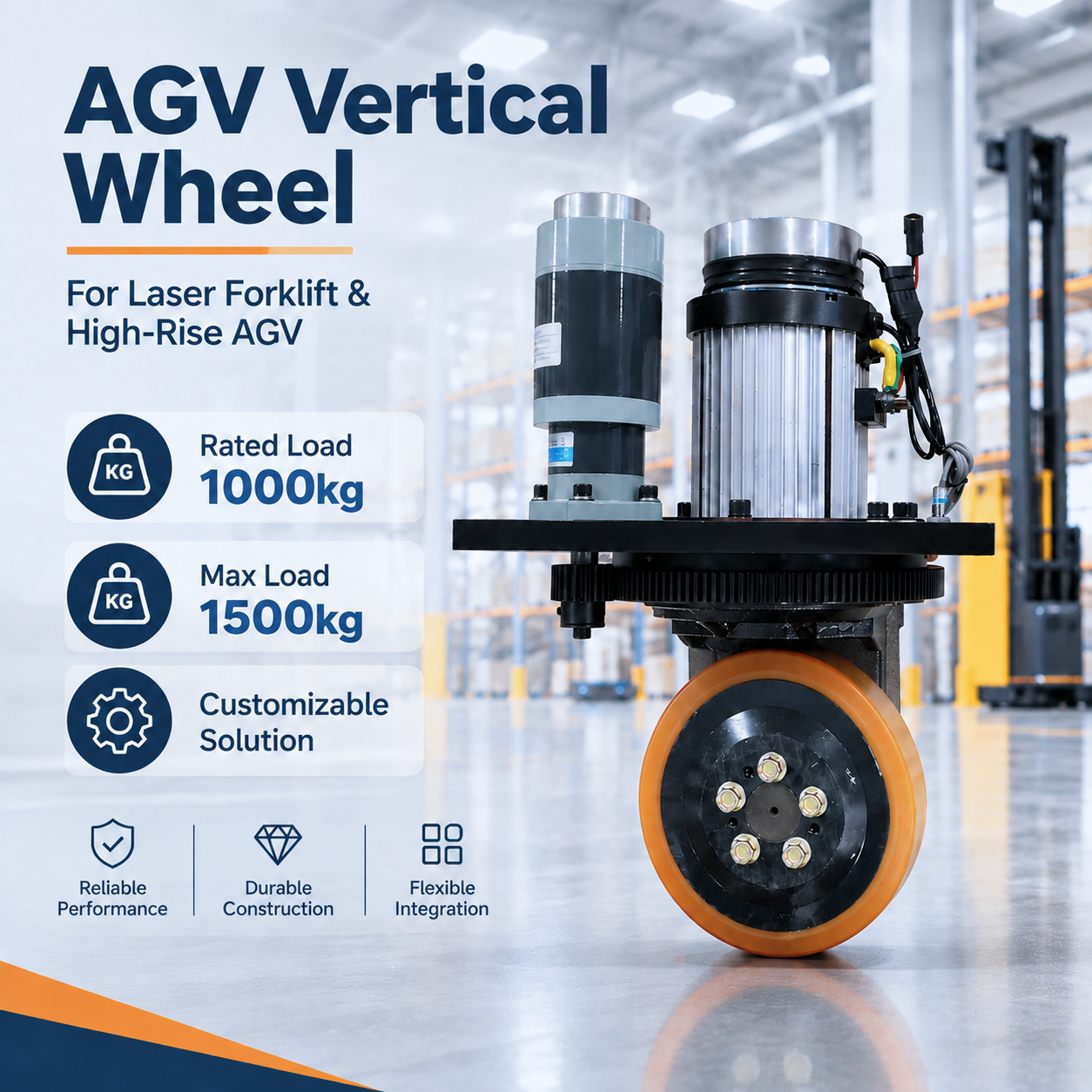
TZBOT 2590r/min Vertical Driving Unit Electric Traction Wheel 1500W Steering Forklift Accessories
Recommended for compact steering AGVs, forklift-style chassis and mobile equipment that needs precise wheel-angle control in tighter Nashville warehouse lanes.
- 1500W
- 2590 r/min
- Steering traction
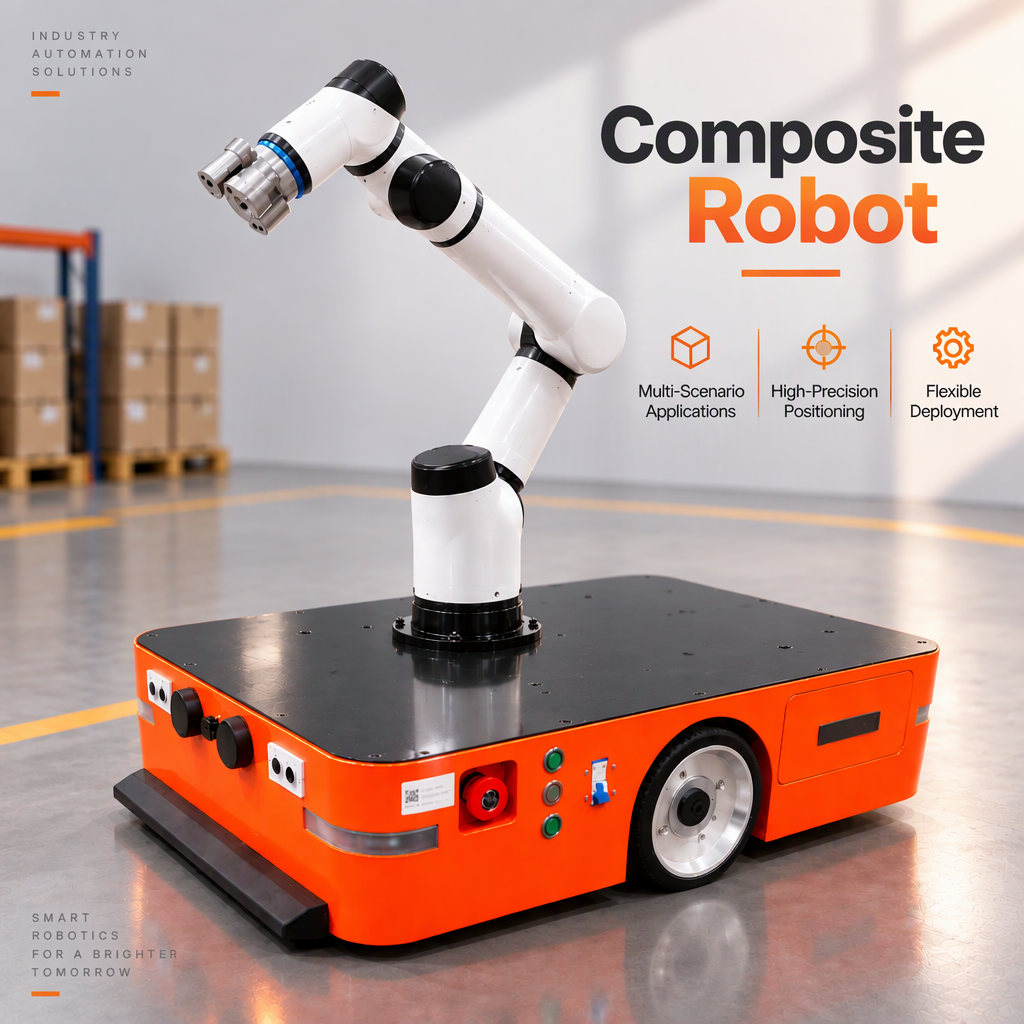
TZBOT Backpack AGV 200kg Load Capacity Chassis Magnetic Guidance Composite Robot with Robotic Arm
A practical chassis for assembly support, machine tending and collaborative cells where a 200 kg mobile base must carry a robotic arm safely.
- 200 kg payload
- Magnetic guidance
- Composite automation
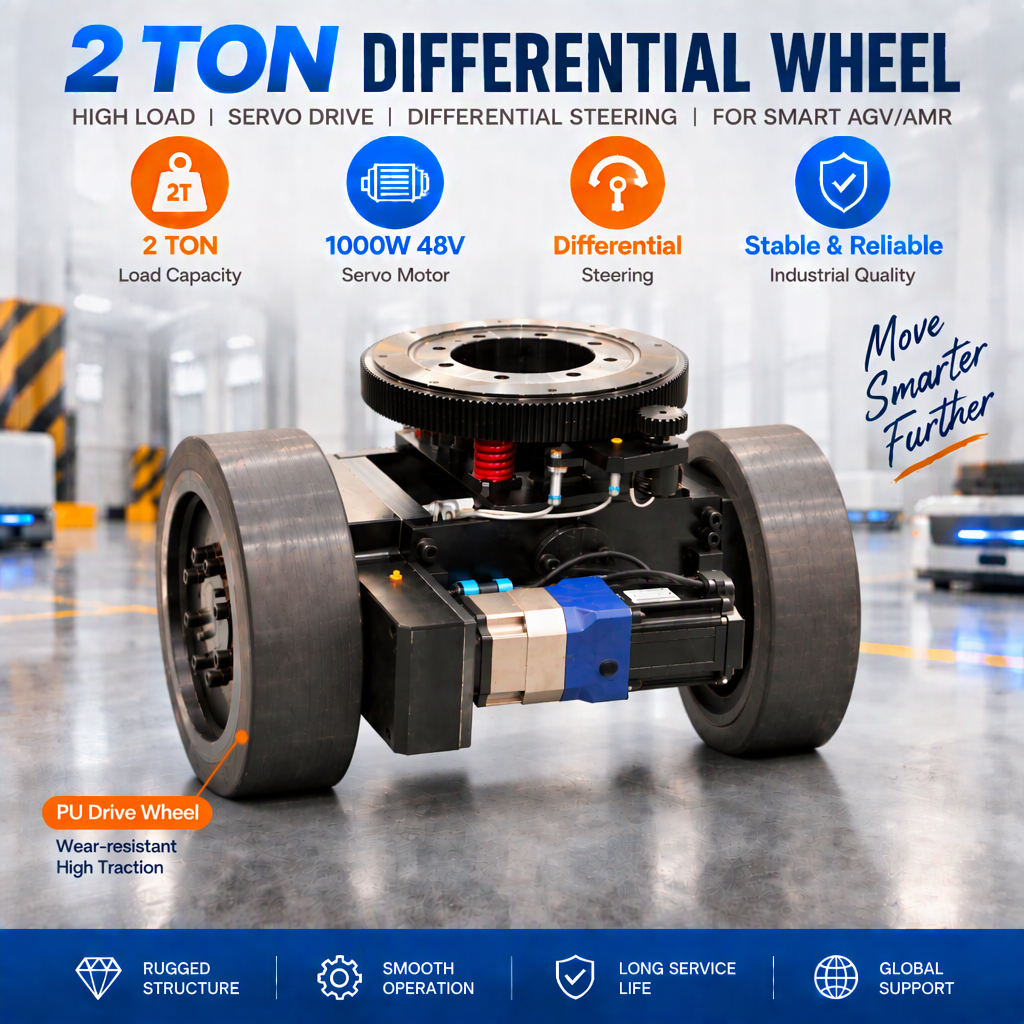
TZBOT Customized 2000kg Bearing Duty agv Wheel 1000w 48V Heavy Duty Series Mobile Robot Differential Drive Wheel with Suspension
Suited to 2-ton mobile robot platforms, automotive line-side delivery and heavy totes where suspension improves floor contact and wheel life.
- 2000 kg bearing
- 1000W / 48V
- Suspension
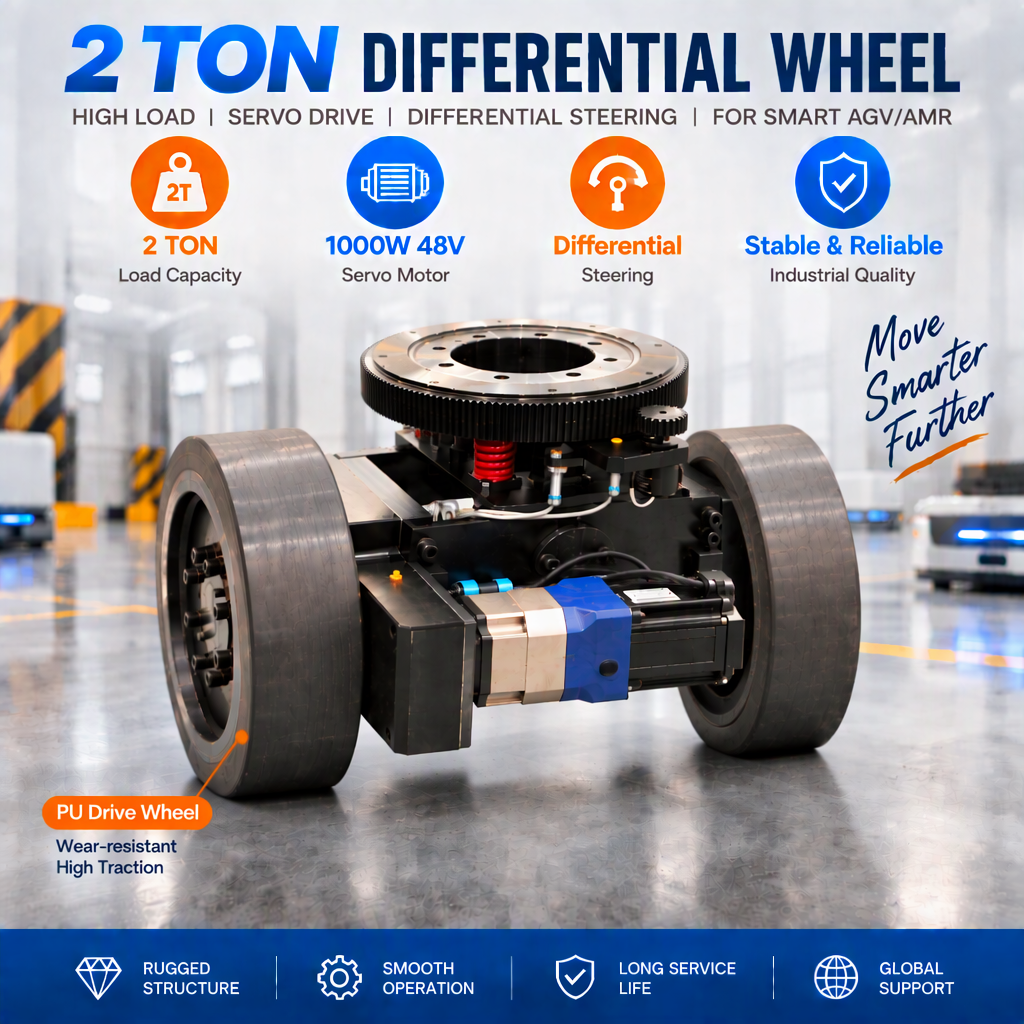
TZBOT 2000KG Heavy Duty Series AGV Wheel 1000w 48V Strong Power Mobile Robot Differential Drive Wheel with Spring Suspension
Delivers strong power and spring suspension for heavy mobile robots that must maintain traction across dock plates, expansion joints and multi-shift floors.
- 2000 kg series
- Spring suspension
- 48V DC
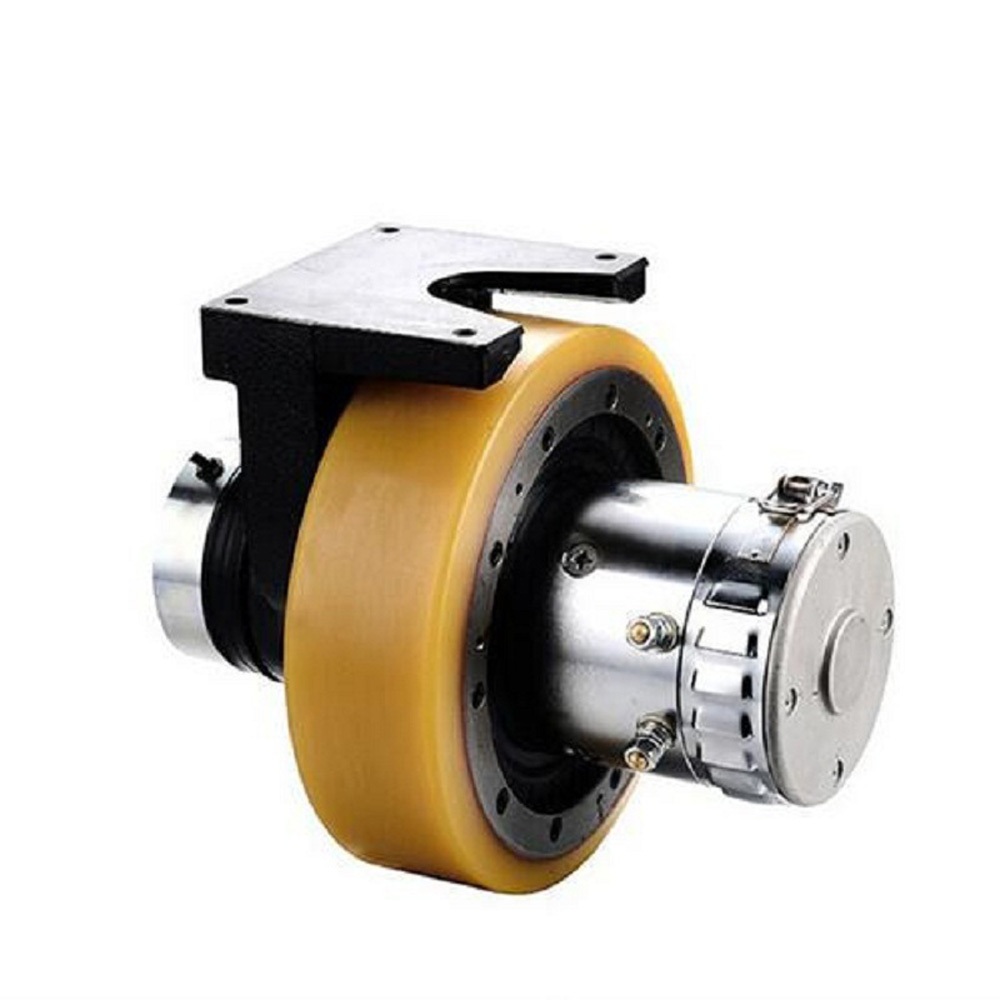
TZBOT TZ18-D12 1200W 24V Horizontal Drive Wheel Assembly Horizontal Wheel Unit Omnidirectional Automatic Steering Wheel
Best for low-clearance chassis and omnidirectional moves where a compact horizontal layout reduces build height without sacrificing steering response.
- 1200W / 24V
- Horizontal unit
- Omnidirectional
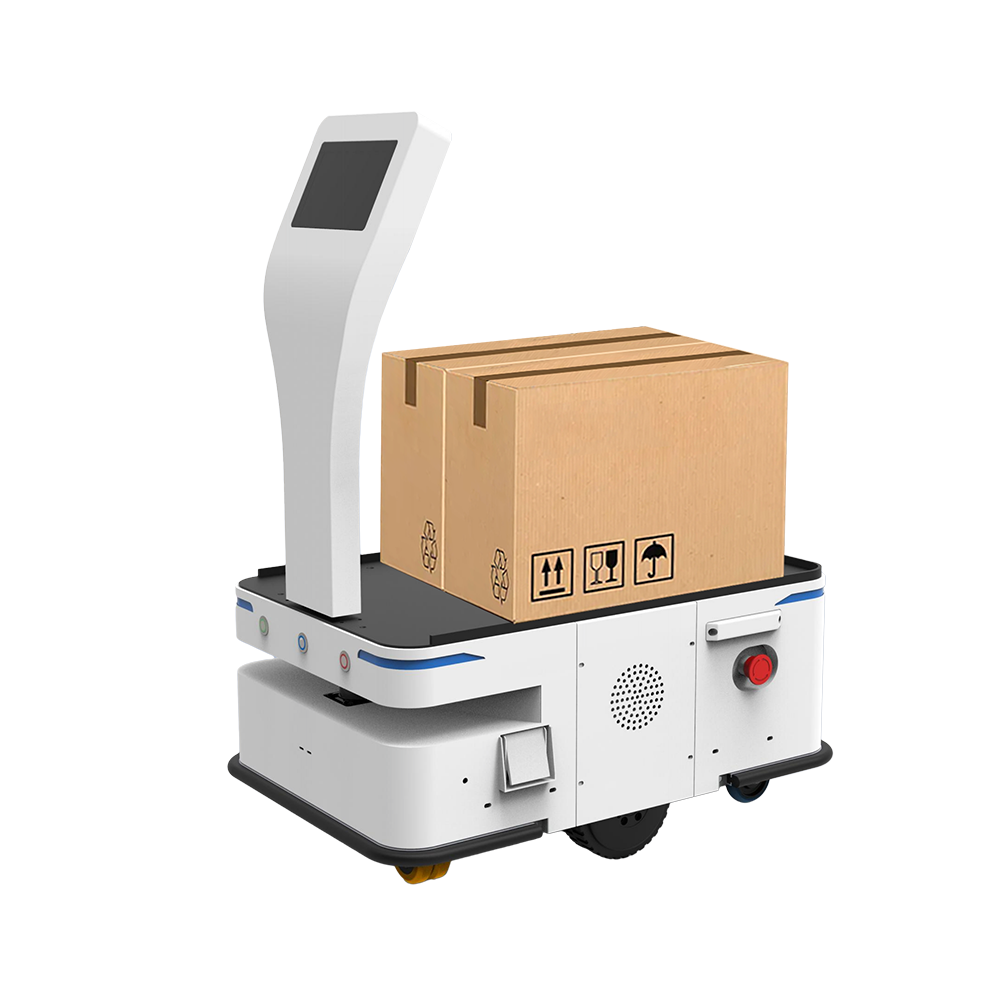
TZBOT High Precision Guidance Laser Slam Navigation Amr Robot 80kg Carrying Capacity Material Handling Amr Robot with 7 Inch HMI
A laser-guided AMR platform for Nashville facilities that change routes often, with 80 kg carrying capacity and a 7-inch HMI for operator interaction.
- Laser SLAM
- 80 kg capacity
- 7-inch HMI

TZBOT 48V DC 2 Ton Heavy Duty Differential Unit AGV Wheel TZCS-750-30
An efficient choice for 2-ton transfer carts, casting and steel handling, and heavy sub-assembly movement where torque density matters.
- 2-ton class
- 48V DC
- TZCS-750-30
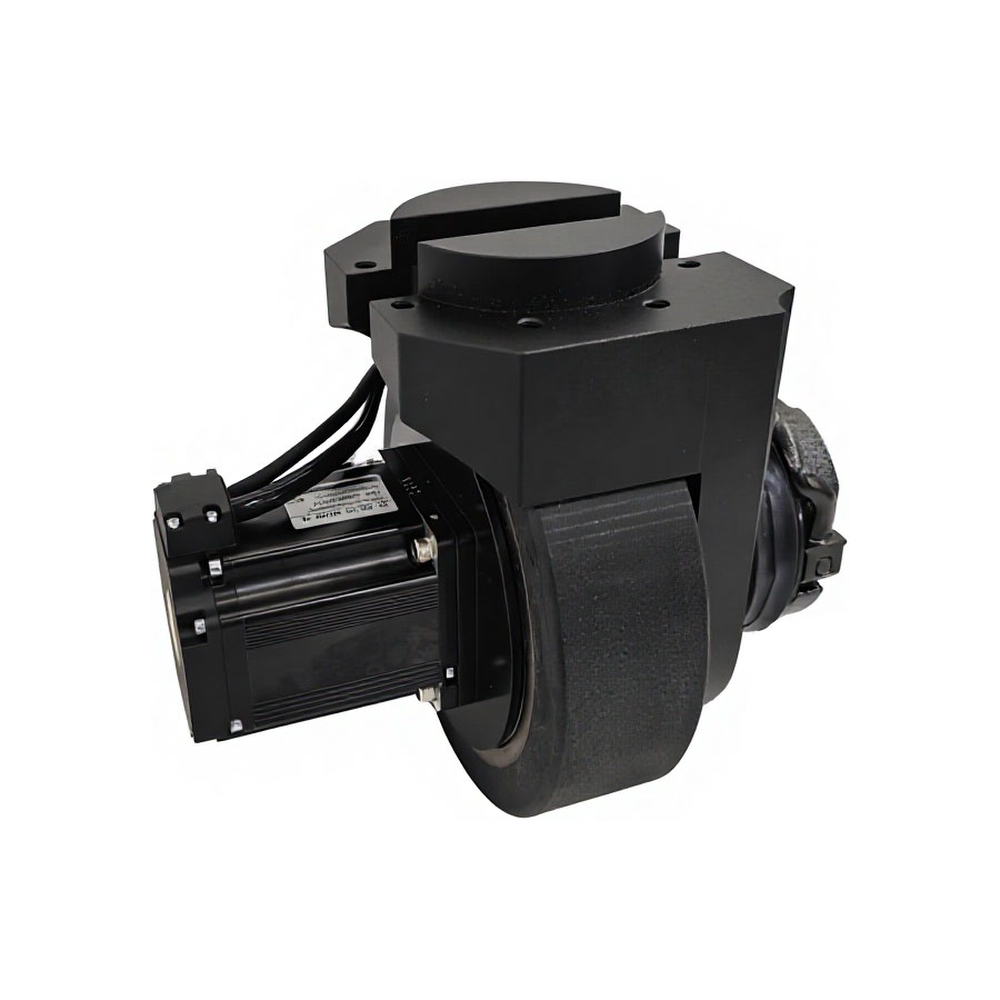
TZBOT 1000kg Bearing Capacity agv Wheel 1000w Servo Motor Material Handling Equipment Part Horizontal Drive Wheel
Combines 1-ton load capacity with a 1000W servo motor and horizontal layout, ideal for low-profile material handling equipment in mixed fleets.
- 1000 kg bearing
- 1000W servo
- Horizontal drive
Why Laser-Guided AGV Decisions Are Different in Middle Tennessee
The Nashville market is not a generic “warehouse automation” market. Its growth is shaped by logistics crossroads, automotive and EV supply chains, healthcare operations, food distribution, e-commerce and a tight labor market for repeatable material movement.
Nashville sits at the intersection of major freight corridors and serves as a regional distribution gateway for Tennessee and surrounding states. Buyers here often need fast route changes without sacrificing throughput, because distribution center layouts, inbound pallets and labor schedules shift frequently. A laser-guided AGV or AMR that can map natural features is attractive where racks, staging lanes and pick modules evolve. At the same time, many facilities still value magnetic guidance or RFID station tags for repeatable lanes, speed zones and high-traffic intersections. The most practical sourcing plan is usually a hybrid one: laser SLAM for flexible travel, magnetic or RFID for deterministic stations, and a drive wheel selected around actual payload, floor transitions, battery voltage and chassis height.
Distribution & 3PL Cross-Docks
Laser SLAM AMRs move totes and parcels through changing staging lanes; heavy-duty differential wheels support cart transfer and dock-to-storage loops.
Automotive & EV Supply Chain
Tennessee’s automotive corridor rewards 2-ton drive units, servo-matched controllers and reliable line-side delivery for high-value components.
Healthcare & Pharmaceutical Logistics
Nashville’s healthcare ecosystem needs quiet, precise movement for supplies, lab materials and scheduled internal logistics with traceable routes.
Cold Chain & Food Distribution
Condensation, freezer transitions and frequent washdowns make wheel tread, suspension and sealing choices as important as navigation software.
E-Commerce Fulfillment
Short order cycles and SKU mix changes favor laser-guided navigation plus modular drive units that can be serviced without rebuilding a chassis.
Manufacturing Line-Side
Magnetic guidance or QR grids often provide deterministic stations while laser sensors add obstacle avoidance around mixed pedestrian traffic.
Narrow-Aisle & Multi-Shift Sites
Steering and horizontal drive configurations reduce footprint, while robust wheel assemblies maintain uptime across second and third shifts.
Airport & Facility Service Equipment
Electric traction and steering units also suit service vehicles, floor-care equipment and airport support carts requiring low-noise electric motion.
Nashville Buyer Priorities for AGV and AMR Projects
Qualitative signals from application discussions in warehouse, manufacturing and distribution environments. The bars are planning weights, not market statistics; they are useful for aligning specifications before a quotation.
Specification Pressure Points in Middle Tennessee
As Nashville-area operations grow, buyers are not simply asking for “an AGV.” They are asking for a mobile platform that can survive real floor conditions, changing routes and a labor model where second-shift staffing is hard to fill. That changes the technical brief in five practical ways.
- Hybrid navigation is becoming the default. Laser SLAM handles flexible travel, while magnetic tape or RFID tags lock down stations, speed zones and high-risk intersections.
- 48V architectures are preferred for heavier loads. More torque headroom, lower current and better efficiency matter on 1–2 ton transfer platforms.
- Serviceability is a purchasing criterion. Drive wheels, controllers and sensors should be replaceable modules, not permanent chassis elements.
- Safety around people cannot be an afterthought. Laser sensors, bumpers, audible/visual indicators and speed-zone logic must be designed together.
- Export documentation and delivery terms matter. Nashville buyers want predictable FOB, CIF, EXW, DDU or express options with clear responsibilities.
Planning Weight by Project Priority
Matching Drive Configuration, Navigation and Payload
Before asking for a price, define the physical job. A drive wheel that works on a smooth 200 kg AMR may fail on a 2-ton cart crossing dock plates in a Nashville distribution center. Use the matrix as a starting point, then confirm with engineering drawings.
| Nashville Use Case | Recommended Drive | Navigation Strategy | Why It Fits |
|---|---|---|---|
| Flexible tote movement in 3PL and e-commerce | Compact differential unit or horizontal drive | Laser SLAM with QR or magnetic station tags | Route changes are easy; low-clearance chassis remains serviceable. |
| Automotive line-side component delivery | 2-ton differential drive with suspension | Magnetic guidance plus obstacle sensors | Repeatable lanes, high payload and stable traction at floor transitions. |
| Forklift-style tugger or tricycle AGV | Single steering drive wheel | Laser SLAM or magnetic guide | Controlled steering angle and efficient turning in mixed traffic. |
| Healthcare supply movement | Quiet 24V/48V drive with servo control | Laser SLAM with mapped corridors | Quiet operation, precise stops and easy route updates. |
| Cold-chain and food distribution | Sealed heavy-duty drive with suitable tread | Magnetic or RFID fixed lanes | Predictable paths and station triggers in low-temperature areas. |
| Low-profile under-ride cart | Horizontal drive wheel assembly | QR grid or magnetic guide | Minimizes build height while maintaining controlled drive response. |
Manufacturer Strengths Nashville Buyers Can Verify
Zhejiang Torqen Technology Co., Ltd. has manufactured AGVs, AGV drive wheel assemblies, DC/AC motors, encoders, reducers, servo/BLDC controllers, navigation sensors and AGV accessories since 2015. The advantage is not a catalog alone; it is the ability to match mechanical, electrical and navigation components as one drive train.
ISO 9001:2015 Quality System
Quality management certification supports repeatable inspection, production records and corrective-action discipline for export buyers.
Intertek Onsite-Verified
Factory assessment gives Nashville integrators a verifiable starting point before placing a first sample or production order.
8 Patents Awarded
Continued R&D in drive wheels, controllers and mobile robot components supports practical customization rather than catalog-only selling.
OEM / ODM Customization
Motor power, voltage, reduction ratio, wheel diameter, tread material, encoder type, brake options and mounting interfaces can be reviewed.
One Matched Drive Train
Drive wheels, servo/BLDC drivers, motors and sensors can be selected together, reducing integration risk and spare-part complexity.
Five In-House Testing Instruments
Finished-product inspection and extended-duration prototype testing help catch issues before production parts ship.
51–100 Team Members
A focused engineering and sales organization supports direct technical communication, drawings and sample follow-up.
Export-Ready Trade Terms
Payment in USD, EUR, JPY, CAD, AUD, HKD, GBP or CNY with FOB, CFR, CIF, EXW, CIP, FCA, CPT, DDU and express options.
Years in motion and drive technology since 2015
Patents awarded for mobile robot and drive designs
Team members and engineers supporting OEM buyers
Inquiry response rate with 24/7 online support
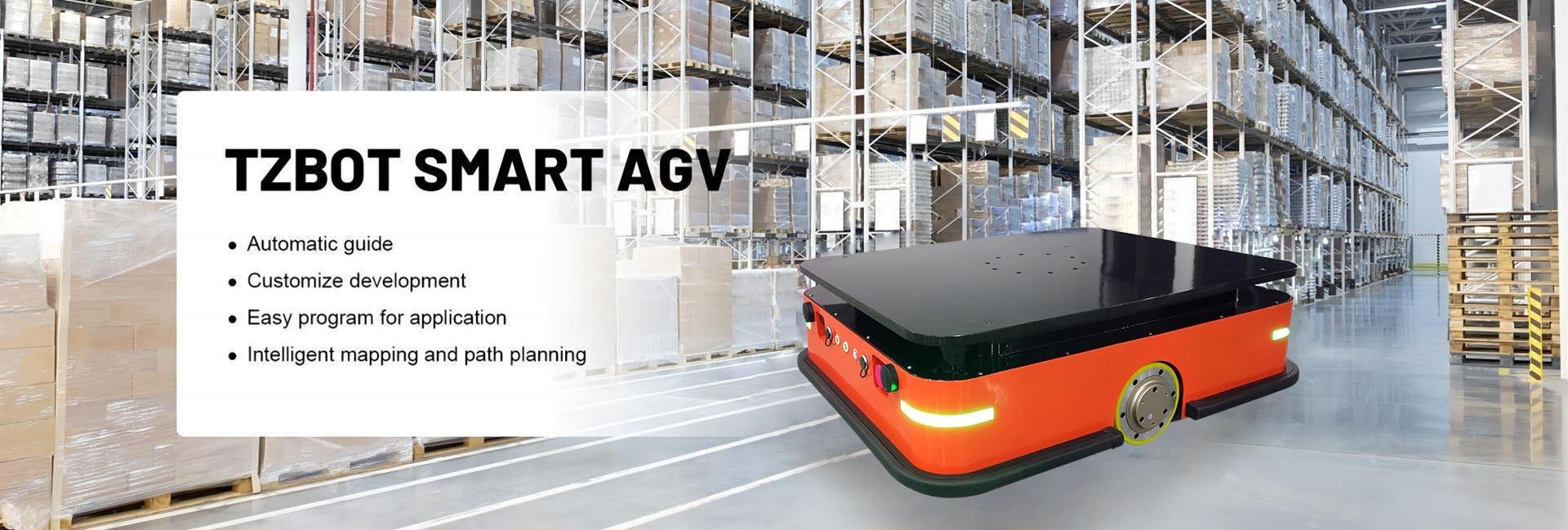 Factory and drive-technology capability for AGV, AMR and mobile equipment projects.
 Engineering, sales and production coordination from Hangzhou, Zhejiang, China.
From Application Data to Nashville Delivery in Six Steps
A transparent sequence for buyers who need samples, drawings, testing evidence and predictable export terms.
Requirement Review
Payload, speed, gradient, voltage, chassis height and navigation method are reviewed.
Engineering Proposal
Motor, reducer, wheel, driver and sensor options are matched with drawings and parameters.
Prototype Build
Sample-based or design-based customization is produced for the target chassis.
Endurance Testing
Extended runs, parameter checks and inspection reduce integration surprises.
Mass Production
ISO 9001:2015 controlled production with traceable component and inspection records.
Inspection & Delivery
Final inspection, export packing and coordinated FOB, CIF, EXW, DDU or express shipment.
Quotation, Payment and Delivery Terms for Nashville Buyers
For cross-border AGV projects, commercial clarity is part of technical reliability. Confirm Incoterms, payment currency, inspection point and packaging before production.
Payment Methods
Delivery Terms
Currencies
Common Purchasing Questions About Laser-Guided AGVs from China
These are the questions most often raised by warehouse operators, integrators and OEM engineers before requesting a quotation.
Can Torqen supply laser-guided AGV components to the Nashville market?
Yes. We support export buyers with product selection, drawings, sampling, production, inspection and delivery terms such as FOB, CIF, EXW and DDU. For Nashville projects, the practical starting point is a short application review covering payload, route type, floor conditions, voltage and required delivery schedule.
Which drive wheel should I choose for a Nashville warehouse AGV?
Use a differential drive unit for compact AMRs and latent or jacking AGVs that turn by wheel-speed difference. Use a single steering drive wheel for forklift-style or tricycle AGVs that need controlled steering angles. Use a horizontal drive assembly for low-clearance chassis. If the vehicle must carry 1–2 tons, specify a heavy-duty differential wheel with suspension rather than scaling up a light-duty unit.
Does Torqen support OEM and ODM customization?
Yes. Customization can include motor power and voltage, reduction ratio, wheel diameter, tread material, encoder type, brake options, mounting interfaces and branding. Sample-based and design-based customization are both available, making it possible to test a configuration before committing to volume production.
How is quality verified before shipment?
Our quality management system is certified to ISO 9001:2015, and our facility has been verified onsite by Intertek. We use five in-house testing instruments, finished-product inspection and extended-duration prototype testing. Buyers can request inspection records and packaging confirmation before shipment.
Can you meet UL, ETL or CSA requirements for U.S. projects?
ISO 9001:2015 and Intertek onsite verification are confirmed. For projects that require UL, ETL, CSA or other specific listings, component selection and documentation requirements should be reviewed before quotation. We do not treat certification scope as an assumption; it is confirmed project by project.
What information should I send for a fast quotation?
Send gross vehicle weight, target speed, maximum gradient, battery voltage, available chassis height, wheel diameter limits, navigation method and estimated annual quantity. If you already have a chassis drawing or motor mounting pattern, include it. These details allow our engineers to recommend a drive wheel, controller and sensor combination instead of quoting an isolated part.
What payment and delivery terms are accepted?
Accepted payment methods include T/T, L/C, D/P, D/A, MoneyGram, credit card, PayPal, Western Union, cash and escrow in USD, EUR, JPY, CAD, AUD, HKD, GBP or CNY. Delivery terms include FOB, CFR, CIF, EXW, CIP, FCA, CPT, DDU and express delivery.
Which industries use these drive and navigation products?
Our products are used in AGVs and AMRs, forklifts, aerial work platforms, airport equipment, agricultural machines, hydraulic applications, floor scrubbers and sweepers, wind energy, marine equipment and medical devices. For Nashville, the most relevant applications are distribution, automotive supply, healthcare logistics, food and beverage, e-commerce and manufacturing line-side movement.
Specifying a Laser-Guided AGV for Nashville?
Send your load, speed, floor, voltage and route requirements. Our engineers will recommend the drive wheel, servo/BLDC controller and navigation sensor set for the application — with export terms suitable for U.S. buyers.
