info@torqenbot.com Hangzhou, Zhejiang, China ISO 9001:2015 · Onsite-Verified Manufacturer
Zhejiang Torqen Technology Co., Ltd. · OEM / ODM Since 2015

Custom OEM AGV Navigation System Supplier & Suppliers for the Caloocan Market

Factory-direct AGV drive wheels, servo and BLDC controllers, and magnetic, RFID and lidar navigation sensors — engineered as one matched drive train, endurance-tested in Zhejiang, and shipped to Caloocan, Valenzuela and the wider Metro Manila industrial belt.

ISO 9001:2015 · Intertek on-site verified · 8 patents · 4.9 / 5 buyer rating

Caloocan Market Brief

Why Caloocan Buyers Now Specify AGV Navigation at Component Level

Not a generic "AGV supplier" search — a sourcing decision with real constraints on aisle width, ambient temperature, electricity cost and spare-part lead time.

Caloocan sits at the centre of one of the densest industrial and logistics clusters in Metro Manila. From the old manufacturing strips of Grace Park, Maypajo and Sangandaan to the newer warehouse belts in Camarin, Bagong Silang, Tala and Deparo, the city hosts garment and textile plants, food and beverage processors, plastic and packaging converters, electronics assemblers, motorcycle and auto-parts traders, and a growing number of third-party logistics providers serving e-commerce fulfilment. The buying corridors that matter to an automation project — Rizal Avenue Extension, 10th Avenue, EDSA, MacArthur Highway and the North Luzon Expressway — all run through or beside the city, and the Port of Manila sits a short haul to the west via Navotas.

Three pressures are pushing Caloocan operations toward automated guided vehicles. First, fulfilment SLAs from Shopee, Lazada and TikTok Shop have compressed pick-and-pack windows, so a manual cart-picking team can no longer absorb peak volume. Second, industrial and warehouse rental rates across Caloocan, Valenzuela and the Bulacan fringe have risen steadily, which pushes operators toward taller racking, tighter aisles and higher storage density — exactly the layout where a compact AGV out-performs a forklift. Third, skilled material-handling labour is scarce and expensive to retain, and staff turnover makes continuity of know-how a genuine operational risk.

That is why the conversation in Caloocan has moved from "who sells AGVs" to "who supplies the navigation system, the drive unit and the spare parts behind it". A chassis is easy to source. A drive train that holds positioning repeatability in a 30–35 °C warehouse through the May-to-November rainy season, on a 220 V / 60 Hz site supply, backed by a supplier who answers at the same UTC+8 working hour as your Caloocan engineering team — that is the harder procurement question this page answers.

  • 10+Years in drive technology
  • 8Patents awarded
  • 51–100Employees & engineers
  • 4.9/5Verified buyer rating
  • 97.9%Inquiry response rate
Product Range

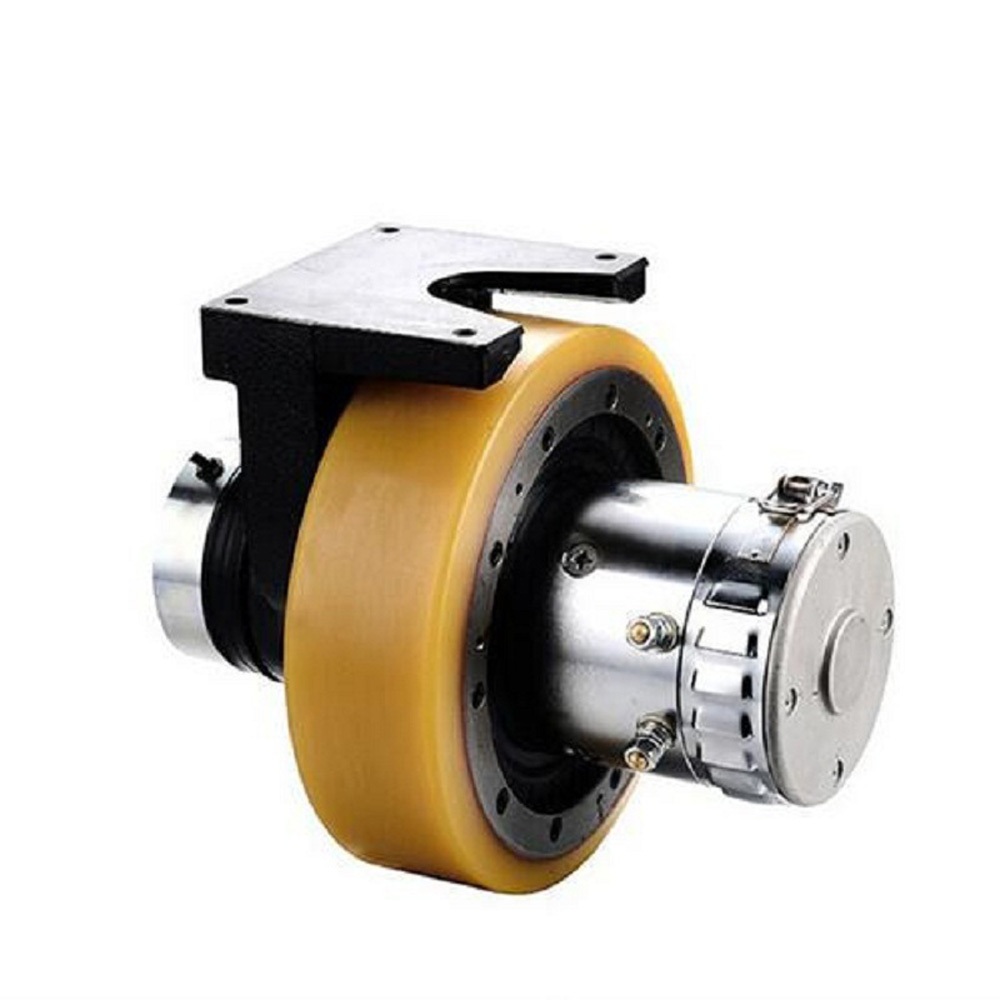
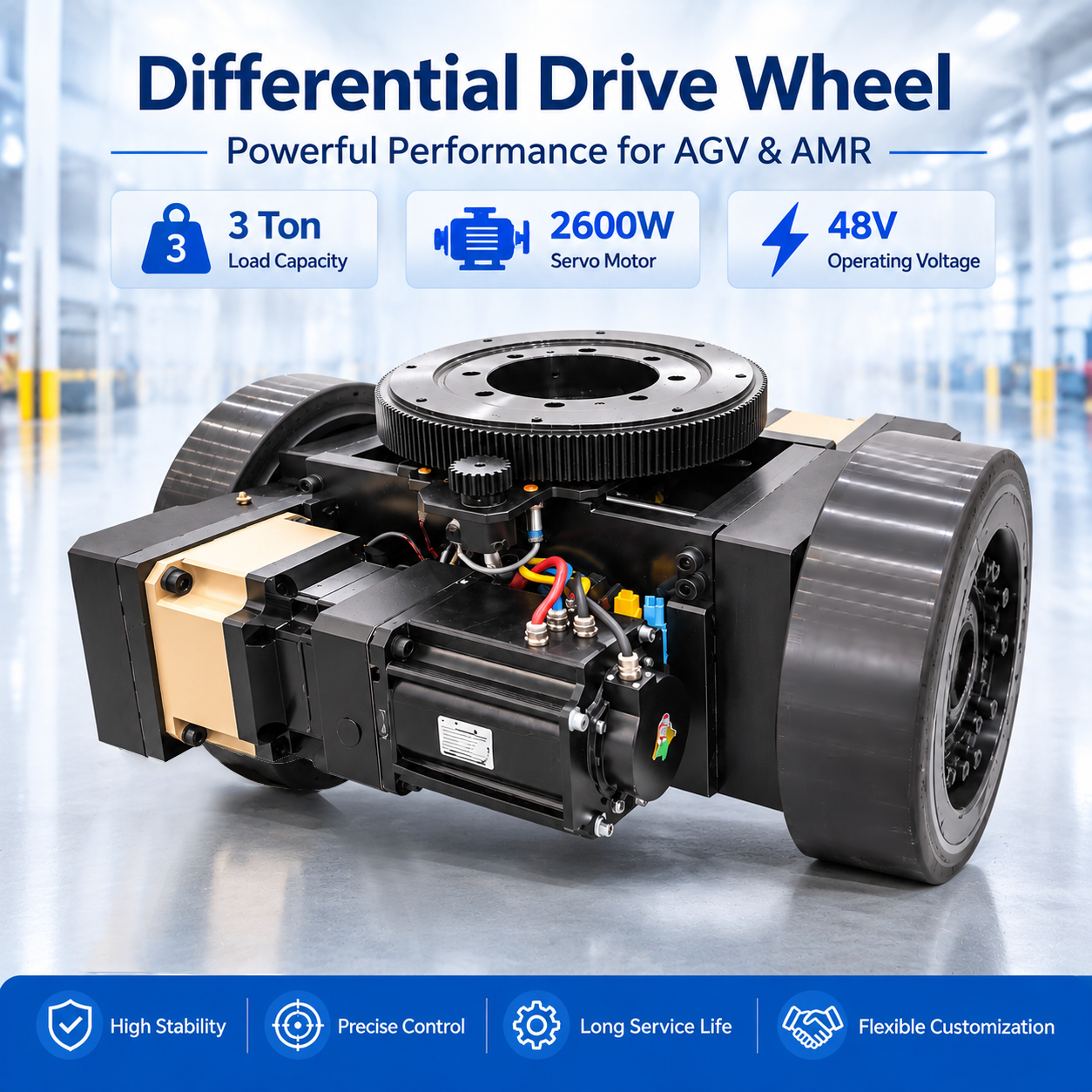
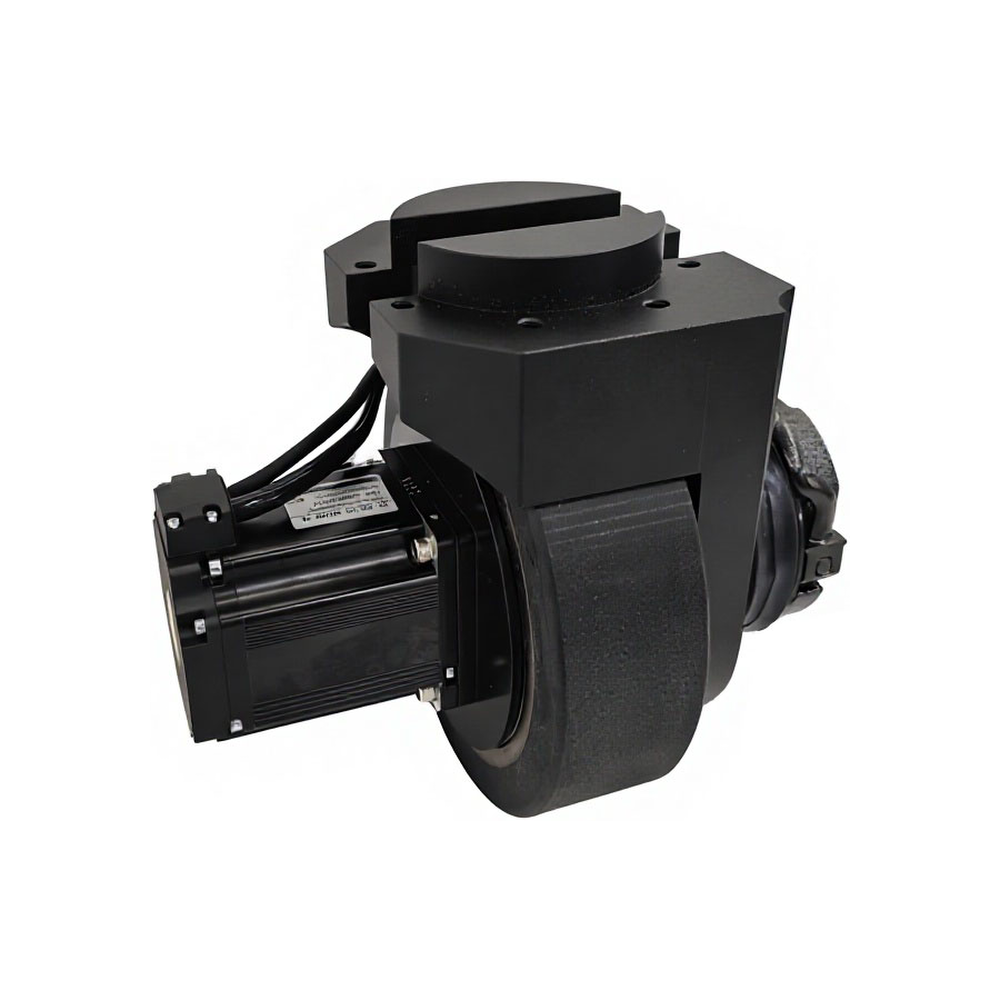
Eight OEM AGV Drive & Navigation Lines Supplied to Caloocan Integrators

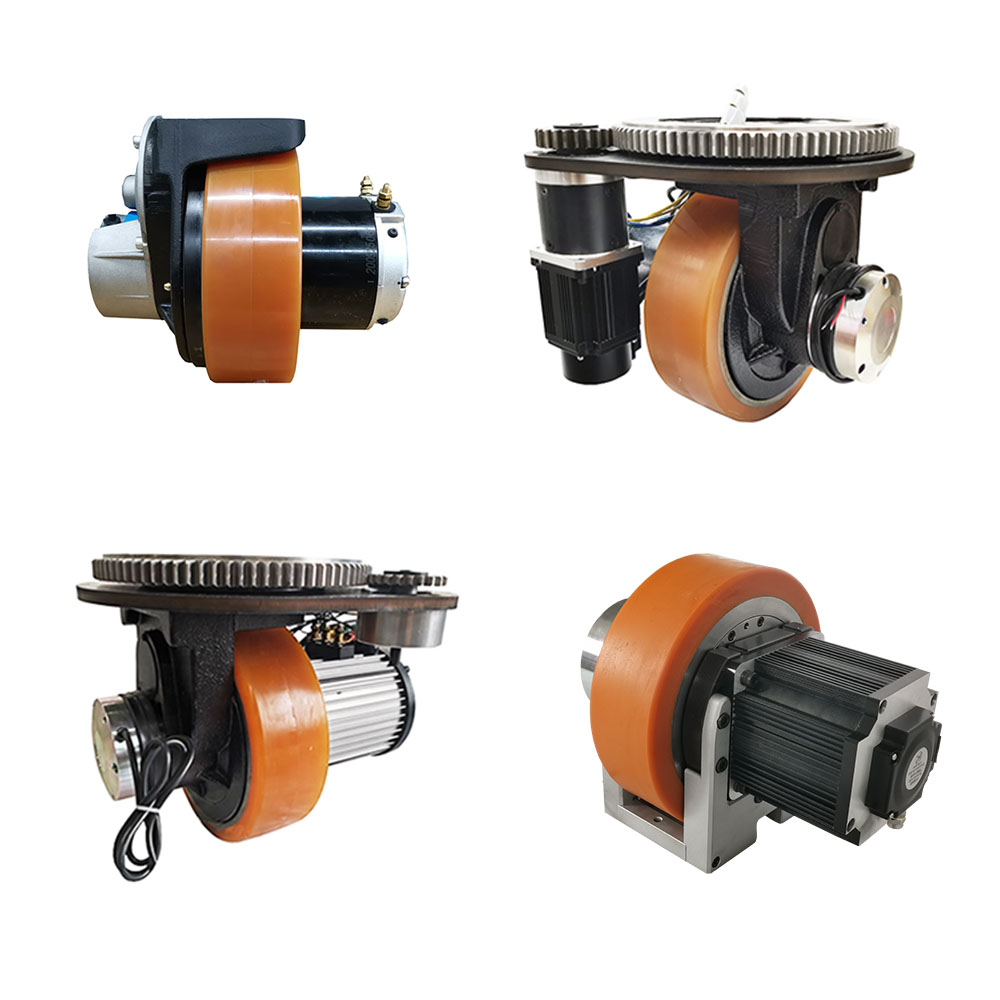
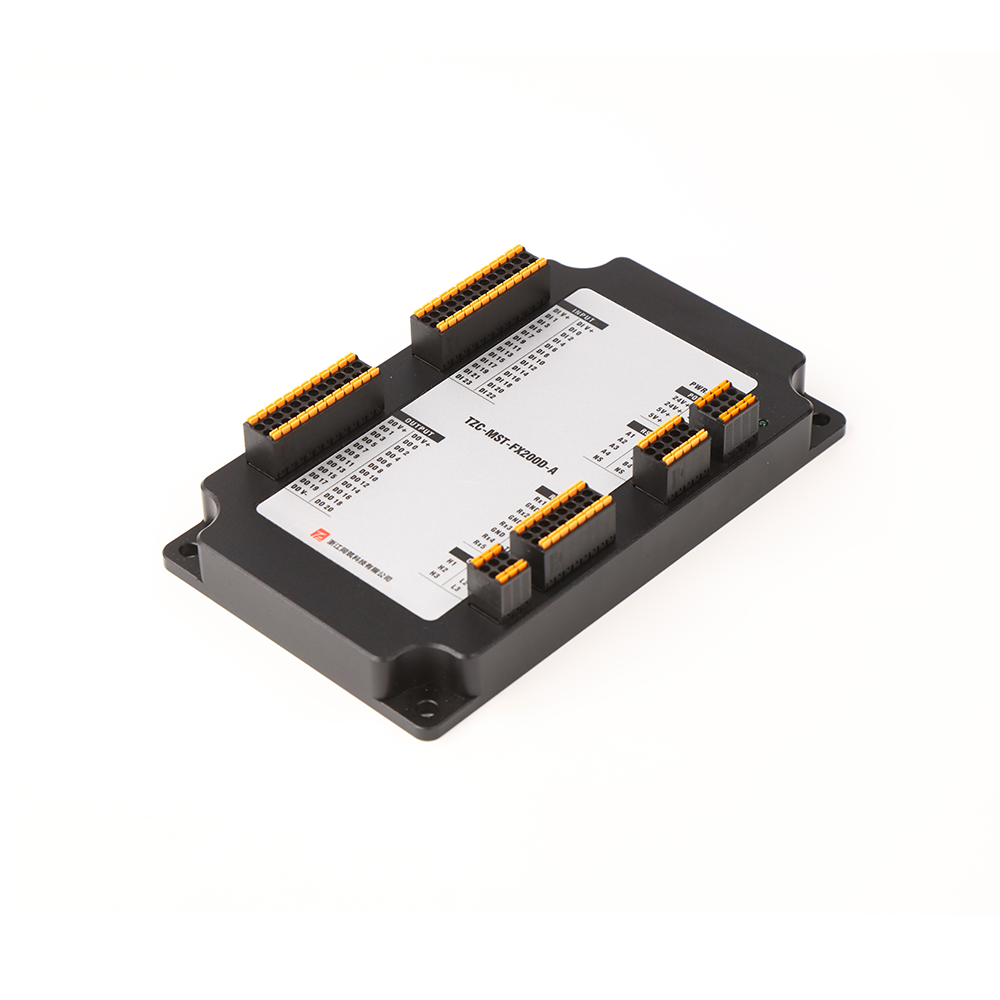
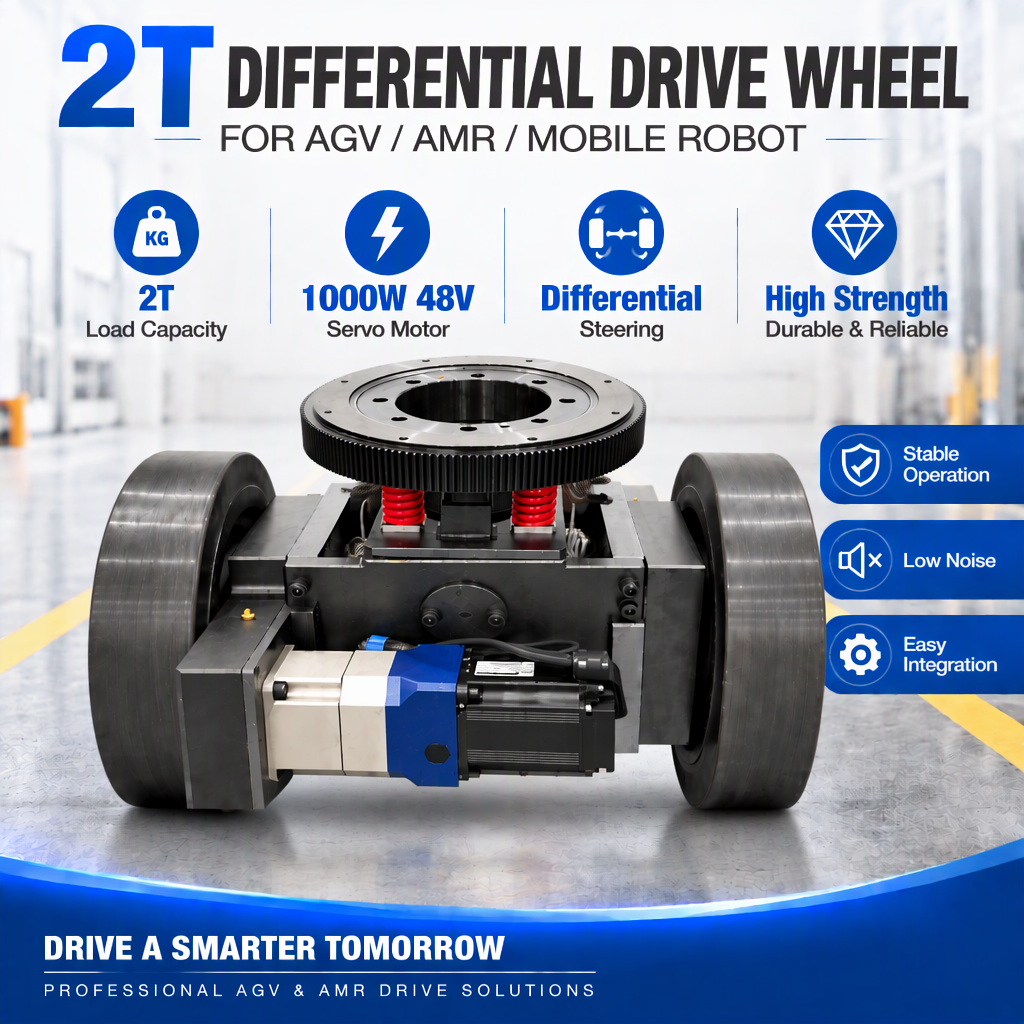
Every item below is built in our own facility, matched to our own controllers, and available as a single unit for prototyping or as an OEM production run.

Local Application Scenarios

Where These AGV Systems Actually Run in and Around Caloocan

Sizing a drive wheel without knowing the floor it will run on is guesswork. These are the deployment profiles our Caloocan and Metro Manila customers bring to the quotation stage.

3PL fulfilment hubs

Camarin and Bagong Silang warehouses running goods-to-person picking for Shopee and Lazada sellers need repeatable 600–1,000 kg moves across 12-hour shifts.

Garment & textile plants

Grace Park and Maypajo factories moving fabric rolls and cut-work bins between sewing lines, where dust load and narrow line-side space rule out a forklift.

Food & cold storage

Dagat-Dagatan and Kaunlaran processors transferring between ambient and chilled zones, where 48 V units handle condensation and the night-shift temperature drop.

Electronics assembly

Northern Caloocan and Valenzuela plants moving ESD-safe totes between SMT lines, where a magnetic guide sensor is more reliable than tape-based line following.

Auto & motorcycle parts

Traders along 10th Avenue handling crated engine components and aftermarket stock need the two-tonne differential units with predictable braking on ramped loading bays.

Plastics & packaging

Tala and Deparo converters moving resin sacks, film rolls and finished cartons between extruders and the dispatch bay on a single repeatable route.

Port & container yards

Depots feeding the Port of Manila via Navotas. Heavy tow tractors and container-handling support vehicles need 2–3 t traction capacity with servo-controlled braking.

Medical & pharma distribution

Monumento and Sangandaan distributors running temperature-logged transfers benefit from RFID station tags that record every stop instead of relying on operator scans.

Local Trends 2025–2028

Six Shifts Reshaping AGV Procurement in Caloocan

Buyers who plan around these trends tend to specify a drive train they can still support three years later.

01

E-commerce density is now the driver

Fulfilment competition in Metro Manila is measured in hours, not days. That pushes more Caloocan 3PLs toward mobile shelving and goods-to-person AGVs, which changes the drive wheel spec from "moves a cart" to "positions a shelf within ±10 mm, thousands of times a day".

02

Warehouse rent forces aisle compression

As rates rise across Caloocan, Valenzuela and the Bulacan fringe, operators densify racking rather than lease more floor. Narrower aisles favour low-clearance horizontal units and omnidirectional steering, not wide forklift trucks.

03

Electricity cost reshapes the duty cycle

High industrial tariffs make every watt of drive inefficiency a recurring cost. Matching servo power and reduction ratio to the actual load — instead of oversizing — is now a purchasing argument, not just an engineering one.

04

Local engineering capability is maturing

Philippine integrators increasingly build and maintain their own vehicles rather than buying turnkey systems. That raises demand for component-level suppliers who publish wiring diagrams, controller parameter files and step-by-step commissioning support.

05

Spare-part availability beats unit price

A single import shipment delayed at customs can idle a whole AGV line. Buyers now negotiate spare wheels, drivers and sensors alongside the first order, and favour suppliers who stock common consumables and consolidate shipments.

06

Climate and flood resilience in the spec

Typhoon-season flooding and year-round humidity are shaping requirements for IP-rated enclosures, sealed connectors and elevated charging rooms. These details are easier to design into a custom OEM order than to retrofit later.

Engineering Guide

How to Choose the Right Drive Unit and Navigation Method

The same comparison our application engineers walk through with integrators before a quotation is issued.

Drive Wheel Configuration

TypeSteering principleBest fit
DifferentialTwo independently driven wheels turn by speed differenceLatent, jacking and shelf-lifting AGVs; tight turning inside existing racking
Single steeringDrive motor plus dedicated steering motor sets wheel angleTow tractors, tricycle chassis, forklift-type vehicles
HorizontalMotor mounted horizontally for minimum build heightLow-clearance chassis, under-ride carts, retrofit platforms
OmnidirectionalSteering plus drive allows sideways and diagonal motionDocks and bays where the vehicle must crab out of a tight slot

Navigation & Positioning Method

MethodFloor infrastructureBest fit
Magnetic guideMagnetic tape on the floorFixed routes, fast deployment, lowest cost per vehicle
RFID positioningTags at stations and junctionsStation recognition, speed zones, auditable stop records
QR code gridPrinted or applied QR matrixGrid warehouses and goods-to-person systems
Lidar SLAMNone — uses natural featuresFlexible routes and layouts that change frequently

Engineer's checklist before you ask for a quote: prepare gross vehicle weight, target travel speed, maximum ramp gradient, battery voltage (24 V or 48 V DC), available chassis height, narrowest aisle, charging-room distance and lift dimensions. Those eight values determine motor power, reduction ratio, wheel diameter and navigation method — and they cut the sampling cycle from weeks to days.

Why Torqen

A Single Source for the Complete AGV Drive Train

Zhejiang Torqen Technology Co., Ltd. has designed and manufactured AGVs, drive wheel assemblies, motors, controllers and navigation sensors since 2015 from Hangzhou, Zhejiang, China.

Matched, not mixed

Drive wheel, motor, reducer, encoder, servo driver and sensor are designed and tested together in one facility. You avoid the integration risk of assembling a drive train from four unrelated vendors.

Real OEM / ODM customisation

Sample-based and design-based customisation: motor power and voltage, reduction ratio, wheel diameter and tread compound, encoder type, brake options and mounting interface. Buyer-label packaging is available.

Verified quality system

ISO 9001:2015 certified and on-site verified by Intertek. Finished-product inspection runs on five in-house testing instruments, and prototypes complete extended-duration testing before production release.

Export-ready and same time zone

China and the Philippines both run on UTC+8, so your Caloocan engineers and our application team are online in the same working hours. Trade terms cover FOB, CFR, CIF, EXW, CIP, FCA, CPT, DDU and express.

  • 1,000–3,000m² factory area
  • US$5–10MAnnual output
  • 8Patents awarded
  • 9Payment methods
  • 8Settlement currencies
OEM / ODM Workflow

From Caloocan Specification to Shipped Production Order

A transparent six-step process built for engineering buyers who need predictable sampling and repeatable production.

  1. Requirement review

    Payload, speed, gradient, voltage, aisle width and chassis height are assessed against our existing platforms.

  2. Engineering proposal

    Motor power, reduction ratio, wheel diameter and navigation method are matched, with drawings shared for approval.

  3. Prototype build

    A sample-based or design-based customisation is produced, including label and packaging requirements.

  4. Endurance testing

    Extended-duration runs and parameter checks confirm torque margin and thermal behaviour before release.

  5. Mass production

    Manufacturing is controlled under our ISO 9001:2015 quality management system, with traceable records per batch.

  6. Inspection & delivery

    Finished-product inspection, export packing, consolidated shipping and documentation for Manila or NAIA clearance.

FAQ for Caloocan Buyers

Questions Local Buyers Ask Before Placing an OEM Order

Practical answers on lead time, customs, voltage, warranty and configuration — the points that decide whether a project ships on schedule.

Are you a manufacturer or a trading company?

We are a manufacturer and trading company based in Hangzhou, Zhejiang, China, established in 2015. Our factory covers roughly 1,000–3,000 m², employs 51–100 people and produces AGVs, drive wheel assemblies, motors, servo and BLDC controllers, and navigation sensors. The facility has been on-site verified by Intertek and our quality management system is certified to ISO 9001:2015.

Can you customise drive wheels and controllers for our own AGV design?

Yes. We support sample-based customisation, design-based customisation, OEM production, design services and buyer-label packaging. Typical customisation parameters include motor power and voltage, reduction ratio, wheel diameter and tread material, encoder type, brake configuration and mounting interface. Send a drawing or a sample and our engineers will confirm feasibility and the sampling cycle.

How long does delivery to Caloocan usually take?

Indicative timings: samples are typically prepared in one to two weeks, with production runs commonly running three to five weeks depending on configuration. Ocean freight from a Chinese port to Manila usually takes about one to two weeks, plus customs clearance; air freight to NAIA is measured in days. Because schedules vary by carrier and season, confirm the current plan with your freight forwarder before committing to a site date.

What payment methods and trade terms do you accept?

Accepted payment methods include T/T, L/C, D/P, D/A, MoneyGram, credit card, PayPal, Western Union, cash and escrow, in USD, EUR, JPY, CAD, AUD, HKD, GBP or CNY. Delivery terms include FOB, CFR, CIF, EXW, CIP, FCA, CPT, DDU and express delivery. Tell us your preferred term and we will quote against it.

Will the drive components work on a Philippine 220 V / 60 Hz site supply?

The AGV itself runs on a DC battery bus — commonly 24 V or 48 V — so the vehicle's motion system is independent of the grid frequency. The charger is the component that interfaces with your 220 V / 60 Hz supply, and it must be specified accordingly. Confirm your charger input rating when ordering so the battery, charger and drive electronics are matched as a set.

Are the units suitable for hot, humid and cold-store conditions in Metro Manila?

Ambient warehouses in Caloocan typically run 30–35 °C at 70–85% relative humidity, and chilled zones bring condensation during zone transitions. Specify the working temperature range and any wash-down exposure at the enquiry stage so we can recommend the appropriate sealing, tread compound and lubrication. Sealed assemblies and 48 V architectures are generally preferred where current draw and thermal margin matter.

What is the minimum order quantity?

MOQ depends on the model and the degree of customisation. Many standard drive wheels, controllers and sensors can be supplied as a single unit for prototyping and evaluation; custom-engineered variants require a larger first run to justify tooling and setup. Ask for the MOQ against your exact model number and configuration.

Do you provide warranty, spare parts and technical support?

Warranty and after-sales terms are stated on the quotation and commercial invoice for each order — request the current standard for your item before purchase. Beyond that, we supply replacement drive wheels, motors, drivers and sensors as separate line items, and provide wiring diagrams, driver parameter files and commissioning guidance so your Caloocan engineering team can carry out installation and first-line maintenance locally.

What documentation is needed for import clearance into the Philippines?

Typically a commercial invoice, packing list, bill of lading or airway bill, and a certificate of origin where applicable. Classification depends on the item — motors, gearboxes, controllers and complete handling machinery fall under different HS headings — so have your customs broker confirm the correct code and any duties or VAT before shipment. We prepare export documents to match the terms agreed in the quotation.

Can you help us select between magnetic guidance, RFID and lidar SLAM?

Yes. Magnetic tape remains the most economical choice for fixed, high-repeatability routes; RFID tags add station recognition and auditable stop records; QR grids suit dense goods-to-person warehouses; lidar SLAM is the right answer when the layout changes often and floor marking is impractical. Share your route map, aisle width and change frequency, and we will recommend a combination rather than a single technology.

What information should we send with the first enquiry?

Send gross vehicle weight, target speed, maximum gradient, battery voltage, available chassis height, narrowest aisle, number of vehicles planned and your required delivery window. A sketch of the mounting interface shortens the process further. With those inputs our engineers can propose a specific drive wheel, driver and navigation combination instead of a generic catalogue answer.

Specifying an AGV Platform for a Caloocan Site?

Send your load, speed, aisle width and voltage requirements. Our engineers will match the drive wheel, servo driver and navigation sensors as one tested package — and quote against your preferred trade term.