8 AGV Modules to Evaluate for Laser Navigation Projects
These eight products are positioned directly below the banner because they cover the practical building blocks of a laser-navigation AGV: guidance control, hybrid navigation, compact power control, heavy-duty drive wheels, low-clearance drive assemblies, and mobile manipulators. Product URLs are retained as supplied, and each image is displayed with contain-fit so proportions are not compressed.
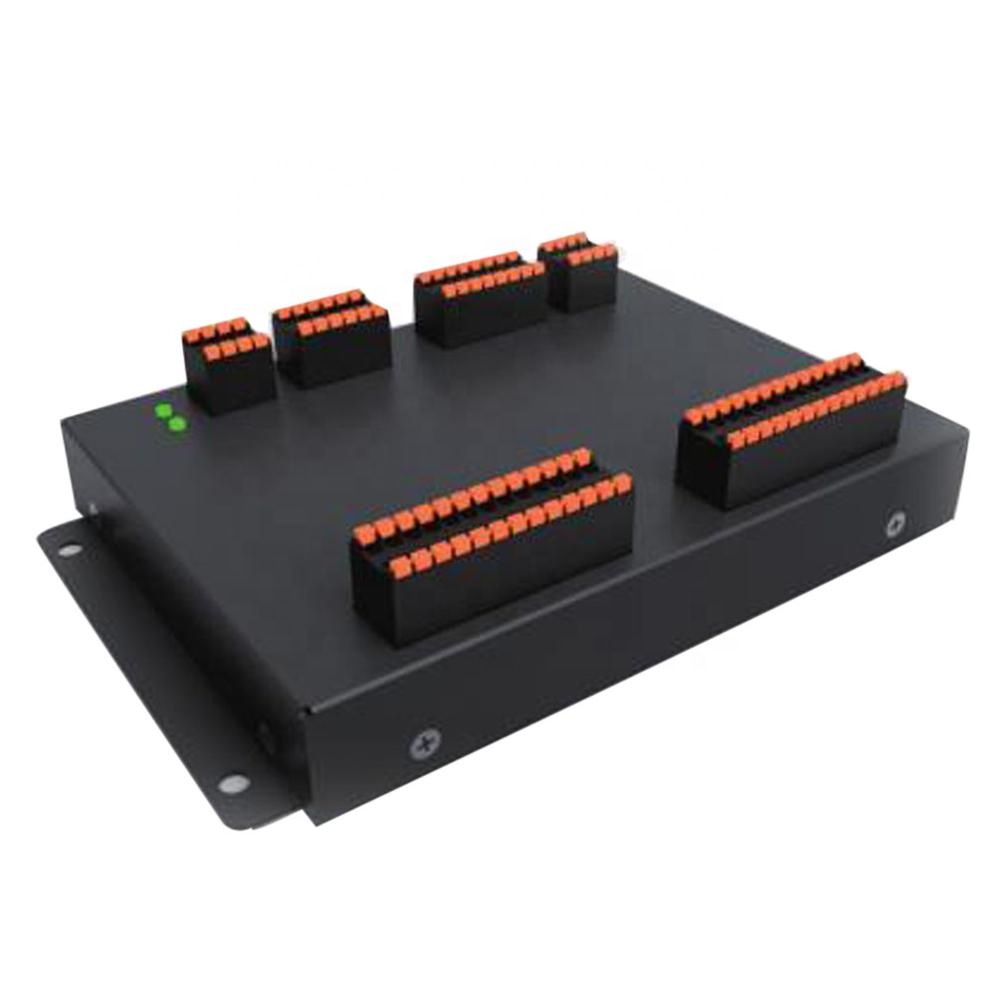
TZBOT Smart Controller TZC-MST-FX200D-A for Guiding the AGV Robot
A compact smart controller for AGV guidance logic. In a laser-navigation architecture it can act as the vehicle-side control layer while a higher-level SLAM host manages mapping, route assignment, and fleet traffic.
- AGV guidance
- OEM integration
- Vehicle control
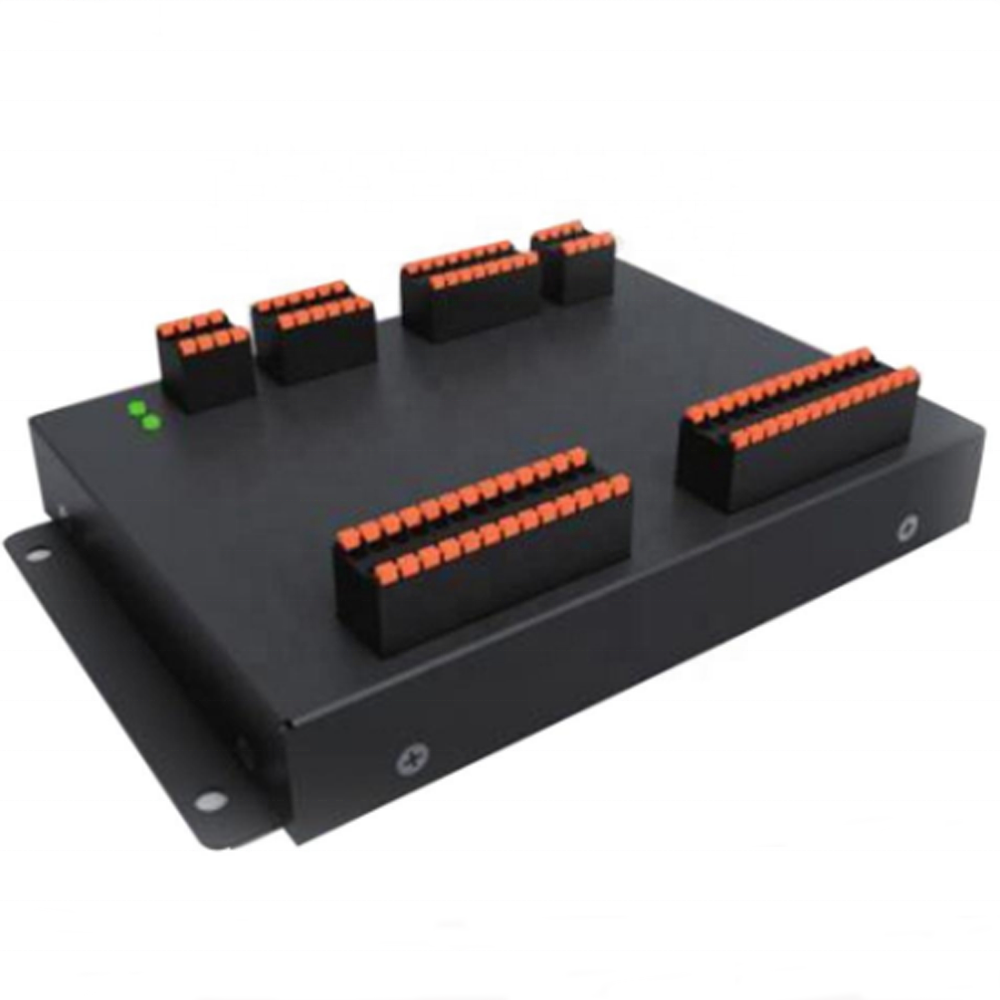
TZBOT FX Series Controller of HX Support Magnetic Tap Guided AGV
A magnetic-tape guided AGV controller with HX support. Use it as a fallback or redundancy layer where LiDAR SLAM sees reflective glass, polished stone, chandeliers, or changing event partitions.
- Magnetic guide
- Hybrid-ready
- FX series
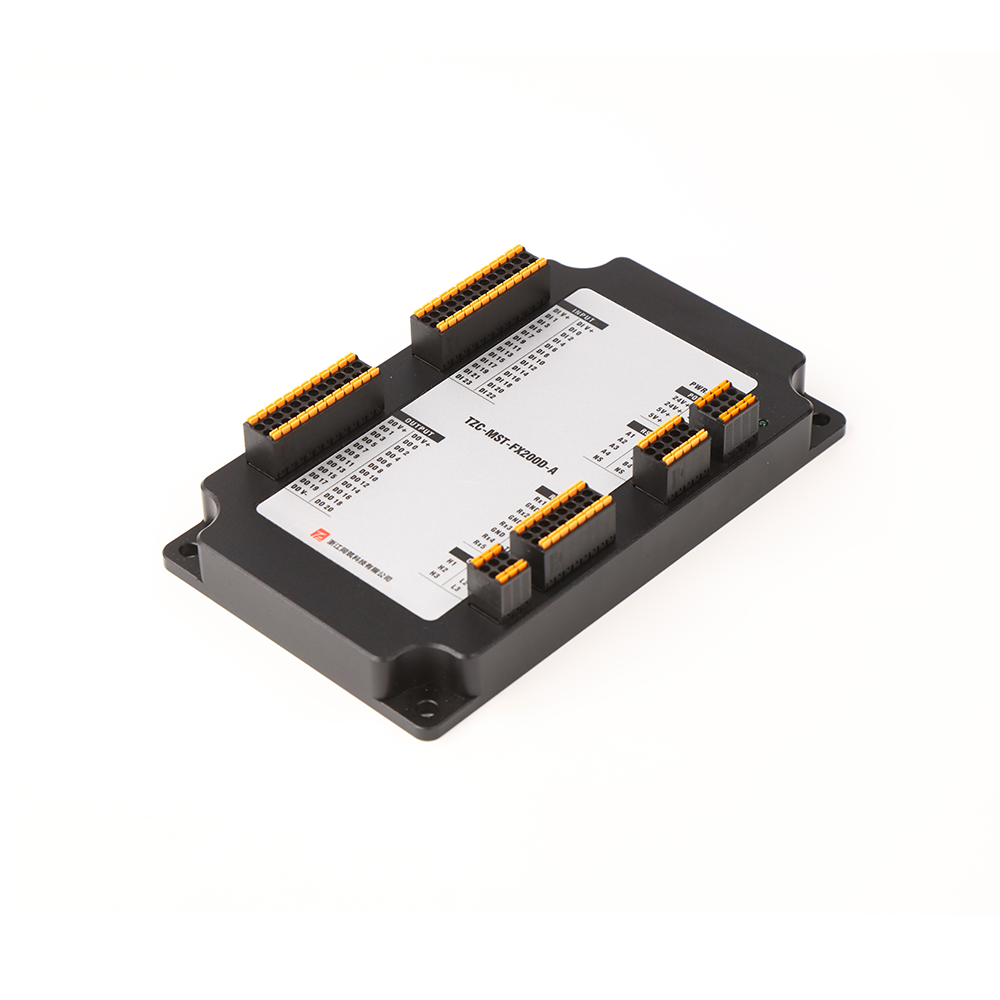
AGV Accessories Automated Guided Vehicle Controller with 19V~29V Power for AGV Robot
A 19V–29V AGV controller for compact autonomous carts and light material-handling platforms. It is relevant when cabinet space, battery voltage, and cost discipline matter more than high-power traction.
- 19V–29V
- AGV accessory
- Compact AMR
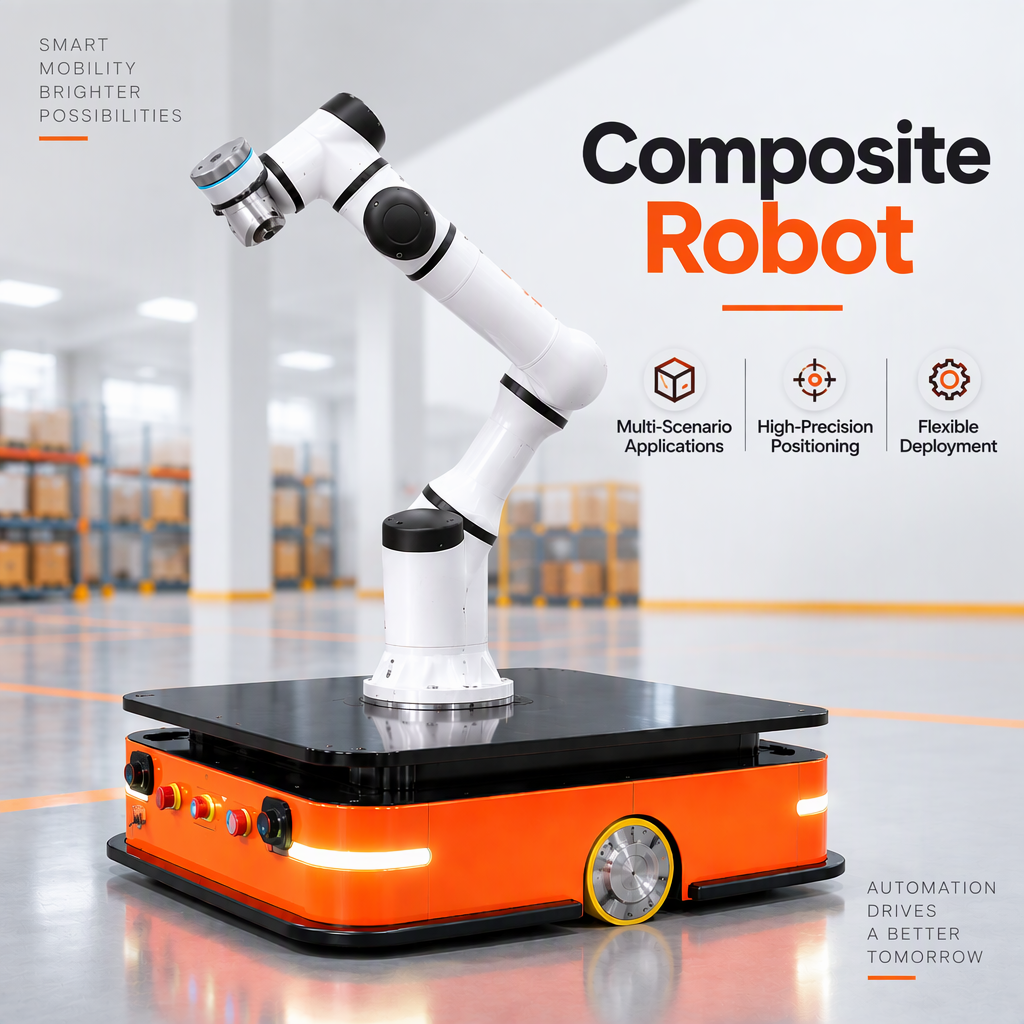
TZBOT Customizable Composite Robot Multi Applications 600kg Bearing Chassis AGV AMR with Robotic Arm
A 600 kg bearing composite robot that combines mobility with arm-based manipulation. It suits repetitive pick-and-place, tray handling, and back-of-house operations where reducing manual handoffs improves consistency.
- 600 kg chassis
- Robot arm
- Composite robot
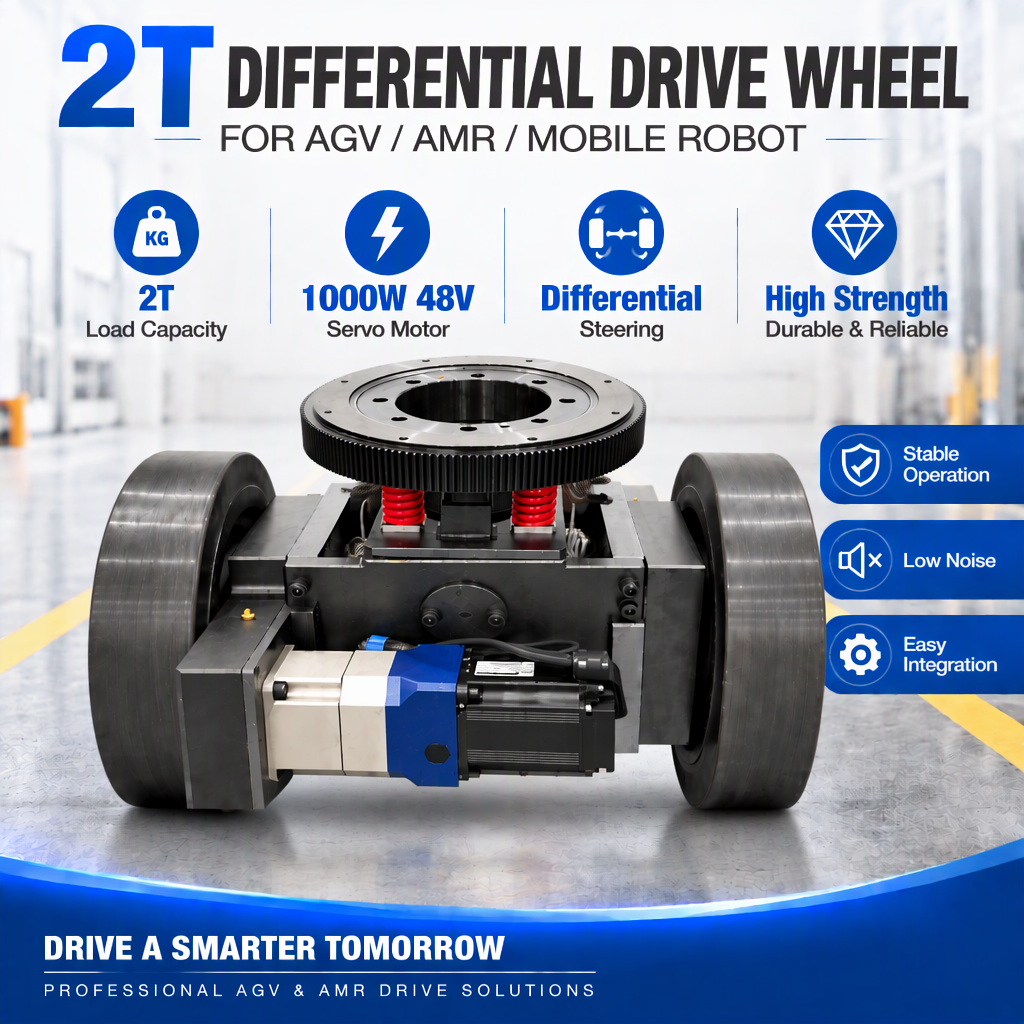
TZBOT 2000kg Traction Capacity Logistic Robot Part agv Amr Differential Steering Drive Wheel for Sale
A 2,000 kg traction-capacity drive wheel for heavy logistic robots. It is appropriate for pallet movers, tugger platforms, and high-load chassis where stable traction and controlled differential steering are mandatory.
- 2,000 kg
- Differential steering
- Heavy duty

TZBOT 48V DC 2 Ton Heavy Duty Differential Unit AGV Wheel TZCS-750-30
A 48V DC, 2-ton heavy-duty differential unit for continuous-duty AGV platforms. Buyers should validate duty cycle, ramp requirements, wheel tread, and controller matching when specifying it for Las Vegas warehouse routes.
- 48V DC
- 2-ton duty
- TZCS-750-30
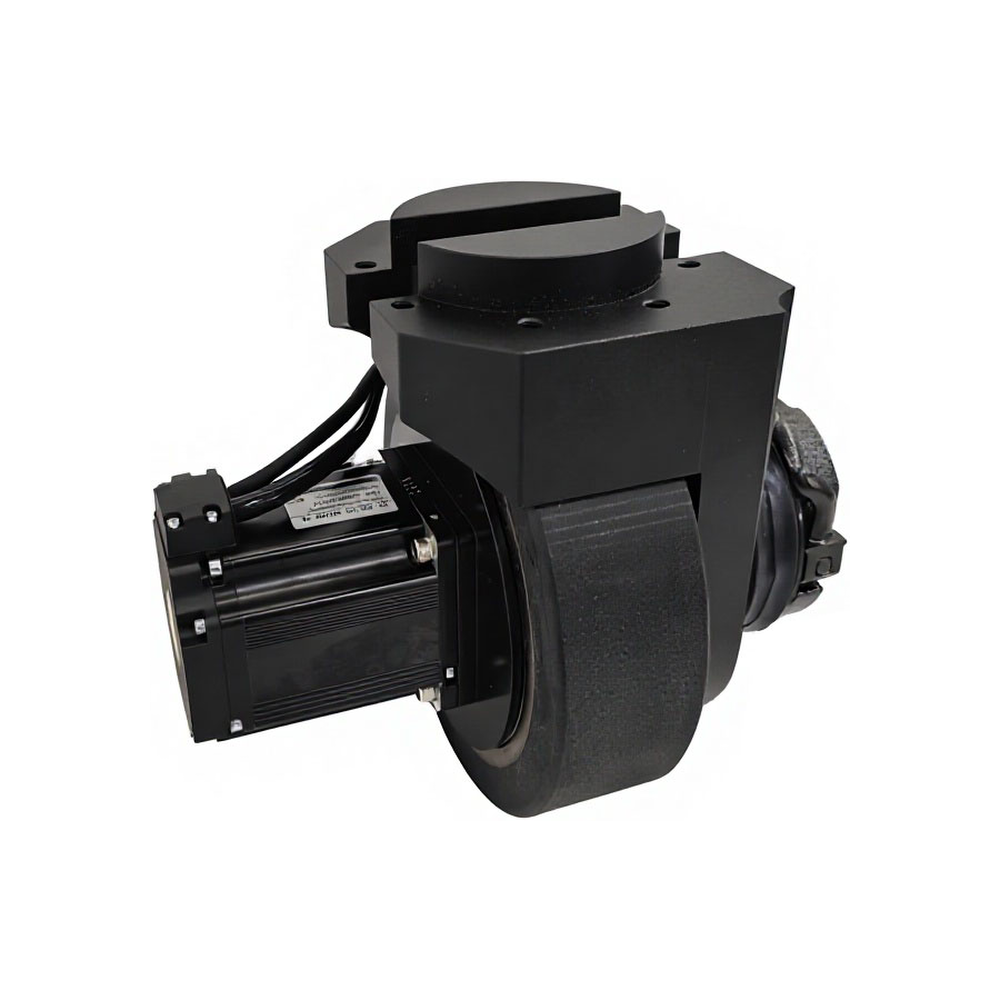
TZBOT agv Wheel Traction Accessories 1000kg Heavy Duty Capacity Material Handling Equipment Part Horizontal Drive Wheel Assembly
A 1,000 kg heavy-duty horizontal drive wheel assembly for material-handling equipment. Its horizontal layout is useful when chassis height is constrained and an under-ride or low-profile drive package is needed.
- 1,000 kg
- Horizontal layout
- Low clearance

TZBOT Auto Guidance Mobile Chassis 1000kg Payload AGV Integrate Arm Robotic Intelligent Composite Robot
A 1,000 kg payload auto-guidance mobile chassis designed for integration with a robotic arm. It is relevant for intelligent composite robots that need a stable base, navigation headroom, and room for safety sensors.
- 1,000 kg payload
- AGV + arm
- Intelligent composite
Not sure which module fits your platform?
Share the vehicle payload, target speed, chassis height, battery voltage, LiDAR placement, and whether the route passes through reflective or public areas. The product links above retain the original catalog naming; the application review can translate those modules into a laser-navigation or hybrid-navigation architecture for a Las Vegas site.
What Las Vegas Buyers Mean by “Laser Navigation AGV Manufacturers & Exporters”
Semantic search intent in Las Vegas is rarely satisfied by a generic supplier page. A buyer searching this phrase usually wants three proofs at once: manufacturing depth, export readiness, and a navigation system that survives a demanding indoor environment.
Manufacturer proof, not a trading label
When a search includes “manufacturers,” procurement teams look for factory evidence, customization capability, engineering communication, and traceable testing. The supplier profile behind these products states a 2015 founding date, ISO 9001:2015 certification, Intertek onsite verification, eight patents, and a 1,000–3,000 m² factory footprint. Those signals matter because laser-navigation AGV projects often require changes to motor power, voltage, reduction ratio, wheel tread, encoder type, brake options, and mounting interfaces rather than a simple catalog purchase.
Exporter serving Las Vegas, not just a shipper
“Exporters serving Las Vegas” adds a second layer of intent: Incoterms, payment methods, export packing, documentation, spare-parts planning, and technical support across time zones. The disclosed trade profile includes T/T, L/C, D/P, D/A, credit card, PayPal, Western Union, cash and escrow, with delivery terms such as FOB, CFR, CIF, EXW, CIP, FCA, CPT, DDU and express delivery. These options are not a promise of lead time; they are the commercial vocabulary a Nevada integrator needs before requesting a formal quotation.
Laser navigation as a system, not a single part
A laser-navigation AGV is an integration stack: LiDAR, SLAM processing, safety scanners, path control, drive wheels, motor drivers, encoders, brake logic, and WMS/WCS interfaces. The most useful supplier is one that can align the wheel, motor, and controller instead of forcing the integrator to solve mismatched electronics. This is where the product range becomes relevant: smart controllers, magnetic-guided controllers for hybrid redundancy, heavy-duty drive units, horizontal drive assemblies, and composite mobile chassis can be evaluated as one drive-train ecosystem.
Information gain for Las Vegas
The local difference is reflective architecture combined with changing public spaces. Las Vegas resorts, convention venues, and showrooms can present glass, mirrors, polished stone, high ceilings, drapery, moving crowds, and temporary partitions. A pure laser-SLAM plan may work well in a high-ceiling warehouse but need hybrid logic near reflective lobbies or high-traffic back-of-house corridors. This guide therefore treats magnetic, RFID, and laser navigation as complementary options rather than competing checkboxes.
Where Laser Navigation AGVs Fit in and Around Las Vegas
Las Vegas has a split automation personality: warehouse floors that need throughput and resort back-of-house spaces that need discretion, safety, and fast reconfiguration. The same AGV drive train can serve both, but the navigation and safety logic must be specified differently.
Resort and casino back-of-house logistics
Linen transport, food-and-beverage replenishment, amenity carts, and uniform handling move through service corridors, service elevators, and staging rooms. Laser navigation reduces dependence on floor tape, which is valuable where finishes must stay pristine. Practical recommendations include safety LiDAR with restricted zones, low-speed public-adjacent modes, and a hybrid fallback where mirrors or decorative surfaces disturb the SLAM map.
North Las Vegas and Henderson fulfillment centers
Warehouse and 3PL teams search for pallet movement, replenishment, and cross-docking support. Heavy-duty differential units and 2,000 kg traction-capacity drive wheels become relevant for pallet movers and tuggers, while the 1,000 kg horizontal drive wheel assembly can support lower-clearance chassis. Laser SLAM can be attractive where racks are moved, but floor reflectivity, wrap stations, and charging-area clutter should be mapped and validated in a pilot.
Convention centers and live-event spaces
Las Vegas event calendars create repeated layout changes. Tape-based guidance is fast on a stable route but less attractive when booths, partitions, and temporary walls are rebuilt frequently. Laser navigation with saved venue maps and geofenced speed zones can reduce rework. For high-value areas, RFID tags at stations can confirm pickup and drop-off points even when natural features change.
Healthcare, laboratories, and sterile logistics
Hospitals and labs need quiet, repeatable movement of supplies, lab kits, linen, and waste. Low-profile horizontal drive assemblies help where carts must sit close to the floor; smooth acceleration reduces shifts of payloads. Laser navigation should be paired with safety scanners, object detection, and route rules that avoid patient-adjacent corridors during peak hours. The 19V–29V controller product is relevant for compact delivery platforms with space constraints.
Airport, cargo, and ground-support environments
Airport-adjacent operations require robust traction, clear emergency-stop behavior, and spare-parts planning. Heavy-duty drive units, brake options, and encoder matching become more important than aesthetic integration. For route planning, do not rely on the same map at all hours: cargo zones and service lanes may be blocked by equipment. Use live obstacle avoidance and conservative speed zones in mixed-traffic areas.
Mobile manipulation and manufacturing support
The 600 kg composite robot and 1,000 kg payload mobile chassis with arm integration point to a second trend: moving the robot to the work instead of moving work to a fixed robot. In Las Vegas, this can support assembly, kitting, showroom logistics, and maintenance operations. Before ordering, validate floor flatness, arm reach, center-of-gravity changes, and safety clearances with the arm in its full range.
Las Vegas Trend Radar: What Is Changing in AGV Procurement
These qualitative indicators are planning aids, not product-performance claims. They help Las Vegas buyers ask better questions before committing to a pilot layout, a navigation method, or a custom drive-train specification.
Spaces reconfigure faster
Events, promotions, pop-up operations, and seasonal layouts change floor plans. Buyers increasingly value saved maps, route versioning, and hybrid navigation over routes that require re-taping.
Sensor fusion becomes normal
Laser SLAM is strong in open warehouses, but Las Vegas resort interiors can challenge any single sensor. Magnetic, RFID, and LiDAR combinations provide redundancy without losing route flexibility.
Heat and duty cycle are design inputs
Las Vegas summer conditions make thermal validation important. Motor duty cycle, controller enclosure design, ventilation, battery behavior, and charging-room temperature should be reviewed with the integrator.
Mobile manipulation grows
Composite robots combine a mobile chassis with an arm to reduce handoffs. For Las Vegas operations, the value is strongest where the work is repetitive, the payload is known, and safety zones can be clearly defined.
Drive Wheel, Laser SLAM, and Hybrid Navigation Selection
Use this section as a pre-RFQ comparison. It prevents the common mistake of selecting a navigation method before understanding the drive wheel, floor condition, safety zones, and traffic profile.
Drive wheel configuration
| Configuration | Motion behavior | Best Las Vegas fit |
|---|---|---|
| Differential drive unit | Two independently driven wheels change speed to turn. | Compact latent, jacking, and tugger AGVs; warehouse routes with tight turns. |
| Single steering drive wheel | A drive motor plus steering motor controls wheel angle. | Forklift-style AGVs, tricycle chassis, and controlled dock-to-stock movement. |
| Horizontal drive assembly | The motor sits horizontally to reduce build height. | Low-clearance chassis, under-ride carts, and retrofit platforms where vertical space is limited. |
Navigation and positioning
| Method | Infrastructure | Best Las Vegas application |
|---|---|---|
| Laser SLAM / LiDAR | Natural features; no floor tape required. | Warehouses with changing racks and event spaces that need saved venue maps. |
| Magnetic guide sensor | Magnetic tape on the floor. | Stable, high-repeat routes where low cost and simple commissioning matter. |
| RFID position sensor | Tags at stations or junctions. | Pickup/drop-off confirmation and speed-zone triggers in blind or congested areas. |
| Hybrid navigation | Laser plus magnetic and/or RFID. | Resort back-of-house corridors, reflective lobbies, and public-adjacent areas where one sensor is not enough. |
Laser SLAM fit by space
Drive-train specification priority
Export-readiness review
Zhejiang Torqen Technology Co., Ltd. — Motion Control and Export Support
The supplier profile behind this product line is built around one practical idea: match the wheel, motor, driver, and navigation accessory before shipping so the buyer spends less time integrating mismatched components.
One-source drive-train matching
Torqen’s profile covers AGV drive wheel assemblies, DC/AC motors, encoders, reducers, motor controllers, casters, PU wheels, and in-wheel units. That breadth is useful when a laser-navigation AGV requires the drive wheel, servo driver, and braking logic to be engineered together.
OEM / ODM customization
The disclosed customization model includes sample-based and design-based customization, OEM production, design services, and buyer-label packaging. Typical changes include motor power and voltage, reduction ratio, wheel diameter, tread material, encoder type, brake options, and mounting interfaces.
Test-first quality control
Quality is supported by ISO 9001:2015 certification, Intertek onsite verification, finished-product inspection, five in-house testing instruments, and extended-duration prototype testing. For a Las Vegas deployment, request the relevant inspection records and confirm the exact test standard for your configuration.
Export-ready trade desk
The trade profile lists payment methods such as T/T, L/C, D/P, D/A, credit card, PayPal, Western Union, cash and escrow, in USD, EUR, JPY, CAD, AUD, HKD, GBP or CNY. Delivery terms include FOB, CFR, CIF, EXW, CIP, FCA, CPT, DDU and express delivery.
Integration and after-sales support
The supplier reports a 97.9% inquiry response rate and a 4.9/5 buyer rating. Support can include wiring diagrams, driver parameter files, commissioning guidance, spare-parts supply, and fault analysis backed by production records. Always confirm the named technical contact and escalation path in the quotation.
Verified capacity and credentials
The company profile states a 2015 founding date, factory size of 1,000–3,000 m², annual output of US$5M–10M, and a team of 51–100 people. Eight patents are listed, and the business is described as a manufacturer and trading company with global export experience.

Pre-Purchase Checklist for a Las Vegas Laser Navigation AGV Project
Before sending an RFQ, collect the data that determines motor power, reduction ratio, wheel diameter, safety configuration, and integration effort. This short checklist reduces sampling cycles and prevents orphaned technical questions later.
- Gross vehicle weight, maximum payload, target speed, acceleration, and maximum ramp gradient.
- Available chassis height, wheel diameter constraints, suspension preference, and floor material.
- Battery voltage, charger profile, duty cycle, and expected charging-room temperature.
- LiDAR mounting height, glass or mirror locations, aisle width, and high-traffic pedestrian zones.
- Safety scanner zones, emergency-stop behavior, bumper requirements, and restricted-area rules.
- WMS/WCS or fleet-management interface, required I/O, communication protocol, and spare-parts plan.
Las Vegas Buyer FAQ: Product, Navigation, and Procurement Questions
Are you a laser navigation AGV manufacturer, an exporter, or both?
The supplier profile describes a manufacturer and trading company that produces AGV drive wheels, motors, controllers, sensors, and related accessories, while also supporting export sales. In practice, a Las Vegas buyer should verify three things: the manufacturing scope for the exact product, the customization boundary for the requested drive wheel or controller, and the export terms and documentation path for the shipment. The product links in this guide preserve the original catalog URLs so the buyer can compare the listed module before requesting a quotation.
Which product should a Las Vegas integrator start with?
Start from the vehicle architecture, not the part number. For a compact garage-style AMR, begin with the 19V–29V controller and a suitable low-clearance drive unit. For a heavy pallet mover, start with the 2,000 kg differential steering drive wheel or the 48V 2-ton differential unit and then match the motor driver. For a laser-navigation platform that must move through reflective interior spaces, evaluate the smart controller together with a magnetic or RFID fallback. For mobile manipulation, the 600 kg composite robot and 1,000 kg payload chassis with arm integration are the logical starting points.
Can laser navigation handle reflective casino interiors and polished floors?
It can, but it should not be assumed without a site survey. LiDAR uses reflected light, so mirrors, glass walls, polished stone, chrome, and large decorative surfaces can create sparse returns, multipath, or temporary mismatches. The safer approach is a hybrid architecture: laser SLAM for flexible routes, safety LiDAR for independent obstacle detection, and magnetic or RFID checkpoints in known blind zones. Test the actual route at different times of day, because lighting, crowds, and temporary partitions can change the map quality.
How should drive hardware be specified for Las Vegas heat and dust?
Treat heat and dust as application constraints, not as marketing claims. Confirm the motor duty cycle, controller enclosure, ventilation path, brake behavior, battery temperature limits, and charging-room conditions. In dusty back-of-house or warehouse areas, protect fans and connectors and plan a cleaning interval. For outdoor or semi-outdoor dock areas, verify the ingress protection and thermal derating that apply to the exact configuration. The supplier’s test records and your integrator’s site validation should both be part of the acceptance process.
What quality evidence is available before shipping to Nevada?
The company profile cites ISO 9001:2015 certification, Intertek onsite verification, finished-product inspection with five in-house testing instruments, and extended-duration prototype testing before production release. For a specific order, request the product drawing, key inspection points, motor and controller matching data, wheel load and speed assumptions, and the final inspection record. If the vehicle will operate in public-adjacent areas, separately document the safety-device logic supplied by the integrator.
What payment and delivery terms are accepted?
The disclosed trade profile lists payment methods including T/T, L/C, D/P, D/A, MoneyGram, credit card, PayPal, Western Union, cash and escrow, with currencies including USD, EUR, JPY, CAD, AUD, HKD, GBP and CNY. Delivery terms include FOB, CFR, CIF, EXW, CIP, FCA, CPT, DDU and express delivery. These options should be confirmed in the final quotation because the correct term depends on the shipment size, destination, customs arrangement, and whether the buyer or supplier manages the freight.
Can the products integrate with an existing WMS, WCS, or safety system?
Integration depends on the selected controller, driver, and fleet architecture. Before ordering, provide the required communication protocol, I/O list, safety-scanner interface, vehicle-control responsibility split, and the WMS/WCS handshake expectations. The supplier can provide wiring diagrams and driver parameter files, but the final system integration and risk assessment are normally completed by the vehicle integrator. A factory test of the controller and drive unit is useful, but it does not replace a full vehicle-level safety validation in Las Vegas.
How does OEM/ODM sampling work for a custom drive or chassis?
A practical sampling sequence is: requirement review, engineering proposal, prototype build, endurance testing, production review, and shipment. For the requirement review, prepare payload, speed, gradient, wheel diameter, mounting pattern, battery voltage, encoder type, brake preference, and environmental notes. If the project involves a composite robot, also share arm mass, center-of-gravity changes, and the safety clearance envelope. Customization can include motor power and voltage, reduction ratio, wheel tread, encoder type, brake options, and mounting interfaces, but every change should be documented in the approved drawing.
Specifying a Laser Navigation AGV for Las Vegas?
Send the payload, speed, chassis height, battery voltage, LiDAR placement, route environment, and target layout. The application review can translate those inputs into a drive-wheel, controller, and navigation-accessory recommendation for a warehouse, resort back-of-house, convention space, or mobile-manipulation project.
Please verify final specifications, safety requirements, and local code compliance with the integrator before deployment.
