8 AGV Navigation & Drive Components for RFID-Enabled Fleets
RFID position sensors work best inside a matched navigation and motion stack. The eight products below cover the command layer, traction, steering, heavy-load drive, and compact AMR platforms that El Paso integrators frequently evaluate for warehouse and cross-border material flow projects.
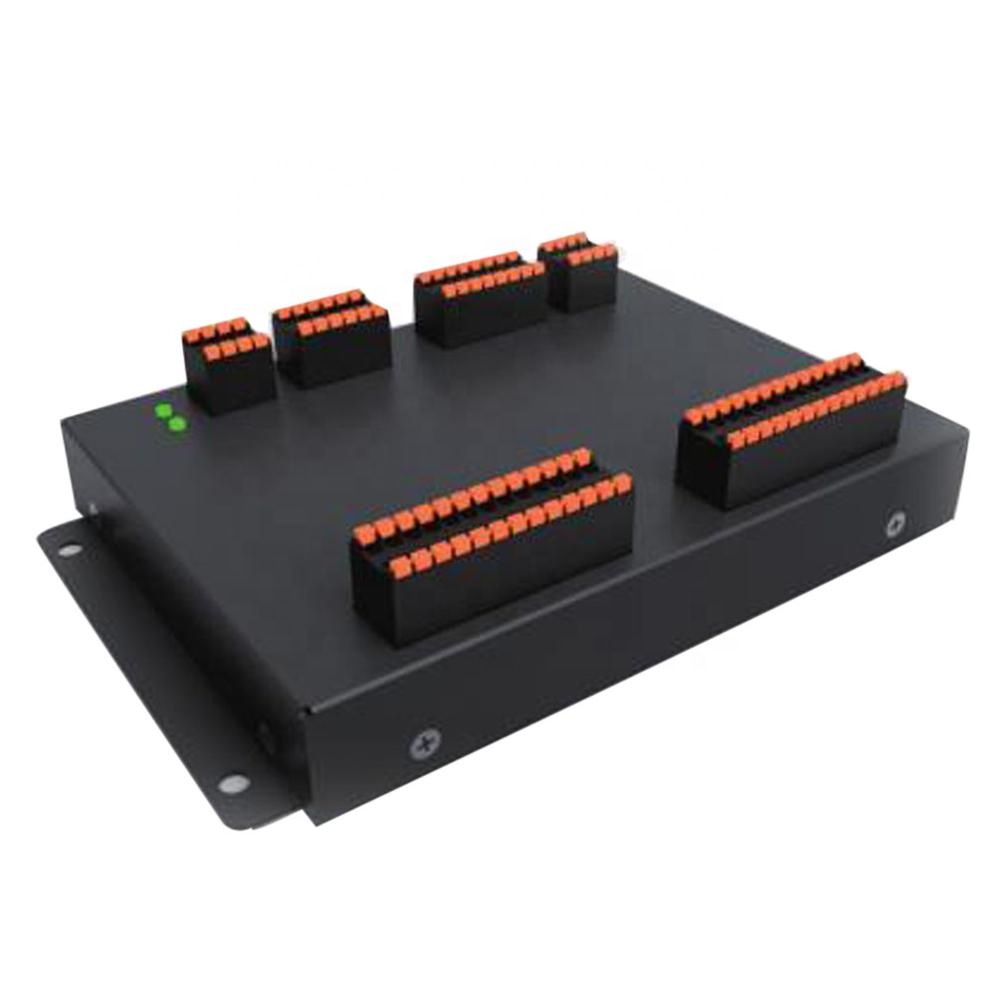
TZBOT Smart Controller TZC-MST-FX200D-A for Guiding the AGV Robot
Recommended when an El Paso integrator needs a command controller for station-read logic, magnetic guidance, drive commands, and coordinated AGV safety I/O.
- AGV command layer
- Sensor integration
- OEM configuration

TZBOT 48V DC 2 Ton Heavy Duty Differential Unit AGV Wheel TZCS-750-30
A high-payload traction option for towing, transfer, and dock-side AGV routes where RFID tags confirm trailer lanes, speed zones, and handoff points.
- 2-ton class
- 48V DC
- Differential drive
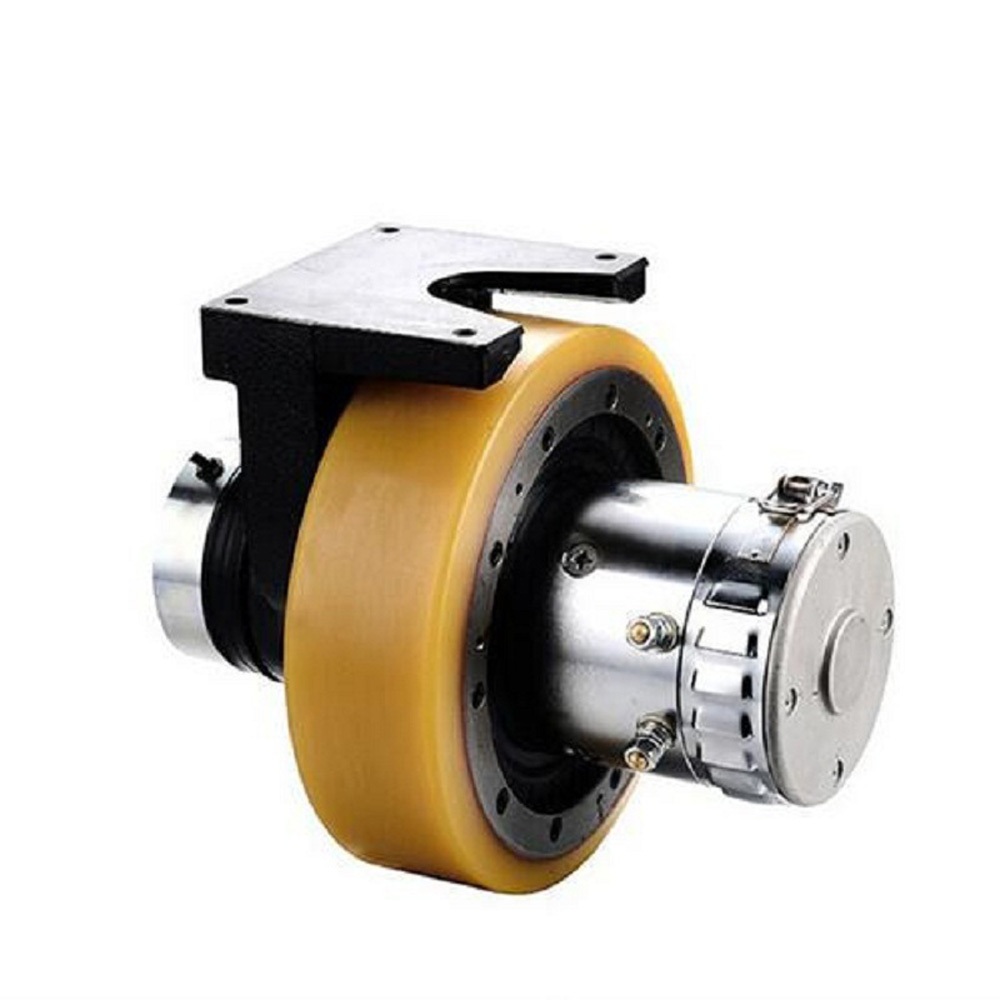
TZBOT TZ18-D12 1200W 24V Horizontal Drive Wheel Assembly Horizontal Wheel Unit Omnidirectional Automatic Steering Wheel
Useful for low-clearance omnidirectional platforms that need precise steering at RFID junctions, workcells, and compact warehouse aisles.
- 1200W
- 24V
- Omnidirectional steering

TZBOT Backpack AGV 200kg Load Capacity Chassis Magnetic Guidance Composite Robot with Robotic Arm
A compact 200kg mobile chassis for robotic-arm cells, kitting stations, and laboratory or electronics workflows where RFID tags trigger station-specific tasks.
- 200kg payload
- Magnetic guidance
- Composite robot base
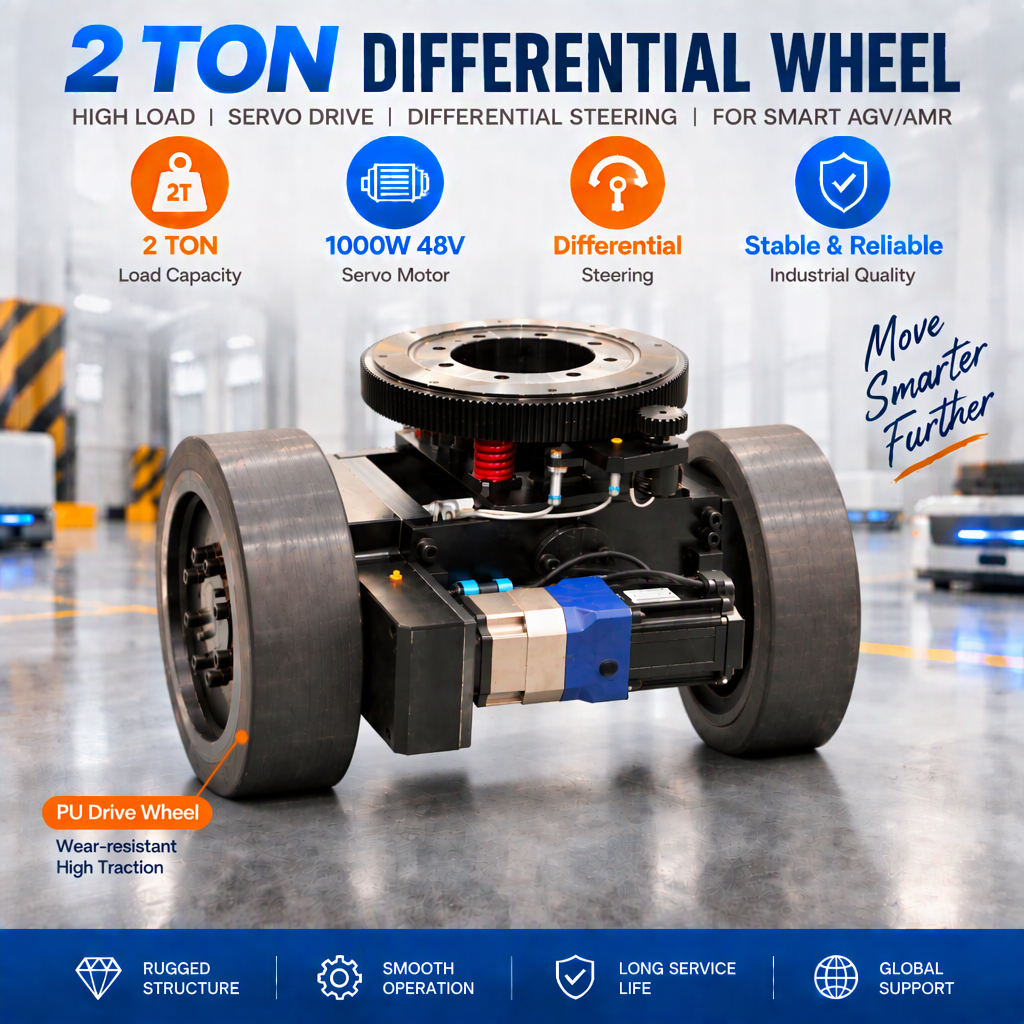
TZBOT Customized 2000kg Bearing Duty agv Wheel 1000w 48V Heavy Duty Series Mobile Robot Differential Drive Wheel with Suspension
Recommended for uneven dock transitions and high-load transfer carts that need suspension, 1000W traction, and stable RFID read events at floor level.
- 2000kg bearing duty
- 1000W / 48V
- Suspension design
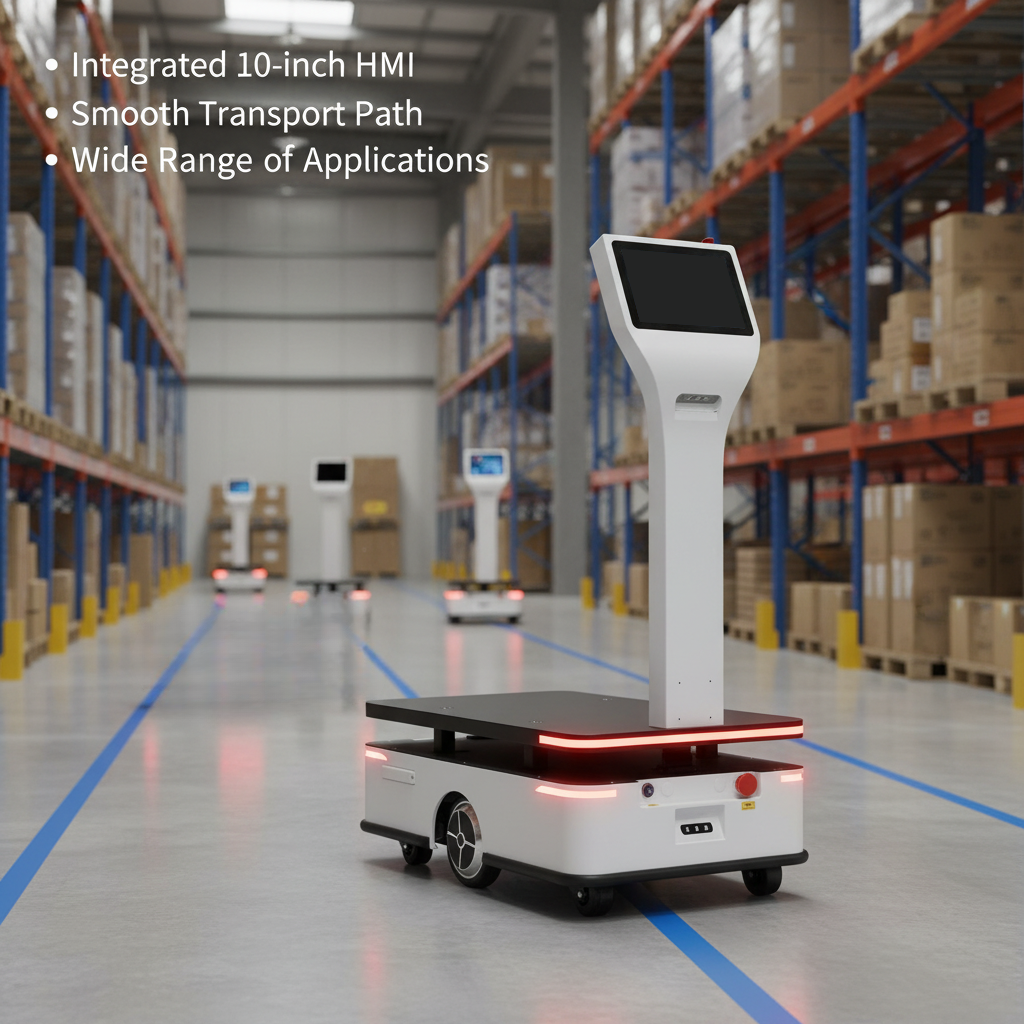
TZBOT Intelligent Warehouse Logistic Robot Unmanned Control System Customizable 80kg Payload agv Transfer Cart Slam Amr
A flexible 80kg SLAM AMR platform for warehouses that combine natural navigation with RFID landmarks for station confirmation and process traceability.
- 80kg payload
- SLAM navigation
- Warehouse transfer
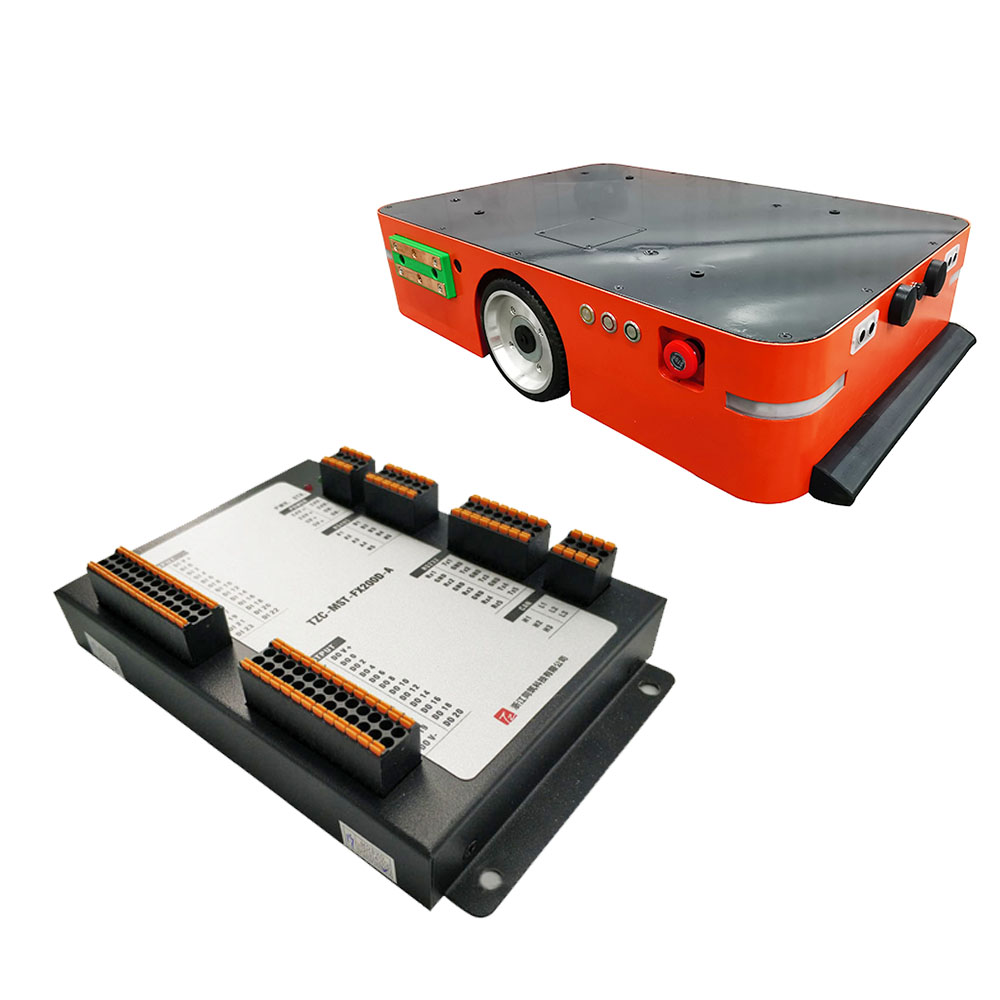
TZBOT Smart agv Controller for Commanding the AGV
A central control component for AGV builders who need coordinated steering, traction, safety sensors, RFID station data, and task execution.
- Vehicle command
- I/O coordination
- Custom parameters
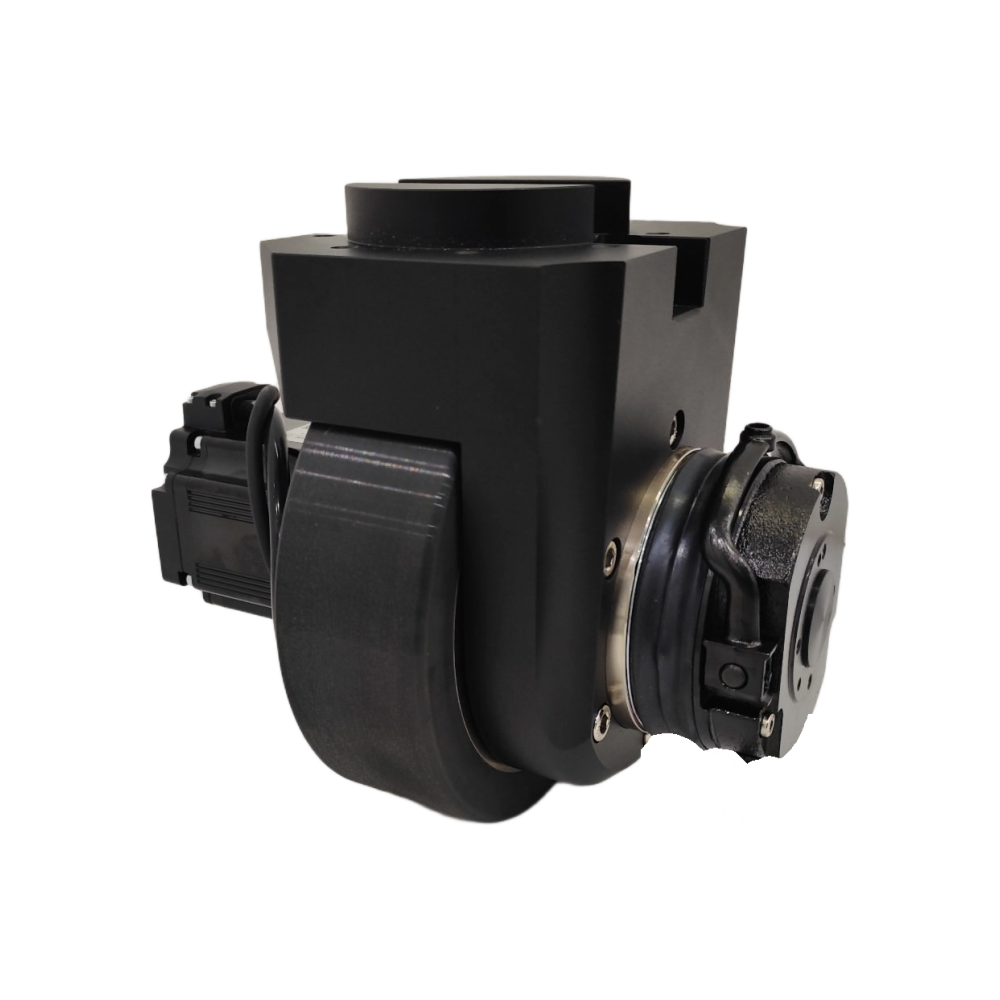
TZBOT Compact Structure agv Wheel Imported Polyurethane 1000kg Load Duty Mobile Robot Horizontal Drive Wheel Unit
An indoor horizontal drive with imported polyurethane tread for smooth floors, tighter chassis packaging, and quieter operation in distribution centers.
- 1000kg load duty
- Imported PU tread
- Compact structure
Transparency note: Torqen manufactures the eight products shown above. This guide is written to help El Paso buyers benchmark suppliers and wholesalers using verifiable engineering, quality, and logistics criteria—not to present paid or unverifiable popularity rankings.
RFID Position Sensors Are Becoming the Navigation Glue for El Paso AGV Fleets
El Paso sits at one of North America’s most important cross-border manufacturing and logistics corridors. For AGV buyers in the region, navigation reliability is not only a robotics question—it is a production, warehouse, and border-flow question.
An RFID position sensor for AGV navigation is often misunderstood. It is not a continuous positioning system like laser SLAM or a high-resolution magnetic guide. Instead, it is a discrete landmark reader: when an AGV passes over or near an RFID tag, the reader confirms that the vehicle has reached a known station, junction, speed zone, charging bay, elevator lobby, or handoff point. That single confirmation can trigger task completion, route branching, conveyor handshake, safety-zone behavior, or a warehouse management system update.
That makes RFID especially useful in El Paso facilities that combine fixed process logic with changing operational priorities. A maquiladora line may need an AGV to stop at exactly the right kitting station. A 3PL near I-10 may need a transfer cart to confirm the correct outbound lane. A cross-border warehouse may need an AGV to prove that a pallet reached the dock staging area before a trailer is loaded. In each case, the value of RFID is not just “positioning”—it is process certainty at the moment of decision.
For procurement teams comparing suppliers and wholesalers in El Paso, the practical question is not simply “Who sells the cheapest reader?” It is “Who can supply a reader, controller, drive wheel, and sensor stack that work together, survive the floor environment, and arrive with clear integration support?” That is where a factory-direct engineering supplier such as Torqen becomes relevant. Torqen’s product range covers AGV vehicles, differential and steering drive wheels, motor drivers and controllers, magnetic guide sensors, RFID position sensors, lidar sensors, motors, and accessories—so the navigation layer and the motion layer can be matched before shipment.
This guide is intentionally evidence-oriented. A credible “top 10” list should show its evaluation method. Because local stock, tariffs, lead times, and distributor availability can change, the most useful approach is to rank the criteria that separate a reliable supplier from a risky one, then use those criteria to score quotes from El Paso distributors, system integrators, and factory-direct manufacturers.
- Information gain: RFID is a discrete landmark technology. Pair it with magnetic guide, QR, SLAM, or lidar for continuous navigation and exception handling.
- Integration gain: Buy drive wheels, controllers, and sensors from a supplier that can document voltage, current, communication, and mounting compatibility.
- Local gain: For El Paso, plan for heat, dust, cross-border documentation, dock transitions, and maintenance response—not just lab performance.
El Paso buyer snapshot
El Paso’s industrial ecosystem frequently involves multi-shift production, trailer yards, rail and highway connections, and cross-border supply chains. An AGV that works in a clean showroom may fail at a dock seal, a wash-down zone, or a transition plate. Buyers should test the complete navigation stack against the real floor, real tag placement, and real traffic pattern.
| RFID role | Best use |
|---|---|
| Station ID | Confirm pick, drop, kitting, inspection, or charging locations. |
| Speed zone | Slow the AGV near pedestrian crossings, dock doors, or blind corners. |
| Route branch | Select a lane or process path at a junction. |
| Traceability | Log arrival and departure events for WMS, MES, or quality records. |
Top 10 Supplier & Wholesaler Criteria for El Paso Buyers
Use this ten-point scorecard to compare RFID position sensor suppliers, AGV wholesalers, local distributors, and factory-direct manufacturers. It is designed for procurement teams that need defensible selection logic, not a directory of unverified claims.
| Rank | Criterion | Why it matters in El Paso | Evidence to request |
|---|---|---|---|
| 1 | Application engineering depth | RFID read distance, tag spacing, mounting height, and speed must match the actual AGV route and floor conditions. | Tag layout review, read-range test data, wiring diagram, and commissioning checklist. |
| 2 | Full-stack compatibility | El Paso integrators often combine sensors, controllers, drive wheels, and safety devices from several sources. | Voltage/current compatibility, communication protocol, I/O map, and matched drive-wheel recommendations. |
| 3 | Factory-direct vs local distributor clarity | Local stock can shorten downtime, while factory-direct support can improve customization and unit economics. | Written lead time, stock location, warranty path, escalation contact, and whether the seller is the manufacturer. |
| 4 | Environmental durability | Heat, dust, trailer-yard dirt, wash-down areas, and cold-chain zones can degrade poorly protected electronics. | IP rating, operating temperature, housing material, connector protection, and maintenance interval. |
| 5 | EMC and electrical resilience | AGV battery systems, servo drives, chargers, and nearby machinery can introduce electrical noise. | EMC test approach, grounding guidance, surge/overcurrent protection, and field-installation notes. |
| 6 | OEM / ODM customization | Chassis height, payload, voltage, wheel tread, encoder, brake, and mounting interfaces often need adjustment. | Sample-based customization, design-based customization, buyer-label packaging, and approval drawings. |
| 7 | Inspection and traceability | Downtime at a distribution center or production line is expensive; buyers need documented quality control. | ISO 9001:2015 certificate, onsite verification, testing instruments list, inspection record, and serial traceability. |
| 8 | Supply continuity and lead time | Cross-border projects can be delayed by missing components, changing tariffs, or long ocean-freight cycles. | Production schedule, safety stock policy, component availability, and realistic shipping windows. |
| 9 | Export and cross-border logistics | El Paso buyers often need FOB, CIF, EXW, DDU, or express delivery with clear documentation. | Incoterms, export packing photos, commercial invoice support, and experience with global shipping. |
| 10 | Lifecycle and after-sales support | Sensor alignment, driver parameters, and spare-part availability matter long after the purchase order. | Spare parts list, technical response channel, warranty terms, and fault-analysis process. |
Suggested evaluation weighting
A balanced procurement scorecard helps prevent the lowest unit price from dominating a decision that affects uptime, safety, and integration labor.
RFID vs. other AGV navigation methods
| Method | Infrastructure | Best fit |
|---|---|---|
| RFID position sensor | Tags at stations or decision points | Station ID, route branching, process traceability |
| Magnetic guide | Magnetic tape on floor | Fixed routes with low-cost deployment |
| QR code navigation | Floor QR grid | Grid warehouses and goods-to-person systems |
| Laser SLAM / lidar | Natural features; no fixed tape | Flexible routes and changing layouts |
Where RFID-Enabled AGV Navigation Creates Value in El Paso
El Paso’s mix of manufacturing, warehousing, cross-border logistics, and distribution creates several high-value use cases for AGV navigation with RFID confirmation.
Maquiladora line-side replenishment
AGVs move kits and components to production stations; RFID tags confirm the correct line, shift route logic, and update MES or WMS records.
Cross-border dock staging
RFID landmark reads confirm trailer lanes, staging zones, and handoff points before a vehicle or pallet crosses the dock.
3PL distribution centers
Put-away, replenishment, and picking routes use RFID to confirm aisle ends, pick faces, charging bays, and exception zones.
Cold chain and food distribution
RFID tags identify freezer doors, staging lanes, and inspection stops; component selection must account for condensation and temperature swings.
Automotive and electronics sequencing
Station-specific RFID reads support sequenced delivery, quality checks, and traceability in multi-shift production environments.
Retrofit and legacy AGV upgrades
Older magnetic-guided vehicles can add RFID station confirmation and modern controllers without replacing the entire fleet at once.
El Paso Automation Trends Shaping AGV Sensor Procurement
These trends explain why buyers are asking for more than a standalone reader—they want a navigation component that fits a broader automation and logistics strategy.
Nearshoring and cross-border manufacturing
As production and logistics activity expands across the El Paso–Juárez corridor, factories and warehouses need repeatable material flow with traceable station events.
Micro-fulfillment and 3PL growth
Faster order cycles and smaller batch sizes favor AGV systems that can confirm destinations at the point of action, not only at the end of a route.
Safety and labor optimization
AGVs reduce repetitive travel, but safe deployment depends on speed zones, pedestrian crossings, and reliable stopping behavior at known landmarks.
Dock-to-stock integration
Buyers increasingly want AGVs to confirm trailer lanes, staging positions, and conveyor handoffs—RFID is a practical low-cost confirmation layer.
Retrofit-friendly controls
Instead of replacing every AGV, many sites upgrade controllers, drive wheels, and sensors to extend fleet life and improve station-level accuracy.
Supply-chain resilience
Lead-time volatility makes supplier documentation, export experience, and replacement-part planning as important as the initial product specification.
Why Torqen Is a Practical Factory-Direct Partner for El Paso AGV Projects
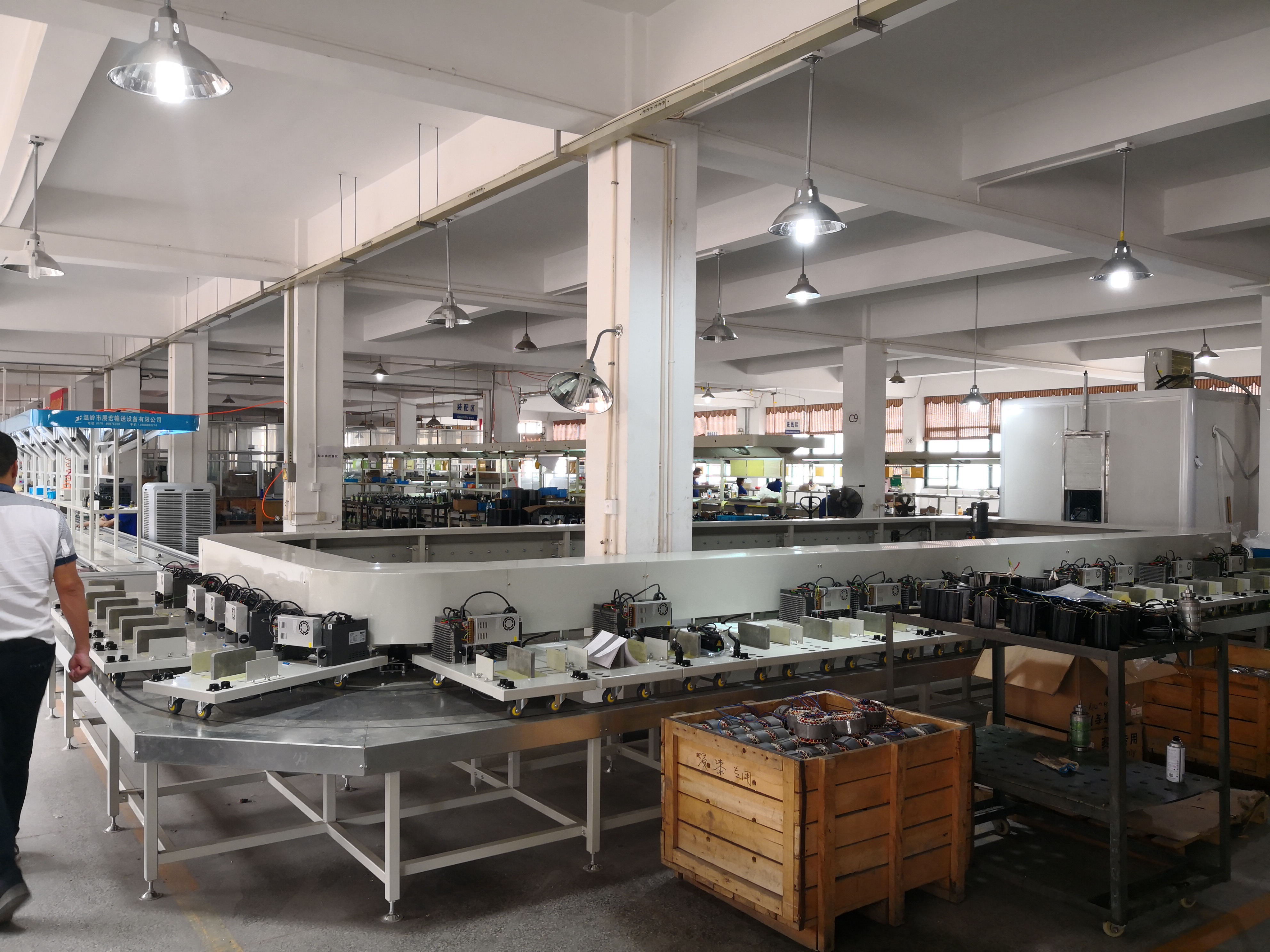
Zhejiang Torqen Technology Co., Ltd. combines AGV vehicles, drive wheels, motors, controllers, and navigation sensors under one manufacturing and engineering workflow.
Founded in 2015 in Zhejiang, China, Zhejiang Torqen Technology Co., Ltd. designs and manufactures automatic guided vehicles, AGV drive wheel assemblies, DC/AC motors, encoders, reducers, motor controllers, caster and PU wheels, and navigation sensors for automation builders worldwide. For an El Paso buyer, that breadth matters because it reduces the number of vendors responsible for motion, sensing, and control compatibility.
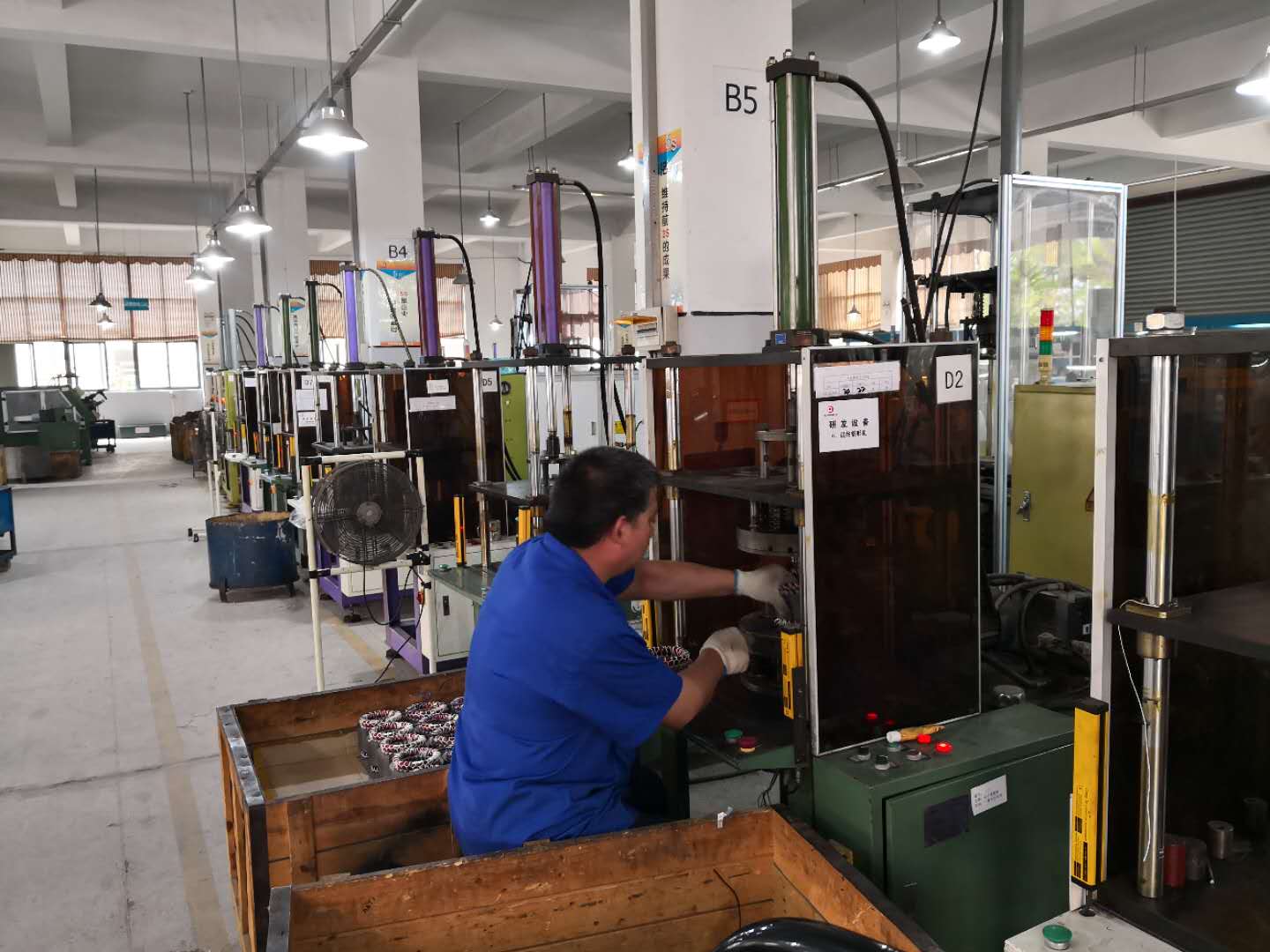
Torqen is an ISO 9001:2015 certified manufacturer and has been verified onsite by Intertek. The company reports eight awarded patents, a 51–100 person team, a factory footprint of 1,000–3,000 m², and annual output in the US$5M–10M range. Its quality process includes finished-product inspection with five in-house testing instruments, and prototypes undergo extended-duration testing before production parts are released.
- Complete drive train: differential, steering, and horizontal drive units can be matched with motors, reducers, encoders, brakes, and controllers.
- Custom engineering: sample-based customization, design-based customization, motor power and voltage changes, reduction ratio, wheel diameter and tread, encoder type, brake options, and mounting interfaces.
- Integration support: wiring diagrams, driver parameter files, commissioning guidance, spare-parts supply, and fault analysis backed by production records.
- Export readiness: flexible payment methods and delivery terms for global buyers, including T/T, L/C, D/P, D/A, credit card, PayPal, Western Union, and escrow in multiple currencies.

How to Specify an RFID Position Sensor for an AGV in El Paso
A robust specification starts with the vehicle’s route, floor, and process logic—not with the reader alone.
First, define what the RFID event must do. If the tag simply identifies a station, a moderate read range may be sufficient. If the AGV must read a tag at speed, during a turn, or from a variable mounting height, the engineering team needs to evaluate tag orientation, reader antenna placement, and read-window duration. In many El Paso facilities, the hardest part is not the reader itself but the floor environment: dock plates, expansion joints, forklift traffic, pallet debris, and changing magnetic or metallic surroundings.
Second, match the RFID sensor to the navigation architecture. A vehicle using magnetic tape for continuous path following may use RFID only for station confirmation. A SLAM AMR may use RFID to anchor a process step where natural-feature localization is not enough. A QR-guided warehouse robot may use RFID to validate a pick face before the robot raises a shelf. Treating RFID as a complementary landmark layer improves reliability without overloading the sensor with a job it was not designed to do.
Third, verify the electrical and mechanical fit. Confirm the AGV battery voltage, controller input compatibility, communication protocol, mounting height, cable routing, and protection class. If you are selecting a drive wheel at the same time, share the gross vehicle weight, target speed, maximum gradient, chassis height, and wheel diameter constraints. Torqen’s application team can use those values to recommend a differential, steering, or horizontal drive configuration and coordinate it with the controller and sensor package.
| Specification area | Question to answer before quoting | Why it affects supplier selection |
|---|---|---|
| Read event | Is RFID used for station ID, speed control, route branching, or traceability? | Different events require different tag density, mounting, and controller logic. |
| Floor and traffic | Are there dock transitions, wash-down zones, dust, metal plates, or high forklift traffic? | Protection class, housing, and mounting design must match the real environment. |
| Vehicle speed | How fast does the AGV pass the tag, and how long is the read window? | Read range and antenna orientation determine whether the event is reliable. |
| Controls | Which controller, PLC, or fleet manager receives the RFID event? | Protocol and I/O compatibility reduce integration labor and commissioning risk. |
| Drive system | What payload, wheel type, voltage, and braking method are required? | A matched drive train prevents mismatched torque, speed, and stopping behavior. |
Engineer’s tip: Do not specify an RFID sensor in isolation. Send your route map, tag layout, vehicle weight, target speed, chassis height, and controller preference together. This shortens the sampling cycle and reduces the risk of a reader that works on a bench but not on the El Paso production floor.
Questions Local Buyers Ask Before Ordering RFID & AGV Components
These answers address the practical concerns that come up when El Paso manufacturers, warehouses, and integrators compare suppliers and wholesalers.
Are RFID position sensors enough for full AGV navigation?
No. RFID position sensors are best treated as discrete landmark readers for station identification, speed zones, junctions, and traceability. Continuous navigation is usually handled by magnetic guidance, QR code navigation, laser SLAM, lidar, or a combination. For El Paso facilities with mixed traffic and changing layouts, a hybrid navigation stack often provides better resilience than a single technology.
What local El Paso applications benefit most from RFID-enabled AGV navigation?
High-value applications include maquiladora line-side replenishment, cross-border dock staging, 3PL put-away and picking, cold-chain handoffs, automotive sequencing, and retrofit projects where older AGVs need station confirmation. The common factor is a need to prove that the vehicle reached a specific process point, not just that it moved along a path.
Can Torqen customize an RFID or AGV component for our chassis?
Yes. Torqen supports sample-based customization, design-based customization, OEM production, design services, and buyer-label packaging. Typical customizations include motor power and voltage, reduction ratio, wheel diameter and tread material, encoder type, brake options, mounting interfaces, and controller parameters. Buyers should provide drawings, route data, payload, speed, and electrical requirements before sampling.
How can we verify quality before a production order?
Request the ISO 9001:2015 certificate, onsite verification evidence, product inspection records, and testing-instrument list. Torqen’s quality process includes finished-product inspection with five in-house testing instruments, and prototypes undergo extended-duration testing before production parts are released. For critical projects, agree on acceptance criteria, sample approval drawings, and a pre-shipment inspection checklist.
Which drive wheel should we choose for an El Paso warehouse AGV?
Differential drive units suit compact latent, jacking, and shelf-lifting AGVs that turn by wheel-speed difference. Steering drive wheels suit forklift-type, tricycle, or tugger vehicles that need controlled steering angles. Horizontal drive assemblies suit low-clearance chassis. For heavy loads, suspension and wheel tread become more important, especially at dock transitions. Share payload, speed, chassis height, floor condition, and battery voltage so the drive can be matched to the route.
What lead times and shipping terms are available for El Paso buyers?
Lead time depends on whether the order is a standard product, a customized sample, or a production batch. Torqen supports FOB, CFR, CIF, EXW, CIP, FCA, CPT, DDU, and express delivery. Payment methods include T/T, L/C, D/P, D/A, MoneyGram, credit card, PayPal, Western Union, cash, and escrow, with currencies including USD, EUR, JPY, CAD, AUD, HKD, GBP, and CNY. Buyers should confirm Incoterm, packing method, and documentation requirements before ordering.
Do you provide integration support for controllers and sensors?
Yes. Torqen can provide wiring diagrams, driver parameter files, commissioning guidance, and recommendations for matching drive wheels, controllers, motors, and sensors. The goal is to reduce integration risk for El Paso integrators who may be combining our components with their own fleet software, safety system, or WMS/MES interface.
How do we start an inquiry?
Send your application details through the inquiry button on this page. Include the AGV type, payload, speed, chassis height, battery voltage, navigation method, RFID station logic, required quantity, delivery destination, and any customization requirements. If you have a drawing, route map, tag layout, or existing supplier part number, include it so the engineering team can respond with a more precise recommendation.
Why compare factory-direct suppliers with local wholesalers?
Local wholesalers can offer convenience, local stock, and faster emergency response. Factory-direct suppliers can offer deeper customization, matched components, and more direct engineering communication. The best choice depends on whether the priority is immediate replacement, new platform development, or total lifecycle cost. A transparent supplier should clearly state whether it manufactures the product, distributes it, or both.
Which industries use Torqen drive and navigation products?
Torqen products are used in AGVs and AMRs, forklifts, aerial work platforms, airport equipment, agricultural machines, hydraulic applications, floor scrubbers and sweepers, wind energy, marine equipment, and medical devices. For El Paso, the most relevant categories are usually warehouse automation, cross-border manufacturing, distribution, and industrial material handling.
A Practical Buying Path for El Paso Integrators
Use this sequence to move from a vague AGV navigation requirement to a testable supplier decision.
1. Map the route and decision points
Identify where the AGV must stop, slow down, branch, charge, or hand off. Mark those locations for RFID tags before requesting pricing.
2. Define the drive requirement
Calculate gross vehicle weight, target speed, gradient, wheel diameter, chassis clearance, and battery voltage. These values determine the drive wheel and motor.
3. Require evidence and samples
Ask for drawings, test data, certificates, and a sample or pilot configuration. Do not rely on a catalog photo alone for a production-line AGV.
4. Confirm logistics and lifecycle support
Verify Incoterm, export packing, spare-parts availability, warranty path, and technical response channel before releasing mass production.
5. Pilot on the real floor
Test heat, dust, dock transitions, tag wear, traffic, and reader alignment. A successful pilot should include failure-mode review, not only a pass/fail result.
6. Standardize the approved configuration
Document the approved sensor, controller, drive wheel, tag layout, parameter file, and spare-parts list so future orders and fleet expansions stay consistent.
Specifying an RFID-enabled AGV for El Paso?
Send your payload, speed, chassis height, battery voltage, navigation method, and RFID station logic. Torqen’s engineering team can recommend a matched drive wheel, controller, and sensor configuration for your application.
