8 Drive Wheel & Control Products Recommended for Nagoya AGV Projects
Nagoya sourcing teams usually need a drive wheel, a motion controller and a navigation component qualified together. The shortlist below covers heavy-duty differential wheels, magnetic tape, steering drive assemblies, AGV controllers and compact 500 kg platforms for line-side and warehouse transport.
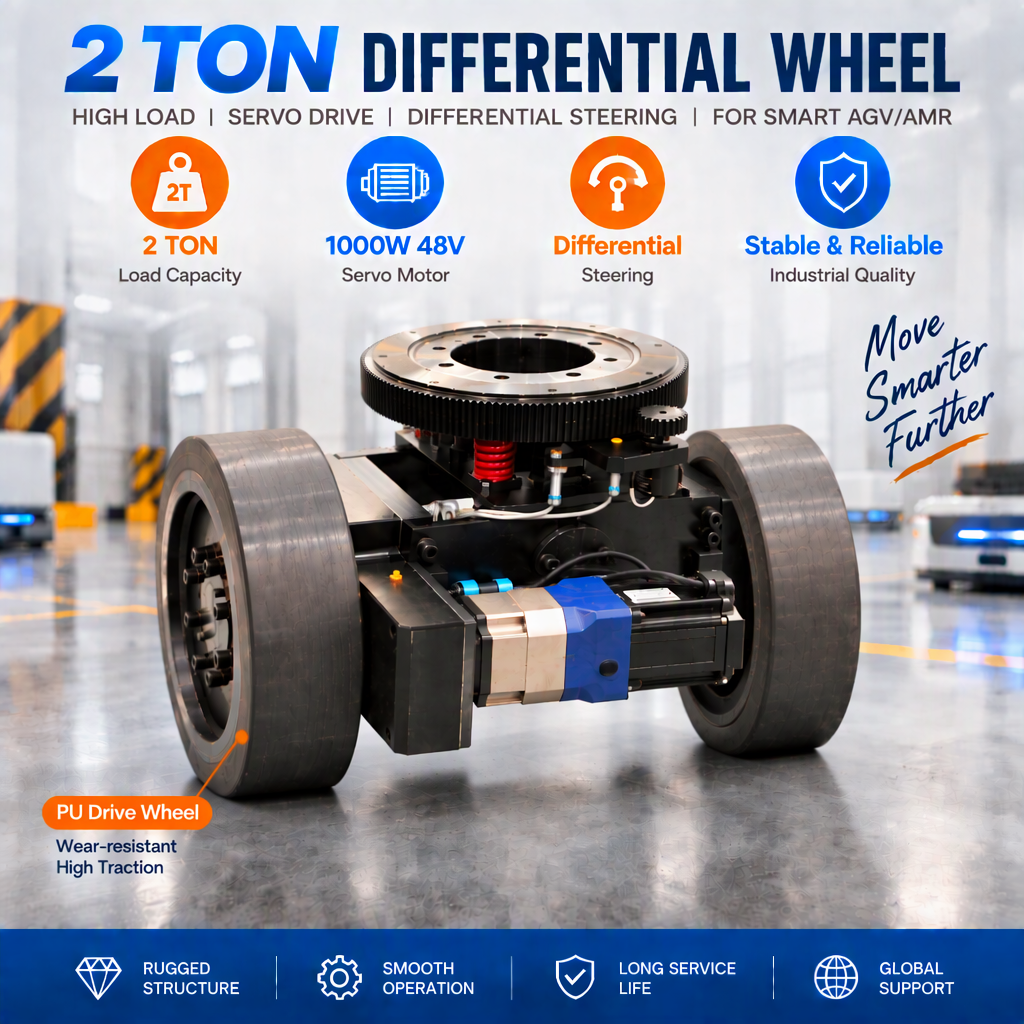
TZBOT 2000KG Heavy Duty AGV Wheel 1000W 48V with Spring Suspension
For 1–2 t class mobile robots, spring suspension absorbs floor transitions in Aichi assembly halls while 1000 W and 48 V provide stable traction.
View product →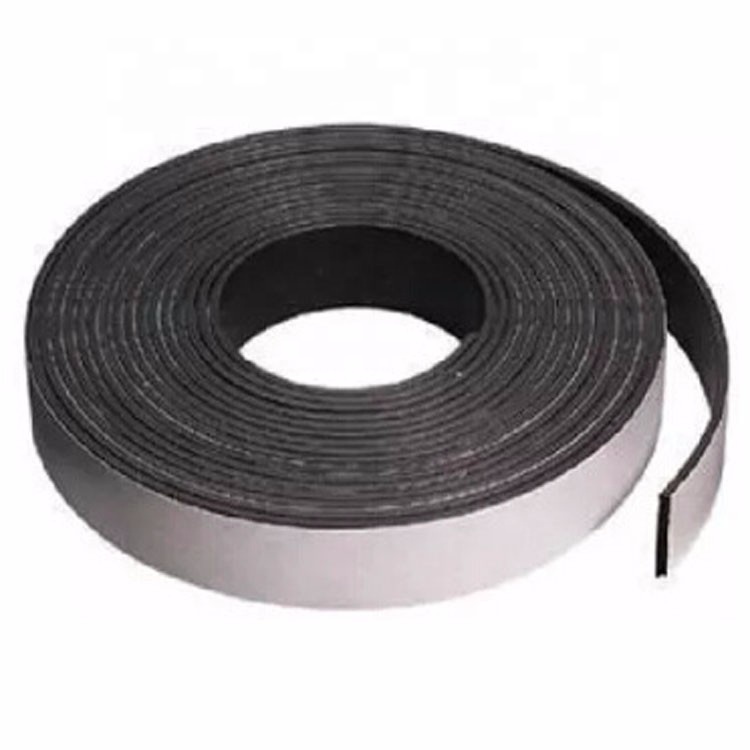
N-Pole Magnetic Tape, 5 cm × 25 m Roll for AGV Paved Path
A practical route-change consumable for Nagoya brownfield factories that need low-cost path updates, retail quantities or wholesale supply.
View product →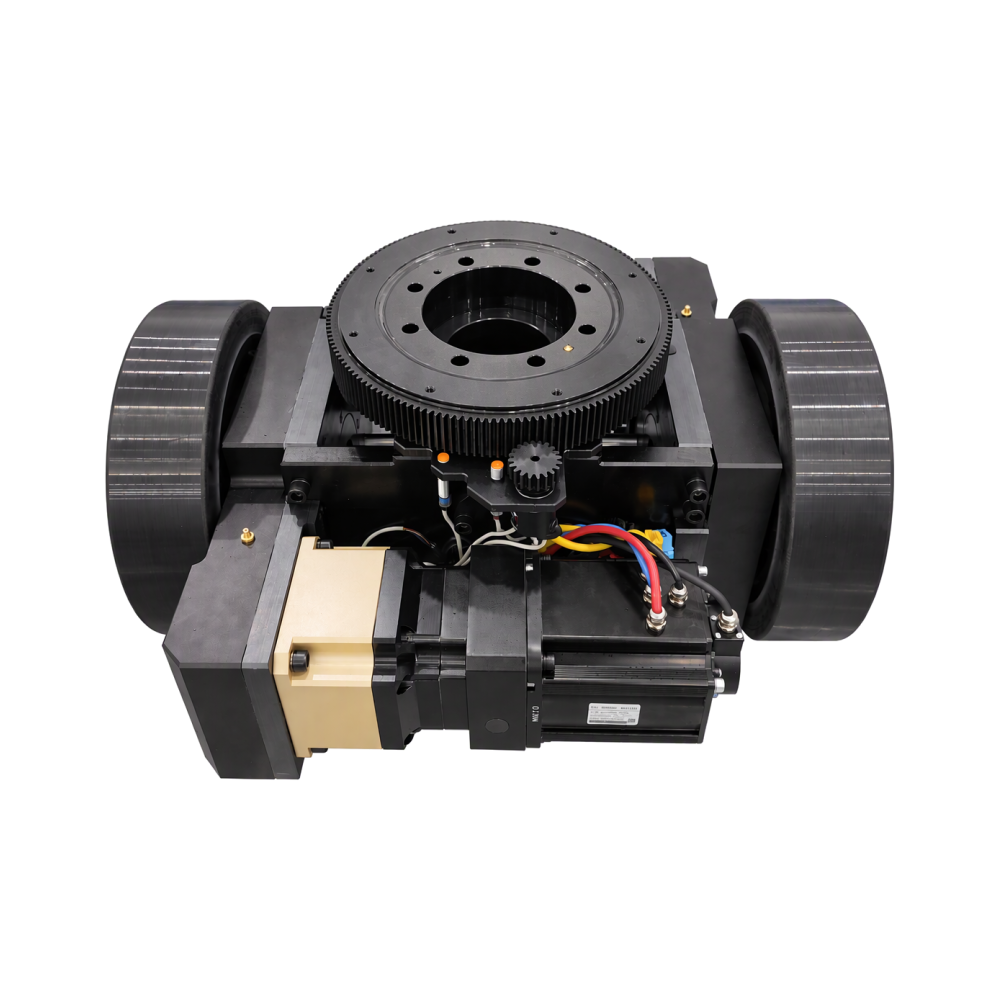
TZBOT Heavy Duty 3000kg AGV Differential Drive Wheel Assembly
Designed for press-shop dies, heavy fixtures and automotive material-handling platforms where high bearing capacity and controlled low-speed starts matter.
View product →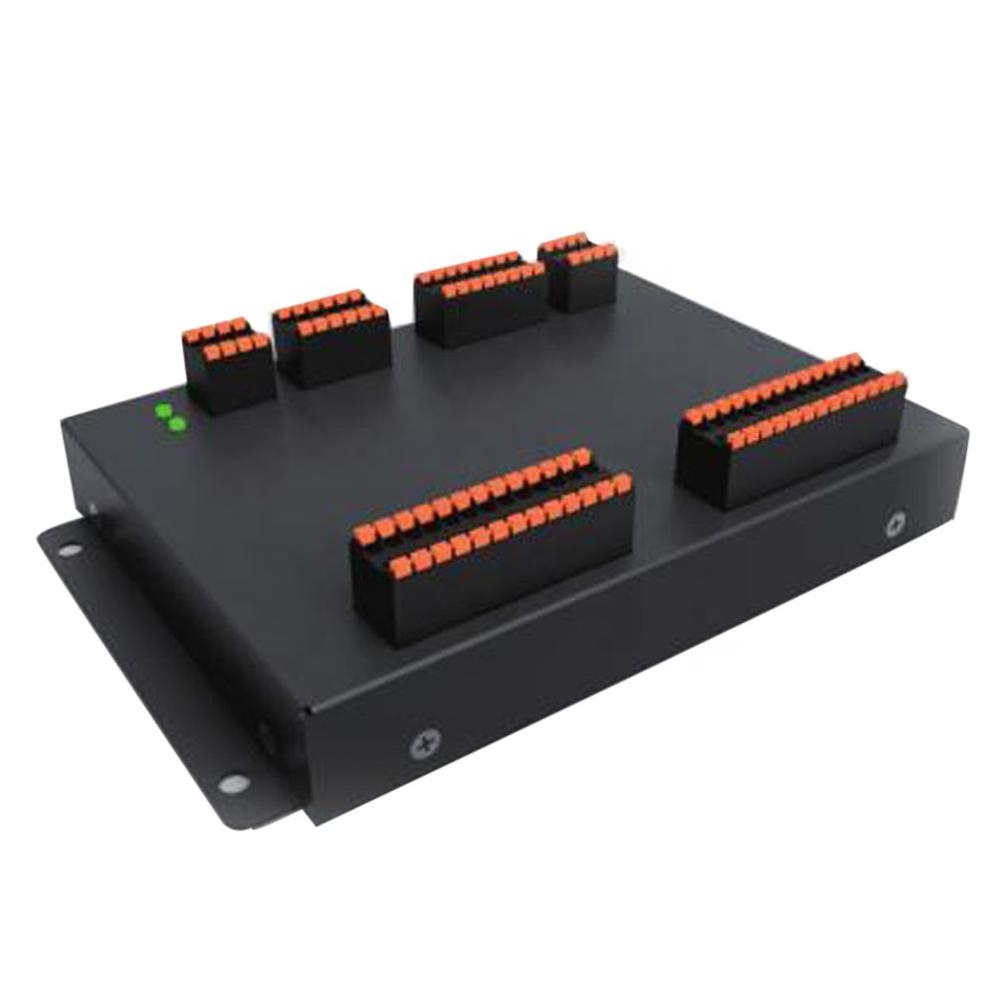
TZBOT TZC-MST-FX200D-A Controller for Commanding the AGV
A compact command layer for AGV motion sequencing and vehicle integration when a Nagoya integrator needs a clean interface between vehicle and host system.
View product →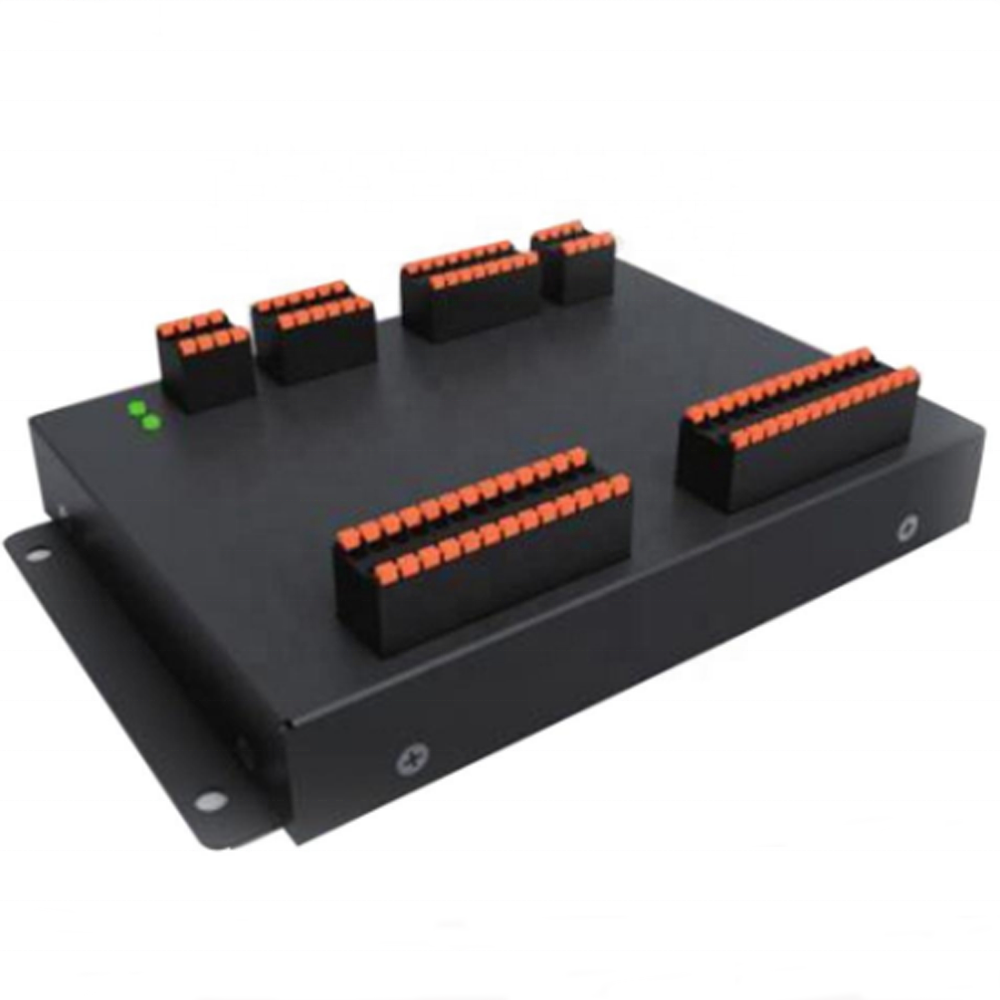
TZBOT FX Series Controller for Magnetic Tape-Guided AGV
Supports repeatable magnetic-tape routes in tier-one plants, warehouse transfer aisles and existing Nagoya facilities where fast deployment is preferred.
View product →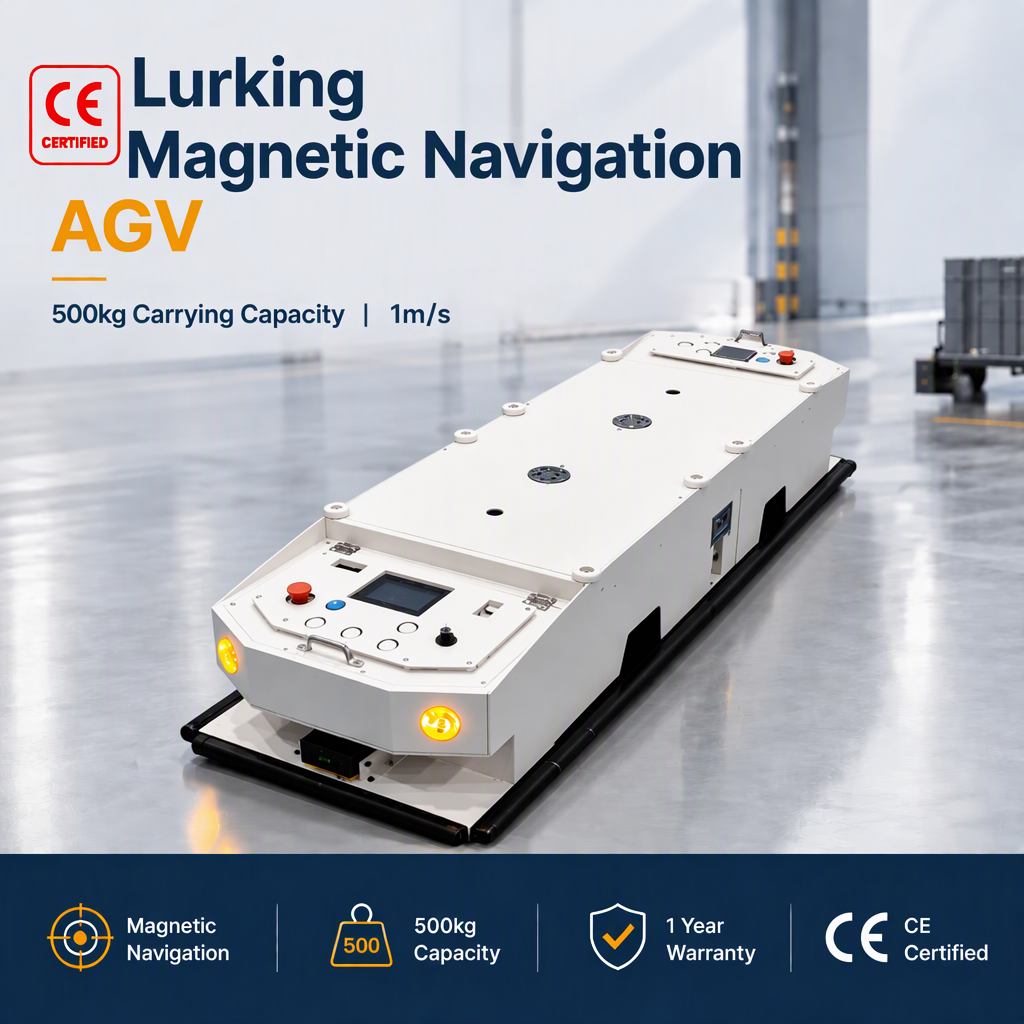
TZBOT CE Approved 500kg Bidirectional Lurking Robot
A 500 kg towing-capacity under-cart platform for Port of Nagoya 3PL sites, mixed pallet flows and repetitive line-side replenishment routes.
View product →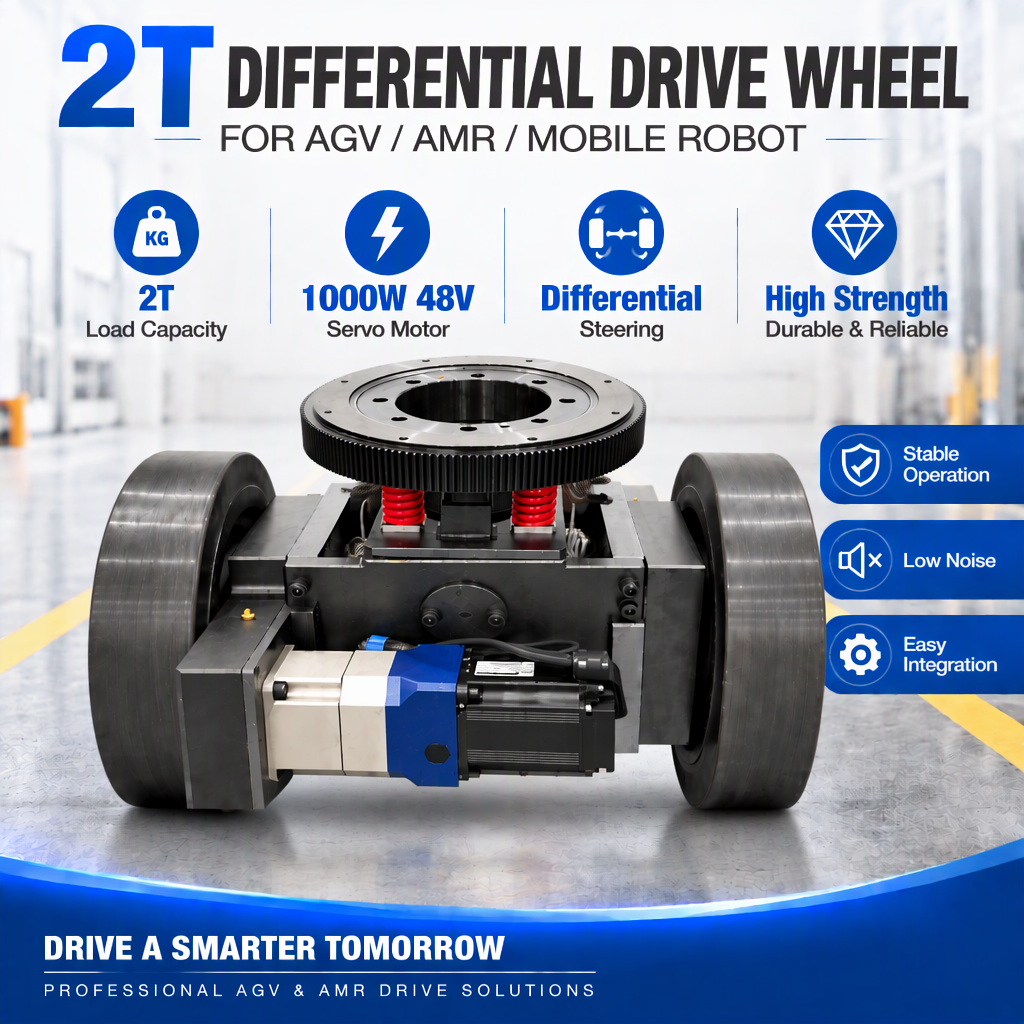
TZBOT 2000kg Traction Capacity Differential Steering Drive Wheel
For tugger, forklift-type and AMR platforms that require controlled steering angles, tight aisle turns and precise docking in Aichi logistics hubs.
View product →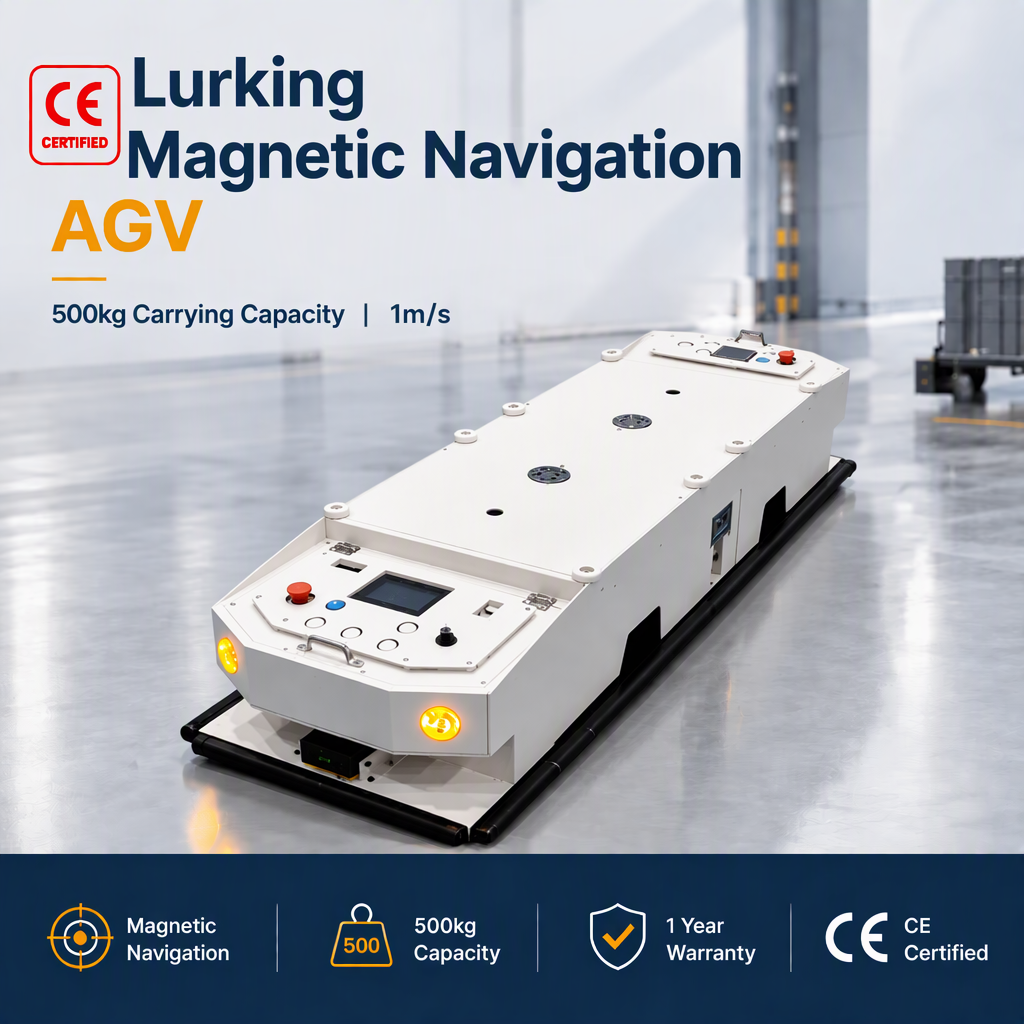
TZBOT EU CE 500kg Bidirectional Magnetic Guidance Mobile Robot
A compact logistics automation platform for electronics, medical device and light manufacturing internal transport in Nagoya industrial parks.
View product →What Nagoya Buyers Should Verify in a China Drive Wheel Assembly Factory
Nagoya is not a generic destination for automation components. It sits inside Aichi’s automotive and precision-machine cluster, where Toyota, Toyota Industries, Denso, Aisin and a dense tier-one network operate high-takt, just-in-time production systems.
For a top China automatic guided vehicle drive wheel assembly factory serving Nagoya, the buying discussion quickly moves beyond unit price. A wheel that performs acceptably in a demo warehouse may fail when it is asked to start and stop thousands of times per shift on a line-side route, cross expansion joints, or hold a loaded cart steady during an automated docking sequence. Japanese buyers therefore tend to evaluate the supplier’s engineering evidence: torque and speed matching, wheel tread, suspension travel, encoder feedback, driver compatibility, documentation and spare-parts planning.
China-based exporters can offer strong value in this category because the supply chain for motors, reducers, encoders, controllers and polyurethane wheels is mature. The key is to separate a factory-direct, application-aware exporter from a catalogue reseller. Ask whether the supplier designs the drive wheel assembly as a system, whether the motor driver is matched in-house, and whether test records can be provided for the exact configuration quoted. For Nagoya projects, it is also reasonable to request English and Japanese label customization where needed, agreed Incoterms, and a clear plan for samples before mass production.
This guide is written from the perspective of Zhejiang Torqen Technology Co., Ltd., a manufacturer and trading company founded in 2015 in Zhejiang, China. The company produces AGVs, AGV drive wheel assemblies, DC/AC motors, encoders, reducers, motor controllers and navigation sensors. Its quality management system is certified to ISO 9001:2015, and its facility has been onsite-verified by Intertek. Those facts are useful, but they are only the starting point. Nagoya buyers should still compare the exact product configuration, delivery terms and after-sales response against their own risk criteria.
Nagoya and Aichi Application Scenarios for AGV Drive Wheel Assemblies
Local fit matters. The same drive wheel can be excellent in a clean warehouse and unsuitable for a stamping shop. These are the most common application scenarios we discuss with Nagoya-area buyers.
Automotive Assembly & JIT Lines
Differential drive wheels with spring suspension and stable low-speed control support line-side replenishment, sequence carts and kitting delivery in Toyota City and broader Aichi assembly plants.
Tier-One Parts & Press Shops
Heavy-duty 2000 kg and 3000 kg assemblies are relevant for die, fixture and raw-material movement where floor conditions vary and loaded starts must remain controlled.
Port of Nagoya & 3PL Warehouses
Compact 500 kg bidirectional lurking robots fit under-cart transport, mixed pallet flows and repetitive transfer routes in logistics facilities around Nagoya Port.
Electronics & Precision Manufacturing
Low-vibration drive units and magnetic guidance help protect sensitive products and maintain repeatable stopping positions in clean, high-mix production areas.
Aerospace & Machine Tool Clusters
Heavy fixtures and long components require predictable traction, encoder feedback and a drive assembly that can be integrated into existing safety and control architectures.
Medical, Food & Light Manufacturing
Smaller AGV and AMR platforms benefit from matched wheels, controllers and sensors that simplify integration and reduce the number of vendors in the bill of materials.
Development Trends Shaping Nagoya AGV Procurement in 2025
Logistics Reform & Labor Pressure
Japan’s tighter truck-driver overtime rules and an aging workforce are pushing Aichi operators to extend warehouse hours, automate repetitive transfers and reduce dependence on manual towing.
Brownfield-Friendly Automation
Many Nagoya factories cannot be rebuilt around automation. Magnetic tape, RFID tags and compact drive wheels allow incremental deployment on existing floors and routes.
High-Mix, Low-Volume Production
Automotive and precision manufacturers are running more variants per line. Modular AGV control and route changes are becoming more important than single-purpose fixed conveyors.
Safety, Traceability & Documentation
Japanese buyers increasingly request clear risk assessments, interface drawings, maintenance schedules and evidence of testing before approving a new mobile platform or replacement drive unit.
Match the Drive Wheel and Navigation Method to the Nagoya Route
Use this comparison as an early specification tool. Final selection should be confirmed with payload, speed, gradient, floor condition, battery voltage and chassis height.
⚙Drive Wheel Configuration
| Type | How It Steers | Best Fit in Nagoya |
|---|---|---|
| Differential drive unit | Two independently driven wheels turn by speed difference | Latent, jacking and shelf-lifting AGVs; compact turning inside assembly and warehouse aisles |
| Single steering drive wheel | Drive motor plus dedicated steering motor sets wheel angle | Forklift-type AGVs, tugger vehicles and tricycle chassis needing controlled steering |
| Horizontal drive assembly | Motor mounted horizontally to reduce build height | Low-clearance chassis and under-ride carts in existing Nagoya facilities |
◎Navigation & Positioning
| Method | Infrastructure | Best Fit in Nagoya |
|---|---|---|
| Magnetic guide sensor | Magnetic tape on floor | Fixed routes, low cost, fast deployment in brownfield factories |
| RFID position sensor | RFID tags at stations | Station recognition, speed zones, junctions and process checkpoints |
| QR code navigation | Floor QR grid | Grid warehouses and goods-to-person systems |
| Laser SLAM / lidar | Natural features | Flexible routes, frequent layout changes and mixed human traffic |
Capability Snapshot for Nagoya RFQs
Why Zhejiang Torqen Technology Co., Ltd. Is a Practical Export Partner for Nagoya
Torqen combines drive-wheel engineering, motor and controller matching, and export support in one supplier relationship. The company has manufactured AGV drive systems and automation components since 2015.
Single-Source Drive Train
Drive wheels, motors, reducers, servo/BLDC controllers, magnetic sensors and RFID sensors can be specified together, reducing integration risk for Nagoya vehicle builders.
ISO 9001:2015 & Intertek Verification
The quality management system is certified to ISO 9001:2015, and the facility has been verified onsite by Intertek. Finished-product inspection is part of the release process.
OEM / ODM Engineering
Sample-based customization, design-based customization, OEM production and buyer-label packaging are available. Typical changes include motor power, voltage, reduction ratio, wheel tread, encoder and brake options.
Tested Before Mass Production
Prototypes undergo extended-duration testing before production parts are released. Five testing instruments support inspection and fault analysis for exported assemblies.
Export-Ready Trade Terms
Payment methods include T/T, L/C, D/P, D/A, credit card, PayPal, Western Union, cash and escrow. Currencies include USD, EUR, JPY, CAD, AUD, HKD, GBP and CNY; delivery terms include FOB, CFR, CIF, EXW, CIP, FCA, CPT, DDU and express.
Responsive Technical Support
Online support is available 24/7, with a recorded 97.9% inquiry response rate. After-sales support covers spare parts supply and fault analysis backed by production records.
Company facts: business type is manufacturer and trading company; factory size is 1,000–3,000 m²; annual output is US$5M–10M; team size is 51–100 people. Applications supported by Torqen drive products include AGVs and AMRs, forklifts, aerial work platforms, airport equipment, agricultural machines, hydraulic applications, floor scrubbers and sweepers, wind energy, marine equipment and medical devices. For deeper due diligence, review the company profile, credit overview, transaction history and buyer reviews.
From Nagoya RFQ to Tested Shipment in Six Steps
A transparent process helps Japanese buyers compare samples, production readiness and after-sales planning on the same basis.
Requirement Review
Load, speed, voltage, floor condition, route layout and chassis height are reviewed.
Engineering Proposal
Motor, reducer, wheel diameter, tread and controller are matched; drawings are shared.
Prototype Build
Sample-based or design-based customization is produced for evaluation.
Endurance Testing
Extended-duration runs and parameter checks are performed before release.
Mass Production
Manufacturing is controlled under the ISO 9001:2015 quality management system.
Inspection & Delivery
Final inspection, export packing and shipment documentation are prepared for the agreed Incoterm.
Questions Local Buyers Ask Before Ordering AGV Drive Components
Can you ship automatic guided vehicle drive wheel assemblies to Nagoya Port?
Yes. Shipments can be arranged under EXW, FOB, CFR, CIF, CIP, FCA, CPT or DDU terms, with express courier available for samples and urgent spare parts. For Nagoya and Aichi deliveries, confirm the preferred port, customs broker, insurance arrangement and final delivery address in the quotation. Torqen can provide export packing and commercial documents for the agreed terms.
Which drive wheel should we choose for an Aichi assembly line?
Differential drive units suit compact latent, jacking and shelf-lifting AGVs that turn by wheel-speed difference. Single steering drive wheels suit forklift-type, tugger and tricycle chassis that need controlled steering angles. Horizontal drive assemblies suit low-clearance chassis. Share payload, speed, chassis height, floor transitions and battery voltage, and the engineering team can recommend a configuration.
Do you support 24 V or 48 V systems and Japanese project documentation?
Torqen offers 24 V AC/DC options and 48 V heavy-duty drive wheel configurations, with motor, encoder, brake and controller options matched to the application. Documentation can include drawings, wiring information and inspection records as agreed. Japanese buyers should confirm label language, manual requirements and any site-specific risk-assessment documents before production.
What is the MOQ, and can we order a sample for a Nagoya pilot project?
MOQ depends on the drive wheel type, customization level and controller pairing. Sample-based customization and design-based customization are supported, so pilot quantities can be discussed for evaluation. For the fastest review, provide the target payload, speed, wheel diameter, mounting interface, voltage and required delivery window.
How is quality verified before mass production?
The quality management system is certified to ISO 9001:2015, and the facility has been onsite-verified by Intertek. Finished-product inspection uses five in-house testing instruments. Prototypes undergo extended-duration testing before production parts are released. Buyers can request the inspection plan and test records relevant to the quoted configuration.
What payment terms, currencies and after-sales support are available?
Accepted payment methods include T/T, L/C, D/P, D/A, MoneyGram, credit card, PayPal, Western Union, cash and escrow. Currencies include USD, EUR, JPY, CAD, AUD, HKD, GBP and CNY. After-sales support includes spare parts supply and fault analysis; warranty and response-time commitments should be confirmed in the quotation or contract. Online support is available 24/7, and the recorded inquiry response rate is 97.9%.
Get a Nagoya-Ready AGV Drive Wheel Assembly Quotation
Send your application details and the Torqen engineering team can match the drive wheel, motor driver and navigation sensor for your Nagoya or Aichi project. Include your target payload, speed, gradient, battery voltage, chassis height and required delivery terms for a faster review.
Direct inquiry: info@torqenbot.com · Zhejiang Torqen Technology Co., Ltd. · AGV drive wheels, controllers and navigation sensors since 2015.
