TZBOT 48V DC 2 Ton Heavy Duty Differential Unit AGV Wheel TZCS-750-30
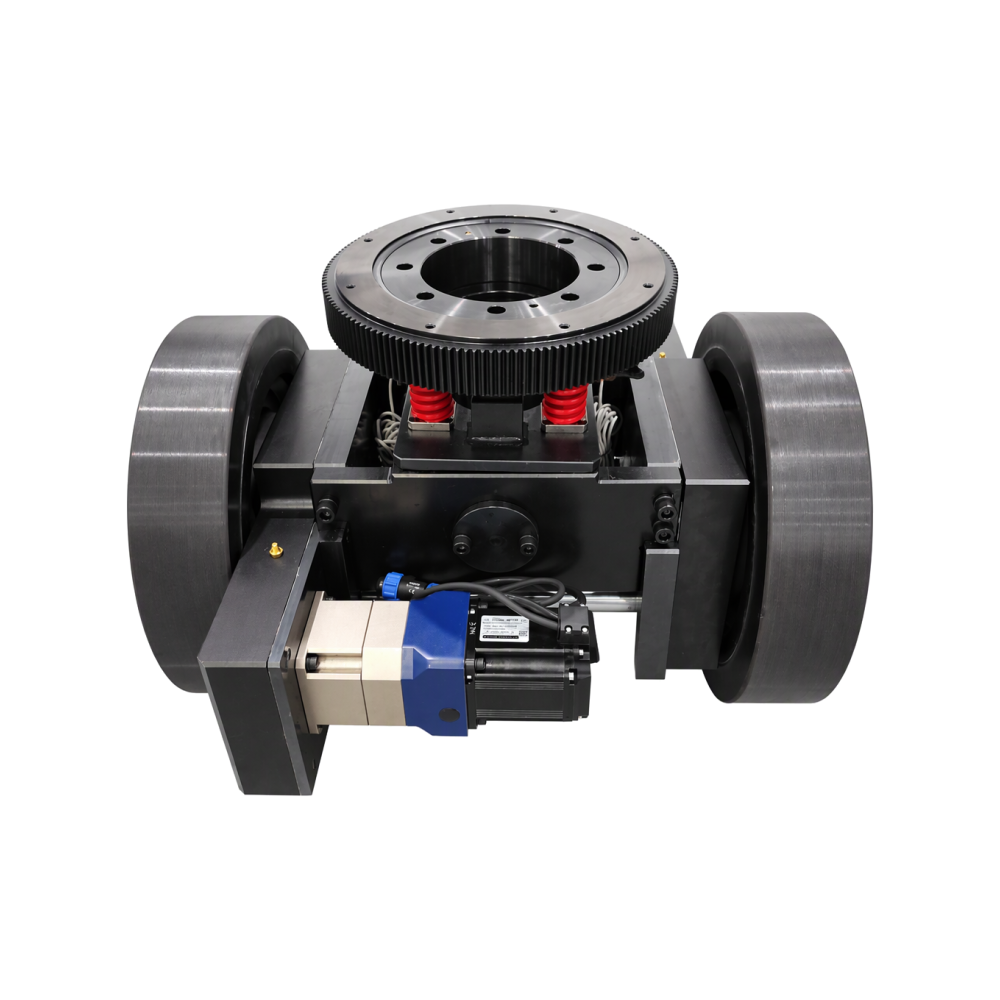
2-ton rated differential unit for latent and jacking platforms; the mounting face leaves room for a front bumper sensor bar without reducing ground clearance.
Eight production-proven items that Mexican AGV builders order together with our contact bumper sensors: the drive train, the motion controller, the guidance media and the autonomous platform that carries the safety chain.

2-ton rated differential unit for latent and jacking platforms; the mounting face leaves room for a front bumper sensor bar without reducing ground clearance.

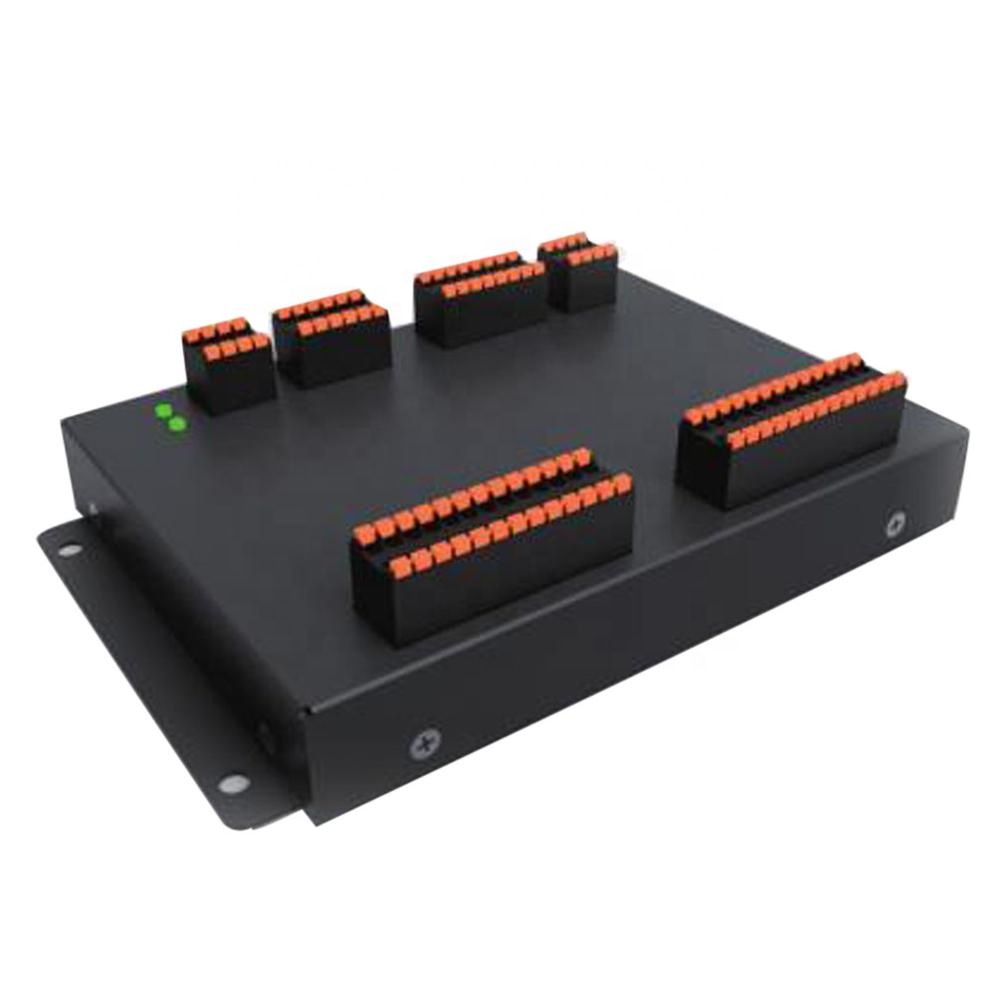
19V–29V platform controller with dedicated bumper and emergency-stop input channels for a compliant AGV safety chain.

Spring-suspended 1000W servo wheel that absorbs floor joints in Mexican plant aisles and keeps bumper sensors level with the load.

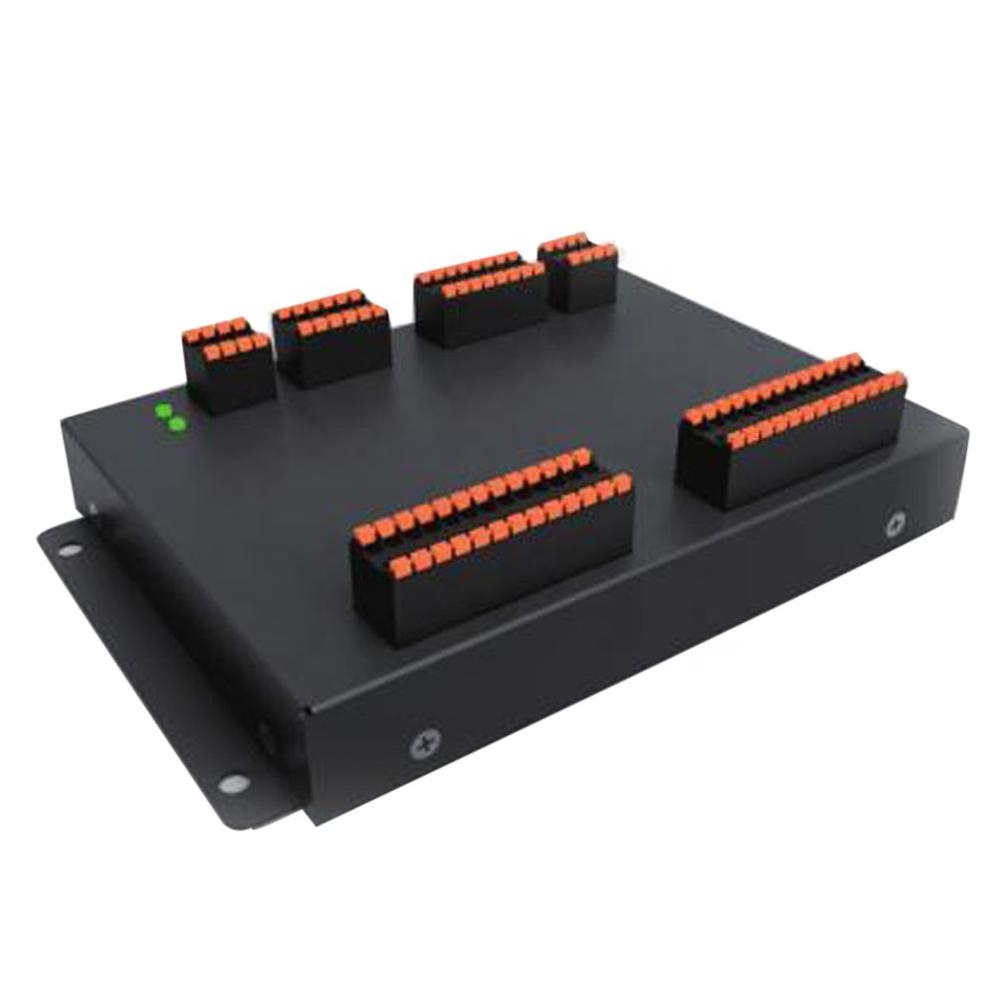
Central controller that arbitrates bumper contact, lidar and magnetic guidance signals before a stop command leaves the board.

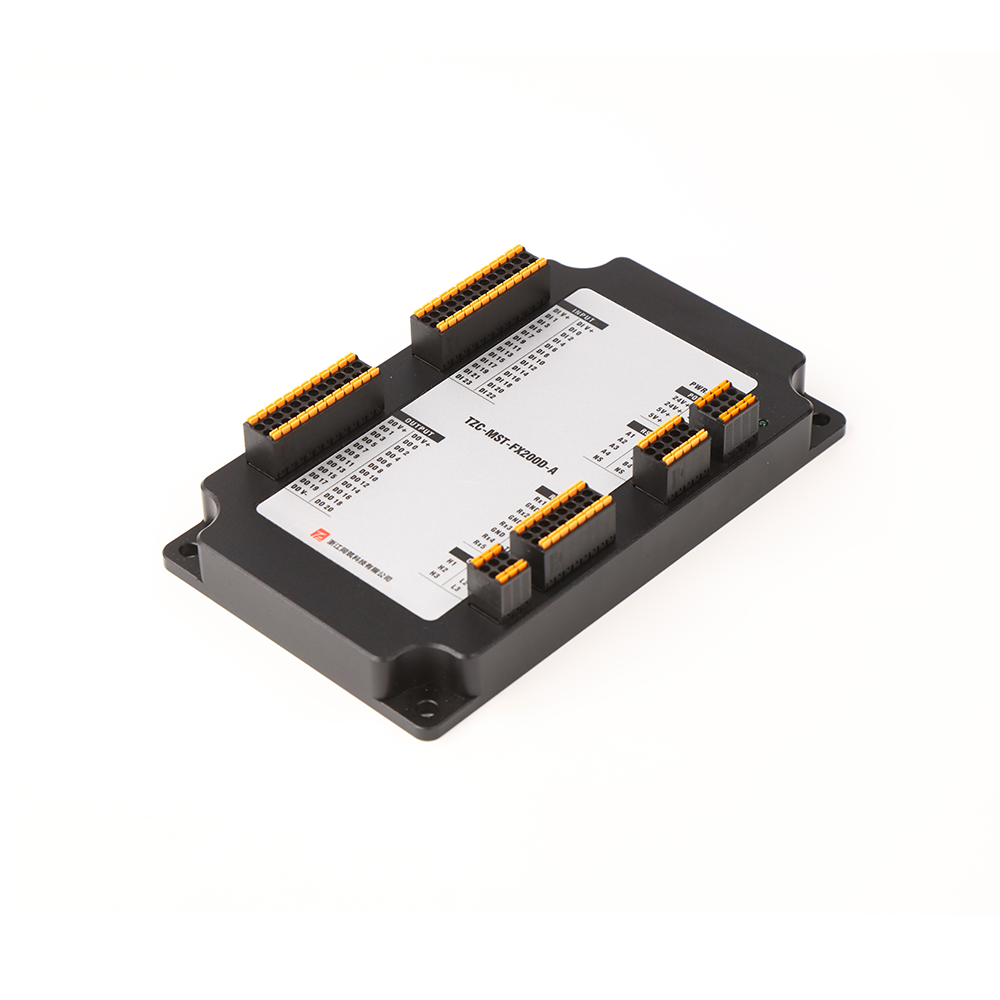
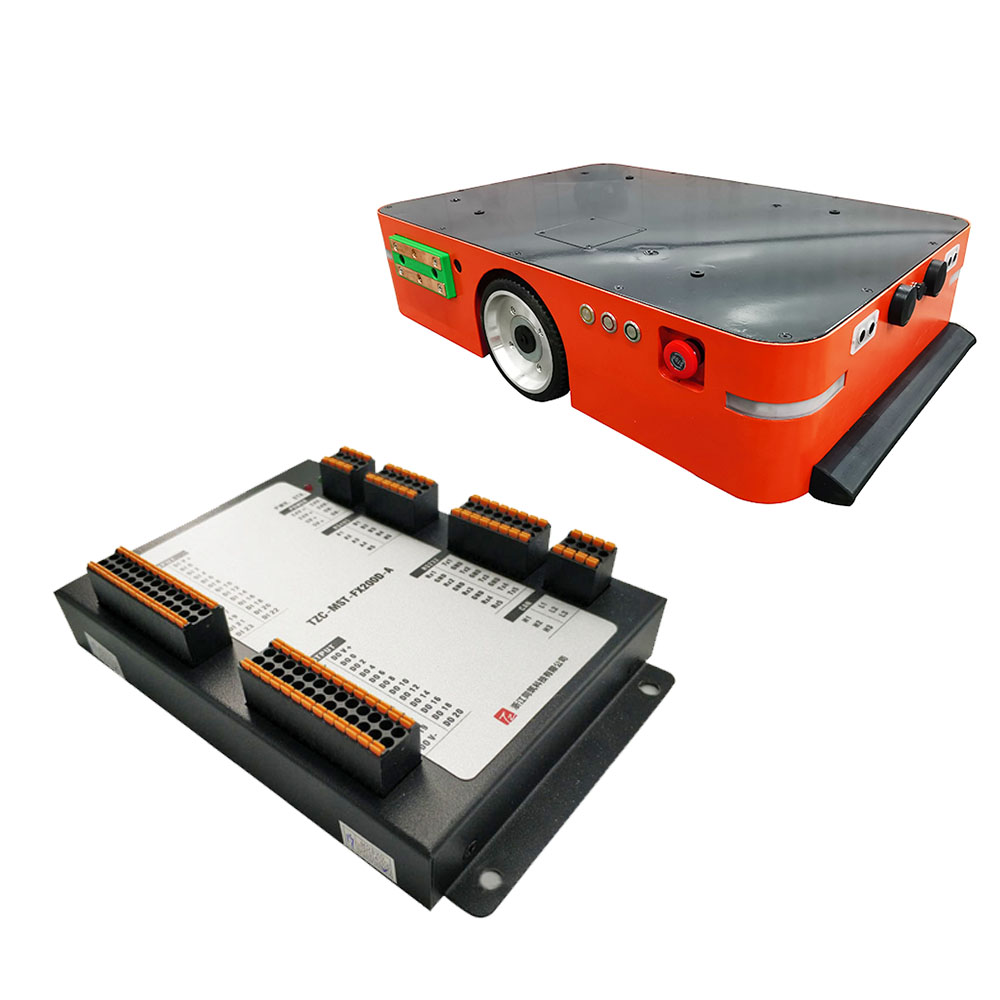
Field-hardened FX200D-A controller used by integrators who retrofit older AGV fleets with modern bumper and safety logic.

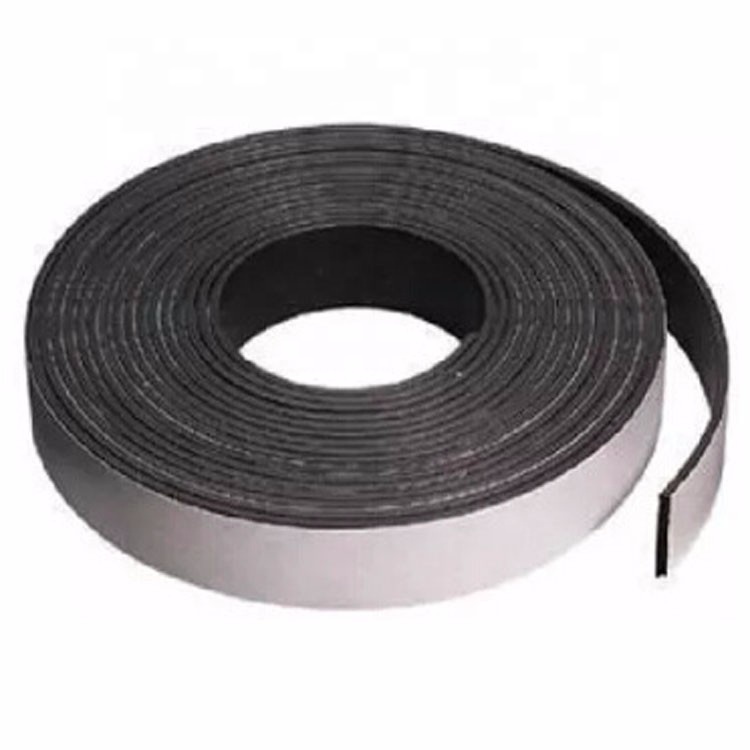
5 cm × 25 m N-pole magnetic tape, retail or wholesale — the route laying cost that Mexican integrators quote alongside safety hardware.

Guidance controller that pairs with magnetic and RFID inputs so bumper triggers can be tied to route segments and named stations.

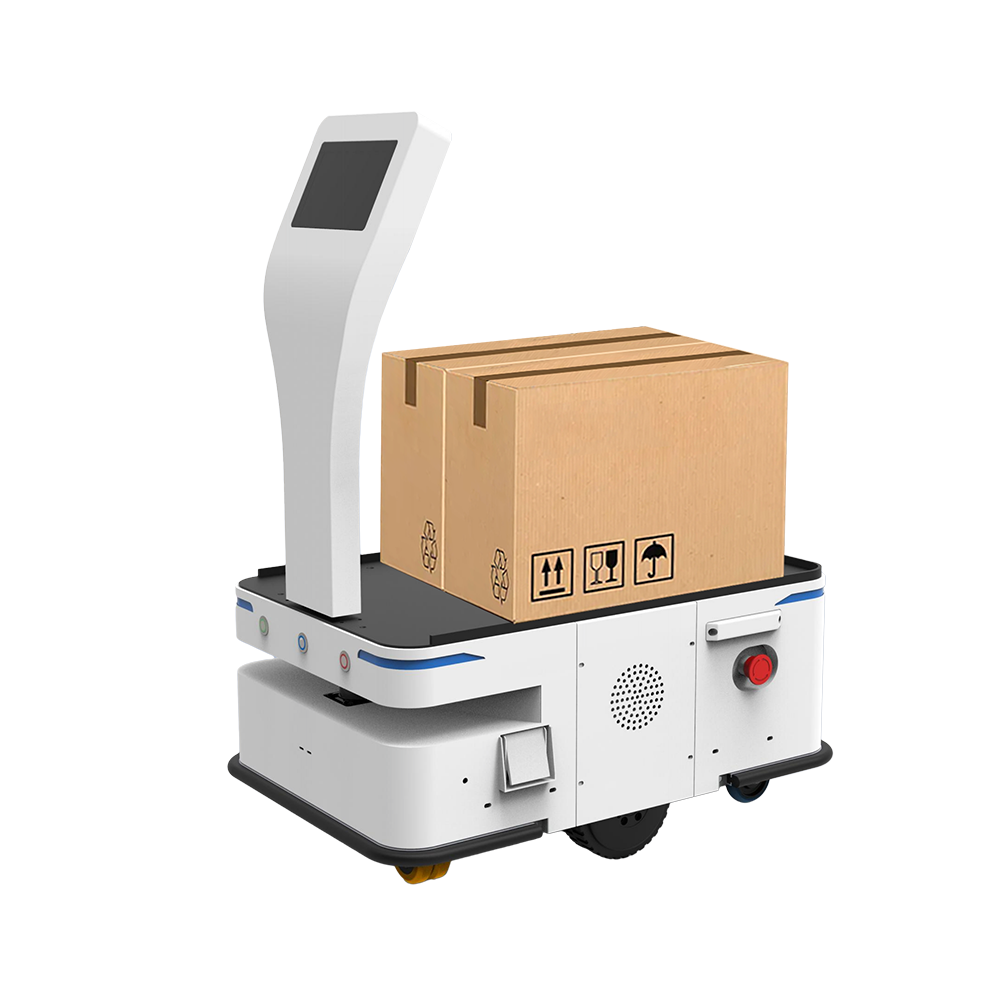
80 kg laser SLAM AMR with a 7-inch HMI — a turnkey platform for warehouses that want bumper-plus-lidar redundancy from day one.
Every figure below comes from our company profile, credit report or production records — not from a brochure.
On a driverless truck, the contact bumper sensor is the component that turns a mechanical collision into a controlled stop. When a 1.5-ton latent AGV approaches a pedestrian walkway in a Mexican automotive plant, the sequence is always the same: the bumper strip deflects a few millimetres, the sensing element changes state, the controller cuts traction and applies the brake — all inside a few hundred milliseconds. If any link in that chain is slow, poorly sealed or undocumented, the whole safety argument collapses during an STPS inspection or a customer audit.
That is why serious buyers in Mexico do not shop for a cheap bumper strip in isolation. They shop for a supplier who can prove the sensor's response behaviour, seal rating, wiring interface and long-term availability of spares — and who can pair it with the drive wheel, controller and navigation hardware it interfaces with.
Zhejiang Torqen Technology Co., Ltd. has designed and manufactured AGV drive wheel assemblies, DC/AC motors, servo and BLDC controllers and navigation sensors since 2015. Because the bumper sensor, the drive wheel and the controller come from the same engineering group, the stop distance is a tested system value rather than three separate datasheets that a Mexican integrator has to reconcile alone.
Our quality management system is certified to ISO 9001:2015 and our facility has been verified onsite by Intertek. Prototypes run for extended durations before a production release, and finished goods pass inspection on five in-house instruments. For buyers in Monterrey or Querétaro who cannot visit Zhejiang before the first order, that paper trail — certificate, audit report, test record, credit report — is the practical substitute for a factory walk-through.
Send your chassis drawing, gross vehicle weight and target speed and our application engineers will return a matched package: bumper sensor family, drive wheel, driver and guidance media, with the interface drawing attached.
Mexico's automation footprint is not uniform. A bumper specification that works in a Querétaro assembly hall may fail in a Mérida cold store or a Tijuana electronics cleanroom. These are the six deployment patterns we quote most often.
In the Bajío corridor and around Monterrey and Saltillo, AGVs tow sequence carts between supermarkets and stations where operators step into the aisle without warning. Wide front bumper bars with a low trigger force are the norm, paired with our 2-ton differential units so the stop remains controlled even when the cart is fully loaded.
Distribution centres in the State of Mexico and Greater Mexico City run mixed fleets of AMRs, forklifts and pedestrians under one roof. Bumper sensors here must tolerate repeated low-speed contacts with pallet corners and cart frames — mechanical durability matters more than raw sensitivity.
Freezer aisles around −25 °C expose bumper elastomers and cable jackets to embrittlement. We specify low-temperature compounds and route the sensor harness away from door curtains, and we pair the bumper with sealed controllers rated for condensation rather than assuming a dry plant environment.
Guadalajara, Tijuana and Ciudad Juárez plants frequently require ESD-safe surfaces, low outgassing materials and cleanroom-compatible fasteners. Bumper assemblies are supplied with non-marking covers and documented material declarations for incoming inspection.
Along the Laredo–Nuevo Laredo and Juárez–El Paso corridors, AGVs frequently move between IMMEX bonded areas and outbound staging. Bumper settings are documented in both English and Spanish so a shift supervisor can verify trigger force and stop distance during a customs or safety walk-through.
Temperature-controlled pharmaceutical DCs demand audit-friendly records. Each bumper batch ships with test data and a traceable production record, which is what quality teams need when they reconstruct a single vehicle's safety history two years later.
Buying behaviour in Mexico has changed measurably over the last three years. These are the shifts our sales engineers see across quotations, not general industry commentary.
Plants relocating capacity into Mexico under USMCA principles are skipping single-vehicle trials and ordering 10–40 unit fleets in one budget cycle. That changes the conversation from “one bumper sample” to “a five-year spare-parts commitment and an identical trigger force across the fleet.”
Procurement teams now request risk-assessment extracts referencing ISO 3691-4 principles and Mexican STPS material-handling practice before approving a purchase. A supplier who cannot produce bumper response data and wiring documentation is quietly dropped from the shortlist.
Mexican system integrators increasingly consolidate imports rather than sourcing wheels, sensors and controllers from three continents. A single supplier who can match a bumper sensor to a servo drive and a guidance controller shortens commissioning and simplifies customs paperwork under a single invoice.
A bumper sensor that costs 15% less but takes ten weeks to restock can idle a whole AGV fleet. Buyers now ask a direct question: how quickly can you ship replacement bumpers and cables, and what is your minimum order for after-sales parts?
Bumper contact sensors are now combined with lidar-based obstacle detection and magnetic or QR guidance rather than deployed as a standalone safeguard. Specifying all three from one engineering group removes the finger-pointing when an evacuation sequence misbehaves on site.
Documentation that a plant technician can read at 2 a.m. during a fault is worth more than a longer manual. Wiring diagrams, parameter tables and I/O maps are prepared in a bilingual format for Mexican projects, with remote support across time zones.
Our test matrix is the reason OEM integrators keep reordering. Each family is verified against the same four pillars, and the results travel with the shipment.
Each production lot is sampled to confirm the deflection force needed to activate the sensor stays inside the declared window, so a replacement bumper behaves like the original.
Seals and cable entries are checked against washdown, coolant and condensation exposure typical of Mexican automotive and food plants.
Bumper, controller and drive are tested as a set to confirm the documented stop distance at rated payload and maximum speed — a system value, not a guess.
Wiring diagram, I/O map, trigger-force record and batch traceability sheets ship with the goods, in a format suitable for plant audits.
Zhejiang Torqen Technology Co., Ltd. was founded in 2015 in Zhejiang, China, and operates a 1,000–3,000 m² facility with a team of 51–100 people and an annual output in the US$5M–10M range.
Quality management certification plus an onsite factory assessment that Mexican procurement teams can verify independently before a first order.
Sample-based customization, design-based customization, OEM production, design services and buyer-label packaging — including motor power, voltage, reduction ratio, wheel tread, encoder and brake options.
Five in-house testing instruments, finished-product inspection and extended-duration prototype runs before any production parts are released to a customer.
T/T, L/C, D/P, D/A, MoneyGram, credit card, PayPal, Western Union, cash and escrow in USD, EUR, JPY, CAD, AUD, HKD, GBP or CNY; delivery by FOB, CFR, CIF, EXW, CIP, FCA, CPT, DDU or express.
Six transparent steps, each with a document you can forward to your own customer or plant safety committee.
Payload, speed, gradient, battery voltage and available chassis height are assessed against the intended route and pedestrian exposure.
Bumper family, drive wheel, driver and guidance media are matched, and a 2D interface drawing is issued for approval.
Sample-based or design-based customization is produced, including labels, connectors and bilingual documentation.
Extended-duration runs, trigger-force checks and stop-distance verification are completed and recorded.
Manufacturing proceeds under ISO 9001:2015 control with batch traceability retained for after-sales support.
Final inspection, export packing and shipping under the agreed Incoterm, with spares quoted for the fleet's service life.
Direct answers to the questions our sales engineers handle most often from Monterrey, Querétaro, Guadalajara and Mexico City.
We supply the bumper sensor assemblies as part of a matched safety chain that also includes the vehicle controller, drive wheel and navigation sensor. Because the bumper, the controller input stage and the traction drive are engineered by the same team, we can document the stop distance as a system value rather than three disconnected datasheets. Tell us your chassis width, approach speed and pedestrian exposure and we will propose a bumper family and wiring interface.
Yes. We offer sample-based customization, design-based customization, OEM production, design services and buyer-label packaging. Typical customizations include bumper length and mounting pattern, cable length and connector type, motor power and voltage, reduction ratio, wheel diameter and tread material, encoder type, brake options and mounting interfaces. Drawings are exchanged before a sample is built so both sides agree on the interface.
Our quality management system is certified to ISO 9001:2015 and the facility has been verified onsite by Intertek. Finished products are inspected with five in-house testing instruments, and prototypes undergo extended-duration testing before production parts are released. Bumper batches ship with trigger-force records and batch traceability so a plant quality team can reconstruct a vehicle's safety history later.
Accepted payment methods include T/T, L/C, D/P, D/A, MoneyGram, credit card, PayPal, Western Union, cash and escrow, in USD, EUR, JPY, CAD, AUD, HKD, GBP or CNY. Delivery terms include FOB, CFR, CIF, EXW, CIP, FCA, CPT, DDU and express delivery. For buyers working through an IMMEX bonded warehouse, we can align shipping documents with the importer of record on the purchase order.
Sampling time depends on how far the configuration departs from a standard unit. A catalogue-matched drive wheel or controller is typically dispatched from stock, while a custom bumper length or a re-rated gearbox requires drawing approval, prototype build and endurance testing before the production release. Share your target installation date at inquiry stage and our engineers will confirm a realistic schedule rather than a promotional one.
Our products are used in AGVs and AMRs, forklifts, aerial work platforms, airport equipment, agricultural machines, hydraulic applications, floor scrubbers and sweepers, wind energy, marine equipment and medical devices. In Mexico specifically, the largest share of our shipments supports automotive line-side logistics, third-party warehousing, food and beverage cold chain, and electronics assembly.
Yes. Spare-part supply is quoted at the same time as the initial order so the fleet has a documented replenishment path. Because production records are retained per batch, we can match a replacement bumper's trigger force to the original shipment instead of asking your maintenance team to re-tune an entire fleet.
Wiring diagrams, I/O maps and parameter tables are supplied with every control system, and our engineers answer technical questions remotely across time zones. Buyers who prefer a documented hand-over can request the bilingual documentation package, which plant technicians can follow during commissioning or during an STPS-oriented safety walk-through.

Send your chassis drawing, gross vehicle weight, target speed and route description. Our engineers will return a matched bumper sensor, drive wheel, controller and guidance package — with the interface drawing, trigger-force window and stop-distance target attached before you commit to a purchase order.
Contact Us