Towing AGV Exporters & Wholesalers in the Berlin Market
A practical sourcing white paper for Berlin warehouse operators, systems integrators and industrial wholesalers evaluating towing AGVs, drive-wheel units, controllers and navigation components from an ISO 9001:2015 manufacturer.
Eight Product Platforms for Berlin Towing AGV Projects
Berlin towing AGV projects rarely fail because a single wheel is too weak. They fail at the integration boundary: controller language, mounting height, floor transitions, safety zoning and the handover between an imported chassis and a German WMS. The eight platforms below are the product set we recommend most often for Berlin buyers who need a practical starting point.
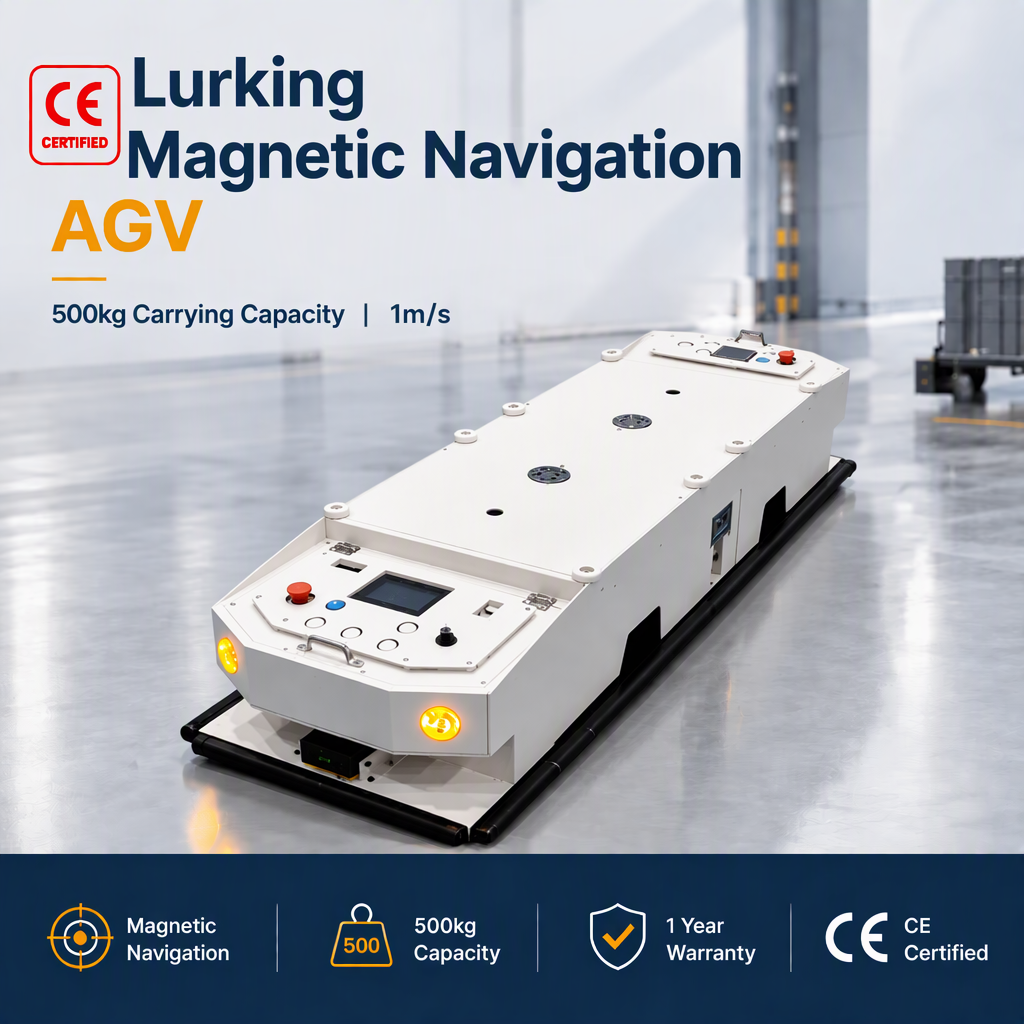
TZBOT EU CE Lurking AGV Material Handling Equipment Logistic Automation 500kg Bidirectional Magnetic Guidance Mobile Robot
A low-profile 500 kg bidirectional magnetic-guidance AGV for cart tugging, line-side replenishment and repetitive indoor transport. It suits Berlin workshops and converted buildings where a standard forklift cannot enter narrow aisles.
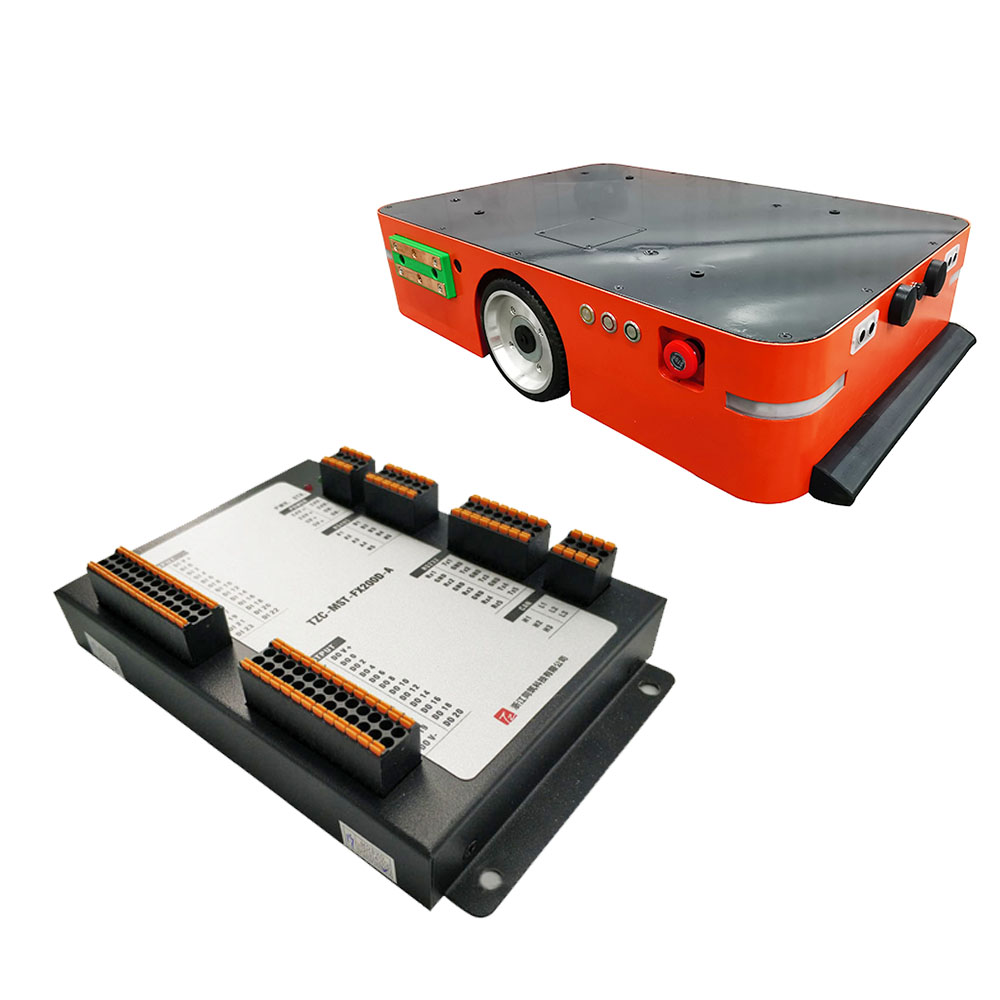
TZBOT Smart agv Controller for Commanding the AGV
A smart controller for vehicle command, route execution and coordination of drive and safety inputs. For wholesalers, it can become the common control layer across a mixed fleet of towing and latent AGVs.
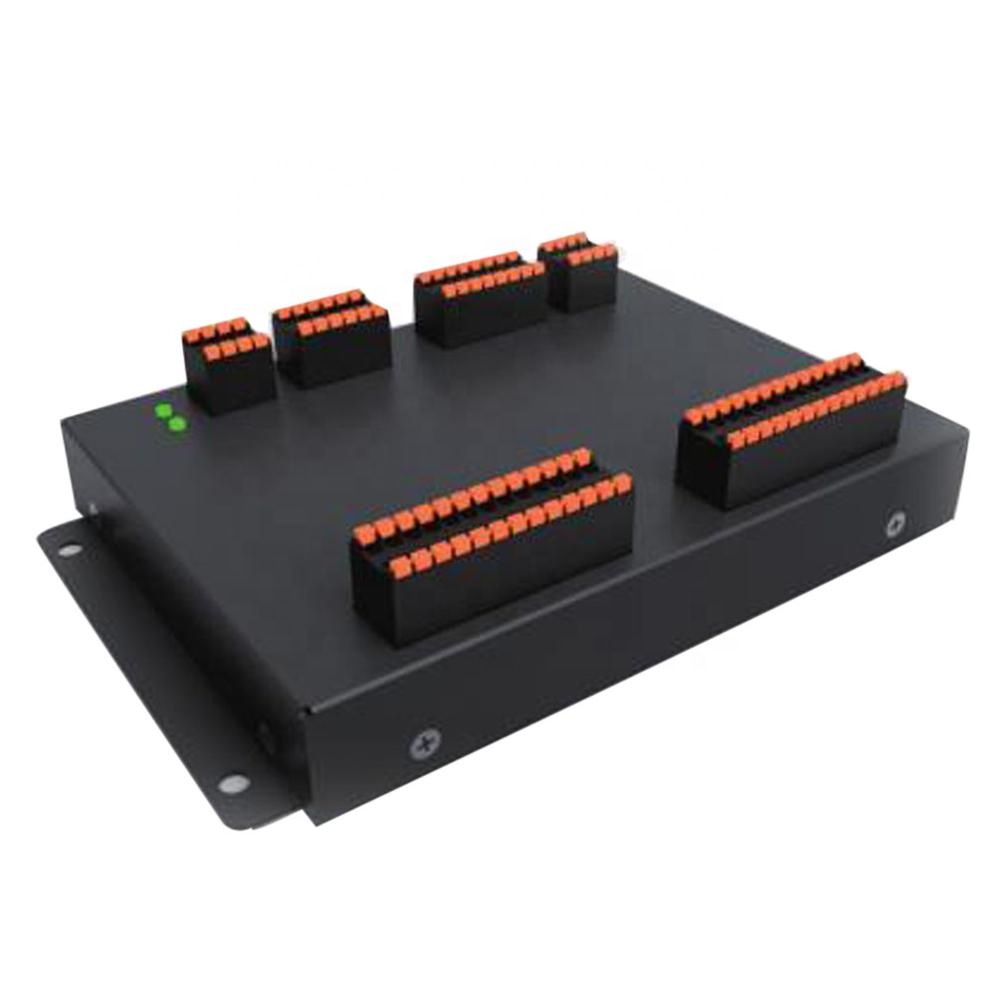
TZBOT Smart Controller TZC-MST-FX200D-A for Guiding the AGV Robot
A compact guidance controller for AGV robots where the integrator wants a matched control board, magnetic sensor feedback and drive-wheel coordination without redesigning the full electronics stack.
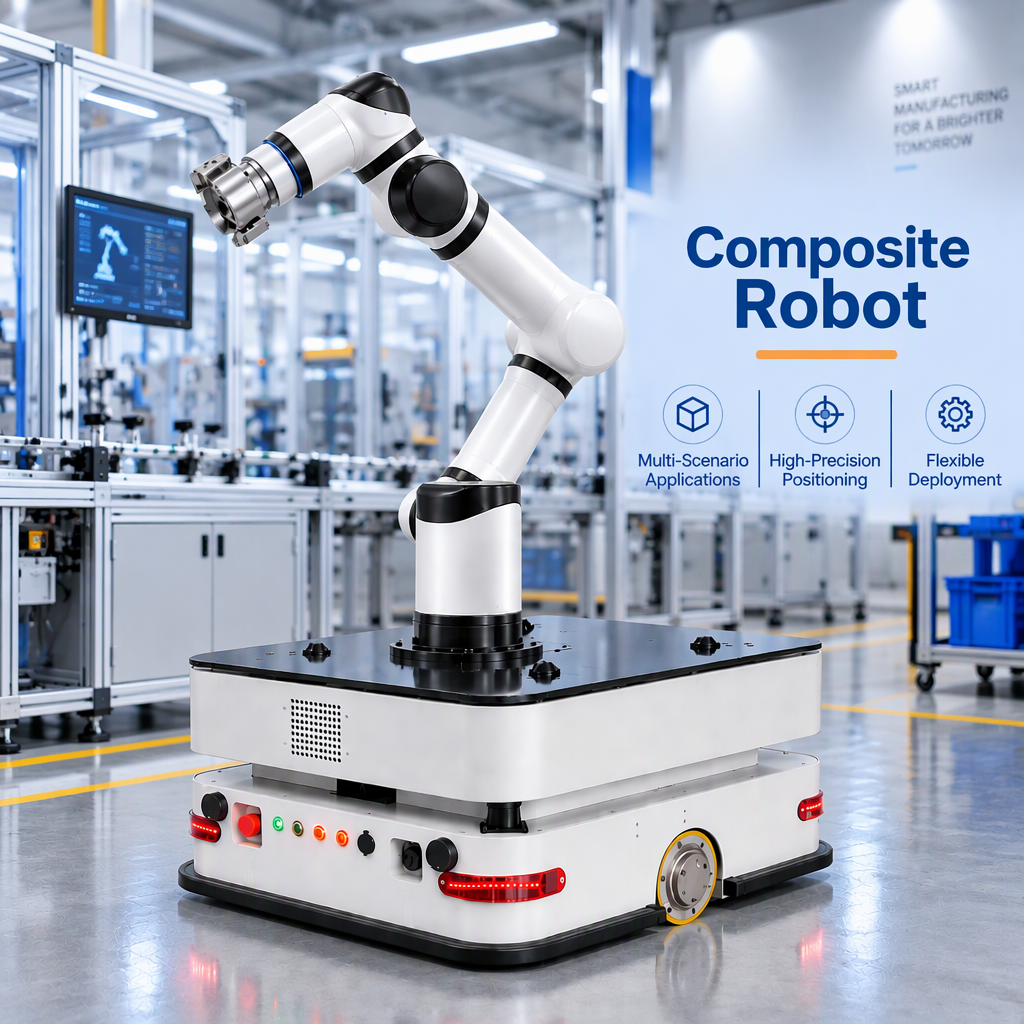
TZBOT Auto Guidance Mobile Chassis 1000kg Payload AGV Integrate Arm Robotic Intelligent Composite Robot
A 1,000 kg auto-guidance mobile chassis for a robotic-arm composite robot. In Berlin, it can support mobile picking, machine tending and laboratory automation pilots where the arm must travel between stations.
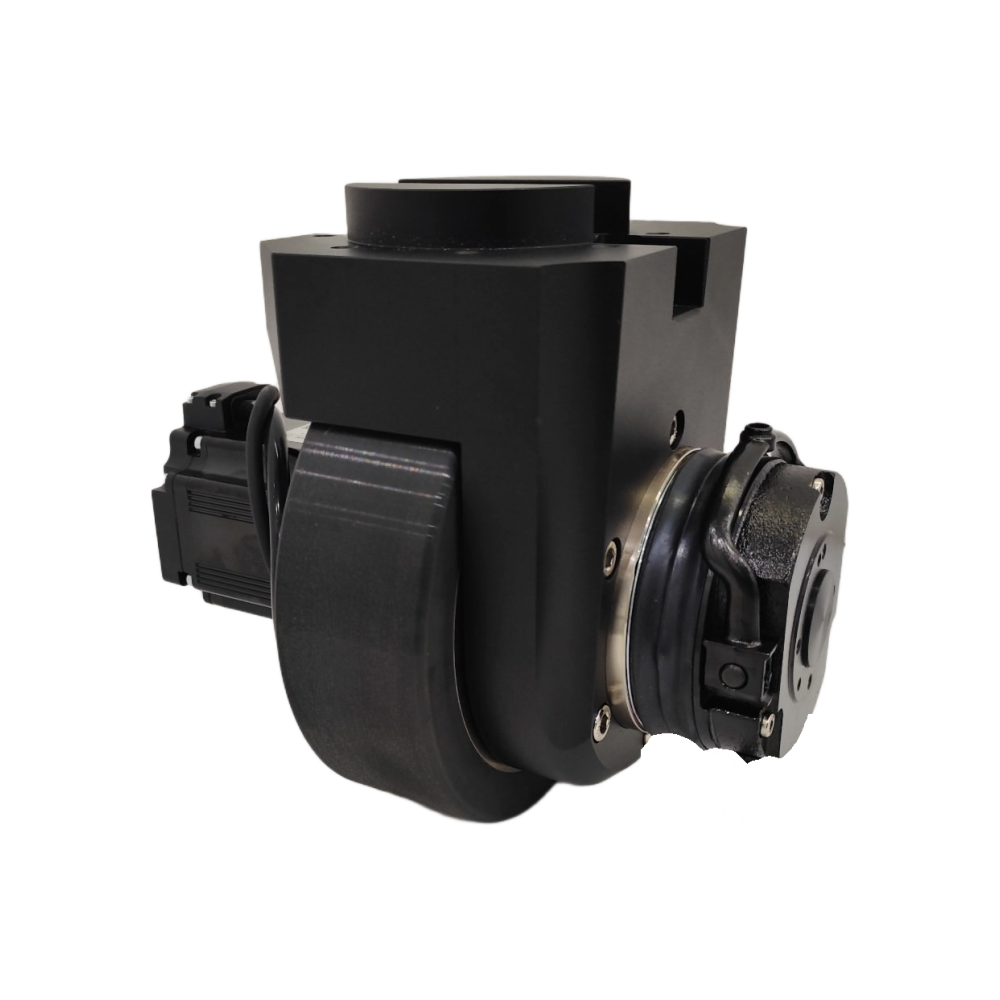
TZBOT Compact Structure agv Wheel Imported Polyurethane 1000kg Load Duty Mobile Robot Horizontal Drive Wheel Unit
A 1,000 kg horizontal drive-wheel unit with imported polyurethane. The low build height helps retrofit older Berlin buildings, shallow ramps and chassis where under-clearance is limited.
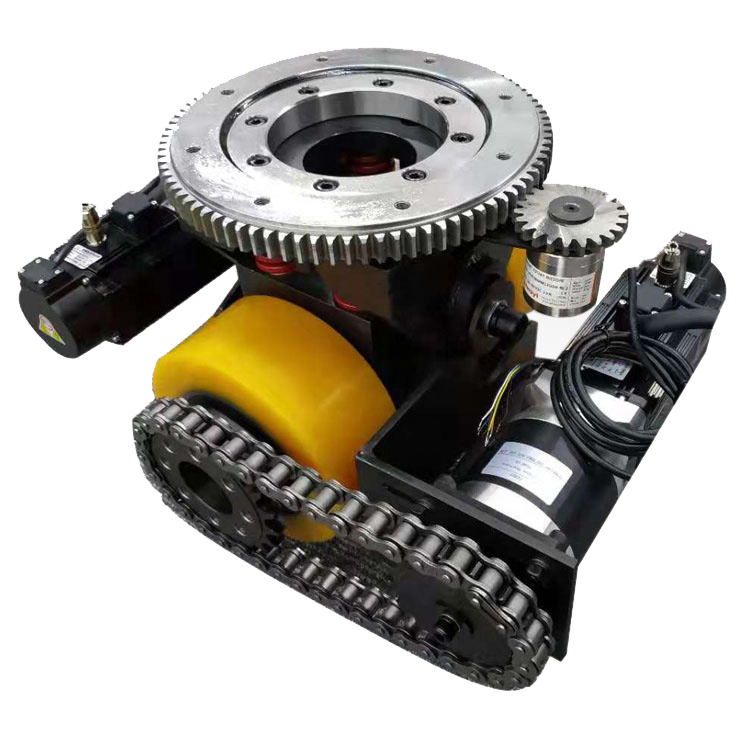
TZBOT 48V DC 2 Ton Heavy Duty Differential Unit AGV Wheel TZCS-750-30
A 48V DC, 2-ton heavy-duty differential unit for tugger trains and high-inertia cart transport. It matches automotive supplier parks, logistics halls and industrial laundry operations where frequent starts need traction and torque reserve.
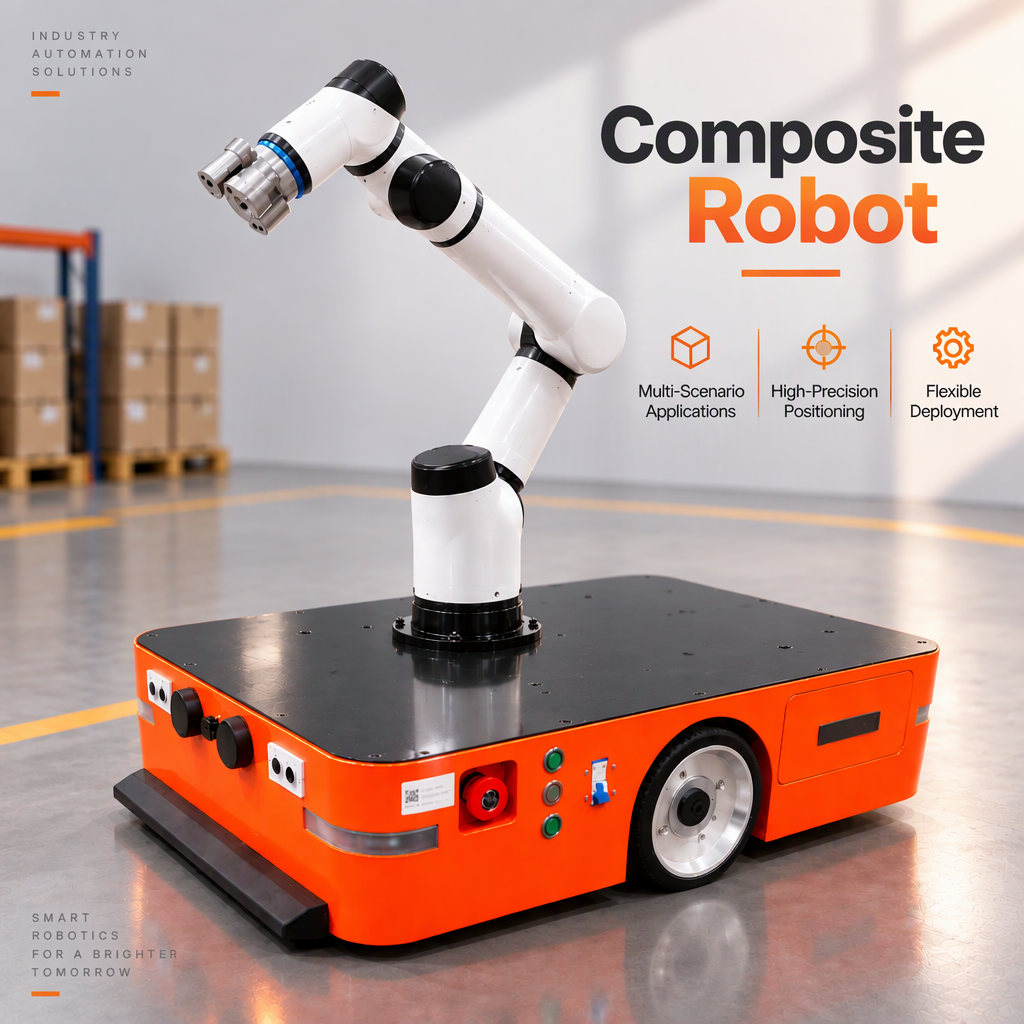
TZBOT Backpack AGV 200kg Load Capacity Chassis Magnetic Guidance Composite Robot with Robotic Arm
A 200 kg backpack AGV chassis with magnetic guidance and robotic arm integration. It is aimed at compact composite-robot tasks such as exception handling, electronics assembly support and e-commerce micro-fulfilment.
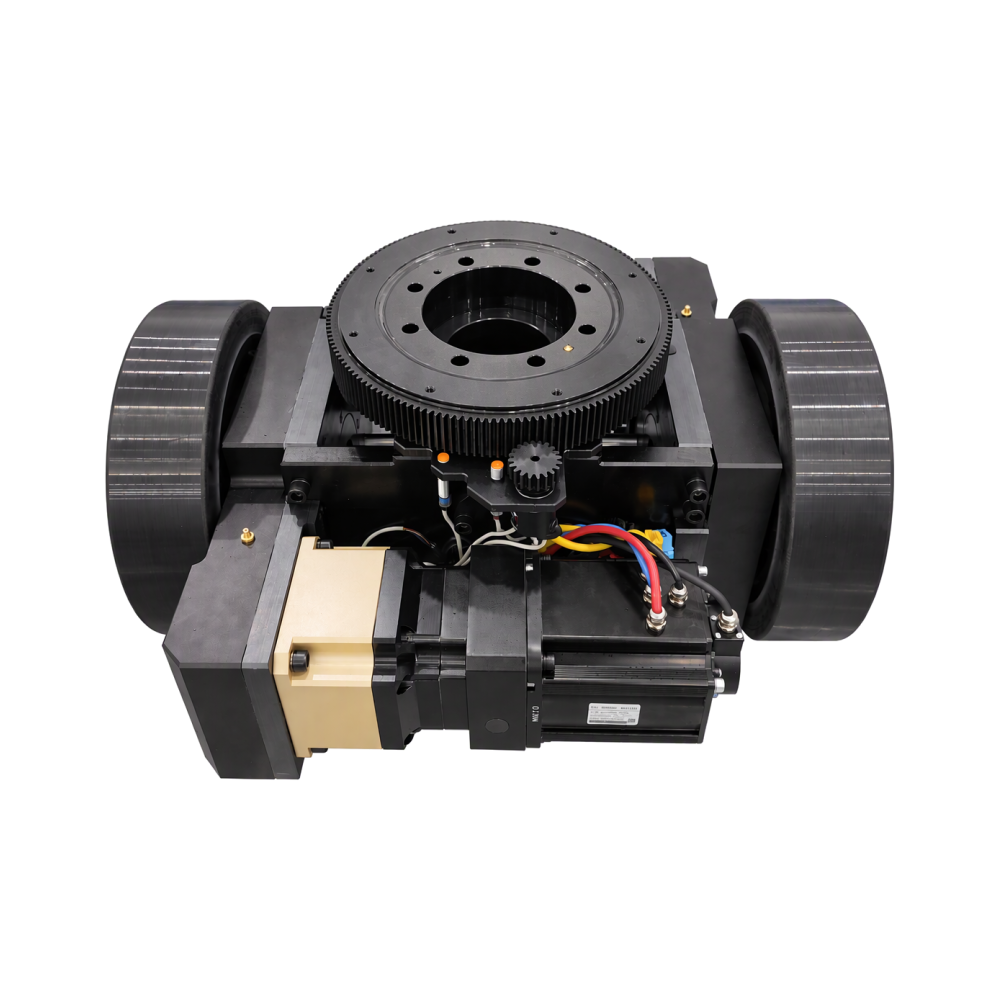
TZBOT Heavy Duty Series Robot Wheel 3000kg Bearing Capacity AGV Material Handling Equipment Differential Drive Wheel Assembly
A 3,000 kg bearing-capacity differential drive-wheel assembly for demanding towing tasks in steel, paper, beverage, industrial laundry and heavy cart handling, where high vertical load and frequent starts require robust wheel traction.
The Real Search Intent Behind “Towing AGV Exporters & Wholesalers in the Berlin Market”
Most pages targeting this phrase stop at “we export AGVs.” That is not enough for a Berlin buying committee. The page must answer the operational, safety, integration and procurement questions that sit behind the keyword.
Operations Lead
“Will the towing AGV move our carts without blocking aisles, lifts or fire doors?” The answer needs route width, turning radius, floor friction, ramp data and stop accuracy.
Systems Integrator
“Can I get CAD, wiring diagrams, driver parameters and spare-part lists before I quote the project?” Documentation quality is often more important than a low sample price.
Wholesaler
“Can I resell under my brand and combine drive wheels, controllers and sensors in one shipment?” OEM labels, packaging, mixed SKUs and predictable change control matter.
Procurement
“What is the landed cost to Berlin, and which terms protect the project?” Payment methods, Incoterms, warranty, spare-parts strategy and documentation all enter the decision.
| Search phrase | What the Berlin buyer is really asking | Information gain this page provides |
|---|---|---|
| towing AGV exporters | Can the supplier ship to Germany, support CE documentation and respond to an integrator? | Factory background, ISO 9001:2015, Intertek onsite verification, component-level data and machine-level CE guidance. |
| AGV wholesalers Berlin | Can I build a resale range of drive wheels, controllers, sensors and complete AGVs? | Eight product platforms, OEM/ODM customization, mixed-component sourcing and export terms. |
| towing AGV for warehouse | Will it handle our carts, ramps, floors and multi-shift duty cycle? | Payload-to-drive-wheel matching, low-clearance options and Berlin-specific application scenarios. |
| AGV drive wheel manufacturer | Can the supplier prove repeatable quality before we approve a sample? | In-house testing instruments, extended-duration prototype testing, patents and matched electronics. |
Where Towing AGVs Create Value in Berlin and Brandenburg
Berlin is not one logistics market. It is a network of inner-city buildings, industrial parks, hospital campuses, parcel hubs and surrounding Brandenburg distribution centres. Each environment changes the specification.
Inner-City E-Commerce & Micro-Fulfilment
In districts such as Tempelhof, Neukölln and Wedding, converted buildings often have narrow aisles, small lifts and uneven floor transitions. A 500 kg bidirectional magnetic AGV or a low-clearance horizontal drive wheel can tow order carts and replenishment cages where a forklift is impractical.
Automotive Supplier & Industrial Parks
Spandau, Potsdam and Ludwigsfelde host production and supplier operations that use tugger trains and sequenced material delivery. The 48V DC 2-ton differential unit and 3,000 kg heavy-duty drive wheel are relevant when towing trains must start, stop and turn with high inertia.
Hospital & Pharmaceutical Logistics
Berlin’s hospital and laboratory campuses need quiet, clean and precise transport for linen, meals, samples and sterile supplies. Low speed, accurate station stops, RFID position recognition and documentation matter more than maximum speed.
Food, Beverage & Cold-Chain
Cold stores, food distribution and beverage halls require attention to condensation, floor friction, wash-down routines and battery charging strategy. Polyurethane tread, sealed components and a realistic maintenance plan should be agreed before the first floor trial.
Parcel, Postal & Print Logistics
Parcel hubs, print plants and postal sorting sites move roll cages, pallet boxes and paper reels over long shifts. The controller must survive frequent direction changes, while the drive wheel needs predictable traction and spare-part availability.
Trade-Fair & Event Logistics
Messe Berlin and event venues need temporary routes, removable magnetic tape and fast deployment. Towing AGVs can move equipment carts and exhibition materials, but public-area safety, floor protection and route control must be planned with the venue.
Berlin-Specific Trends Reshaping Towing AGV Purchasing
The Berlin buyer’s specification is being shaped by building stock, labour availability, European safety rules and the need to connect new vehicles to existing warehouse software.
Brownfield Retrofits & Low-Clearance Drives
Many Berlin sites are conversions, not new-build warehouses. Low-clearance horizontal drive units, compact turning radii and adjustable mounting interfaces are often more important than headline payload.
VDA 5050 & Mixed-Fleet Interoperability
Berlin integrators increasingly discuss VDA 5050 because end users do not want a single-vendor island. Compatibility must be confirmed in the project specification; it should never be assumed from a product photo or a generic catalogue page.
EN ISO 3691-4 & Machine-Level CE
European buyers ask how the vehicle will be risk-assessed, zoned and marked. Component supply is not the same as machine-level conformity. The final integrator or operator must hold the technical file and CE declaration for the complete machine.
Labour Availability & Multi-Shift Uptime
Berlin operators face high labour costs and difficulty filling repetitive transport roles. Towing AGVs are evaluated on uptime, quick fault diagnosis and spare-part availability, not only purchase price.
German-Language Support & Local Spare Parts
English documentation is standard, but Berlin buyers often want German labels, training material and a clear escalation path. A spare-parts kit ordered with the first machine can prevent a small failure from stopping an entire shift.
Energy Transparency & Battery Strategy
Multi-shift operations require a charging plan, not just a battery voltage. Berlin buyers increasingly ask for energy consumption data, opportunity-charging guidance and a clear replacement strategy for lithium or lead-acid options.
How to Match Payload, Route and Drive Hardware
For a towing AGV, the drive wheel is only one part of the answer. The correct configuration depends on gross train weight, acceleration, floor friction, gradient, turning frequency and the available chassis height.
| Berlin towing task | Recommended platform | Why it fits |
|---|---|---|
| Light cart towing up to 500 kg | 500 kg magnetic guidance lurking AGV plus smart controller | Low-profile body, bidirectional movement and magnetic guidance suit narrow aisles and repetitive indoor routes. |
| 1,000 kg mobile arm or composite robot | 1,000 kg auto-guidance mobile chassis | Provides a stable mobile base for robotic-arm integration and station-to-station travel. |
| Low-clearance tugger around 1,000 kg | 1,000 kg horizontal drive-wheel unit with imported PU | Horizontal motor layout reduces build height and helps with shallow ramps and converted buildings. |
| Heavy tugger train around 2,000 kg | 48V DC 2-ton differential unit TZCS-750-30 | Higher torque reserve and robust differential structure for frequent starts, stops and turns. |
| Industrial towing up to 3,000 kg | 3,000 kg heavy-duty differential drive-wheel assembly | High bearing capacity for steel, paper, beverage and other heavy-cart operations. |
| Existing AGV needs a guidance/control upgrade | TZC-MST-FX200D-A smart controller or smart AGV controller | Supports vehicle command, route execution and integration with magnetic guidance and drive feedback. |
The Torqen Advantage for Berlin Wholesalers and Integrators
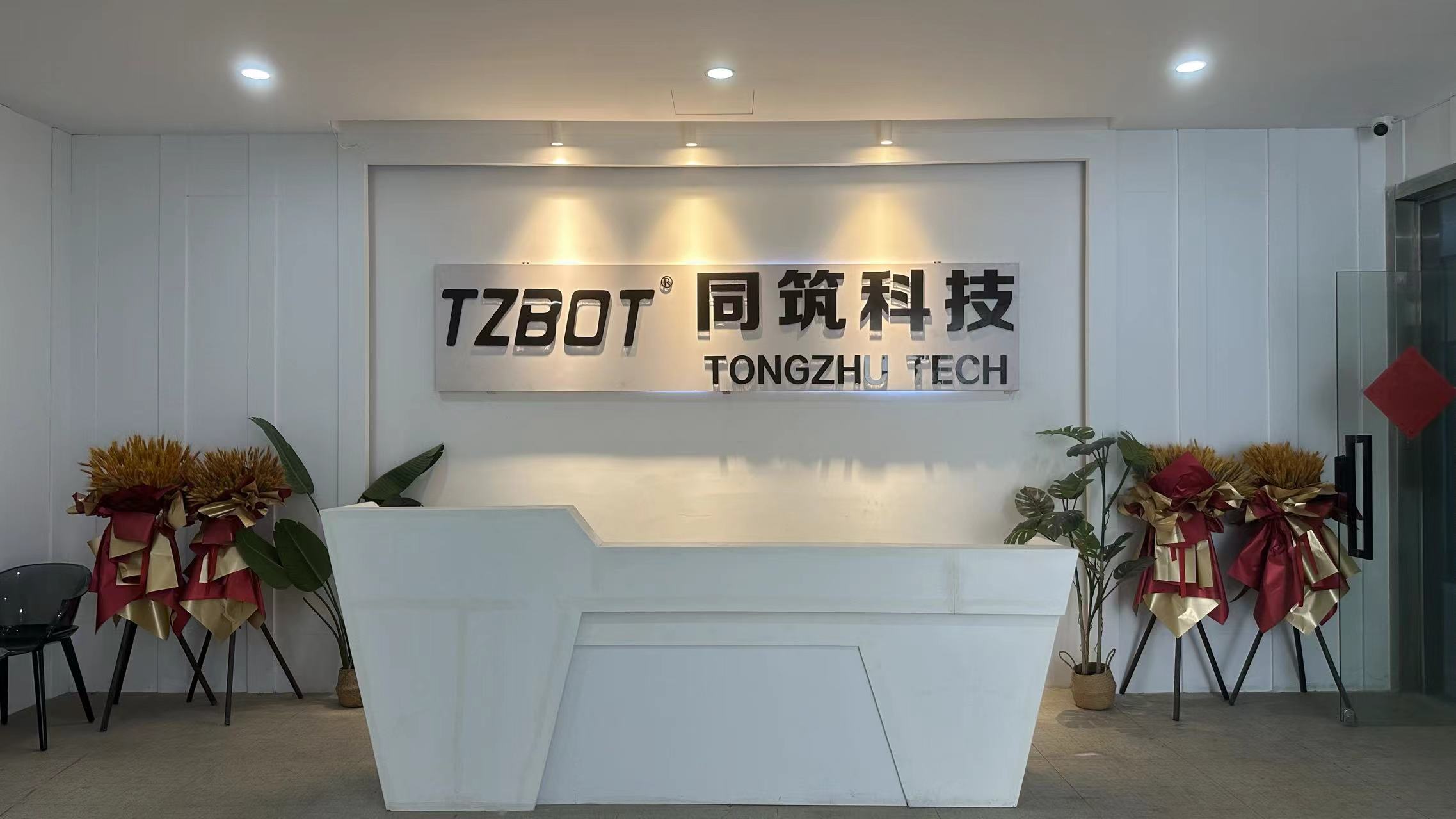
Zhejiang Torqen Technology Co., Ltd. was founded in 2015 in Hangzhou, Zhejiang, China. We design and manufacture automatic guided vehicles, AGV drive-wheel assemblies, DC/AC motors, encoders, reducers, servo/BLDC controllers, magnetic and RFID sensors, caster and PU wheels, and in-wheel motor units for automation builders worldwide.
One Factory for the Complete AGV Drive Train
Buying wheels, motors, drivers and sensors from separate vendors creates integration risk. Torqen matches the drive wheel, motor, reducer, encoder, controller and navigation sensor as one engineering system. For a Berlin integrator, this means fewer interface surprises when the imported components meet the local safety, WMS and service environment.
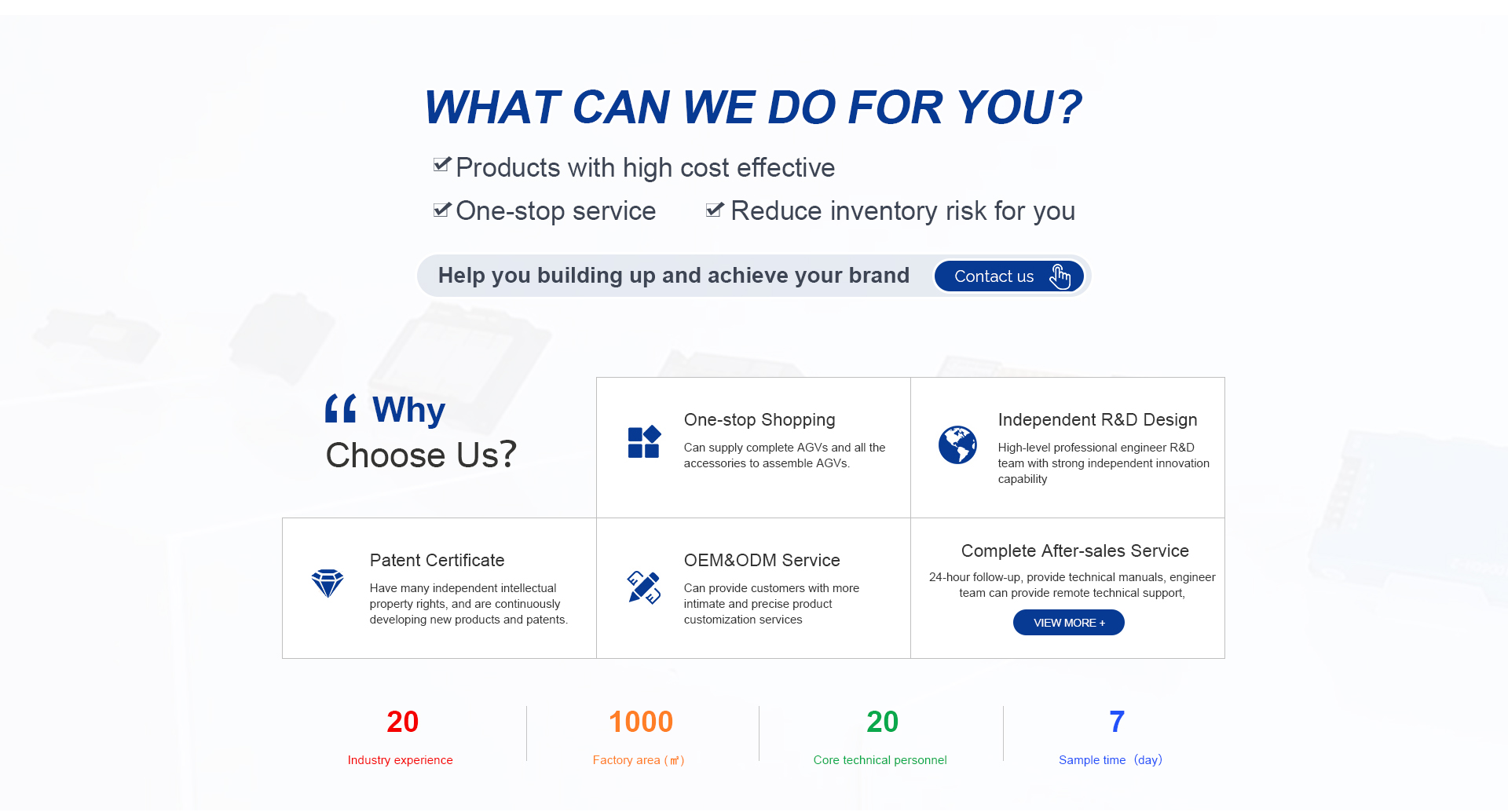
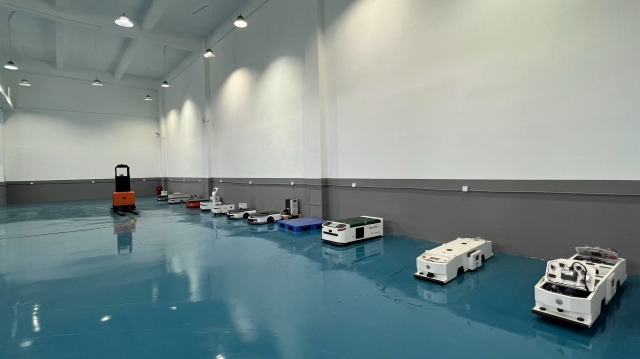
Our factory occupies 1,000–3,000 m² and employs 51–100 people, with annual output in the US$5–10 million range. These facts tell a buyer what kind of supplier they are dealing with: a focused engineering factory with trading capability, not a catalogue-only intermediary. We are certified to ISO 9001:2015 and have been verified onsite by Intertek. We hold 8 patents and use five in-house testing instruments for finished-product inspection.
- Founded2015, Zhejiang, China
- Business TypeManufacturer & Trading Company
- Factory Size1,000–3,000 m²
- Team51–100 people
- Annual OutputUS$5M–10M
- Quality SystemISO 9001:2015 · Intertek onsite-verified


Custom Drive Engineering
Sample-based and design-based customization of motor power, voltage, reduction ratio, wheel diameter, tread material, encoder type, brake options and mounting interfaces.
Tested Before Shipping
Five in-house testing instruments, finished-product inspection and extended-duration prototype runs before production release. Quality is treated as a process, not a final photo.
Matched Electronics
Servo and BLDC drivers tuned to our own drive wheels, plus magnetic, RFID and lidar sensors for a single-source bill of materials and clearer integration responsibility.
Export-Ready Logistics
FOB, CFR, CIF, EXW, CIP, FCA, CPT, DDU and express delivery. Payment methods include T/T, L/C, D/P, D/A, credit card, PayPal, Western Union and escrow, in major currencies.
Years in drive technology
Patents awarded
Employees and engineers
Buyer rating
Inquiry response rate
FAQ: What Berlin Buyers Ask Before Importing Towing AGVs
These are the questions that repeatedly appear in Berlin and Brandenburg RFQs for towing AGVs, drive wheels, controllers and navigation sensors.
Are your towing AGVs and components CE compliant?
We provide component information, drawings, test records and technical documentation to support your CE-marking process. For a complete AGV or towing tractor, the final machine-level risk assessment, technical file and CE declaration normally belong to the integrator or the entity placing the machine into service in the EU. We work with your Berlin safety engineer to clarify which documents are supplied by Torqen and which must be produced locally. Do not accept a generic “CE certificate” as a substitute for a machine-specific conformity assessment.
Can you ship to Berlin and support a German-speaking integrator?
Yes. We regularly quote export shipments with FOB, CFR, CIF, EXW, CIP, FCA, CPT, DDU and express options, and we can coordinate with your freight forwarder or Berlin integrator. English technical documentation is standard. German-language labels, training material or translated manuals can be discussed at RFQ stage; the exact scope should be written into the order so that both sides know who is responsible for translation and verification.
What is the typical minimum order for wholesalers or import distributors?
We support sample orders, single-unit engineering samples and mixed-component orders. Wholesale pricing depends on the annual volume, drive-wheel specification, controller quantity, sensor mix, packaging and private-label requirements. A single sample order is normally evaluated as a validation cost, not as a wholesale price benchmark. For Berlin distributors, we recommend starting with a small kit: one drive wheel, one matched controller, one magnetic sensor and a spare connector set.
How do you prove product quality before we place a production order?
Our quality management system is certified to ISO 9001:2015, and our facility has been verified onsite by Intertek. We use five in-house testing instruments and run finished-product inspection. Prototypes can undergo extended-duration testing before production parts are released. For Berlin buyers, the practical next step is to define acceptance criteria in the sample order: load, speed, duty cycle, noise, temperature rise, encoder feedback and mounting tolerance.
Which safety standards should a Berlin buyer plan for?
Depending on the machine, the project team should review the Machinery Directive 2006/42/EC and the transition to Regulation (EU) 2023/1230, the EMC Directive 2014/30/EU, the Radio Equipment Directive where wireless modules are used, and EN ISO 3691-4 for driverless industrial trucks. EN 1175 is also relevant to electrical requirements for industrial trucks. Standards evolve, so the final list must be confirmed by your safety consultant and the entity responsible for CE marking. Torqen can supply component-level information for that review.
What floor, route and vehicle data do you need for a correct recommendation?
Provide gross train weight, cart or trailer weight, maximum payload, target speed, acceleration and deceleration, maximum gradient, floor material, floor friction, ramp angle, turning radius, aisle width, lift dimensions, door widths, under-clearance, battery voltage, charger type, required stopping accuracy and daily duty cycle. Also include the safety-scanner zones, Wi-Fi coverage, WMS/MES interface, desired fleet protocol and whether the route is indoor, outdoor or mixed. A floor plan with dimensions is more useful than a written description alone.
Can you customize voltage, battery, controller, wheel tread and branding?
Yes. Typical customizations include motor power and voltage, reduction ratio, wheel diameter and tread material, encoder type, brake options, mounting interfaces, connector types, controller parameters, buyer-label packaging and documentation. For OEM/ODM programs, we can review your chassis drawing, load case and interface requirements before the sample is built. Changes that affect safety functions must be reviewed with your integrator and safety assessor.
How should we plan spare parts and after-sales support for a Berlin fleet?
Order a recommended spare-parts kit with the first machine. A practical kit often includes one drive wheel or wheel tread set, encoder, controller fuse set, connectors, magnetic sensor, RFID tags, emergency-stop components and mounting hardware. Keep serial numbers and parameter files under change control. Our team supports fault analysis with production records, wiring diagrams and parameter guidance. For multi-shift operations, response time matters more than the price of a single spare part.
What payment and delivery terms are accepted?
Accepted payment methods include T/T, L/C, D/P, D/A, MoneyGram, credit card, PayPal, Western Union, cash and escrow, in USD, EUR, JPY, CAD, AUD, HKD, GBP or CNY. Delivery terms include FOB, CFR, CIF, EXW, CIP, FCA, CPT, DDU and express delivery. For Berlin buyers, confirm the Incoterm, named place, unloading responsibility, customs broker, EORI number and HS-code classification before shipment.
Can you support VDA 5050 or integration with our existing fleet manager?
We can review the interface requirements with your fleet manager and integrator. VDA 5050 compatibility must be confirmed in the project specification, including message set, map format, vehicle state model and test plan. It should never be assumed from a product photo or a general catalogue claim. For Berlin projects with mixed fleets, start with an interface workshop before choosing the controller and AGV platform.
Request a Berlin-Specific Towing AGV Proposal
Send your payload, route, floor plan, battery voltage and safety requirements. Our engineers will match the drive wheel, controller and navigation components for your Berlin or Brandenburg project.
info@torqenbot.com